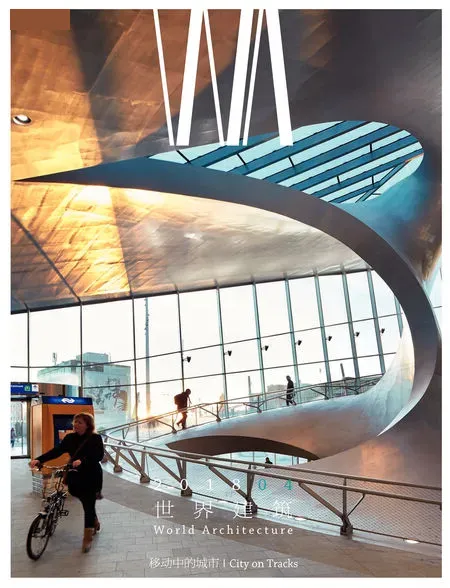
京都站大樓未來百年保護策略
2018-04-21 07:04:13高浦敬之山本博史YoshiyukiTakauraHiroshiYamamoto徐知蘭TranslatedbyXUZhilan
世界建筑 2018年4期
高浦敬之,山本博史/Yoshiyuki Takaura, Hiroshi Yamamoto徐知蘭 譯/Translated by XU Zhilan
1 自引進鐵路運輸系統迄今的歷史回顧
日本于1872年引進了鐵路運輸系統。當時國營鐵路的鋪設主要用于物資運輸和軍事目的。伴隨著產業的現代化進程,工業產品也被列為運輸對象,并成為鐵路運輸的核心內容。此后,客運業務蓬勃發展,由于公路和汽車的發展,鐵路貨運量隨之衰減。1964年之后,國營鐵路系統持續出現赤字。1987年國營鐵路系統民營化之后,貨運業務被保留下來,但對鐵路系統以客運服務為主要目的進行了改造。
日本鐵路最初使用的燃料是煤炭,其后很早改為柴油和電力驅動,而鐵路現在則成為主流的交通工具。因此,整個運輸系統都發生了變化。
國營鐵路系統主要面向長距離運輸的業務,其火車站大多分布在城市周邊地區。而后來發展起來的民營鐵路則在最初鋪設鐵軌時就用列車將其車站與國營鐵路系統的車站相銜接。由此,火車樞紐站得以形成并最終發展為城市的中心商業區。
2 京都站改造和京都站建設項目
京都于794年仿照中國長安城建成。1877年,在內外城之間的交界處建設了最早的京都站。(圖1)第二代京都站于1915年建成,為滿足日本天皇即位的條件在倉促間建設完成,并于1950年毀于一場大火。(圖2)為了火災后盡快重建,第三次京都站的建設也于1951年突擊完成,它持續使用了46年,直到目前的京都站于1997年建成為止。(圖3)正如我們能從這段歷史了解到,京都站的屢次建設都很難稱得上從一開始就有良好的規劃,車站也同樣設在城郊地區。
現在的京都站大樓于1997年建成,是第4代京都站。(圖4)在建設期間,和私營鐵路一樣,近鐵線、京都城市交通局的地鐵、公共汽車、出租車等都已成為公共交通系統中的一環,而人們對于傳統城鎮周邊地區在商業方面仍保留著過去的印象。1987年,國營鐵路系統也完成了民營化的過程,在建設第4代京都站的時候,人們決定把它建成一座EKIBIRU1),而不僅僅是一座火車站。由此,火車站在整個EKIBIRU中僅占有5%的面積,它變成了一座囊括百貨商店、購物中心和高級酒店的綜合建筑。(圖5)這部分歸功于京都EKIBIRU的建成,同時京都站周邊區域的商業潛力也由此得到了提升。
在東京和大阪那樣的大城市里,EKIBIRU的建設作為交通運輸終端的開發過程已經重復了許多次,所以人們很難理解它為周邊地區熙熙攘攘的商業繁榮景象所帶來的影響。然而,在京都的例子里,EKIBIRU建筑于20年前在火車站的舊址上突然建成,于是我們能很容易理解火車站建設工程的影響力。(圖6)
3 京都站大樓的挑戰與倡議
京都EKIBIRU已經建成20多年,在此期間,社會經歷了滄桑巨變,有些人認為感覺相當于傳統意義上50年的變化。那么,究竟發生了哪些變化?
日本建筑的主體大多是木質結構,城市面貌經由火災、地震、洪水等事件得到逐步更新。因此,我認為日本民眾已經接受了建筑是一股潮流、并非固定不變的認識。
在經濟活動日漸增長的過程中,人們在大拆大建的同時思考建筑潮流,這兩種想法并行不悖。
1990年舉辦了京都EKIBIRU的國際競賽。當時的日本正處于泡沫經濟時代,許多日本人認為這種局面將永遠持續下去。而在泡沫經濟將近尾聲之時,京都EKIBIRU也于1997年建設完成。這一年也是《聯合國氣候變化公框架公約》第三次締約方會議在京都召開之時,會議簽署了《京都議定書》。因此,這座建筑完成之時也正值社會重大轉變之際,有許多新的課題亟待應對。
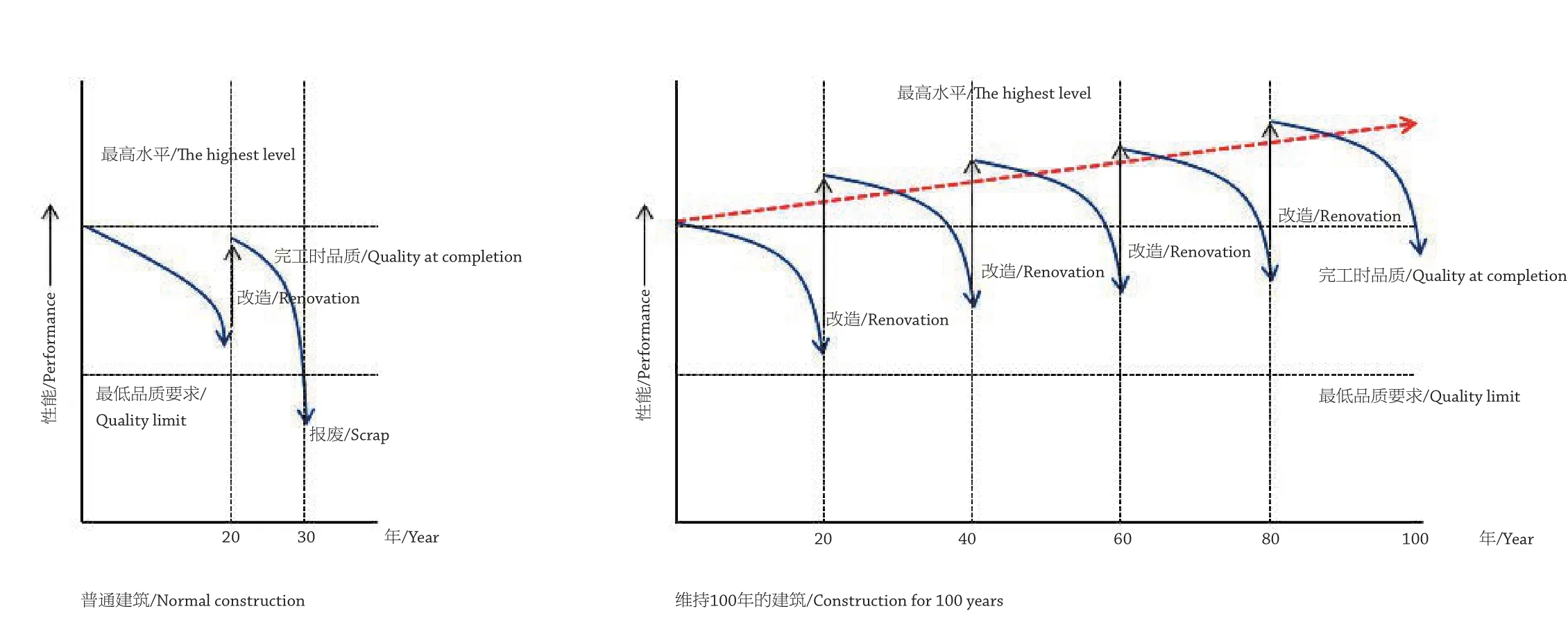
考慮到經濟合理性,我們再也無法重建這座擁有豐富空間的樞紐站建筑。(圖7)當時建筑能夠建成的原因是,人們認為在整個社會轉向可持續發展方式之前,經濟增長的情況將一直持續下去。所以,想要再建一座這樣的樞紐站非常困難。基于這些原因,為了能長期持續地使用這座建筑,我們開始以前所未料的方式做出各種努力,直到現在也同樣如此。僅僅將作為軌道交通樞紐站的建筑物當作文化遺產對待無法延長其使用壽命。作為民營鐵路的重要營收來源,它還必需滿足經濟方面的合理性,并能永遠提供“積極的服務”來適應社會的變遷。在保護優秀建筑的同時,也很有必要從硬件功能和建筑自身存在的理由兩方面入手跟上時代的變化。(圖8)
在價值觀得到更新的當今社會,為了實現京都EKIBIRU未來百年的維護使用,我們在建筑的硬件方面采取了三項主要措施——應對氣候變化問題的措施、發生災害事故時的持續運營預案、以及作為社會公共集散地的空間利用方案。比起為這三大主題策劃特殊項目的方式,我們更傾向于利用這些機
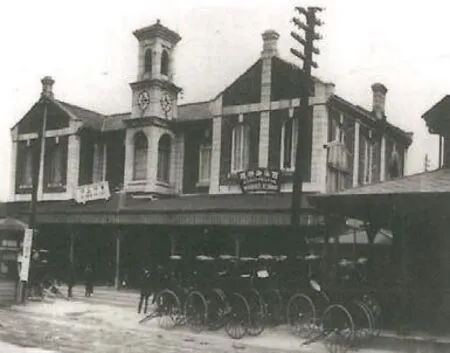
1 第一代京都站/The fi rst Kyoto Station
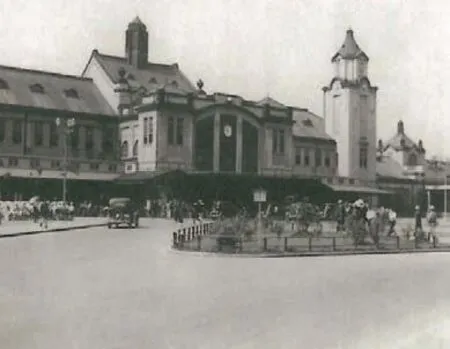
2 第二代京都站/The second Kyoto Station
1 Review from the introduction of railway system to today
The railway system was imported into Japan is 1872 year. In the national railroad at that time,railroads were laid for resource transportation and military purposes. In addition to the modernisation of industries, industrial products have been added to transportation targets and cargo has become the centre of railway transportation. Thereafter passenger transport expanded, cargo transport declined due to the development of roads and cars. From 1964 year, the national railroad became a def i cit. After the privatisation of the national railroad in 1987 year,cargo transport remained, but the railroad was to be rebuilt mainly on passenger transport.
Coal was the fuel at first, but the power changed to diesel and electricity before long, and the train now occupies the mainstream of the vehicle. As a result, the whole transport system has also changed.
The railway station of the national railroad which is mainly aimed at long distance transport is often located in the periphery of the city. And the late developed privately owned railroad was laid from the beginning in a form connected to the station of the national railroad using a train. In this way the railway terminal was formed and eventually became the central commercial area of the city.
2 Transition of Kyoto Station and the Kyoto Station Building Project
Kyoto was built in 794 year following the city of Chang’an in China. The fi rst Kyoto station was built around the city which is the boundary between the inside and the outside of the city in 1877. (Fig.1)The second Kyoto station was built in the 1915 in a sudden construction to be in time for the imperial position of the Emperor, and it was destroyed in a fire in 1950. (Fig.2) Kyoto station of the third generation was completed in 1951 with a sudden construction for the rebuilding of the fi re, and was used for 46 years until the current Kyoto station completed in 1997. (Fig.3) As you can see from this history, it was difficult to say that the stations were well planned for the first to the third generations,and the location was also around the city.
The current Kyoto station is completed in 1997,and it is the 4th generation. (Fig.4)
At the time of construction, it was at the point of public transport such as Kintetsu, Kyoto

5 建筑布局/Building Composition1-京都劇院/Kyoto Theatre2-GRANVIA京都酒店/Hotel GRANVIA Kyoto3-北派出所/North police station4-京都站大樓專門店街The CUBE美食街/Shopping Mall "The CUBE"Goumet (11F)5-京都拉面小路/RAMEN KOJI (10F)6-公共服務設施/Public Service (8,9F)7-JR京都伊勢丹/JR Kyoto ISETAN (B2~11F)8-停車場/Parking9-石頭博物館/Stone Museum10-JR中央驗票口/JR Central Gate11-京都站大樓專門店街The CUBE/Shopping Mall "The CUBE" (1F)12-南北自由通道/Pedestrian Walkway (2F)13-大樓梯/Great Staircase
項目信息/Credits and Data
功能/Program: 包含京都站、商場、賓館、劇院以及專門店的綜合建筑/Complex building including Kyoto Station,department store, hotel, theatre, specialty store
建筑設計/Architect: 原廣司/Hiroshi Hara
總建筑面積/Total Floor Area: 235,942m2
基地面積/Site Area: 380,000m2
結構/Structure: 地上:鋼結構;地下:鋼筋混凝土結構/above ground: steel; basement: steel framed reinforced concrete
層數/Floor Number: 地上16層,地下3層/above ground:16 fl oors; basement: 3 fl oors
建筑高度/Height: 60m
竣工時間/Completion: 1997.07
京都站大樓訪客數/The Number of Visitors in Kyoto Station Building: 33,920,000 (1997) → 34,350,000 (2016)京都站乘客數/The Number of Passenger in Kyoto Station:160,000 (1997) → 200,000 (2016)City Transportation Bureau, subway, bus, taxi etc as private railway. Commercially, the impression of the surrounding area of the traditional town still remained. In 1987, the national railroad is privatised, at the time of construction of the 4th generation, it was decided to be built as a EKIBIRU1)instead of a railway station. As a result, the proportion of the station in EKIBIRU was only 5%,it became a complex building including department store, shopping centre, hotel. (Fig.5) Partly due to completion of the Kyoto EKIBIRU, the position around Kyoto station in Kyoto's commercial potentials improved.
In large cities such as Tokyo and Osaka,the construction of EKIBIRU has been repeated many times during the development process as a railway terminal, so it is difficult to understand the impact on the commercial bustle around the station. However, in the case of Kyoto, EKIBIRU was suddenly made in the place where it was a railroad station 20 years ago, so it was easy to understand the impact of the station building construction.(Fig.6)
3 Issues and Initiatives in Kyoto Station Building
Twenty years have passed since the Kyoto EKIBIRU was completed. The change of society during this time is large, some people compare to the change of 50 years if it is a conventional feeling.What was the change like?
The main structural parts of Japanese buildings are wood, and the city has been renewed due to fi re,earthquake, floods and so on. Therefore, I think that Japanese accepted the building as a fl ow rather than as a stock.
In the process of expanding economic activity,thinking of scrap & build and thinking of building as a fl ow coexisted without discomfort.
The international competition of Kyoto EKIBIRU was carried out in 1990. At that time Japan was in the state of the bubble economy, and many Japanese thought that this condition would continue. After the end of the bubble economy, the Kyoto EKIBIRU was completed in 1997. That year was also the year when COP 3 was held in Kyoto, and the Kyoto Protocol was signed. When the building was completed it was a major turning point of society and it became necessary to deal with new issues.
This building has rich spaces that can never be會替換老舊的設施,并以同時符合企業經濟利益的方式來開展工作。
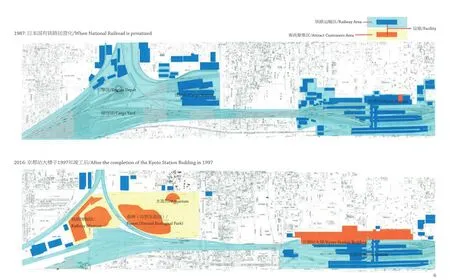
6 京都站周邊變遷/Transformation around Kyoto Station

7 從經濟合理性的觀點出發的話,這樣豐富的空間絕無可能實現/Rich spaces that can never be realized from the viewpoint of economic rationality7a 大樓梯/Big Staircase7b 中庭/Atrium
8 長期改造計劃/Long term renovation plan
9 綠水步廊:城市化樞紐站中自然的恢復與啟示/Ryokusuihoro:Nature restoration and enlightenment at urbanized terminals(本文圖片均由京都站大樓開發株式會社提供/All images are provided by Kyoto Station Building Development Corporation)
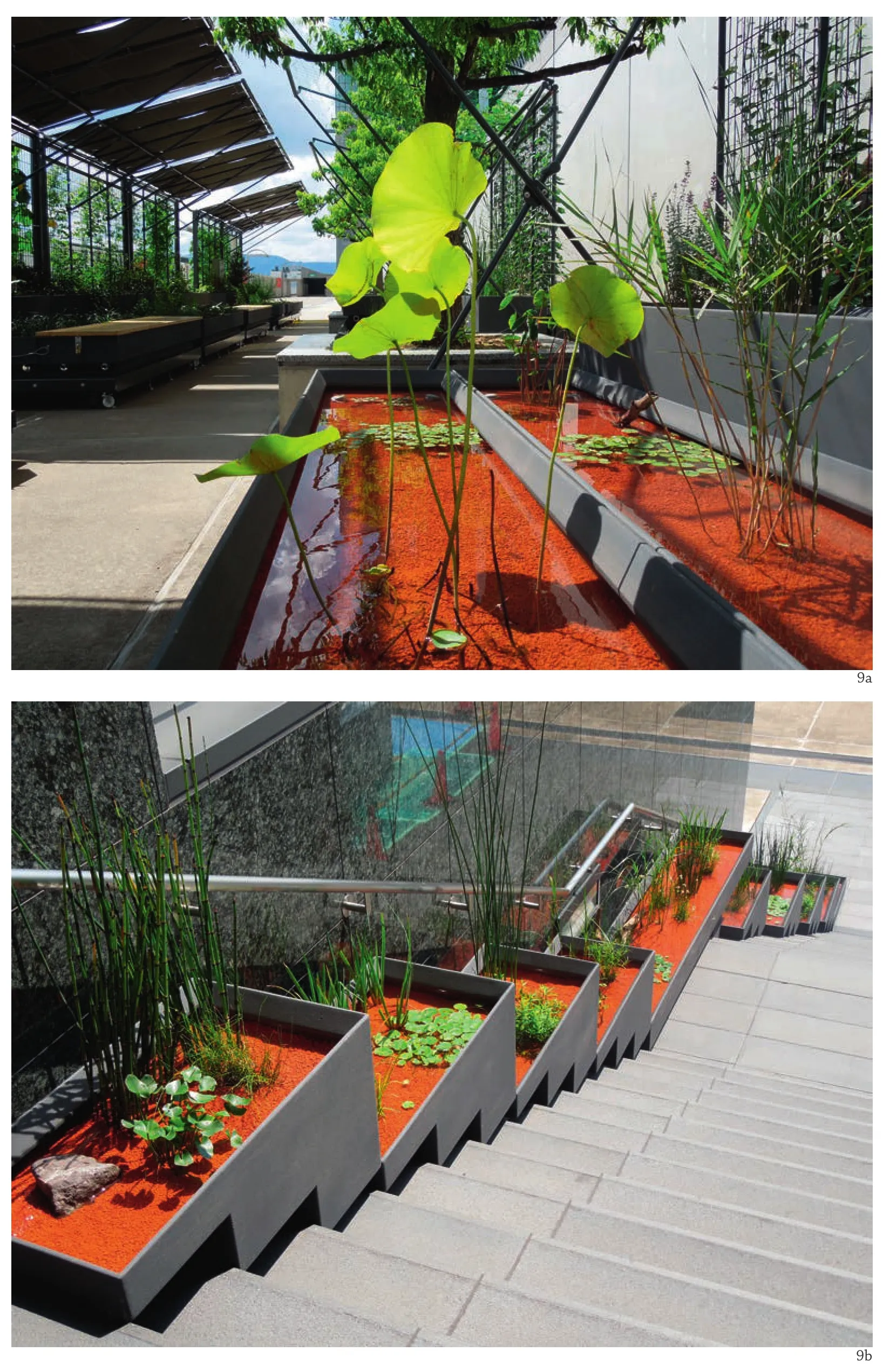
到現階段,我們已經收獲了豐碩的成果。通過使用調試方法,我們更換了空調制熱系統,它原先占據了一半的建筑耗能,在系統更換期間,建筑仍可持續使用,直至新系統全部完成為止。CO2排放量從4.8萬t降至2.8萬t。整座建筑耗能減少了30%,僅熱耗能一項減少60%。由于京都EKIBIRU的CO2排放量占據了京都全市的72%,其成果具有劃時代的意義。同樣,人們常常以為在京都鐵路樞紐站所在的城市中心,修復自然環境困難重重。然而,通過利用京都站豐富多變的建筑空間,我們建成了一條生態廊道(生態網落)。通過利用車站吸引人流和傳播信息的優勢與潛力,我們與各類行政機構和關注環境問題的組織合作,參與多項活動,宣傳教育保護生物多樣性的重要性。(圖9)□realised from the viewpoint of economic rationality.(Fig.7) It can be realised as it is considered that the expansion of economic activity will continue even before the society steers forward in a sustainable direction. In this way, it is very difficult to make such a building again. For such reasons, we have begun to undertake efforts that have not been thought much in Japan until now to continue using this building for a long time. A building as a railroad terminal does not prolong life simply by preserving it as a cultural asset.It is necessary to satisfy the economic rationality as one of the important revenue sources of privatised railway and always respond to social change with"active service". While protecting good buildings,it became necessary to catch up with changes in society in terms of the function as hardware and the existence reason of the building itself. (Fig.8)
In the society with new values, there are three major things working on the hardware side of the building to sustain the Kyoto EKIBIRU for 100 years. These are initiatives for climate change problems, business continuity plan in disasters, and utilisation of space as a social contribution. Rather than making special projects for these three themes,we are taking advantage of opportunities to replace aging facilities and are working in a way that also matches economic rationality as a company.
As a concrete result at the present stage, we changed the air conditioning heat source system which uses half of building energy while continuing to use building to a completely new system by commissioning method. And CO2emissions were reduced from 48,000t to 28,000t. The reduction is 30% for the entire building and 60% for the heat source alone.
Since the Kyoto EKIBIRU discharged 0.72 of the total CO2emissions in Kyoto city, this result is epoch-making event. Also, it is often thought that restoration of nature is difficult in the centre of the city where the railway terminal is located. However,by utilising the varied and rich space of the Kyoto station building, it contributes to the formation of a living corridor (ecological network). And by taking advantage of the attracting power and the potential of information dissemination, we are engaged in activities to educate the importance of conserving biodiversity with various organisations addressing administrative and environmental issues. (Fig.9)□
猜你喜歡
工業設計(2022年8期)2022-09-09 07:43:20
北方建筑(2021年6期)2021-12-31 03:03:54
軍民兩用技術與產品(2021年10期)2021-03-16 06:05:30
云南畫報(2021年12期)2021-03-08 00:50:54
北京測繪(2020年12期)2020-12-29 01:33:58
文苑(2020年10期)2020-11-07 03:15:36
現代裝飾(2020年6期)2020-06-22 08:43:12
鐵道通信信號(2018年7期)2018-08-29 01:17:04
家庭影院技術(2017年9期)2017-09-26 03:41:45
通信電源技術(2016年4期)2016-04-04 02:58:04