
Cash gifts, perception of social sphere and distribution of water resources for rural farmers in a typical oasis area in Northwest China
2018-05-09 07:36:41QianTaoZhuWenZhiZhaoJianGuoHuLiu
QianTao Zhu , WenZhi Zhao , Jian Guo , Hu Liu
1. Northwest Institute of Eco-Environment and Resources, Chinese Academy of Sciences, Lanzhou, Gansu 730001, China
2. University of the Chinese Academy of Sciences, Beijing 100864, China
1 Introduction
Since ancient times, Chinese culture has embraced the cash gift as a means of expressing sentiments for social occasions such as weddings and funerals (Zhai and Hu, 2010; Wang, 2012). The more complex a social relationship, the more expensive a cash gift is expected to be. Hence, a farming family with many complex social relationships may spend an excessive amount on unexpected cash gifts.Nowadays, in fact, family expenditures on cash gifts—along with those for medical care and education—have grown to such a high level that they are now a primary cause of poverty among the farming population. Unlike other poverty-causing expenditures, though, the cash gift is essentially invisible,because it occurs continuously and unpredictably, and farmers do not perceive its heavy impact on their lives.
Besides cash gifts, other influences on their budgets include total income, the types of agricultural products they produce, planting and harvesting schedules, an individual family's perceptions of what they can afford, and their long-term plans. In fact, the crucial factor is the availability of a key resource in this area—water.
The Linze Oasis in Northwest China—a typical oasis area—is home for many farming families with complex social relationships. Irrigation agriculture is the main source (59%) of income for farmers in this area. As a result, farmers' livelihood is highly dependent on water resources (Hu, 2014). Unfortunately,these farmers are facing the challenge of severe water resource shortages which have become a major problem affecting farm families' finances. In order to reduce the shortage of water resources, the Minqin county government has adopted various measures to adjust the planting structure. Since 2010, the area of irrigated farmland has been reduced by 26,667 hm2,and the per capita net income of farmers has increased by 7,000 Yuan (Shiet al., 2017). While many research studies indicate that water resource shortage has become a primary cause of ecological deterioration in China (Zhanget al., 2009; Kummuet al.,2010; Wu and Tan, 2012), little effort has been made to study the relationships among farming families'cash gifts, perceptions of social obligations, and the equitable distribution of water resources. To fill this gap, this study conducted surveys in seven towns in Linze County in Northwest China, to explore these relationships, which may eventually help to improve water resource distribution among farmers in oasis regions.
2 Materials and methods
Seven towns in the Linze Oasis were included in the survey: Shahe, Xinhua, Liaoquan, Pingchuan,Banqiao, Yanuan, and Nijiaying (Figure 1). Farmers were asked a series of questions to gather information about utilization of water resources, cash-gift expenditures and social relationships or the overall distribution of water resources. A total of 860 surveys were completed in this study—about 120 samples were randomly chosen from each of the seven towns,with the samples identified by town. The questionnaire consisted of 39 questions, in seven categories:demographics and family characteristics, household spending, family income, domestic water consumption, attitudes of better water-saving technology, the decision-making process for giving cash gifts, and general environmental consciousness. Since many of farmers have limited literacy, the survey was conducted primarily via face-to-face interviews. The farmers interviewed were mostly middle-aged, with limited education: the average age was around 45, and the highest level of education was usually elementary or junior high school. Only the head of each household was interviewed.
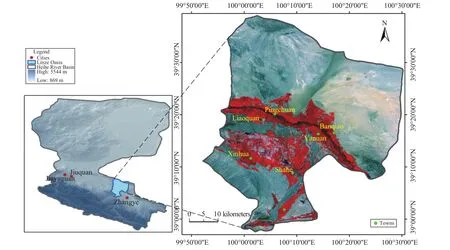
Figure 1 Study area of seven towns in the Linze Oasis in Northwest China(Red regions represents the oasis in the study area)
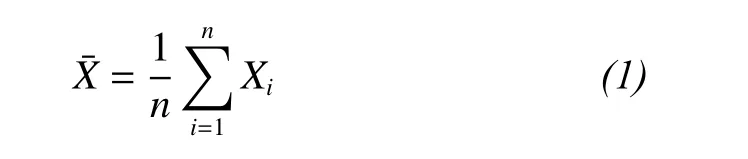
At the same time, we take the standard deviation to measure the dispersion and real distribution of research data, with the formula as follows:
Sample average:
Standard deviation:
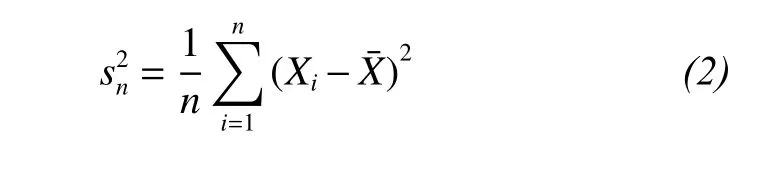
The sample average and standard deviation of cash gifts and social distribution of water resources are examined, and results indicate the standard deviations are all in a reasonable range.
3 Results
3.1 Cash gifts
There was generally good agreement about the standard size of cash gifts: 93.29% of the farmers agreed with the standard. For ordinary relationships,each occasion requires a gift of 100 to 200 Yuan. For close relatives or other closer social relationships,28.32% of the farmers chose a level of 300 Yuan, and the remaining 71.68% chose 500 Yuan. A small percentage of the farmers chose 1,000 Yuan or more for special cases or exceptionally close relationships(Table 1).
In 2014, the annual per capita net income was 10,088 Yuan in Linze County (Linze County Party Committee of the Communist Party of China, 2015),almost equal to the national average for famers in China. The cash gifts for farming families in this oasis, however, reached an annual average of 1,330 Yuan per family, making it the second-largest expenditure after food, and much higher than medical expenses(average of 890.8 Yuan) or education (average of 854.1 Yuan) (Figure 2). Because of the continuity,certainty and asymmetry of cash gifts, they can be expected to occur in every family over time. Medical and educational expenses, though, are restricted to families who experience illnesses or have school-aged children, making those expenses uncertain and more dependent on contingencies.

Table 1 Cash gift distribution table
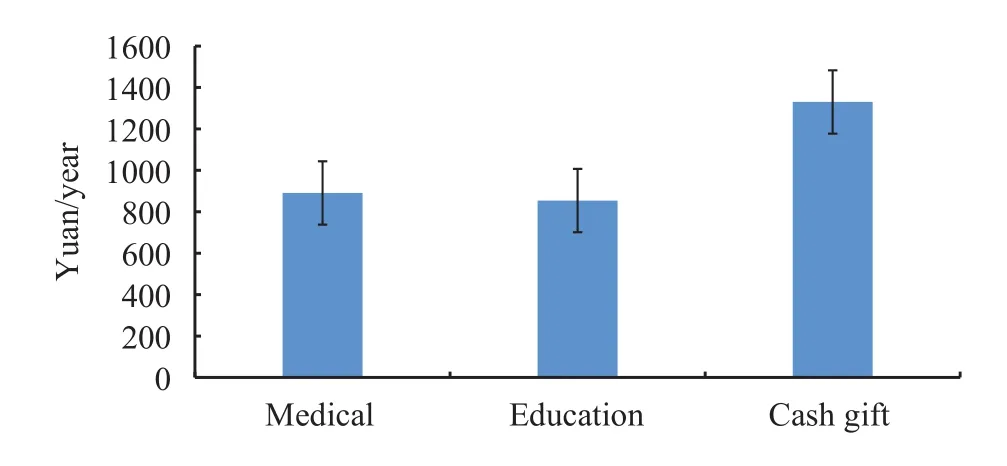
Figure 2 Medical, educational and cash gift expenditures of per family in the Linze Oasis
As for annual totals, 73.29% of farmers' cash gifts were concentrated in the 800–4,500 Yuan range, with 17.41% above 5,500 and the rest of 9.40% scattered randomly between 4,500 and 5,500 Yuan. When we took a second interview with the 9.40% group,36.44% of them stated that these expenditures are within their expectations, while another 60.21%offered various explanations of the need for sudden unexpectedly high cash gifts. Overall, the social cash gifts followed the "20%–80% principle".
3.2 Perception of social sphere
From the above data, we concluded that as long as someone adheres to traditional Chinese social relations, he must bend to the social pressure by giving cash gifts. The amount of cash gift is highly depending on the relationship among farmers. In this area,farmers can be divided into five social categories:ordinary farmer, labor broker, large farm or ranch owner, leader of a cooperative, and village cadre.Each of these categories has certain social relations or contact paths.
An ordinary farmer's social interaction is a linear-structured model: limited to simple bi-directional line links between ordinary farmers, with few connections, as presented in Figure 3.

Figure 3 Ordinary farmer's social interactions in the Linze Oasis
The difference between a labor broker and a large farm or ranch owner is the way they relate to ordinary farmers. A labor broker gathers a group of ordinary farmers together into an organized team, and transfers this labor force out to anywhere they are needed, whereas a large farm or ranch owner organizes a group of ordinary farmers together to perform work on his own land. Labor brokers and large farm or ranch owners' social interactions follow the same model, though—a linear emission model—and they also have similar models in their contacts with ordinary farmers. Ordinary farmers relate to the labor broker or large farm or ranch owner only as a model launch center, while the broker or owner interacts with many ordinary farmers, as presented in Figure 4.
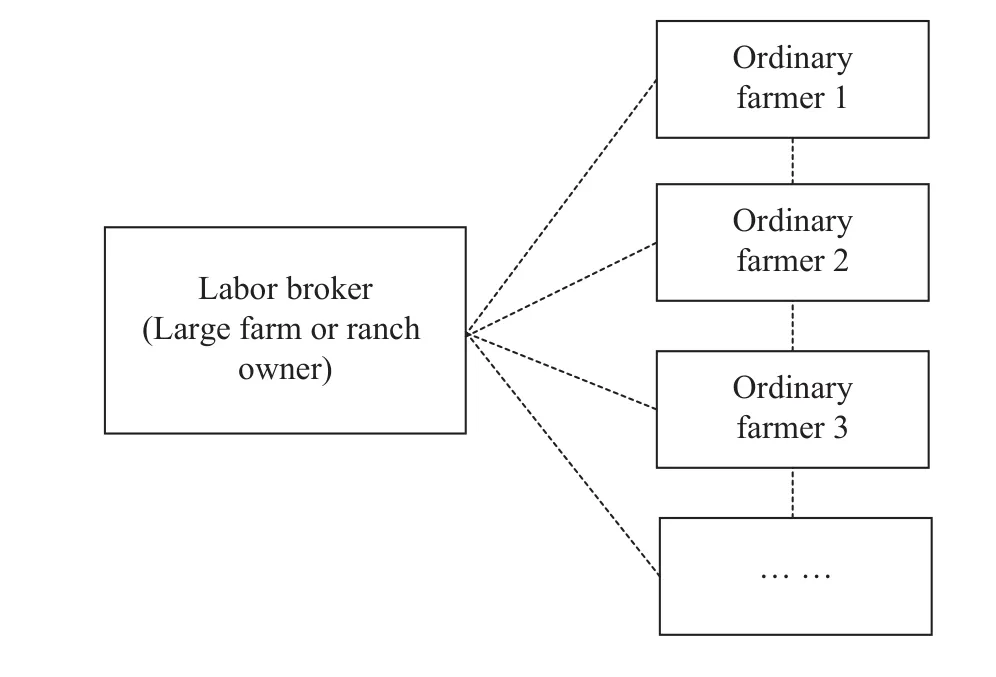
Figure 4 Labor broker's and large farm or ranch owner's social interactions in the Linze Oasis
A cooperative leader's social interactions can be depicted as a united launch model. An agricultural cooperative launched by several leaders shares profits and losses, and employs ordinary farmers as co-producers, as presented in Figure 5.
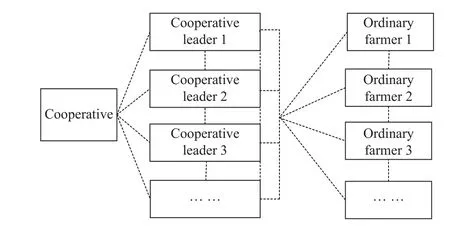
Figure 5 Cooperative leader's social interactions in the Linze Oasis
A village cadre's social interactions follow a circular hierarchical model. An area cadre is responsible for the town government and acts as a guide to the ordinary farmers, as presented in Figure 6.
From our survey data of the Linze Oasis, we found that 98.32% of the ordinary farmers' total annual cash gifts were concentrated in the 800–4,500 Yuan range, and that 87.66% of the individual cash gifts were less than 300 Yuan. All of the village cadres' annual layouts for cash gifts were above 6,500 Yuan,because of the core role these persons play in rural social relationships. Cooperative leaders had bi-directional contacts (with both ordinary farmers and markets), and 93.73% of their annual cash gifts were over 5,500 Yuan, while those of the rest of 6.27% were no less than 4,500 Yuan. As for the labor brokers and large farm or ranch owners, 88.37% of their annual cash gift totals were between 3,000–4,500 Yuan.
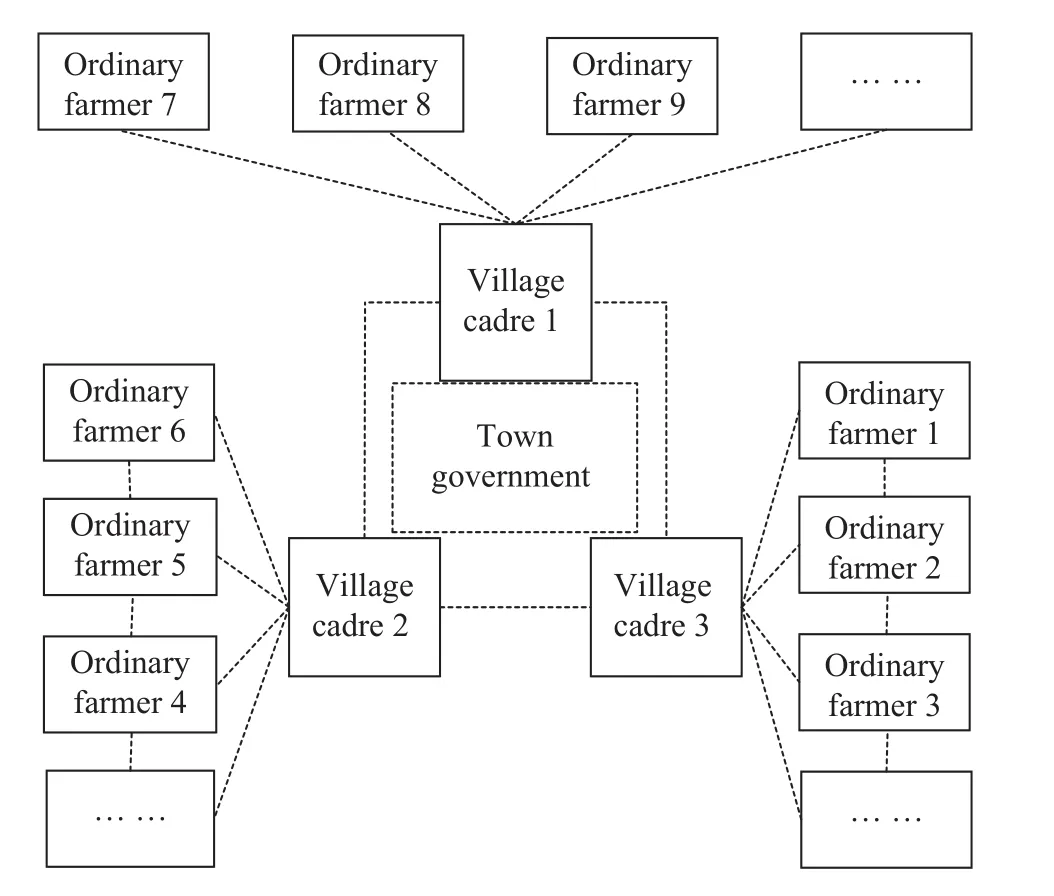
Figure 6 Village cadres' social interactions in the Linze Oasis
The "Engel's coefficient", which refers to the percentage of total expenditures on food, indicates a family's wealth (Wang, 2006; Zhanget al., 2010). Unfortunately we still lack an index to express a single family's level or extent of social relationships. In our survey, we found that higher-income families spent more on cash gifts, but, unlike the "Engel's coefficient", the percentage of total expenditures attributable to these cash gifts could not accurately represent a family's level of social relationships. Originally, we could,however, use the relationship between food expenditures and cash-gift expenditures to determine a family's level or extent of social relations, as follows:

In the rural Linze Oasis, except for ordinary farmers, the average annual food expenditure was 3,322 Yuan in 2014, and the average annual cash-gift expenditure was over 3,000 Yuan, giving a Social Relations Extent Coefficient of about 0.90. It can be concluded that a coefficient value of 0.90 can be the threshold between ordinary farmers and other types of farmers in this area. In the same way, 4,500 Yuan and 6,500 Yuan divided by 3,322 Yuan give social coefficients of about 1.35 and 1.96, respectively. Applying these social coefficients of 0.90/1.35/1.95 to the social interactions presented in Table2, which shows that when the social coefficient is below 0.90, the farmers' social interactions are simple; when the coefficient is between 0.90 and 1.95, the social interactions are relatively numerous; and when it is above 1.95, a farming family is rich in social interactions.Hence, this Social Relations Extent Coefficient formula can indicate a family's social interaction level or extent, in general.

Table 2 Social relations extent coefficient
3.3 Social distribution of water resources
Water resources in rural areas can be roughly divided into two types: water for basic living activities,and water for agricultural production. For a basic rural family unit, the amount of water consumed for basic living activities is essentially the same as families from other areas. Hence, we can exclude this basic water consumption and consider only the social distribution of agricultural-production water in the following analysis.
Since water is a public resource, every farming family should have the same rights to water resources:they use, and pay for what they need. But in reality,access to and usage of water resources vary greatly among farming families, presenting major social inequities. Specifically, control over and use of water resources can be described as follows, for the five categories of farmers: ordinary farmers have the lowest levels, followed by labor brokers. Village cadres and cooperatives have the largest share, leaving the large farm and ranch owners in the mid-range.
In the rural Linze Oasis, the average area of arable land per household was 0.8 hm2in 2014. In fact,ordinary farmers and labor brokers' have less land—an average of about 0.553 hm2; a typical large farm or ranch owner has roughly 2.1 hm2; a single cooperative leader has about 2.753 hm2; and a village cadre has the largest land rights, owning 4.227 hm2(Table 3). The primary direct reason for these discrepancies is past transfers of farmers' land use rights to other owners. But the deeper reasons arise from the population structure, individual abilities and skills,and the effects of social interactions and relationships.

Table 3 Per-family's water consumption ratios and all kinds of farmers' land
Under the existing conditions of climate and traditional planting patterns, the agricultural planting structure determines the amount of water usage, so that water consumption is more or less directly correlated with the amount of arable land occupied. Hence the per-family water consumption ratios are about 1:4:5:8 (0.553:2.100:2.753:4.227), for the categories of ordinary farmers and labor brokers: large farm or ranch owners: cooperative leaders: village cadres.
In reality, though, because of the differing levels of financial capability, operational capacity, and education, there are still large differences among farming family's planting patterns. Ordinary farmers and labor brokers still focus on traditional agriculture, while large farm and ranch owners have gradually expanded their capabilities to include more innovative agricultural techniques and practices (for example, some arable land can be farmed year-round). Cooperative leaders are mainly engaged in the more innovative techniques, and village cadres are focused on largescale mechanized operations. According to our survey, water consumption levels for large farm and ranch owners and cooperative leaders are about 38.76% and 53.25%, respectively—more than those of ordinary farmers. As for village cadres, every household in land reclamation is about 0.669 hm2.Taking all these contingencies into consideration, we recalculated the water consumption ratio based on the different social spheres of the different types of farming families, with modified rations of 1:5:8:9.
4 Discussion and conclusion
In China, poverty can be caused by illness and excessive educational expenditures, but rarely by excessive expenditures on cash gifts. In this study,though, 66% of famers believed that cash gifts have become the second largest spending after basic household expenditures, and yet, surprisingly, few farmers complain about the burden from cash gifts. Small wonder, though, because while illness and education are contingencies most families plan for, cash gift expenditures are unpredictable, and even though a single cash gift may be large, it is an occasional and unexpected expense and not usually included in family budgets. Furthermore, cash gifts are perceived as something freely given—a personal good, to express best wishes to the recipient, whereas expenditures on illness and education—especially higher education—are seen as social obligations and responsibilities.Therefore, although poverty caused by cash-gift expenditures is widespread in rural areas, it is invisible.
The research literature on cash gifts is very limited, not to mention the link between these gifts and social relations. As a unique economic and cultural phenomenon, cash gifts have a special connotation in China, and are an important household expense.Therefore, having developed the Social Relations Extent Coefficient, we applied it to investigate the cashgift phenomenon in other oasis areas in Northwest China, such as Minqin and Akesu. The standard amounts for cash gifts in these areas are also in the 100–500 Yuan range with comparable income, making the Social Relations Extent Coefficient applicable in these areas as well. The coefficient is also a useful tool for measuring the social relations complexity for a single individual or family throughout China, in urban as well as rural areas. In addition to the Social Relations Extent Coefficient, the amount of a single cash gift represents the relationship strength between the recipient and the donor. Hence, if we want to judge a family's social interaction relationships in practice, we need to consider their social relations extent and strength.
Unlike education and health care, cash-gift spending is a good indicator of the social relations complexity of a family, as it reveals the complex social hierarchies and networks in rural areas, especially in Northwest China. This information, in turn, can help government departments to carry out different management and leadership models according to different classifications.
With the rapid economic growth and urbanization process that China has been experiencing for the last several decades, agriculture is no longer the only source of income for many rural families. The new generation of farmers includes educated young people who prefer to seek opportunities for higher income in cities (Zhao, 1999; Qin, 2010). This demographic shift in the rural labor-force structure poses great obstacles to the adoption of better agricultural technologies, especially those requiring relatively intricate models or tools. Hence the exodus of the younger generation has left the remaining farmers confined to the traditional cultivation models, and most of these farmers are too uneducated or apathetic to change this situation, preferring to simply maintain their current status as long as it meets their basic needs. Indeed,78% of ordinary farmers use phrases such as: muddling along, taking things as they are, meeting their own needs, to describe their lives. Such attitudes have also led to differences in the way water resources are distributed among different farmers.
For example, there is a strict water distribution scheme in the Linze Oasis of the Heihe River Basin,and the number of wells and cubic meters of water are fixed for each village (Zhang, 2007; Nianet al.,2014). Nevertheless, agricultural cooperative leaders are increasing water consumption through better agricultural techniques, and village cadres are expanding their agricultural acreage to large-scale cultivation through land reclamation. Since both of these approaches are working well, they should be actively promoted in oasis areas.
It can be expected that the further promotion of better agricultural techniques and large-scale cultivation in this area could help distribute water resources more equitably. On one hand, agricultural technology and large-scale cultivation improve water use efficiency, on the other hand, the practical significance of the large-scale cultivation means an ordinary farmer makes money due to hiring or renting out plots. Thus,if we cannot solve the unfairness, maybe we could look for a rational way for fairness, for example, hiring or renting.
To facilitate these changes, we need to take advantage of labor brokers' ability to transfer the agricultural labor force to areas where it is most needed;this approach can benefit the ordinary farmers as well as brokers. Some of these farmers could work on large farms or ranches, agricultural cooperatives, or large-scale agricultural operations, while others could migrate to towns or urban centers, where they could be trained for other work. Meanwhile, the government could encourage young educated farmers to engage in entrepreneurial enterprises in their hometowns. Such a reorganization of the agricultural work force, as presented in Figure 7, would also safeguard the elderly, as the resulting strong economic system and food security would assure their long-term retirement support, even after leaving the farmland.

Figure 7 A recommended reorganization of the agricultural work force model or path in the Linze Oasis
This study is supported by Social Science Foundation of China (17CGL032), Gansu Provincial key research and development foundation (17YF1FA134). The authors also would like to thank the Linze Inland River Basin Research Station, Key Laboratory of Eco-hydrology of Inland River Basin for providing data used in this study.
Hu XJ, 2014. Households' Response to Water Resources Management in Minqin Oasis. Lanzhou: Lanzhou University.
Kummu M, Ward PJ, de Moel H,et al., 2010. Is physical water scarcity a new phenomenon? Global assessment of water shortage over the last two millennia. Environmental Research Letters, 5(3):034006. DOI: 10.1088/1748-9326/5/3/034006.
Linze County Party Committee of the Communist Party of China,2015. Linze Statistical Yearbook. Linze: Linze Statistical Publishing House.
Nian YY, Li X, Zhou J,et al., 2014. Impact of land use change on water resource allocation in the middle reaches of the Heihe River Basin in northwestern China. Journal of Arid Land, 6(3): 273–286.DOI: 10.1007/s40333-013-0209-4.
Qin H, 2010. Rural-to-urban labor migration, household livelihoods,and the rural environment in Chongqing Municipality, Southwest China. Human Ecology, 38(5): 675–690. DOI: 10.1007/s10745-010-9353-z.
Shi Y, Zhang R, Dong PG,et al., 2017. Effect analysis of water resources efficient utilization and ecological control measures in Shiyang River Basin—a case study of water resources management in Minqin County. Water Resources Planning and Design,(2): 53–55. DOI: 10.3969/j.issn.1672-2469.2017.02.018.
Wang F, 2006. The effect of price index on Engel coefficient of urban and rural households. Commercial Research, 14: 112–115. DOI:10.3969/j.issn.1001-148X.2006.14.033.
Wang JH, 2012. The investigation and consideration of farmers burden in Cash gifts—from the cash gift check of W village in Shulan city, Jilin Province. Journal of Beijing Agricultural Vocation College, 26(5): 50–53.
Wu PL, Tan MH, 2012. Challenges for sustainable urbanization: A case study of water shortage and water environment changes in Shandong, China. Procedia Environmental Sciences, 13: 919–927.DOI: 10.1016/j.proenv.2012.01.085.
Zhai QJ, Hu YH, 2010. Review of gifts and gifts-giving studies in contemporary China: Based on double perspectives of sociology and anthropology. Huazhong Normal University Journal of Postgraduates, 17(4): 16–20.
Zhang JL, 2007. Barriers to water markets in the Heihe River Basin in Northwest China. Agricultural Water Management, 87(1): 32–40.DOI: 10.1016/j.agwat.2006.05.020.
Zhang JL, Zhang FR, Zhang LQ,et al., 2009. Transaction costs in water markets in the Heihe River Basin in Northwest China. International Journal of Water Resources Development, 25(1): 95–105.DOI: 10.1080/07900620802517541.
Zhang Q, Xu CY, Yang T, 2009. Variability of water resource in the Yellow River Basin of past 50 years, China. Water Resources Management, 23(6): 1157–1170. DOI: 10.1007/s11269-008-9320-2.
Zhang ZG, Shao YS, Xu ZX, 2010. Prediction of urban water demand on the basis of Engel's coefficient and Hoffmann index: Case studies in Beijing and Jinan, China. Water Science and Technology,62(2): 410–418. DOI: 10.2166/wst.2010.290.
Zhao YH, 1999. Leaving the countryside: Rural-to-urban migration decisions in China. American Economic Review, 89(2): 281–286.DOI: 10.1257/aer.89.2.281.
 Sciences in Cold and Arid Regions2018年2期
- Sciences in Cold and Arid Regions的其它文章
- Seasonal characteristics of chlorophyll fluorescence kinetics of heteromorphic leaves in Populus Euphratica
- Effects of intercropping on rhizosphere soil microorganisms and root exudates of Lanzhou lily (Lilium davidii var. unicolor)
- Relationship between the haplotype distribution of Artemisia halodendron (Asteraceae) and hydrothermal regions in Horqin Sandy Land, northern China
- A method to obtain soil-moisture estimates over bare agricultural fields in arid areas by using multi-angle RADARSAT-2 data
- Climate change inferred from aeolian sediments in a lake shore environment in the central Tibetan Plateau during recent centuries
- Source and environmental significance of oxalate in Laohugou Glacier No. 12, Qilian Mountains, Western China