共建網絡空間命運共同體
2018-05-14 12:39:12
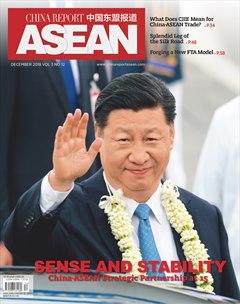
中國東盟報道 2018年12期
2015年12月16日,在中國烏鎮召開的第二屆世界互聯網大會上,習近平發表主旨演講,重點論述了“網絡空間命運共同體”的理念。他說,網絡空間是人類共同的活動空間,網絡空間前途命運應由世界各國共同掌握。實際上,這一理念在習近平2014年致首屆互聯網大會的賀詞中就已經提到。本屆會議期間,他再度提及并進一步提出了共建網絡空間命運共同體的5點主張:第一,加快全球網絡基礎設施建設,促進互聯互通。第二,打造網上文化交流共享平臺,促進交流互鑒。第三,推動網絡經濟創新發展,促進共同繁榮。第四,保障網絡安全,促進有序發展。第五,構建互聯網治理體系,促進公平正義。共建網絡空間命運共同體,這是中國領導人在互聯網領域提出的中國主張,也需要國際社會共同努力才能實現。
Jointly Building a Community with a Shared Future in Cyberspace
In his keynote speech at the Second World Internet Conference (WIC) in Wuzhen, China, on December 16, 2015, Xi Jinping outlined his vision for a community with a shared future in cyberspace, a vision he first brought up in his message to the First WIC in 2014. He said that since cyberspace as a sphere of human activity belongs to humanity, its future should be decided by all countries of the world. In a five-point proposal for building a cyberspace community with a shared future he highlighted the need to (a) accelerate the development of a global Internet infrastructure and promote interconnectivity, (b) create online platforms to facilitate cultural exchanges, (c) promote the development of the Internet economy and encourage innovation, (d) ensure Internet security and orderly development, and (e) build a cyberspace governance system to ensure fairness and justice. The goal of building such a cyberspace community, as proposed by Chinas leadership, can be achieved only through joint efforts by the international community.
維護和發展開放型世界經濟
中國倡導維護和發展開放型世界經濟,主張各國應進一步擴大相互開放,旗幟鮮明地反對各種形式的貿易保護主義,齊心協力做大世界經濟這塊大蛋糕。為此,各國應維護自由、開放、非歧視的多邊貿易體制,不搞排他性貿易標準、規則、體系,避免造成全球市場分割和貿易體系分化。要探討完善全球投資規則,引導全球發展資本合理流動,更加有效地配置發展資源。
Maintaining and Developing an Open World Economy
China is committed to maintaining and developing an open world economy. It encourages all countries to open their doors wider, stand firm against protectionism in all its forms and work in concert to promote the growth of the world economy. To this end, they should work for a free, open and nondiscriminatory multilateral trading system, and resist any standards, rules or policies that condone or encourage exclusionary trade practices. Efforts are called for to avoid undue fragmentation of the global market and trading system. All avenues should be explored to improve global investment rules, and ensure rational flows and more effective allocation of global development resources.
猜你喜歡
中國核電(2021年3期)2021-08-13 08:56:36
新世紀智能(數學備考)(2020年11期)2021-01-04 00:38:16
中國外匯(2019年17期)2019-11-16 09:31:14
家庭影院技術(2018年11期)2019-01-21 02:20:52
華人時刊(2017年21期)2018-01-31 02:24:01
北方交通(2016年12期)2017-01-15 13:52:53
現代企業(2015年1期)2015-02-28 18:43:18
汽車零部件(2014年9期)2014-09-18 09:19:14
新高考·高一物理(2014年1期)2014-09-18 01:26:07
中國火炬(2010年8期)2010-07-25 11:34:30