Ningbo–The Harbor City
2018-05-21 16:39:52
CHINA TODAY 2018年4期
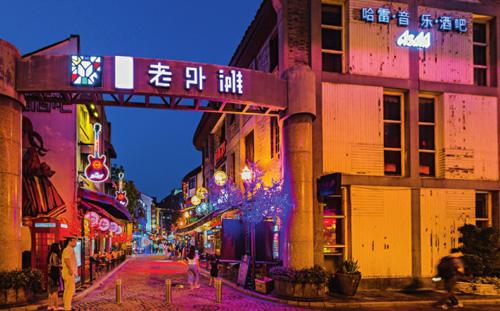
LOCATED in the eastern part of Zhejiang Province, Ningbo, a sub-provincial city, is one of the three major economic centers in Zhejiang.
Enjoying rich cultural heritage and long-standing history, Ningbo owns Neolithic cultural sites and Chinas earliest private library Tianyi Pavilion. Ningbo people have long cherished the tradition of respecting intellectuals and laying emphasis on education. Meanwhile, Ningbo is also the sea port at the southern end of Chinas Grand Canal. The city is not only one of the starting ports of the Maritime Silk Road, but also an important oriental port connecting Ningbo to more than 600 ports in over 100 countries and regions in the world. It is also a famous hometown of many overseas Chinese. Overseas Ningbo confraternity has become an important bridge linking Ningbo with other parts of the world.
Highly Developed Farming Civilization
Located in the middle of the coastline of Chinese mainland and the southern wing of the Yangtze River Delta, Ningbo has aboundant water sources, and the river and lake sediment makes the soil there fertile. In 1973, archeologists discovered four successive overlying cultural layers in Hemudu Town of Ningbo. The earliest date was about 6,000-7,000 years ago. Tens of thousands of cultural relics were unearthed, along with cultivated rice, the earliest crop discovered in China, indicating that there was already a progressive primitive culture in the lower reaches of the Yangtze River between 6,000 and 7,000 years ago. Later, this culture was named Hemudu Culture.
Among the wide range of artifacts, there are original wood machinery for textile, bone whistles and other original instruments, tools made of stone and animal bones, as well as a large number of pottery and primitive architecture.
The architecture in the region uses timber piles as the foundation. Wooden supports are then set up, with paved floors to form a foundation bed above the ground, and then finally building columns, beams, and gable roofs, and surrounding the structure with a reed mat and bark. This kind of overhead building with a long corridor is called stilt style architecture, which adapts to the humid and rainy climate in the south. Today, these buildings can be seen in southwest China and Southeast Asian countries.
A good deal of rice was also found there. After multiple samples were tested, it was identified as a cultivated species of rice by agricultural historians, which corrected the former belief that Chinas rice cultivation was imported from India. In academia, it has been established that the cultivated rice in China originated from its native land, which does not have just one area of origin, broadening the research field on the origins of agriculture.
About 400,000 pieces of pottery were also unearthed there, including 1,221 intact and recovered potteries. The most distinctive style is the early carbon black pottery. Hemudu ancestors intentionally incorporated carbon powder in the clay, mainly to reduce the clay viscosity and improve the yield. There are different types of pottery, according to the use of functions; they can be divided into the categories of cooking, diet, storage, and water container. The unearthed items also include artifacts made of stone, bone, and wood, as well as primitive artworks.
The discovery of the Hemudu Site shows that a highly developed farming civilization system was formed in Ningbo during the Neolithic period. As early as 7,000 years ago, the ancestors of Ningbo changed their living pattern from fishing and hunting to settlement, progressing from savagery to civilization. It can be said that Ningbo is also one of the cradles of the Chinese farming civilization.
Distinctive Marine Culture
Due to traffic inconvenience in ancient times, waterways have become an important means of trade. As the southernmost city of the Grand Canal of China, one of the World Cultural Heritages, Ningbo is also the marine outfall of the canal, the junction between the canal and the Maritime Silk Road.
The Grand Canal of China is the golden waterway of South-to-North food transfer and North-to-South material transfer, which has played a significant role in the economic and cultural development and exchanges between Chinas north and south. At the same time, Ningbo is also an important seaport, and maritime trade has been carried out since the third century BC and accelerated with the development of the oceans. Ningbos commercial trade has made great strides with the prosperity of the Grand Canal and its shipping industry. Large quantities of silk, tea, and porcelain are shipped to East Asia, Southeast Asia, West Asia, and Africa through the canal and the port of Ningbo. In the eighth century, Ningbo, Yangzhou, and Guangzhou were known as Chinas three major foreign trade ports. Ningbo is not only a port city famous for its traffic and trade with other countries in the world, but also an important window for international cultural exchanges.
So far, the city still retains many distinctive marine cultural relics.
The Gulou area in Haishu District is one of the most prosperous commercial areas in the city. There is a greenbelt on its east side – Yongfengku Ruins Park, which is particularly eye-catching in contrast to the surrounding high rises. In the park, one can feel the profound history. There is a recreation of the ruins according to its original proportions, including bridges, walls, wells, and a waterway, along which citizen can ramble. One-meter underground are the buried ruins.
The relics used to be an ancient large-scale warehouse. After the Song, Yuan, and Ming dynasties, large ruins with a clear layout have been completely preserved. A large number of trade ceramics were unearthed here, gathering works from famous kilns in different regions of North and South China in the Song and Yuan dynasties, reflecting the historical truth of the development and prosperity of the Maritime Silk Road at the time.
Ningbos cultural relics also include canoes, wooden paddles, and pottery boat models unearthed in the Hemudu Site, imported articles of the Han Dynasty, ceramics for trade from Shanglinhu ancient kiln site, and coastal defense site at Zhenhai. Various ruins reflect many aspects of the entire society, covering politics and diplomacy, economic and trade, port traffic, and folk customs.
Todays Ningbo Port is already an important part of the Shanghai international shipping hub and has opened shipping routes with more than 600 ports in more than 100 countries and regions in the world.
Vibrant Ningbo Business Group
Unlike the traditional agriculture civilization in Central China that encourages agriculture rather than trade, ocean trade allowed Ningbo people to form a regional culture that promotes agriculture and trade simultaneously. The local East Zhejiang School provided ideological support for the development of the commodity economy in Ningbo.
Without sectarianism, the East Zhejiang School is compatible and innovative. It advocates that academic research should serve the society and has a great influence on Chinese modern and overseas academics (especially Japan and Southeast Asia). Its ideological concepts are in line with the development trend of Ningbos commodity economy and society. They also emphasize personality, individuality, ability, utility, and practical concepts, and are the main characteristics of Zhejiangs humanistic spirit. A developed commodity economy, utilitarian, and pragmatic tradition, coupled with the open ocean trade, has shaped Ningbo into a developed commercial land, and made it the forefront for Chinese businessmen to go global since modern times.
The Ningbo Confraternity is one of the most influential business groups in modern Chinese history. As early as the late Ming Dynasty, Ningbo merchants controlled the industries of traditional Chinese medicine, garment industry, and banking industry in Beijing. Since the modern times, they took the lead to learn the Western modern industrial civilization, and advanced the development of Chinas commerce and industry. Ningbo businessmen established the first Chinese bank with modern significance, the first Chinese-funded shipping company, and the first Chinese-owned machinery factory. Ningbo businessmen are all over the world, many of them world-class business tycoons.
The important reason why the Ningbo Confraternity has endured is that it formed a unique and influential culture in the difficult entrepreneurial process. Based on the Confucian tradition of “integrity and righteousness,” this culture also integrates Ningbos local pioneering and innovative, compatible, and inclusive marine culture. For example, the Ningbo Yue family, who founded Tongrentang pharmacy in 1669, still abides by the ancient code that “although the preparation of the medicine is complicated, no one dares to save the labor; although the medicine is expensive, no one dares to reduce the material.” This self-discipline guarantees no mistakes are made. The time-honored brand has become one of the representatives of the Ningbo Confraternity. The business management takes sincerity as the base and gains profit from righteousness, which has been abided by Ningbo traders for a long time; even todays overseas Ningbo Confraternity look up to it as the standard.