
Dietary effects of A zolla pinnata combined with exogenous digestive enzyme (Digestin?) on growth and nutrients utilization of freshwater prawn, Macrobrachium rosenbergii(de Man 1879)
2018-08-02 02:51:18GODAAshrafSAADAmalHANAFYMohamedSHARAWYZakiELHAROUNEhab
GODA Ashraf , SAAD Amal , HANAFY Mohamed , SHARAWY Zaki , ,EL-HAROUN Ehab
1 Aquaculture Division, National Institute of Oceanography and Fisheries (NIOF), Egypt
2 Institute of Oceanology, Chinese Academy of Sciences, Qingdao 266071, China
3 Division of Aquaculture, College of Agriculture, Food Science and Sustainable Systems, Kentucky State University, Frankfort,KY, USA
Abstract The present study was conducted to evaluate the effect of either individual or combined wheat bran (WB) replacement with Azolla pinnata supplemented with Digestin? in the diet of freshwater prawn,Macrobrachium rosenbergii Postlarvae (PL) on growth performance, nutrient utilization, chemical body composition and survival (%). Experimental diets were a wheat bran-soybean based diet with no Azolla and Digestin TM (control, T 1), and diets containing 17% Azolla supplemented with Digestin TM 0% (T 2), 1% (T 3),2% (T 4) and 3% (T 5). Each experimental diet was allocated into three tanks (6 m 3/tank) fed for 12 wks. Each tank was subdivided into three equal pens by nets (2 m 3) and stoked with 84 PL/m 2. The experimental diets were readily consumed by prawns PLs where both high growth and good feed efficiency were achieved for all diets. The results showed that the diets containing A. pinnata supplemented with Digestin? at the level up to 3% have the higher growth and better nutrient utilization than the control diet. No differences were observed for moisture and protein content among the experimental diets. However, the highest protein content was observed on prawns fed on diets T 1 and T 5 respectively, while the lowest value was recorded for T 4 diet. The results also show that prawn PLs fed the diets contain A. pinnata and supplemented with Digestin TM recorded the highest values of body lipid content compared to the control diet. Feed efficiency and economic conversion rate (ECR) values show that economic performance and the cost-effectiveness of the A. pinnata supplemented with up to 3% Digestin TM recorded the highest net return, and therefore it is recommended for prawn, M. rosenbergii PL’s. These results are clearly indicating that A. pinnata have a good potential for use in prawn diets at reasonable levels than other conventional diets.
Keyword: Azolla meal; enzymes; growth performance; economic analysis; feed efficiency
1 INTRODUCTION
In Egypt, most of the ingredients used in aquafeed industry are exported to meet the markets requirement.In addition, wheat bran (WB) and yellow corn (YC)are the main source of energy and compete with livestock, aquaculture and poultry feeds industry which causes a price increase in the feed ingredients in Egypt (El-Sayed et al., 2015). Therefore, alternative feed ingredients being non-competitive in terms of animal and poultry consumption and locally produced is feasible solution to reduce the cost of formulated diets. Azolla has a great potential in aquaculture due to its ability to cultivate on both fresh water and waste water from agriculture and other domestic sources,Azolla is a potential source of nutrients as protein,minerals, vitamin, beta-carotene and vitamin B12(Cherryl et al., 2014; Noor et al., 2014), whichfortunately, can be used without further processing in Aquafeed industry (Balaji et al., 2009; Kumar et al.,2012; Cherryl et al., 2014). Azolla has an important contribution as a local feedstuff produced in countries such as Egypt where soybean meal (SBM) and other valuable ingredients are limited and very expensive or mostly export. However, little has been accomplished to evaluate the potential of A. pinnata as a feed ingredient for different aquatic species,particularly those species which do not easily accept fresh plants as a feed ingredient without extra processing technology such as crustaceans. Other species can efficiently use and convert A. pinnata into the live weight of carp and Nile tilapia (Gaigher et al.,1984; El-Sayed, 1992; Y?lmaz et al., 2004). It’s also worth to mention that most studies have investigated A. pinnata as a protein source replacing fish meals to decrease the cost (Y?lmaz et al., 2004). Sustainability of Macrobrachium rosenbergii needs an economic feed formulation to be developed and raw ingredients available from local feed mill for optimal growth and cost-effective culture (Aarumugam et al., 2013). In addition, using digestive exogenous enzymes supplementation to fish diets has provided an additional powerful tool to improve growth, optimize digestibility, nutrient absorption, cost effectiveness,minimize the anti-nutritional factors (ANF) effects,effluent pollution and reduce the cost of the diets(Buchanan et al., 1997; Felix and Selvaraj, 2004;Manush et al., 2013). The present study was conducted to assess the effect of using A. pinnata as a complete replacer of WB alone or in combination with Digestin?, in practical feeds on growth, feed efficiency ratio, and body composition of M. rosenbergii Postlarvae in terms of growth performance, nutrient utilizations, body composition and economic efficiency of prawn.
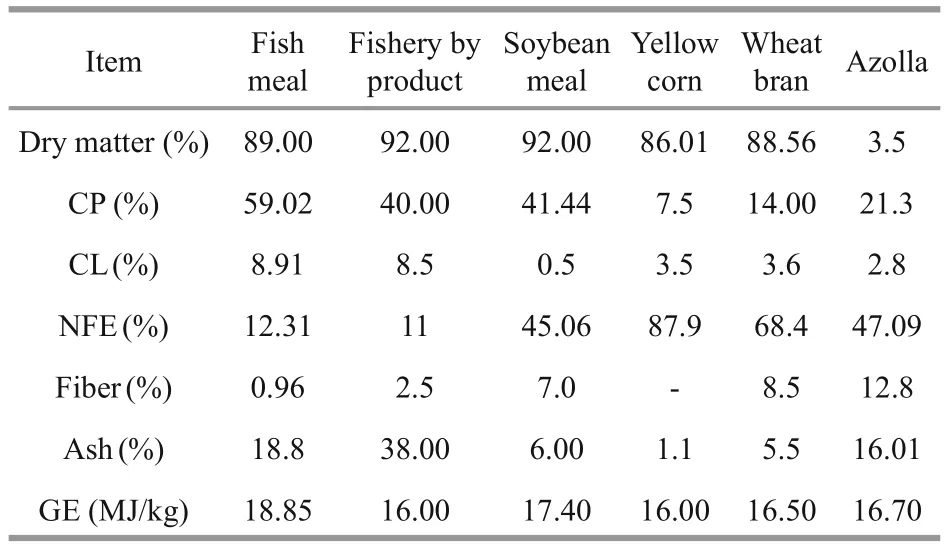
Table 1 Proximate composition of the ingredients used in the experimental diets
2 MATERIAL AND METHOD
2.1 Ingredients and diet formulations
All ingredients, including imported FM, SBM, YC,WB, soybean oil (SBO) and the premix (minerals and vitamins) were purchased from a local commercial company (El-Morshady Company, Cairo, Egypt).Fresh A. pinnata was collected from Darawa Irrigation Branch, (Kalubiya, Egypt) and then sun-dried for 48 h. Digestin? was obtained from (PHARCO Pharmaceuticals-Alexandria, Egypt). Digestin? is a well-balanced combination of digestive enzymes containing mainly protease, amylase, lipase and cellulase. These enzymes act upon food contents of the gastrointestinal tract (GIT) and catalyze their conversion into simpler and easily digestible and absorbable components.The chemical composition of the ingredients is presented in Table 1. Five experimental diets were formulated to be isonitrogenous (32% CP and isocaloric 17 MJ/kg,Table 2). The control diet was not supplemented either with A. pinnata or with DigestinTMand classi fied as control (T1). In (T2) diet, all WB content was replaced by A. pinnata without DigestinTMsupplementation. Diets T3, T4and T5were formulated as T2diet and supplemented with increasing levels of DigestinTM(1%, 2%, and 3%, respectively). All dried ingredients were blended and homogenized to formulate 2 mm pellets using sprout Waldron lab pellet machine (Pellet Mill Co., California, USA).After the pellets dried, a diet has been crushed to a powder-like to be suitable for the PLs. During our 12 wks experiments, prawns PL were fed daily, while the diets were distributed in equal proportions of the total amount for each of the three feeding times(08:00, 12:00 and 17:00). The feeding ration was increased every second week based on prawn body weight which was determined on a fortnightly basis.
2.2 Prawn husbandry and rearing management
The grow-out production of the prawn was implemented at the Experimental fish farm of the National Institute of Oceanography and Fisheries,Kalubiya, Egypt for 12 wks. A hatch out of single female was purchased from the Marriot commercial hatchery, Alexandria, Egypt and then prawns were acclimated to trial conditions for 2 wks in a cement tank (8 m×4 m×1 m) with a daily feed control diet(32%, crude protein). At the end of the acclimation period, PLs (0.2±0.02 g) were then stocked in five cement tanks. Each tank (6 m3) was subdivided into three equal pens using nets (2 m3). Three replicates of each treatment randomly assigned to different pens in different tanks with a stocking density of 84 PL/m2as suggested by FAO (2005). Each pen was supplied with four PVC pipes (30 cm long×16 mm diameter)to diminish the cannibalism behavior, especially during the molting process as proposed by Mariappan and Balasundaram, (2004). However, the mortalities were recorded once a day at 08:00. All pens were water supplied from the nearest agricultural irrigation branch after filtrations. Prawns were held under natural light condition (12 h:12 h, day:night) providing extra aeration using an electric blower with a daily water flow rate of 20.83 L/(min·5 tanks). Water quality parameters were measured and recorded during the experiment according to APHA et al.(1995). Water temperature (°C) was measured daily using a mercury thermometers/pen, dissolved oxygen(mg/L) was measured daily using an oxygen-meter(model: 56-YSI, Yellow Springs, Ohio, USA),whereas pH was daily measured using a pH-meter(Orion, Texas, USA), both ammonia and salinity were measured and recorded twice/wk.

Table 2 Formulation and proximate composition of the experimental test diets (Diet as dry fed basis, %)
2.3 Sampling and chemical analysis
At the beginning of the trial, a pooled sample of fish was collected to serve as an initial carcass sample.At the end of each trial, five fish were sampled from each pen and anaesthetized with t-amyl alcohol and killed with a cephalic blow. The five fish were pooled,autoclaved, ground into a homogeneous slurry, freezedried, reground and stored at -20°C until analyzed.Diet, ingredients and carcass samples were analyzed for dry matter (DM) and ash according to AOAC(1995), crude protein (%N×6.25) by Kjedahl method using a Kjeltech autoanalyzer (Model 1030, Tecator,H?gan?s, Sweden), and total lipids according to the method of Bligh and Dyer (1959). Gross energy (GE)contents of carcass samples were measured using an automated bomb calorimeter (Model 1272, Parr Instruments Inc., Moline, IL). Uneaten food collected from each tank by syphon and dried in an oven at 105°C until constant weight to measure feed efficiency parameters.
2.4 Calculation and statistical analyses
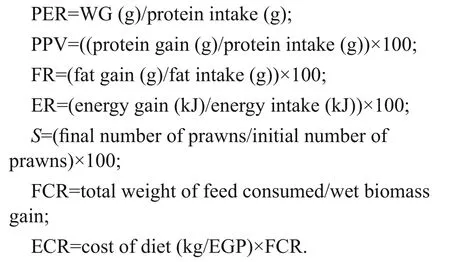
At the end of the trial, weight gains (WG, g),speci fic growth rates (SGR, %/day), feed conversion ratios (FCR), protein efficiency ratios (PER), protein productive values (PPV), fat retentions (FR, g),energy retentions (ER, kJ), survivals (S%) and economic conversion rates (ECR) were estimated as:

where FBW= final body weight; IBW=initial body weight;
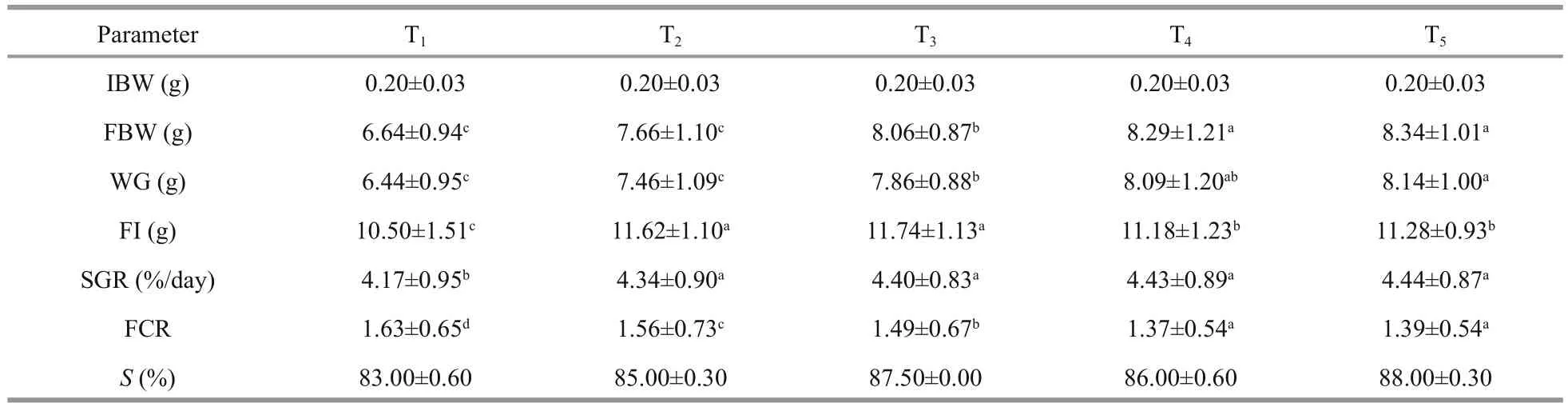
Table 3 Growth performances of freshwater prawn, M. rosenbergii fed different experimental diets for 84 days

Table 4 The nutrient efficiency of freshwater prawn, M. rosenbergii when fed different experimental diets

where ln=natural logarithmic; t=time;
The data were analyzed applying the analysis of variance (one-way ANOVA) using MSTAT-C (1987)4 software package. Duncan (1955) test was used to compare differences between treatments whenever signi ficant F values ( P <0.05) were noticed. Prior to data analysis, all ratios and percentages were arc-sin transformed (Zar, 1984) and were presented untransformed to facilitate comparisons.
3 RESULT
3.1 Water quality
Water quality parameters during the experiment were within those considered to be favorable for growth, and fell under the optimal standards de fined for nutritional evaluations of freshwater prawn PLs according to (Zafar et al., 2015). The mean temperature values were ranged from 28.8 to 28.5±0.8°C, while the mean value of the dissolved oxygen (DO) was expressed as 6.4 to 6.1±1.1 mg/L during the feeding experiment. Meanwhile, the mean value of pH,ammonia, and alkalinity was ranged (7.4 to 7.8±0.5),(0.27±0.1 mg/L) and (189±7.5 mg/L), respectively.
3.2 Prawn performance
Growth performance, nutrient utilization efficiency,and survival of the juvenile of freshwater Prawn, M.rosenbergii fed the diets containing different replacement levels of wheat bran with azolla meal for 12 wks are presented in (Table 3). Survival was high in every dietary treatment, more than 80% ( P ≥0.05).There were no signi ficant differences ( P ≥0.05) in the initial weights of prawn stocked, however, prawn fed on a T5diet recorded highest signi ficant ( P ≤0.05)weight gain, speci fic growth rate, feed intake and feed conversion ratio compared to other tested diets, while prawn fed the control diet (T0) recorded the lowest values of weight gain, speci fic growth rate, feed intake, feed conversion ratio.
3.3 Nutrient utilization
Effects of different diets on nutrient efficiency of prawn are presented in Table 4. In general, prawn fed T1and T5diets recorded the best values ( P ≤0.05) ofprotein productive value, energy retention and protein efficiency ratio compared to other tested diets, while prawn fed T2diet recorded the lowest values ( P ≤0.05)of protein efficiency ratio and energy retention.

Table 5 Chemical composition (whole body) of freshwater prawn, M. rosenbergii fed on different experimental diets

Table 6 Economic analysis* for fresh water prawn, M. rosenbergii fed different experimental diets for 84 days
3.4 Carcass composition
The data of whole body composition of prawn are presented in Table 5. Overall, the highest protein contents were observed on prawns fed on diets T1and T5with 18.55% and 18.36%, respectively, while the lowest value was recorded for T4diet (17.48%). The results show that all prawn PLs fed the diets contain A. pinnata and supplemented with different levels of DigestinTMresulted in higher body lipid content compared to the control diet.
3.5 Economic efficiency
Economic analysis data are presented in (Table 6)and clearly indicated that economic performance and the cost-effectiveness improved for A. pinnata diet supplemented with DigestinTM.
4 DISCUSSION
In general, the increasing prices of aquatic diets, as well as feed ingredients, have been considered as the most important factor limiting pro fitability in prawn and shrimp cultures, while finding a relatively lowcost alternative ingredient has been an ongoing research goal (Forster et al., 2003; Hernández et al.,2008; Sharawy et al., 2016). Lower acceptance and effectiveness of fresh plant as a feed ingredient for aquatic species was the major constraint for using these ingredients in fish diets and these disadvantages could be attributed due to the lack of exogenous enzymes. Although considerable efforts have been made have been done to investigate the effects of exogenous enzymes on aquatic diets (e.g., Dabrowski and Glogowski, 1977a, b; Kolkovski et al., 1993).The current study highlighted the importance of combined exogenous digestive enzymes with A. pinnata on M. rosenbergii PL survival and growth.
Our present work clearly reveals that lower S% in control diet could not be attributed to any pensspeci fic effect occurred during the trial except for the severe mortality started 2 wks before the end of the experiment which might occur due to the increase of cannibalism during molting events. Generally, the molting process of crustaceans can be affected by different external factors, e.g. water temperature and salinity, light intensity as well as the internal factors that are associated with the nutritional status and the hormones (Cheng et al., 2003; Sharawy, 2012).However, inadequately formulated diet has been considered as the major factor raising the mortalities especially during the molting period (Yao et al., 2006;Goda, 2008a, b; Sharawy, 2012). The present findings suggested that Azolla meal could be readily accepted by M. rosenbergii PLs without any adverse effects on growth performance and nutrient utilization. The results showed that M. rosenbergii PLs fed with control diet (T1) exhibited signi ficantly ( P ≤0.05)lower weight gain (WG) and feed intake (FI) when compared to PLs that fed on a T2diet. The lower feed intake (FI) and growth performance values are correlated to the lower diet quality with respect to different aspects, e.g., amino acids balanced and nutrient digestibility (Hepher, 1988; Pavasovic et al.,2006, 2007a, b; Ambani, 2015). Overall, the prawns that fed on diets containing Azolla and supplemented with DigestinTMup to 3% recorded the best weight gain and feed efficiency. However, this better performance of prawn fed the diet containing Azolla meal supplemented with DigestinTMresulted from superior quality of Azolla meal which contains almost all essential amino acids, minerals such as iron,calcium, magnesium, phosphorus, etc. In addition,Azolla meal contains probiotics and biopolymers,which act as a growth promoter as reported by Pillai et al. (2002) and Chaturvedi et al. (2003). Moreover,same patterns have been recorded in the present study for other nutrient utilization indices. Meanwhile, the addition of DigestinTMimproves the feed efficiency by hydrolytic enzymes including amylases and proteases, and vitamins, such as biotin and vitamin B12(Sugita et al., 1991). Another possible explanation for increased growth performance with adding DigestinTMto Azolla meal is the improvement in digestibility, which may in turn explain the better growth and feed efficiency observed with the supplemented diets. Otherwise, the addition of DigestinTMcompound to Azolla meal in fluence digestive processes by enhancing the digestibility and absorption of food and nutrient utilization (Bomba et al., 2002). Therefore, the values of FCR and ECR in the present results are clearly indicating that the feed cost of the diet containing A. pinnata supplemented with up to 3% DigestinTMwas cheaper compared to other tested diets, and therefore it is recommended for prawn, M. rosenbergii PL’s. Thus, adding such enzymes can provide additional powerful tools which enhance the nutritional value of prawn feeds,minimize the effects of ANF, effluent pollution,nutrient retention; reduce both diets costs and excretion of nutrients into the environment (Davis et al., 1998; Felix and Selvaraj, 2004). The data of whole body composition of prawn are presented in Table 5.Overall, the highest protein contents were observed on prawns fed on diets T1and T5with 18.55% and 18.36%, respectively, while the lowest value was recorded for T4diet (17.48%). The results show that all prawn PLs fed the diets contain A. pinnata and supplemented with different levels of DigestinTMresulted in higher body lipid content compared to the control diet. Our results agree with the findings of previous studies (Klinnavee et al., 1990; El-Sayed,1992) who reported that some aquatic plants including Azolla pinnata having a symbiotic relationship with nitrogen fixing cyanobacteria ( Anabaena azollae),Hydrodictyon reticulatum, coontail ( Ceratophyllum demersum) and chuut-nuu ( Eleocharis ochrostachys)can be used as a partial replacement of standard protein for different tilapia species (El-Sayed, 1992).Therefore, Azolla appears to be a potential source of nutrients and has a considerably high feeding value(Hossiny et al., 2008; Anitha et al., 2016). These characteristic make it a suitable and powerful tool to replace expensive, inefficient and limited ingredients as wheat bran in shrimp and prawn diets and create novel ingredient to incorporate in crustacean formulation diets which could be a part to achieve the aquaculture sustainability.
5 CONCLUSION
Under the present condition, enzyme supplements such as amylase, trypsin, and multi-enzyme have positive results, which play very important role in formulating eco-friendly aqua-feeds. More research toward the use of exogenous enzymes as feed supplements or as pre-treatment of foodstuffs is warranted. Based on the cost differential between the two ingredients, there are economic advantages to complete replacement of wheat bran with A. pinnata for dietary of M. rosenbergii PLs, especially since it is essentially a wild plant that provides an easy, practical and cheaper fish feedstuff. Therefore, from an economic perspective, the diet containing A. pinnata,supplemented with Digestin?at the level of either 2%(T4) or 3% (T5) can be considered more cost effective for prawn, M. rosenbergii PLs compared to other experimental diets (Table 6).
6 ACKNOWLEDGEMENT
Sincere thanks to National Institute of Oceanography and Fisheries staff, technician, and scientists for providing their technical facilities and research advises.
7 DATA AVAILABILITY STATMENT
The datasets during and/or analyzed during the current study available from the corresponding author on reasonable request.
登錄APP查看全文
 Journal of Oceanology and Limnology
2018年4期
Journal of Oceanology and Limnology
2018年4期
- Journal of Oceanology and Limnology的其它文章
- Editorial Statement
- Effects of seawater acidi fication on the early development of sea urchin Glyptocidaris crenularis*
- Preliminarily study on the maximum handling size, prey size and species selectivity of growth hormone transgenic and non-transgenic common carp Cyprinus carpio when foraging on gastropods*
- Hydrodynamic characteristics of the double-winged otter board in the deep waters of the Mauritanian Sea*
- De novo transcriptome sequencing reveals candidate genes involved in orange shell coloration of bay scallop Argopecten irradians*
- New record of Japanese snake blenny Xiphasia matsubarai(Perciformes: Blenniidae) from South China Sea*