
By the Book
2018-08-16 20:31:54ByJiJing
Beijing Review 2018年31期
By Ji Jing
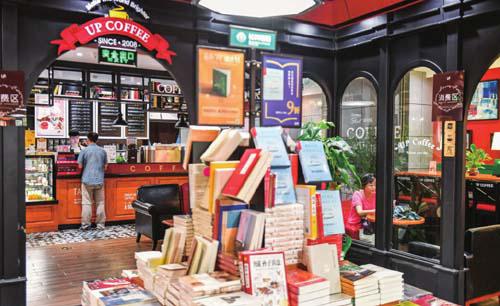
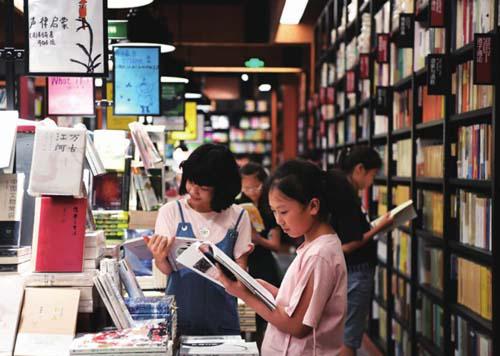
In a corner on the third fl oor of the Capitaland Shopping Mall in Beijings Xizhimen area, not far from the Forbidden City, sits the Chinese bookstore Sisyphe, which opened in February.
The bookstore derives its name from Sisyphus, a cunning king of Ephyra (Corinth) in ancient Greek mythology who was punished for his deceitfulness by being forced to roll a huge boulder up a hill only to have it roll down again as soon as he had placed it on the summit, repeating this laborious task for eternity. According to its website, the bookstore chain is set to become the Sisyphus of the cultural industry, tenaciously promoting reading among the public.
According to the All-China Federation of Industry and Commerce, 10,000 bookstores in China closed down from 2002 to 2012, accounting for nearly one half of the countrys total. The closing of such a large number of brick-and-mortar bookstores was the result of competition from e-commerce websites and e-books, but a new wave of bookstore chains represented by Sisyphe is now thriving.
New approach
The Sisyphe bookstore is unorthodox in the sense that it is not only dedicated to selling books, but combines the functions of bookstore, café and the sale of creative cultural products and stationery.
Founded in 1993 and headquartered in southwest Chinas Chongqing Municipality, Sisyphe was originally a bookstore focused on selling books on the humanities and social sciences. However, in the face of rising rents and competition from online book retailers, Sisyphe sought to transform and upgrade its business in 2009.
Now, Sisyphe has opened nearly 150 stores in shopping malls in over 50 cities in China. Before Sisyphe came along, it was rare to fi nd bookstores in Chinas shopping malls, but the proliferation of the chain in recent years has changed things. For example, covering an area of 750 square meters, the bookstore in the Capitaland Shopping Mall has 600 square me- ters devoted to books and 150 square meters for its café, and the black and red theme creates a comfortable environment for customers.
“Sisyphe takes advantage of the large and stable customer base of shopping malls to sell its books and creative cultural products, and enables customers to enjoy spending time reading and drinking coffee. In turn, bookstores have improved the cultural atmosphere of shopping malls. It is mutually beneficial cooperation,” Hu Lei, General Manager of Sisyphes Cultural Development Center, told Beijing Review.
Sisyphe adapts the books sold in its stores to the shops location and consumer demographic in order to cater to specifi c needs.
So far, the bookstores business model has been profitable. “Book sales account for 78 percent of our revenue. We want to maintain our identity as a bookstore and not to expand the area for selling coffee and creative cultural products. The bookstore occupies 80 percent of our outlets and the café 20 percent,” Hu said.
CITIC Bookstore, a subsidiary of Beijingbased CITIC Press Group, has adopted a similar business model as Sisyphe. Since 2015, it had opened 74 stores in airports and eight in Chinese cities.
On the second floor of the Hopson One Shopping Mall in Beijings Chaoyang District, nestled amid clothing shops, is a CITIC Bookstore. Every weekend adults and children alike fl ock there to read, while lectures, exhibitions and events featuring authors are held regularly to develop local residents interest in reading.
According to statistics from the WinShang Commercial Property Intelligence Center, bookstores accounted for 26 percent of the cultural and creative brands that opened outlets in shopping malls in 2017, the largest share for any of this category of retailer.
The data was based on a study of 60 shopping centers with a floor space greater than 40,000 square meters in second-tier cities. In other words, bookstores have become a cul- tural and creative business model of choice for shopping malls in China.
Favorable policies
E-commerce websites have also be gun eyeing the brick-and-mortar bookstore market. At the end of 2015, online book retailer Dangdang.com announced a plan to open 1,000 bookstores in China in the next three to five years.
Dangdang.coms PARK108 bookstore, which opened in Chongqing in January, covers an area of 2,500 square meters. It combines selling books with creative cultural products, food, flower arrangements, exhibitions and intangible cultural heritage.
The bookstore has nearly 40,000 books covering a wide variety of subjects including literature, history and science, with all books in store sold at the same price as those on Dangdangs website.
Zhang Wei, Assistant President of Dangdang.com, said that the company decided to open brick-and-mortar stores because of the governments supportive policies for physical bookstores, including lower rents and subsidies for interior design.
He also said that brick-and-mortar bookstores have huge potential if they change their previous model of simply selling books into providing diversifi ed experiences for consumers.
Beijings bookstores will likely witness new opportunities for development this year, with annual subsidies for 150 bookstores to increase from 18 million yuan ($2.65 million) to 50 million yuan ($7.37 million), according to a guideline on supporting the development of brick-and-mortar bookstores released by the Beijing Municipal Government on July 17.
Zhang Su, Deputy Director of the Beijing Municipal Bureau of Press, Publication, Radio, Film and Television, said that the local government will support the establishment of bookstores with distinctive characteristics at commercial centers, tourist attractions, transportation hubs, densely populated communities and newly-built residential compounds.
By 2020, each district of Beijing will have a large bookstore which will double as a comprehensive cultural center, while important streets will also have their own iconic bookstores. The move aims to improve public cultural services in Beijing and promote the development of the city into the nations cultural center.
According to the guideline, Beijing will promote the transformation of bookstores from book retailers to providers of cultural services for the public. The city is encouraging the development of 24-hour bookstores and supports the bookstore business merging with the fi lm, creative design and tourism sectors to become spaces for cultural activities and leisure.
In order to resolve bookstores difficulty in finding locations, the guideline encourages making use of unused public spaces to establish stores and supports real estate companies in making exemptions or lower rents for bookstores.
Meanwhile, the government will offer tax reduction and exemption for bookstores and encourage private capital to take part in the development of physical bookstores.
