Embracing a More Open China
2018-11-21 19:39:38BystaffreporterZHOULIN
CHINA TODAY 2018年11期
By staff reporter ZHOU LIN
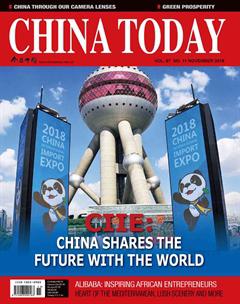
ON the eve of the China International Import Expo (CIIE), multinationals, both the wellknown global corporations and innovative newcomers are ready for this big event. What does a more open China really mean to them?
This year the Chinese government has constantly signaled “further expanding the opening-up of the country,” with a lowering of import tariffs on vehicles, medicines, and daily commodities. At the opening ceremony of Boao Forum for Asia Annual Conference 2018, Chinese President Xi Jinping de- clared that China would take the initiative to expand imports that were competitive and needed by the Chinese people. Three months later, Opinions of the Ministry of Commerce and Other Departments on Expanding Import and Promoting Balanced Development of Foreign Trade was published. Soon in late August, Dr. Liam Fox, Secretary of State for International Trade of the U.K., arrived in Beijing and reached an agreement with the Chinese government to allow the import of U.K. dairy products made with milk from third countries, which was estimated to be worth £240 million over next five years. Another signed agreement included the import of Scotlands high-quality seed potatoes.
Tesla Gigafactory in China
On July 10 Tesla Inc. signed agreements with the Shanghai municipal government to set up its first gigafactory in the Lingang Industrial Area which would have the capacity to produce 500,000 electric cars a year. It will be a wholly-owned subsidiary of Tesla with integrated capacity for research and development, manufacturing, and marketing.
After the signing ceremony, Shanghai Municipal Party Committee Secretary Li Qiang met with Teslas CEO Elon Musk. He told Musk that Teslas new factory would expand the brand to the larger Chinese market and even to the Asia-Pacific markets, owing to Shanghais fast-developed and complete automobile industrial chain. “We are building a more international, law-abiding, and convenient business environment for both foreign and Chinese enterprises with more preferential policies. The first CIIE is to be held in Shanghai this November. It is a signal of Chinas initiative to open wider to the outside world, and will serve as a vital platform for foreign companies to present their new products to Chinese customers,”said Li Qiang.
Teslas agreement came at a time when trade tensions between the U.S. and China rattled the auto industry.
The Trump administration announced an additional 25 percent tariff on Chinese imports worth US$34 billion on July 6. In a quick response, the Chinese State Councils Customs Tarrif Commission said in a statement that a 25 percent tariff would take effect July 6 on US $34 billion of American goods, including automobiles.
It means that the cost for a basic Model S or Model X vehicle in Chinese market will see an increase of about US $22,000-37,000. China is Teslas second largest market in the world. Last year, Teslas sales in China reached up to 20,000 vehicles, with an average cost of RMB 800,000 (US $116,000) for each vehicle. If we levied an additional 25 percent tariff on Tesla, the company would have to pay RMB 4 billion more annually, which would be terrible news for both the manufacturer and its Chinese customers.
Favorable Policies for Foreign Investors
The new gigafactory of Tesla in Shanghai will be wholly owned by Tesla. On June 28, 2018, Special Administrative Measures for the Access of Foreign Investment (Negative List) was released by the Ministry of Commerce and National Development and Reform Commission. It significantly lowered the threshold of market access, and the number of measures on the list saw a reduction from the original 63 to 48. Services, manufacturing, agriculture, and energy resources were the key areas among altogether 22 fields that would open wider. For the automobile industry, the biggest change is that the limits on foreign shareholding ratio and business scope of newenergy vehicle sector were officially eliminated.
The moment Tesla announced to set up a plant in China, The 100 New Measures for a More Open Shanghai was released. It aims to expedite the opening-up of the automobile, aircraft, and shipbuilding sectors, following the states decision to accelerate the removal of other limits on foreign investment in the automobile industry. It was the favorable policy of Chinas further expanding the openingup that finally contributed to Teslas signing of the agreement.
Musk said, “This citys innovative vitality, high efficiency, and talents aggregation attracted me to set the first overseas gigafactory in Shanghai.”
Competitive prices and opening-up policy are alluring, but the decisive factor for Teslas decision was the huge potential in the Chinese market.
China is the worlds largest and fastest-growing market for electric cars. Data of the China Association of Automobile Manufacturers show that Chinese consumers bought about 777,000 new-energy vehicles last year, a 53.3 percent jump from 2016.
In recent years, China and auto manufacturing power Germany have had frequent interactions in the fields of electric cars, new energy vehicles, and automatic driving technology. During Chinese Premier Li Keqiangs July visit to Germany, he and German Chancellor Angela Merkel attended a selfdriving car exhibition. Li pointed out, “The new generation tech revolution and industrial reform have swept the globe, and self-driving vehicles have a promising future. China is now opening wider to the outside world, and will broaden the access for auto makers. We invite German investors to take the initiative to seize the market opportunity and advance our common interests.”
Innovative Tech Upgrades Consumption
The market potential not just attracted agriculture products from the U.K., Tesla from the U.S., and German auto manufacturers. In late September, the American Chamber of Commerce in China launched the 2018 Technology and Innovation Summit in Beijing, at which around 200 business leaders from both multinationals and Chinese companies agreed that technology and innovation had made significant contributions to boosting Chinas development and was a driving force for business. Xu Mingqiang, CTO of Microsoft Greater China, advised that “Chinas digital transformation will bring many opportunities to multinational companies, and we should be looking to partner with Chinese companies.”
Celina Chew, president of Bayer Group Greater China, said that, with the motto “Science for a Better Life,” the 150-plus-year-old German enterprise Bayer focused on improving health for humans, animals, and plants. Facing Chinas digital transformation, Bayer has joined hands with AliHealth to use the new retail concept to meet Chinese consumers demands for quality healthcare products.
“The Chinese government has proposed the Health China 2030 Plan, aiming to provide equal healthcare services to its people. Self-care is a key factor for realizing this goal within the whole medical system,” Celina Chew explained. “Bayer is a promoter of self-care and we will work together with all sectors of society to upgrade consumers education regarding self-care and wellness.”
AliHealth hopes to use big data and the Internet to improve peoples healthcare, while Bayer believes in the concept of self-care in the future. The core of their collaboration is to bring Bayers healthcare expertise to consumers everywhere, providing 1.4 billion Chinese people with equal, inclusive, and easily available medical health services through AliHealths big data.
The economy has moved from the high-speed growth stage to the high-quality development period in China. Consumption becomes a major driving force for economic growth; meanwhile, a robust demand exists in changing the present economic structure from a pursuit of quantity to quality, from tangible commodities to intangible services. Taking the initiative to expand imports that are competitive and needed by the Chinese people is sure to alleviate the supply shortage of high-quality products and to satisfy the publics demand for upgraded consumption.