
650 Apartments Ljubljana, Slovenia
2019-05-07 08:35:46斯諾文尼亞盧布爾雅那
世界建筑導報 2019年2期
關鍵詞:設計
斯諾文尼亞盧布爾雅那
項目情況:設計2003年,開工2004年,竣工2006年
項目計劃:公寓、停車、商業
建設單位:Gradis G Group d.d.
建筑面積:54 700平方米,住房47 400平方米,地下停車42 000 平方米,商業區400平方米
建設成本:3 675萬歐元
攝影:Tomaz Gregoric
Status: project 2003, construction start 2004, completion 2006
Program: apartments, parking, commercial
Client: Gradis G Group d.d.
Area: 54 700 m2, housing 47 400 m2, underground parking 42 000 m2,
commercial areas 400 m2
Cost: 36,750,000 €
Photo: Tomaz Gregoric
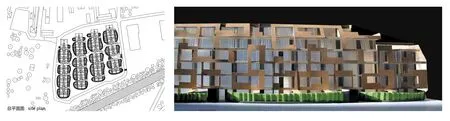
作為一項僅限受邀參與的開發四個長125米至140米的公寓樓比賽的優勝項目,客戶選擇了在預先確定的城市布局上提供更有市場空間的經濟方案。制定計劃和解決建筑工程的預定時間非常緊迫:在不到18個月的時間里,一個650套公寓項目意味著每天要建造一套公寓。預算也非常有限:目的是建造低成本公寓,最終生產成本約為500歐元/平方米。浴室、窗戶和立面面板設計為預制單元,以簡化規劃和施工。每棟建筑被劃分為四個相同的模塊,每個模塊都有自己的垂直通信核心,每個模塊包含了所有類型的公寓。
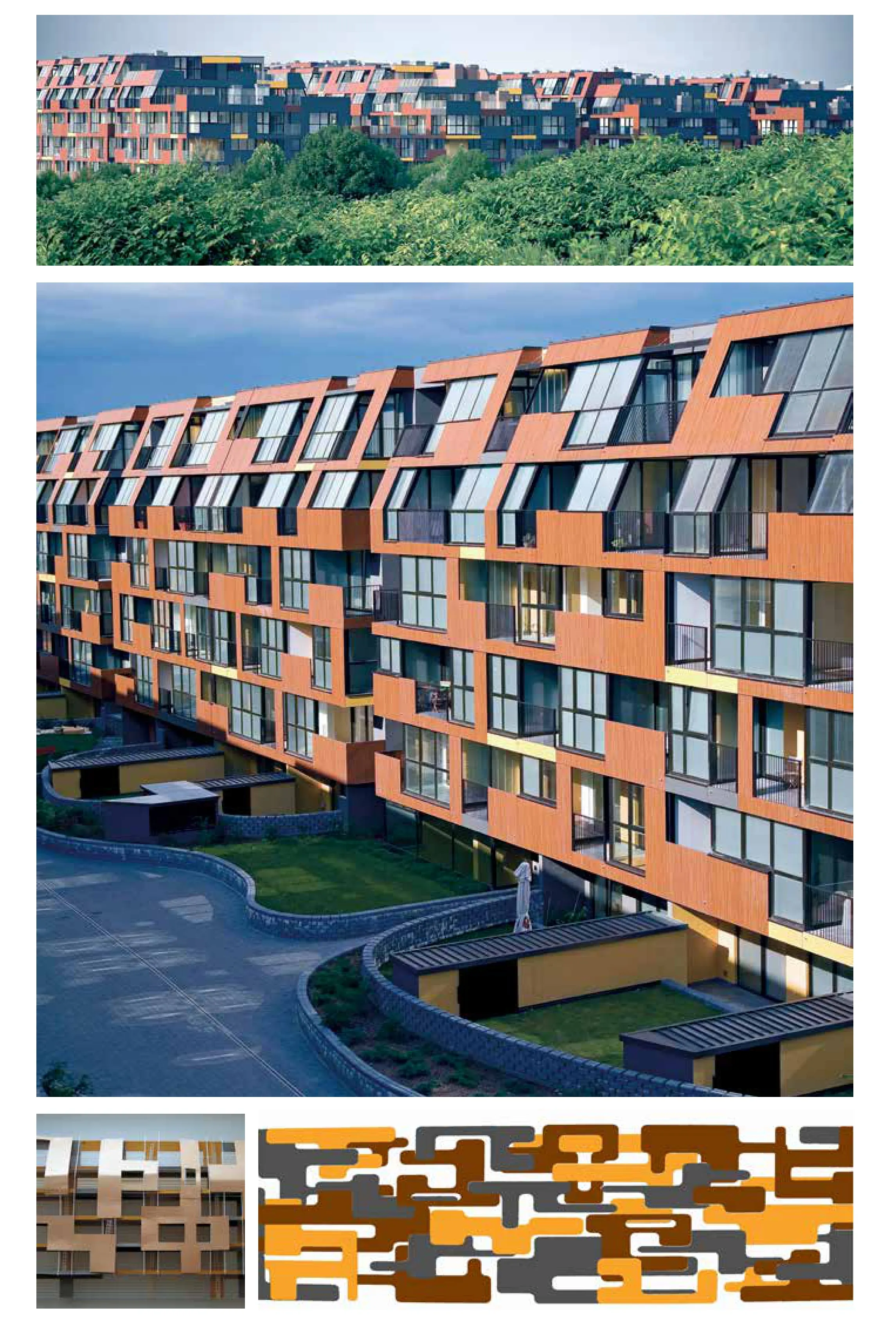
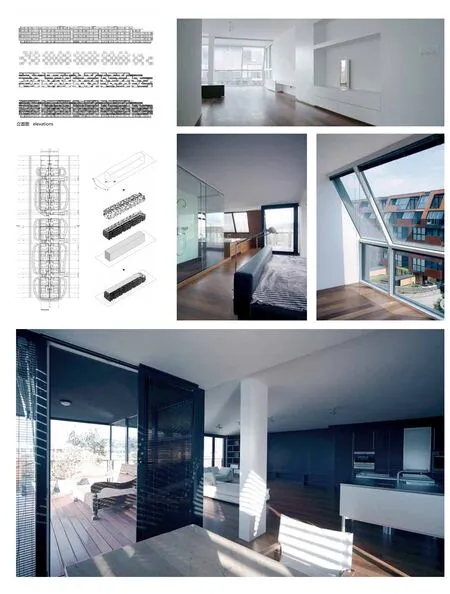
每個單元有42間公寓,從30平方米的小型一室公寓到四層相同的60平方米1.5間臥室的公寓,以及頂部兩層的85至105平方米的較大復式公寓。該模塊重復四次,在建筑物的末端略有變化。立面分為兩層設計,內部立面和室外空間由玻璃涼廊、陽臺和露臺等物品組成。第二層表面由預制木板、玻璃和金屬欄桿構成。每套公寓至少有一個陽臺和連接室內外空間的涼廊。與模塊一樣,立面層也重復了四次,融入到重復的不同元素的幾何形狀中。場地下方有兩層停車場。通過使用柔和彎曲的軌道和完全有機的特征,景觀與幾何立面形成對比。它打破了整個建筑群的視線,創造了公共和私人空間之間的差異。
As a winning entry on invitation-only competition for developing four apartment blocks from 125 to 140 meters in length, the client chose the proposal for the economy offered with more marketable floor space on the predefined urban set-up. The scheduled time for preparing plans and resolving the building work was very tight: a 650 apartment project in less than eighteen months meant literally to build one apartment a day. The budget was also extremely limited: the aim was to build low-cost apartments and to bring the final production cost in at around 500 €/m2. Bathrooms, windows and facade panels were designed as prefabricated units to simplify both planning and construction. Each building is divided into four identical modules, each with its own vertical communications core and each module contains all types of apartments from the brief.
There are 42 apartments in each module, varying from small 30 m2 studios to 60m2 1.5-bedroom apartments on four identical floors, and larger duplex apartments from 85 to 105 m2 on the top two floors. The module is repeated four times with slight variations at the far ends of the building. The facade is designed in two layers,the inner facade and outdoor space being formed by items such as glazed loggias, balconies and terraces.A second skin is constructed with precast wooden panels, glass and metal rails. Each apartment owns at least one balcony and loggia connecting the outdoor and indoor space. Like the modules, the facade layer is also repeated four times, but given the geometry of the different elements of the repetition, it passes virtually unnoticed. There are two parking levels beneath the site. The landscape provides a contrast to the geometrical facade through the use of gently curving rails and completely organic features. It breaks up the sight lines through the complex, creating a difference between public and private space.
猜你喜歡
河北畫報(2020年8期)2020-10-27 02:54:06
現代裝飾(2020年7期)2020-07-27 01:27:42
流行色(2020年1期)2020-04-28 11:16:38
電子制作(2019年19期)2019-11-23 08:41:36
電子制作(2019年15期)2019-08-27 01:11:50
電子制作(2019年7期)2019-04-25 13:18:16
藝術啟蒙(2018年7期)2018-08-23 09:14:18
海峽姐妹(2017年7期)2017-07-31 19:08:17
Coco薇(2017年5期)2017-06-05 08:53:16
商周刊(2017年26期)2017-04-25 08:13:04
