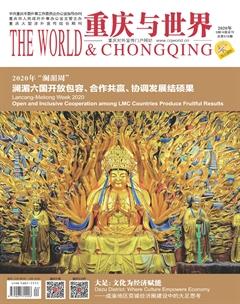
慶祝瀾湄合作機制四周年暨2020年“瀾湄周”瀾湄國家開放包容、合作共贏、協調發展結碩果
2020-05-25 02:28:46楊艷
重慶與世界 2020年4期
楊艷
瀾湄合作歷程
History of Lancang-Mekong Cooperation
2012年,泰國提出瀾滄江-湄公河次區域可持續發展倡議,中方給予積極回應。
2014年11月,第17次中國-東盟領導人會議上,建立“瀾滄江-湄公河對話合作機制”被首次提出,受到湄公河五國熱烈響應。
2016年3月23日,瀾湄合作首次領導人會議在海南三亞成功舉行,會議以“共飲一江水,命運緊相連”為主題,發表了《瀾滄江-湄公河合作首次領導人會議三亞宣言—打造面向和平與繁榮的瀾湄國家命運共同體》,宣告瀾湄合作機制正式啟動。
2018年1月10日,瀾湄合作第二次領導人會議在柬埔寨金邊舉行,六國領導人一致同意將每年3月23日首次領導人會議召開的那一周確定為“瀾湄周”。
2020年1月16日,瀾湄合作第十次外交聯合工作組會在重慶舉行,柬埔寨、緬甸、泰國、越南工作組長參加。會議回顧了2018年12月第四次外長會以來瀾湄合作進展,討論了未來合作方向。
2020年2月20日,瀾湄合作第五次外長會在老撾萬象舉行。會議通過了《瀾湄合作第五次外長會聯合新聞公報》。六國外長明確表示,鼓勵“陸海新通道”建設與瀾湄流域經濟發展帶對接,連接中國中西部大市場與充滿生機的東盟市場,增強經濟韌性,促進產業融合,確保供應鏈效率,推動瀾湄地區高質量和可持續發展。
2020年3月23日,第三個“瀾湄周”如期而至。轉眼間,瀾湄合作已經走過四個春華秋實。這個因水而生、因水而興的合作機制在瀾湄各國辛勤灌溉下,不斷茁壯成長、開花結果,從快速拓展期進入了全面發展期。
瀾滄江-湄公河合作Lancang-Mekong Cooperation(簡稱:瀾湄合作LMC)是中國與湄公河五國—緬甸、老撾、泰國、柬埔寨、越南,共同發起和建設的新型次區域合作平臺,旨在深化六國睦鄰友好合作,促進次區域經濟社會發展,縮小地區國家發展差距,助力東盟一體化建設和地區一體化進程,為推進南南合作、落實聯合國2030年可持續發展議程作出新貢獻。
瀾湄流域是亞洲乃至全世界最具發展潛力的地區之一。瀾滄江和湄公河一水二名,是一條重要跨國河流。該河上游發源于中國青藏高原,源頭在中國青海玉樹境內,在我國境內稱為瀾滄江,經云南出境后被下游國家稱作湄公河,依次流經緬甸、老撾、泰國、柬埔寨、越南,全長4880公里,流域面積79.5萬平方公里,瀾湄六國山水相連,人文相通,傳統睦鄰友好深厚,安全與發展利益緊密攸關。
瀾湄六國共同為瀾湄合作機制創建的“3+5合作框架”,通過合作概念文件,確定政治安全、經濟和可持續發展、社會人文三大支柱,以及互聯互通、產能、跨境經濟、水資源、農業和減貧五個優先合作方向,實施了許多惠及民生的項目,為全面長期合作奠定了堅實基礎。
4年來,瀾湄合作已發展成為湄公河次區域最具活力和潛力的合作機制之一,形成了“開放包容、合作共贏、協調發展”的瀾湄理念,打造了“領導人引領、全方位覆蓋、各部門參與”的瀾湄格局,培育了“發展為先、務實高效、項目為本”的瀾湄模式,弘揚了“平等相待、真誠互助、親如一家”的瀾湄文化。
On March 23, 2020, the third Lancang-Mekong Week was launched. In what seemed to be just a blink of an eye, Lancang-Mekong Cooperation has already been initiated for four years. Thanks to the efforts made by Lancang-Mekong countries, the cooperation mechanism, which was initiated because of the river and then thrives on river, continues to thrive and bear fruits. It has now entered a stage of all-round development from the stage of rapid growth.
Lancang-Mekong Cooperation (LMC) is a new sub-regional cooperation platform jointly initiated and developed by China and five countries along Mekong River including Myanmar, Laos, Thailand, Cambodia and Vietnam. LMC aims at deepening the good-neighborly and friendly cooperation among the six countries, bolstering the economic and social development of the sub-regional countries, narrowing the development gap among regional countries and supporting ASEAN community building as well as advancing South-South cooperation and promoting the implementation of the UN 2030 Agenda for Sustainable Development .
The Lancang-Mekong area is one of the regions with the greatest development potential in Asia and beyond. Lancang and Mekong differ in names, but they refer to the same river—an important river running across countries. Originating from Chinas Qinghai-Tibet Plateau, the river has its source in Yushu of Qinghai Province. It is called Lancang River in China, while in its downstream after flowing out of Yunnan Province, it is called the Mekong River, running across Myanmar, Laos, Thailand, Cambodia, and Vietnam, measuring 4,880 kilometers in length and covering an area of 795,000 square kilometers. Linked by mountains and rivers, the six LMC countries feature cultural similarities, enjoy profound traditional good neighborliness and friendship, and share closely inter-connected security and development interests.
LMC has established a "3+5 cooperation framework" and adopted the concept paper for cooperation. LMC has identified the three cooperation pillars of political and security issues, economic and sustainable development, and social, cultural and people-to-people exchanges as well as the five key priority areas, namely, connectivity, production capacity, cross-border economic cooperation, water resources, agriculture and poverty reduction, and implemented many projects beneficial to the people, which have laid a solid foundation for all-round and long-term cooperation among LMC countries.
Over the past four years, the Lancang-Mekong Cooperation has developed into one of the most dynamic and promising cooperation mechanisms in the Mekong sub-region. It is featured by the concept of openness and inclusiveness, win-win cooperation and coordinated development, by the pattern of the leaders' guidance, all-round cooperation and broad participation, by the mode of high efficiency and focus on concrete projects, and by the culture of equality, sincerity, mutual assistance, and affinity.
猜你喜歡
中國-東盟博覽(政經版)(2022年2期)2022-03-14 22:12:32
今日農業(2021年12期)2021-11-28 15:49:26
中國核電(2021年3期)2021-08-13 08:56:36
少兒美術(快樂歷史地理)(2019年10期)2019-04-20 07:15:50
文苑(2018年21期)2018-11-09 01:23:06
華人時刊(2017年21期)2018-01-31 02:24:01
北方交通(2016年12期)2017-01-15 13:52:53
中國衛生(2015年9期)2015-11-10 03:11:12
中國衛生(2014年3期)2014-11-12 13:18:12
汽車零部件(2014年9期)2014-09-18 09:19:14