白云國際機場擴建工程二號航站樓,廣州,中國
2020-07-14 12:16:40QianFang
世界建筑 2020年6期
關鍵詞:設計
1
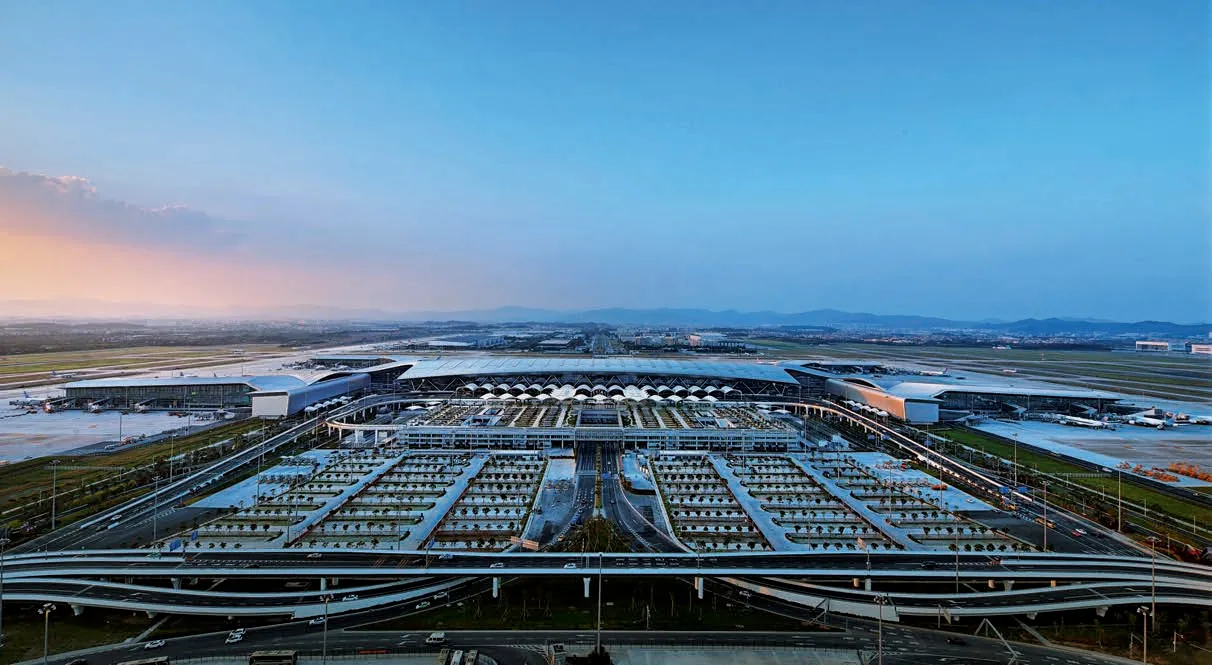
1 夕陽余暉中的二號航站樓及交通中心/T2 and transportation centre in the sunset
廣州白云國際機場擴建工程二號航站樓及配套設施由二號航站樓、交通中心及停車樓、市政道路、高架橋及隧道等組成。二號航站樓設計年旅客吞吐量4500 萬人次,本期總機位78 個,其中近機位65 個。
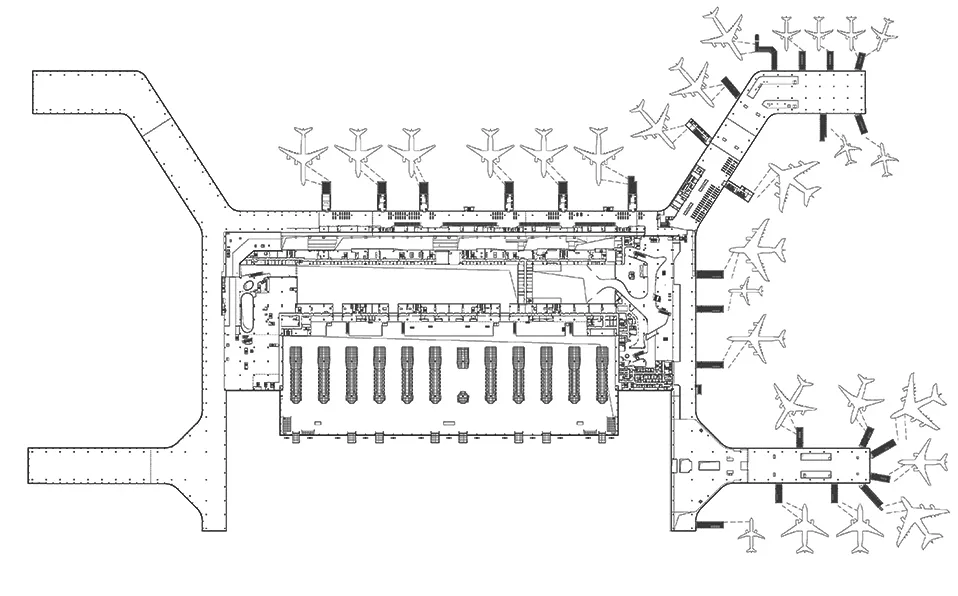
采用北站坪概念的“指廊式+前列式”構型,北面的進場路下沉穿過機坪及航站樓與南面路網連接,機坪在東、西及北三面連通,便于飛機調度,增加近機位,特別是與主樓路程最短的大型近機位,縮短了旅客平均步行距離。
“云”概念元素,成為二號航站樓建筑造型和空間的核心元素。塑造出具有原創性的二號航站樓建筑與空間形象,為到訪的旅客帶來了個性化并具有親和力的獨特感受。
作為一個大型的復合樞紐機場航站樓,擁有各種類型的旅客流程,各種流程或交叉或聯系或結合又形成新流程,錯綜復雜。采取了國內混流、國際分流、設置混合機位的策略來搭建航站樓的內部組織框架和樓層。
陸側交通一體化,實現城軌、地鐵、大巴、出租車等各種交通方式無縫連接,平層解決主要換乘需求,通過垂直交通到地鐵、城軌及停車樓,整體縮短旅客的步距。采用立體交通組織到發及過境車輛,實現完全人車分流。
作為一個全天候開放的微型城市,航站樓是融合旅客流程的非典型商業綜合體。嶺南花園,讓旅客在現代化的航站樓內可以感受到傳統園林的魅力。
保持空間彈性及發展潛力,為提高機位的使用效率,在流線最便捷、流程最短的前列式機位設置國內/國際可切換的混合機位;國際國內并置的安檢廳,可對安檢通道進行切換,解決特殊高峰時段(如春節)流量瓶頸問題;國際國內并置的行李大廳,適應國際國內不同的增長需求。
二號航站樓是一座具有獨特標志性,結合現代功能、融入傳統文化、地域特色、自然景觀,創新先進的超大型樞紐機場航站樓,是目前中國運營規模最大的航站樓之一。其功能流程完善、系統設備眾多、技術材料新穎、投資規模宏大,是多學科融合與技術創新的建筑典型。二號航站樓以旅客體驗為導向、充分滿足旅客需求的國際航空樞紐為目標進行設計,在規劃構型、流程布局、空間造型、綠色節能、商業設施、地域特色、技術設計、智慧機場等方面進行了創新設計,并應用了大量新技術實現旅客智能化出行,全面提升了旅客出行體驗及機場服務水平。
項目建成投產后獲得了社會各界好評,被全球民航運輸研究認證權威機構SKYTRAX 評為“全球五星航站樓”,其綠色節能設計,也達到了濕熱地區首個國家綠色建筑評價三星級標準,成為中國領先、國際一流的大灣區門戶機場航站樓。
項目信息/Credits and Data
地點/Location: 廣州新白云機場航站區/Guangzhou New Baiyun Airport Terminal Area
業主/Client: 廣東省機場管理集團有限公司工程建設指揮部/Engineering Construction Headquarters of Guangdong Airport Management Group Co., Ltd.
設計團隊/Design Team:
主要建筑師/Primary Architects: 陳雄,潘勇,周昶,賴文輝,郭其軼,易田,鐘偉華/CHEN Xiong, PAN Yong, ZHOU Chang, LAI Wenhui, GUO Qiyi, YI Tian, ZHONG Weihua
其他項目參與人員/Other Project Participants: 鄧章豪,楊坤,吳冠宇,溫云養,羅菲,許堯強,戴志輝,倪俍,董軒,金少雄,黎智立,黎運武(建筑);陳星,區彤,李楨章,李愷平等(結構);陳建飚,鐘世權,廖堅衛,陳小輝,符培勇,梁景暉,黎潔等(機電);陳偉等(市政)/DENG Zhanghao, YANG Kun, WU Guanyu, WEN Yunyang, LUO Fei, XU Yaoqiang, DAI Zhihui, NI Liang, DONG Xuan, JIN Shaoxiong, LI Zhili, LI Yunwu (Architecture); CHEN Xing, OU Tong, LI Zhenzhang, LI Kaiping, et al. (Structure); CHEN Jianbiao, ZHONG Shiquan, LIAO Jianwei, CHEN Xiaohui, FU Peiyong, LIANG Jinghui, LI Jie, et al. (Electromechanical Engineering); CHEN Wei, et al. (Municipal Engineering)
顧問機構/Consultants: Molen Associates Limited,Landrum & Brown, Inc.,北京光景照明設計有限公司,上海賽馳標識設計工程有限公司/Molen Associates Limited, Landrum & Brown, Inc., Light & View Lighting Design Co., Ltd., Shanghai Signage Design Co., Ltd.
基地面積/Area: 二號航站樓285,000m2,交通中心及停車樓49,600m2/T2 285,000m2, Transportation centre and parking building 49,600m2
建筑面積/Floor Area: 658,700m2(二號航站樓),208,400m2(交通中心及停車樓)/658,700m2(T2), 208,400m2(Transportation centre and parking building)
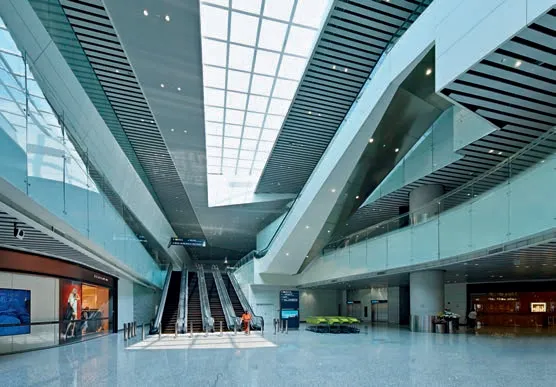
結構形式/Structure Style: 混凝土大跨度鋼結構(二號航站樓),鋼筋混凝土結構(交通中心及停車樓)/Concrete large-span steel structure (T2), reinforced concrete structure (Traffic Centre and Parking Building)
工程造價/Cost: 108億元/10.8B CNY
設計時間/Design Period: 2005-2014
竣工時間/Completion Time: 2018.02
攝影/Photos: 潘勇/PAN Yong
2
3
4
5
6
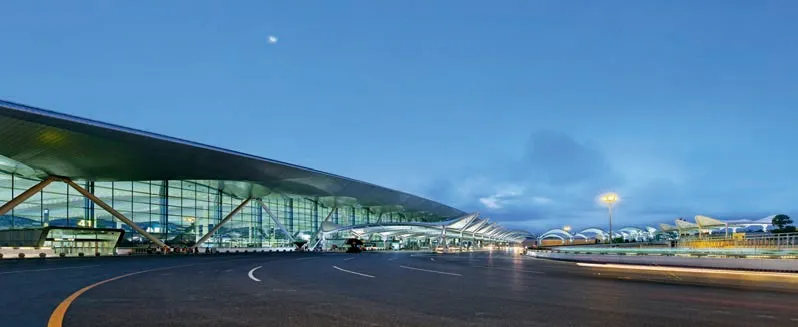
2 華燈初上的出發車道邊/The starting lane at nightfall
3 西立面外遮陽電動遮陽百葉/External sunshade electric sunshade shutter of west fa?ade
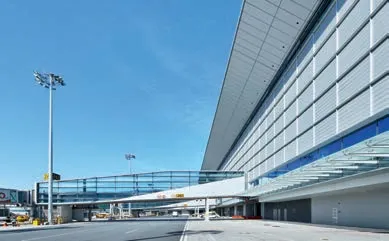
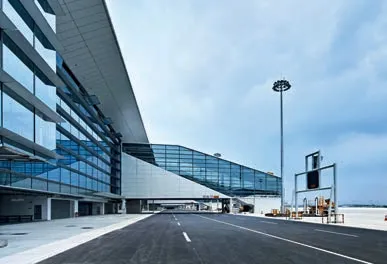
4 功能與形體結合的登機橋/Boarding bridge combining function and form
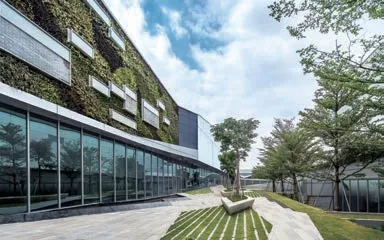
5 綠意盎然的嶺南花園/Green Lingnan garden
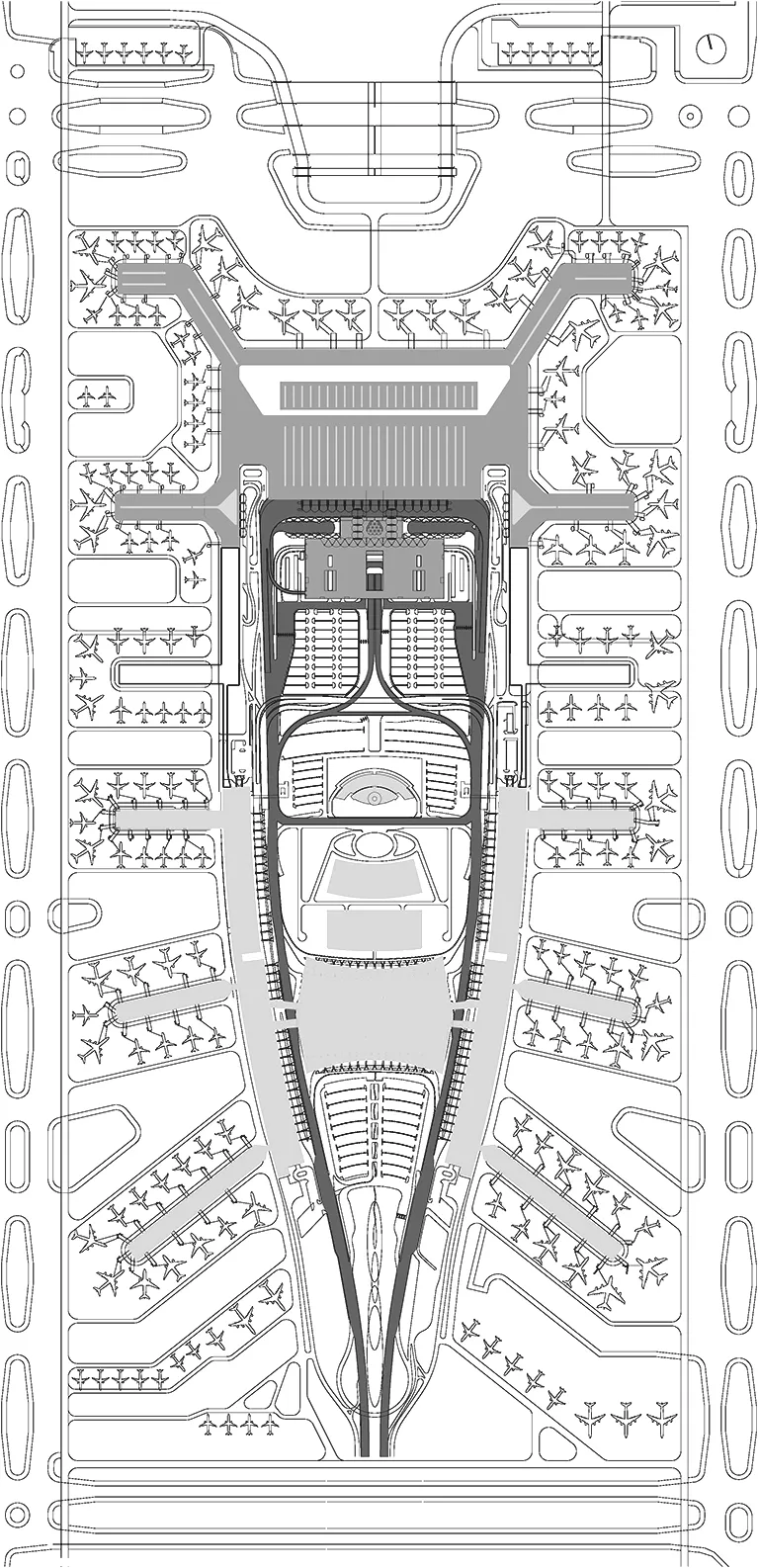
6 總平面/Site plan
Guangzhou Baiyun International Airport Extension Project, including Terminal 2 and the ancillary facilities, is composed of the Terminal 2 building, a transportation centre and parking building, the municipal road, the overpass and tunnel, etc. The designed yearly passenger throughput of Terminal 2 is about 45 million person/time, the total number of gate positions for the current construction phase is 78, in which 65 are contact gates.
The design applies the concept of northern parking apron that is in a structure of "airside concourse + front row". The entrance road on the north sinks down and goes through the apron and the terminal building, before being connected with the road network on the south. The apron is connected on the eastern, western, and northern sides, which is convenient for flight dispatching. In addition, the number of contact gates is increased, especially large ones with the shortest distance to the main building, as a result, the average walking distance for passengers is cut down.
The concept of "cloud" has been the central element in the architectural and spatial design of Terminal 2. The innovative architecture and spatial image of Terminal 2 bring about unique spatial experiences to the passengers, who would feel refreshed and amiable here.
As a large-scale hub airport terminal, various passenger flows cross or connect with each other or merge into new flows, which is quite complicated. In view of the situation, the design adopts the strategy of mixed domestic flows, separated abroad flow, and setting compound flight positions to establish the internal framework and floor structure of the terminal building.
The integration of on-land transports is realised in the design, various transport means including city rail, subway, bus, and taxi are seamlessly connected with each other, transport means transfer can be realised at the same floor, and the walking distance between different transport means is shortened. A complete separation between people and vehicles is realised through an underneath pass. Passengers arrived can directly take a taxi outside the gate, or go to the long-distance and urban bus stations, or the parking building for private cars, and they can also go to subway stations, the city rail station and the other floors of the parking building through vertical transport means.
As a micro-city that opens 24 hours, the terminal building is a non-typical commercial complex that is combined with passengers various flows. The Lingnan Garden provides an opportunity for passengers to appreciate the charm of the traditional Chinese garden in a modern terminal building.
In order to maintain the spatial resilience and development potential and to promote occupancy efficiency of flight positions, the domestic/abroad switchable compound gates are set at the front row positions where the flow line is the most convenient and the flow is the shortest; at the domestic/abroad security inspection hall, the inspection channels can be switched between domestic and abroad to address the problem of flow bottleneck during special peak times (like the spring festival); and at the domestic/abroad luggage claim hall, measures will also be adopted to match increased demand of passengers from domestic or abroad.
Terminal 2 is a mega-scale hub airport terminal building with unique characteristics, modern functions, regional features, natural landscape, and innovative and advanced technologies. It is one of China's airports with the largest operational scale at present. Equipped with thorough functional procedures, sophisticated systems and equipment, innovative materials and technologies, and giant investment scale, Terminal 2 can be regarded as an architectural classic that integrates crossdisciplinary technical innovations. The design is oriented towards the passengers' experience and aims at meeting the demand of passengers as an international airline hub. To realise the goal, innovations are made in terms of planning and structure building, flow layout, space shape, green and energy-saving, commercial facilities, regional characteristics, technological design, intelligent airport, etc. What's more, a large amount of new technologies are applied to realise intelligent traveling, which promotes the travel experience of passengers and the airport service level.
After the project was completed and put into use, it has gained wide recognition, including being appraised as the "Global Five Star Terminal" by SKYTRAX, an authoritative institution in studying and assessing global civil air transportation. Now Terminal 2 has become a gate airport terminal in the Guangdong-Hong Kong-Macao Greater Bay Area that is advanced in China and first-class in the world. (Translated by Qian Fang)
7
8
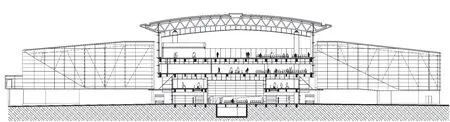
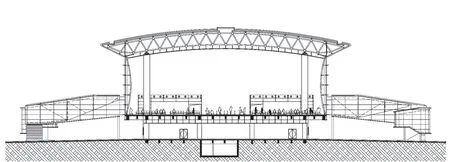
7.8 橫剖面/Cross sections


9
10
11

12
14

13
15
9 整體南北向剖面/Overall north-south section
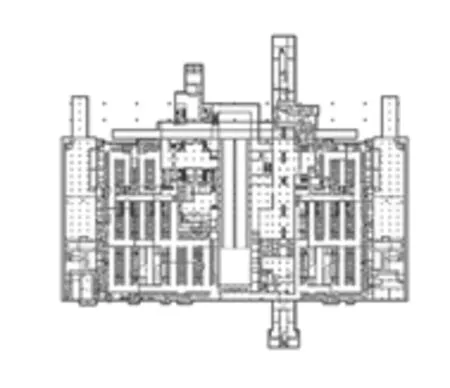
10 交通中心地下二層平面/Second underground floor plan of the traffic centre
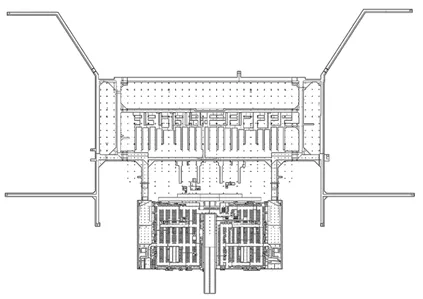
11 地下一層平面/First underground floor plan
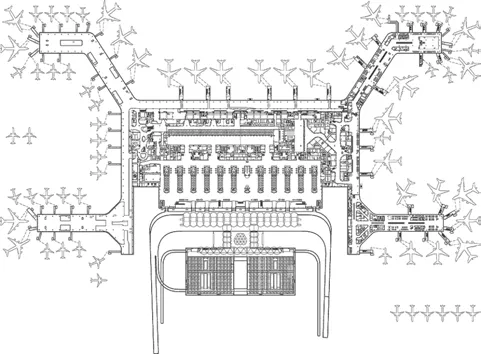
12 首層平面/Ground floor plan
13 二層平面/First floor plan
14 三層平面/Second floor plan
15 四層平面/Third floor plan
16
17
18
21
19
20

22
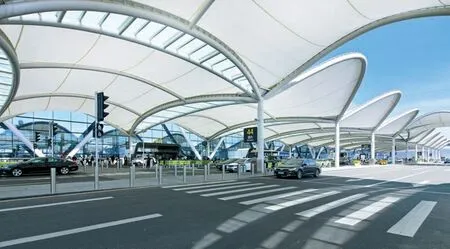
16 被云形張拉膜覆蓋的出發車道邊人行通道/Sidewalk beside departure lane covered by cloud shaped tension membrane
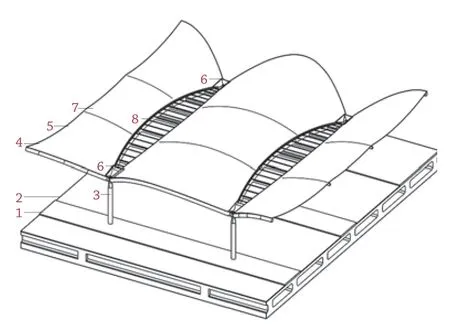
17 雨篷標準單元/Typical canopy unit
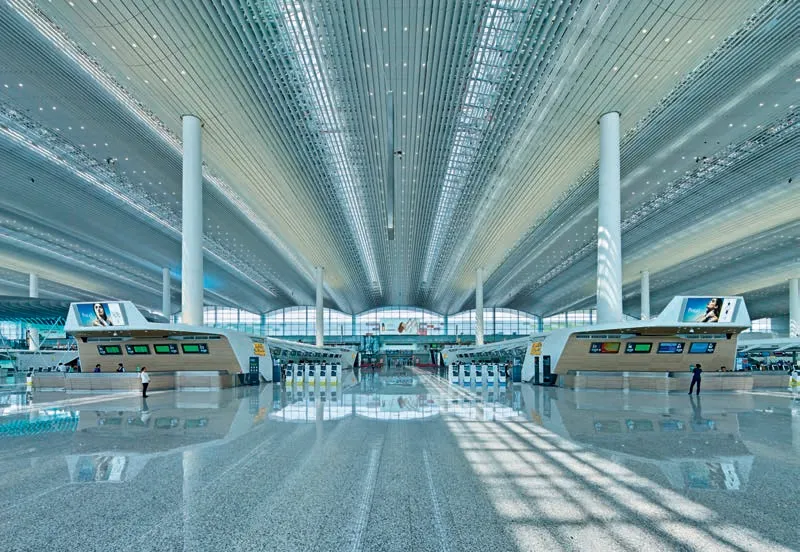
18 值機通道及辦票島/Check-in counters and ticket island
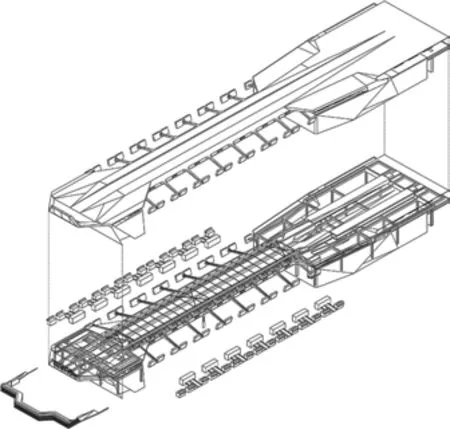
19 辦票島拆分/Diagram of ticket island
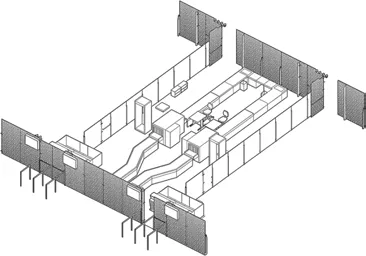
20 安檢單元/Security inspection unit
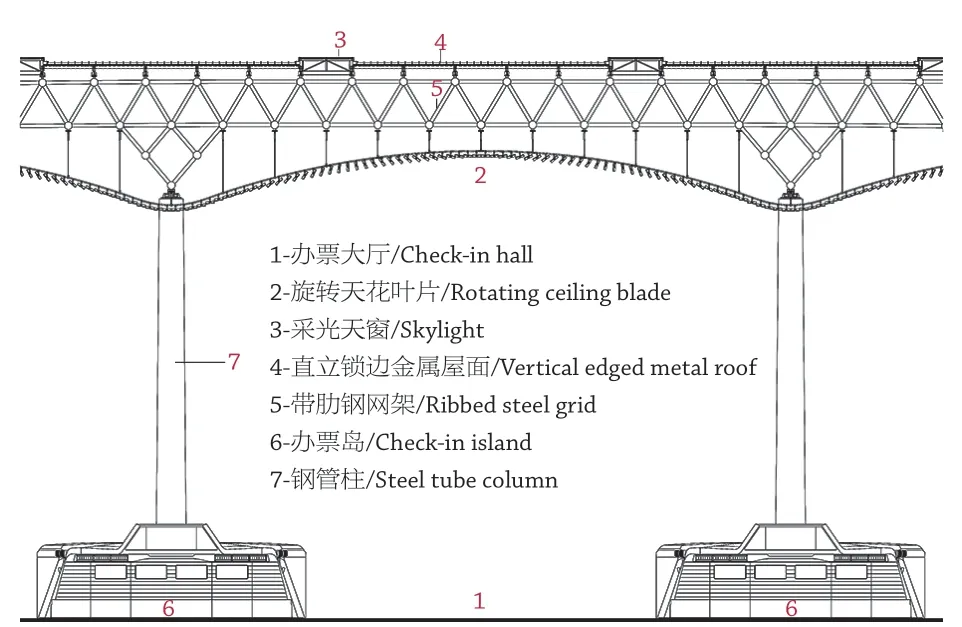
21 采光天窗及旋轉天花葉片剖面/Section of skylight and rotating ceiling blade
22 屋面構造/Roof construction plan
23
24

25
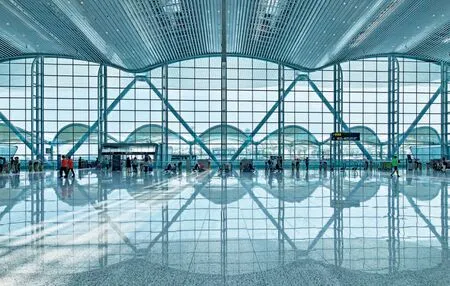
23 室內外一體化設計的值機大廳/Check-in hall with integrated the interior and the exterior
24 國內商業區中庭/The atrium of domestic commercial area
25 嶺南花園/Lingnan garden
猜你喜歡
河北畫報(2020年8期)2020-10-27 02:54:06
現代裝飾(2020年7期)2020-07-27 01:27:42
流行色(2020年1期)2020-04-28 11:16:38
電子制作(2019年19期)2019-11-23 08:41:36
電子制作(2019年15期)2019-08-27 01:11:50
電子制作(2019年7期)2019-04-25 13:18:16
藝術啟蒙(2018年7期)2018-08-23 09:14:18
海峽姐妹(2017年7期)2017-07-31 19:08:17
Coco薇(2017年5期)2017-06-05 08:53:16
商周刊(2017年26期)2017-04-25 08:13:04