National Security Legislation Ensures Bright Future for Hong Kong
2020-08-06 14:20:04ByHOUYUXIANG&WUSIKE
CHINA TODAY 2020年8期
By HOU YUXIANG & WU SIKE
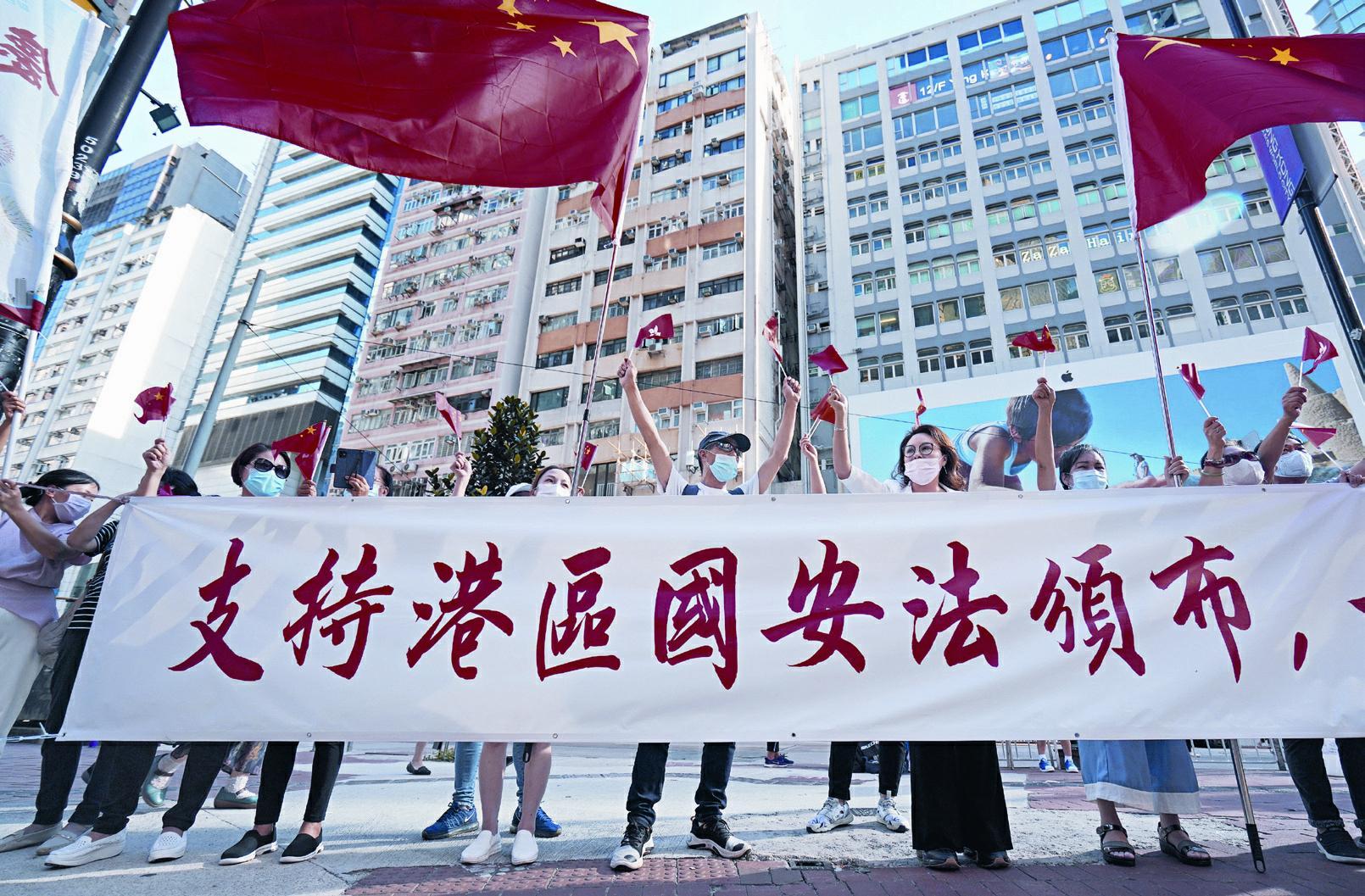
ON May 28, the Decision on Establishing and Improving the Legal System and Enforcement Mechanisms for Safeguarding National Security in Hong Kong Special Administrative Region (HKSAR) was adopted at the third session of the 13th National Peoples Congress (NPC). On June 18, Shen Chunyao, the person in charge of the Legislative Affairs Commission of the 13th NPC Standing Committee, briefed the lawmakers attending the 19th session of the 13th NPC Standing Committee on the draft law on safeguarding national security in Hong Kong, with the essence being: the central government shall establish an office for safeguarding national security in the HKSAR to deal with acts and activities that grievously endanger national security, including splitting the country, subverting state power, and organizing terrorist activities, as well as the activities of foreign forces interfering in the affairs of HKSAR, so as to ensure the implementation of “one country, two systems” policy and maintain the prosperity and stability of Hong Kong.
On June 30, at the 20th session of the 13th NPC Standing Committee, Chinese lawmakers voted to adopt the Law of the Peoples Republic of China on Safeguarding National Security in Hong Kong Special Administration Region. President Xi Jinping subsequently signed Presidential Decree No. 49 to unveil the law.
Plugging a Loophole in National Security
Chinas national law on safeguarding security in Hong Kong is based on Article 23 of the Basic Law of the Hong Kong Administrative Region of the Peoples Republic of China in 1990. The clause states: “The HKSAR shall enact laws on its own to prohibit any act of treason, secession, sedition, subversion against the Central Peoples Government or theft of state secrets, prohibit foreign political organizations or bodies from conducting political activities in the region, and prohibit political organizations or bodies of the region from establishing ties with foreign political organizations or bodies.”
Hong Kong has maintained prosperity and stability since its return to China in 1997. However, in recent years, violent terrorist activities instigating Hong Kong“independence” have been escalating, and illegal interference by external forces has become increasingly rampant, pushing the region acclaimed for rule of law and stability into a perilous maelstrom. Following the fugitive offenders law amendment disturbance last year, the “anti-China” forces inside and outside Hong Kong who scheme to destabilize Hong Kong have intensified, overtly advocating Hong Kong “independence.” They damaged and insulted the symbols of national sovereignty, asked for external forces to intervene, committed violent crimes, created local terrorism, seriously trampled on the rule of law in Hong Kong, severely wrecked national sovereignty, unity, and territorial integrity, and undermined social stability. All this has seriously impacted the economy and peoples livelihood, stirred up social disintegration and antagonism, and decomposed Hong Kongs investment environment and international image. For these reasons, all Chinese people, including Hong Kong compatriots, agree that it is an urgent matter to safeguard national security in Hong Kong through legislation. To establish and improve the legal system and law enforcement mechanisms to ensure Hong Kongs security has become an urgent mission for the country to maintain its prosperity and stability and ensure the “one country, two systems”framework.
National security legislation is the basic principle of state sovereignty, and is also the general practice of all countries in the world. Hong Kong is a local special administrative region directly under the central government of China, and the central government holds the ultimate responsibility for its security. At the same time, Article 31 of the Chinese Constitution stipulates: “The state may establish special administrative regions when necessary. The systems to be instituted in special administrative regions shall be prescribed by law enacted by the National Peoples Congress in the light of specific conditions.” The law on safeguarding national security established in accordance with the Chinese Constitution and the Basic Law of Hong Kong will neither transform the social system and high degree of autonomy of the SAR, nor affect the rights and freedoms of Hong Kong residents or the legitimate rights and interests of foreign investors in Hong Kong. But it will endow Hong Kong with a more solid legal system, a more stable social order and a better business environment.
Hong Kongs return to China preceded that of Macao, and it should have completed the legislation of the Basic Law earlier than Macao. However, due to the complexity of its social and international environment, the HKSAR had not fulfilled its legislation task until very recently, resulting in weaknesses and deficiencies in maintaining national security there. In accordance with Article 23 of the Basic Law, Macao passed and implemented the law on safeguarding national security in 2009. Practice has proved that this law only prevents and punishes those who harbor the intention to split the country and incite rebellion against national security. It also safeguards the legitimate rights and interests of the vast majority of people in Macao, and maintains the social harmony and stability of Macao.
In recent years, Hong Kong has been crippled by sustained chaos and turmoil of the Color Revolution, moving in the direction of local terrorism, in sharp contrast to the stable development and prosperity of Macao. This motivated the central government to consolidate its determination to establish an integral legal system and implementation mechanisms for safeguarding national security in the HKSAR. After the decision was passed by the NPC, the central government has extensively listened to the opinions of people from all walks of life, including NPC deputies and the Chinese Peoples Political Consultative Conference members in the HKSAR. Referring to Macaos experience in safeguarding national security, and in light of the actual situation in Hong Kong, the central government drafted and revised the provisions of the law on safeguarding national security in Hong Kong.
National security constitutes the top priority of a country. No country will sit by and see its territory slipping into a state of undefended security for an extended phase. Safeguarding national security constitutes a significant segment of the “one country, two systems”framework. The Basic Law endows Hong Kong residents with broader rights and freedoms, and explicitly stipulates their responsibilities and obligations to defend national security, which constitute the premise of respecting and protecting human rights. Without national security, there will be no long-term stability in China, let alone the long-term prosperity and stability of Hong Kong. Only when national security is guaranteed, can Hong Kong enjoy long-term prosperity and stability. The objective of the new legislation is to effectively prevent, cease, and punish a tiny minority of illegal and criminal acts endangering national security, and make the rule of law in Hong Kong more sound and the society more stable, so as to better protect the lives, properties and rights, and freedom of Hong Kong residents.
Essential for Hong Kongs Prosperity and Stability
“One country, two systems” is the institutional innovation and basic national policy of China to achieve a peaceful reunification of the country, with its core content being the central government possesses overall governance over Hong Kong, while Hong Kong maintains its original capitalist system for a long time and enjoys a high degree of autonomy in all matters, except foreign affairs and national defense. Practice has proved that the “one country, two systems” is the best institutional arrangement for safeguarding national unity and territorial integrity, and fully takes into account the special circumstances of Hong Kong and the interests of Hong Kong people. Definitely, the “one country, two systems” is an integrated concept, with adherence to“one country” being the premise and foundation of implementing “two systems.” Only by maintaining national security can we ensure the long-term stability of the country and the long-term prosperity and stability of Hong Kong. The Chinese government is unswervingly determined to implement the “one country, two systems” policy in a comprehensive and accurate fashion and to oppose any outside interference in Hong Kong affairs. This legislation is a powerful practice of comprehensively and accurately implementing the principle of“one country, two systems.”
Certain politicians in the U.S., Britain, and some other Western countries still hold ideological prejudice and a Cold War mentality, unwilling to accept the fact that Hong Kong has already returned to its motherland as a special administrative region of China. They have repeatedly interfered in Hong Kongs affairs through various means. They made negative comments on Hong Kongs security legislation and accused the Chinese government of wrecking the high degree of autonomy of the HKSAR. The U.S. Congress recently passed the socalled Hong Kong Human Rights and Democracy Act and Hong Kong Autonomy Bill, ignoring Chinas solemn position. In the process it has maliciously slandered the law on safeguarding national security in Hong Kong, seriously interfered in Hong Kong affairs and Chinas internal affairs, violated international law and the basic norms of international relations, and exposed its real intention of leveraging the Hong Kong issue to contain Chinas development. No one is more sincere and determined than the Chinese government to fully and accurately implement the “one country, two systems” principle. No one is more concerned about the prosperity and stability of Hong Kong and the well-being of Hong Kong residents than the Chinese government. The Chinese side made solemn representations to the U.S. on its interference. At the same time, China stressed that no matter how loud the separatist voices in Hong Kong are, and how much pressure the external anti-China forces are exerted, China will not restrain from promoting the implementation of the law on safeguarding national security in Hong Kong.
The HKSAR Chief Executive Carrie Lam said recently that the law for Hong Kong to safeguard national se- curity will neither undermine HKSARs high degree of autonomy, nor affect the regions judicial independence. She believes that both the business community and the people of Hong Kong will feel relieved by these safeguards. With the national security law, any law enforcement act to safeguard national security will strictly comply with the provisions of the law, comply with the statutory power and follow legal procedures, and will not infringe upon the rights and interests and freedoms enjoyed by residents, legal persons, and other organizations in accordance with the Basic Law. The legitimate rights and interests of foreign investors in Hong Kong will continue to be protected. Therefore, the implementation of the national security law in Hong Kong is to protect the “one country, two systems” principle, safeguard the right of the Hong Kong people to govern Hong Kong, and protect Hong Kongs free and open trade and fair competition environment.
Guarantee to a Bright Future
Safeguarding national security is consistent with protecting the interests of foreign investors. The implementation of the national security law in the HKSAR will contribute to restoring order in Hong Kong, maintain Hong Kongs stability and good business environment, consolidate and enhance Hong Kongs status as an international financial, trade and shipping center, and further enhance the confidence of foreign investors in Hong Kong. Since its handover to China, Hong Kong has enjoyed financial independence, free trade, currency issuance, and free flow of capital. As a free port and a separate customs territory, Hong Kongs status has been guaranteed and consolidated. We are glad to see that politicians and people of insight from many countries in the world have expressed their understanding and support for Chinas legislative measures and are confident in the future of Hong Kong.
In line with the “one country, two systems” principle, Hong Kongs capitalist system, free economy, and legal system of good reputation are still sound. The high degree of autonomy will not change, the independent judicial power and the power of final adjudication will not change, and the legitimate rights and interests of foreign investors will continue to be effectively protected.