
Investigation on Savonius turbine technology as harvesting instrument of non-fossil energy: Technical development and potential implementation
2020-08-10 03:23:10AdityaRioPraowoDandunMahesaPraowoputra
Aditya Rio Praowo, Dandun Mahesa Praowoputra
aDepartment of Mechanical Engineering, Universitas Sebelas Maret, Surakarta 57126, Indonesia
bGraduate School of Mechanical Engineering, Universitas Sebelas Maret, Surakarta 57126, Indonesia
Keywords:Savonius turbine Environment pollution Revenue cost Water operation Wind-energy harvest
ABSTRACT Environmental risk due to excessive residual emission is rising. Greenhouse effect, ice melting in the Arctic, reduction of air quality are several concerns which need immediate development and change. Energy harvesting equipment is one of the key solutions. Environment potential, e.g. water resource can be collaborated with mechanical equipment to harvest clean energy. Savonius turbine has been proposed and studied for this purpose and can be placed on several energy resources, i.e. water and wind. Still, real-world implementation of this technology is lacking,especially in tropical archipelago countries which have abundant water resources. In this work,assessment of Savonius turbine technology as instrument to harvest clean energy is conducted. A series of development on the turbine performance and technical modification is considered as reference to implement the technology in water and open air environments. It is noted that rotor design, operation depth and nozzle attachment are several key influencing factors.
?2020 The Authors. Published by Elsevier Ltd on behalf of The Chinese Society of Theoretical and Applied Mechanics. This is an open access article under the CC BY-NC-ND license(http://creativecommons.org/licenses/by-nc-nd/4.0/).
Particular solution for this problem is progressive change on energy sources for our daily activities, from non-renewable source, such as fossil fuel, into source that capable to produce renewable energy. Renewable energy is energy that is collected from renewable resources, which are naturally replenished on a human timescale, such as sunlight, wind, rain, tides, waves, and geothermal heat. Renewable energy often provides energy in four important areas: electricity generation, air and water heating/cooling, transportation, and rural (off-grid) energy services.In order to support this change, development in mechanical instrument to harvest the mentioned resource is seriously conducted. One field is directed to concentrate in wind-based harvest using Savonius turbine, which is a type of vertical-axis wind turbine (VAWT), used for converting the force of the wind into torque on a rotating shaft. The turbine consists of a number of aerofoils, which is vertically mounted on a rotating shaft or framework. Besides harvesting wind energy, several works are also found to be implementing this instrument for water-based energy resource, such as Thakur et al. [1] and Kerikous and Thévenin [2].
Considering high demand on production of renewable energy, a study to investigate potential of research development in terms Savonius technology to increase its performance to produce clean energy. A series of improvement of the Savonius turbine for water territory and open-air environment will be discussed in this work by taking concern on timeline of research in order to compile concluding remark regarding technical recommendation, and predict expected challenge to make this instrument as major option in generating renewable energy, especially for territory with abundant wind and water resources.
Costs accrue at every point of the fossil fuel supply chain,which the industry large scale investment and very thorough planning, including in mining and extraction stages. Extraction processes can and unavoidably generate air and water pollution,which highly possibly causes harm local communities. Transporting fuels from the mine or well site can induce air pollution and lead to serious accidents and spills when either human or instrument error occurs. During the fuels are burned for either industrial or home application, they emit toxins and global warming emissions. Even the waste products are hazardous to public health and the environment. Various ominous aspects are observed on these parties due to mining of fossil fuel, e.g.:
● Extracting fossil fuels;
● Coal mining;
● Surface and underground mining;
● Oil and gas drilling;
或許你并不清楚,我們常喝的加多寶、王老吉、六個核桃等飲料的紙袋,其實(shí)都是使用正博的機(jī)器所生產(chǎn)。事實(shí)上,正博制袋機(jī)的銷售就是這樣火爆,市場銷售額在2017年“爆炸式”增長了36%。
● Water impact due to drilling process;
● Wide range of land use;
● Global warming emissions;
● Offshore drilling;
● Transporting fossil fuels;
● Burning fossil fuels;
● Expansion of air pollution;
● Fossil fuel (including coal) waste;
● Oil and gas wastewater.
Illustration in Fig. 1 shows the global consumption of fossil fuels (coal, oil and gas) from 1800 onwards. Overall indication based on this data suggests that global consumption of fossil energy has increased more than 1300-fold over the last two centuries. As shown in this figure also, coal was the first and only fossil source until the 1860s when crude oil consumption began. This data is also supported by the fact that the first industrial revolution using this energy source as fuel for diesel engine. Another resource, natural gas, production began a couple of decades later, in the 1880s-1890s. The 20th century initiate a large diversification process of the fossil energy consumption, with coal use declined from 96% of total production in 1900 to less than 30 percent in 2000. Understanding on environmental effect due to emission of the coal mining and extracting is one of the main reasons other forms of fossil fuels are considered to be developed and applied. Until 2017, it can be observed that crude oil is the largest energy source, accounting for around 39% of fossil energy, followed by coal and natural gas at 33% and 28%, respectively. This number is also affected by high improvement of transportation using renewable energy and harvesting instrument for energy produced by wind, water and wave.
Performance of Savonius turbine as harvesting instrument of clean energy has recently validated by Shah et al. [4] in Canada who considered comparison of experimental study and computational simulation (Fig. 2a). As presented later that the estimated total power of the model under 7 m/s wind speed to be 367.2 W while on the other hand, the experimental value produced 327.5 W. The recorded loses of the experiment and simulation was also differ by 6.2% which was followed by the generator efficiency percentage at 7.8%. With average error under 8.5%,it can be concluded into two things. First, computational methodology can be strongly considered for future estimation and analysis of Savonius turbine, and second, the deployed model is verified and can be taken for further analysis.

Fig. 1. Global fossil fuel consumption since 1800 for coal, crude oil and natural gas. The graph is designed based on information in Ref.[3] (1 TW·h=1×10⁸ kW·h).
Potential of the Savonius is quantified into produced annual energy and revenue allocation. Boundary situation is set to be in several wind speeds. Results in Fig. 2b illustrate that no energy generation from the turbine if the wind speed is slower than 3 m/s (cut-in wind speed). On the highest wind speed, the turbine ceases its power generation at 17 m/s which is so-called cut-out wind speed. Estimation of total value in terms of the annual energy output was 7838 kW·h, while the annual revenue was$846.51 with assumption there is 20 years contract price under feed-in-tariff $0.108/(kW·h). The prevailing market price of these small turbine varies in range $1000-$3000, depends on several factors. Besides, several expenses on operational and maintenance are also needed to be considered. If the total cost of the proposed design is assumed at $3000, the break-even point(BEP) will happen approximately after 3.5 years, and the turbine will generate a net income of $13967.4 in 20 years life-span.
Savonius turbine has been developed into various perspectives, which one of them is operational of the turbine on water.Wide application in terms of ocean engineering emerges as consideration of performance assessment under wave tank [5]. The analysis was carried out using numerical methodology by inputting sea state assumption into numerical wave tank. Correlation of the turbine’s efficiency with operational depth (Fig. 3a) was successfully quantified that deeper the operational depth, the efficiency tended to decline in range 27%-38%. The highest efficiency was concluded same as the rotor diameter. On the other hand, mean sea state which was assumed in this work was found produced the highest efficiency (Fig. 3b) at 16.7% when the entry blade angle (α) was set to 20° when the rotor operated in 42.5 rpm. The lowest efficiency was recorded at 3.5% during operation in 30 rpm and the angle blade was modified into 20°.
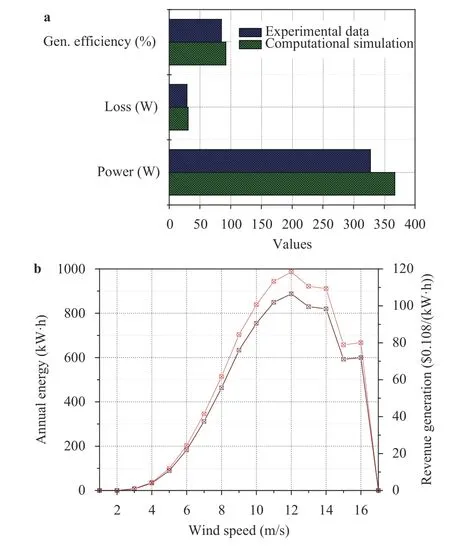
Fig. 2. a Data verification of Savonius turbine and b annual energy and revenue allocation. The graphs are composed based on data in Ref. [4].
Contribution of lift coefficient (Cl) and drag (Cd) on Savonius turbine design which in this case, their correlation to the produced efficiency, is the selected subject. Lift coefficient (see Fig.18b in Ref. [8]) was found reached its peak during azimuthal angle was set to be 90° at velocity 0.5 m/s. This number declined to its lowest level in 180° it reached peak again in 270°. Different tendency was interpreted based on result of the drag coefficient(see Fig. 18a in Ref. [8]) which the highest point was discovered at the 135° and 315° for all proposed water speeds. The lowest coefficient occurred on angle 180° at all speeds except 0.5 m/s which quite remarkable difference value approximately 0.8 was found at this angle while other speed produced drag coefficient in range between 0.2-0.4.
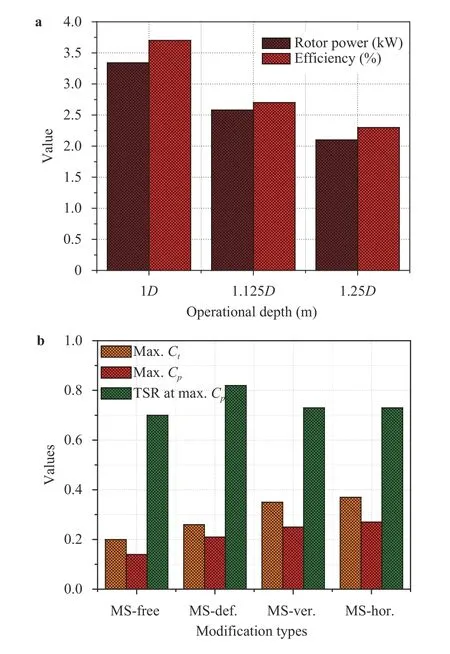
Fig. 3. a Effect of depth to turbine’s efficiency [5] and b modification results of Savonius turbine system by adding nozzle [6, 7]. MSfree means free modified Savonius rotor; MS-def. means modified Savonius rotor with deflector; MS-ver. means modified Savonius rotor with vertical ducted nozzle; MS-hor. means modified Savonius rotor with horizontal ducted nozzle.
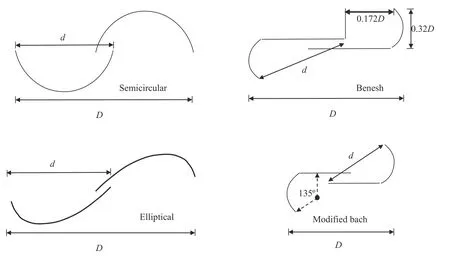
Fig. 4. Several rotor types deployed in previous work of Alom and Saha [9].
In order to increase performance of the Savonius turbine for on-water operation, modification on the turbine system is conducted by adding nozzle [6]. Assessment of four modification style is presented in Fig. 3b. It is noted that horizontal ducted nozzle increase value of power coefficient (Cp) with value 0.27 and recorded torque coefficient (Ct) at 0.37. These values are slightly superior at 7.4% forCpand 5.4% forCtcompared to the vertical style. Even though the results of these styles differ, the tip speed ratio (TSR) is found the same at 0.73 specifically during maximum power coefficient was considered. Application of the ducted nozzle is proven increase significantly Savonius performance which is previously modified by Golecha et al. [7] by attaching deflector on the Savonius system. TheCpimproves by 16%while theCtat maximum level get higher by approximately 25%.Free modification conducted Elbatran et al. [6] does not produced betterCpandCtwhich fall behind 45% compared to application of the ducted nozzle.
The origin of savonius turbine technology is addressed to harvest wind energy. Since it was introduced in 1922, Savonius turbine has undergone a number of modifications, which one of them is rotor blade profile. Recent work of the Alom and Saha [9]presented four types of this component, such as semicircular,benesh, elliptical and modified bach (see Fig. 4).
Performance of these rotors indicated that quite significant distinction occurred between elliptical profile and other rotors in terms of the torque coefficient, approximately 13.5% which difference between other rotors was less than 2%. Similar tendency was also shown by power coefficient which the elliptical profile is superior among all deployed model. It is also noted that the maximum power coefficient occurred at tip speed ratio 0.8. Other strategy in developing performance of the turbine is directed to modification of rotor geometry, from general semicircular into airfoil. Based on work of Masdari et al. [10], the trend for both rotors are the same, but the suction area and pressure magnitude of the pressure side of the airfoil type turbine are more extensive than simple type Savonius turbine i.e. semicircular. Therefore, in the airfoil, the pressure difference causes more force, and produces an increase in power coefficient occurs. Advantage of the air space in harvesting wind energy has reached another achievement as an idea to attach the Savonius turbine on top of train roof is introduced [11]. Assuming the train moves in speed 18 m/s, the average power generated is found possible to exceed 700 W with power coefficient 0.3752 (Fig. 5). This phenomenon is described by the fact that the larger the rotor diameter more air is captured by the turbine for harvesting energy.
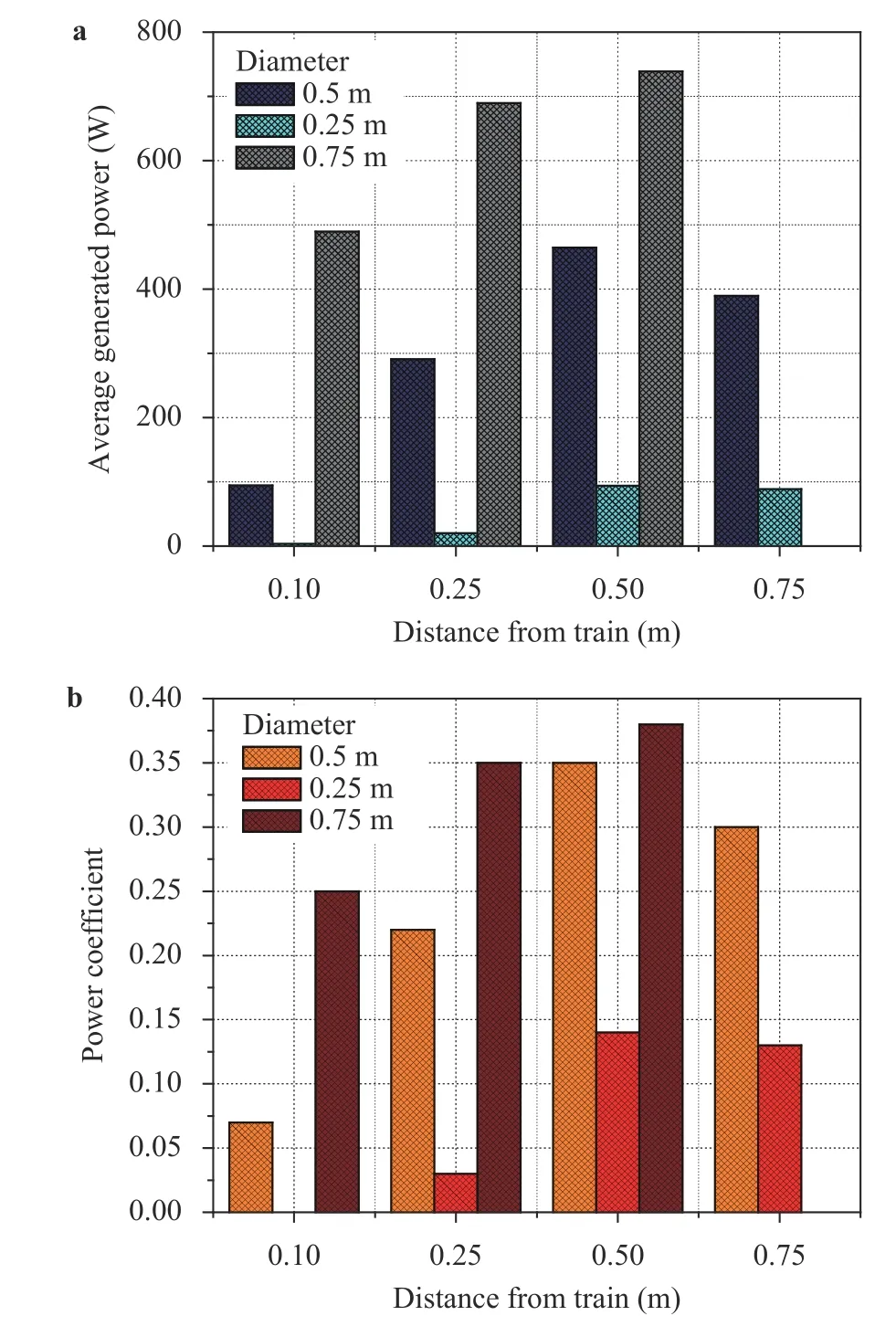
Fig. 5. Savonius performance depends on distance from train. a Average generated power and b power coefficient. The graphs are composed based on data in Ref. [11].
Based on the turbine characteristic, wind angle and speeds are major contributor in energy production using Savonius turbine. Experimental studies conducted by Promdee and Photong[12] indicated that the peak voltage level was successfully produced in angle range 23°-34° which the highest one was recorded at 32.7°. In terms of wind speed (see Fig. 6), higher speed was evidenced to produce higher voltage output, which dependence of the turbine performance to wind speed is absolute. Application of Savonius on other fluids can be considered as further study since many fluid types, especially waters influenced by their environmental conditions. The findings still can be developed by taking rotor type, geometry and selected thickness to achieve optimum operation in producing sustainable wind energy. Fundamental studies in renewable energy and energy harvesting instrument of Savonius windmill were previously initiated by Mojola [13] who analyzed aerodynamic design of the windmill rotor, and then observation to torque mechanism of Savonius rotor was continued by Fujisawa [14]. In the beginning of the millennium, World Renewable Energy Congress VI in Brighton, United Kingdom documented performance evaluation of Savonius type and cross-flow type windmills [15]. After these, recent works are conducted to ensure sustainability of the Savonius development, e.g. consideration to influence of rear deflector (see Fig. 7) to Savonius performance is addressed in both experimental and numerical assessments [16-20]. Possibility of technical hybridization with Darrieus turbine (Fig. 8) is investigated as part of instrument development, including for maritime environment [21-25], which is followed by optimization of Savonius components to increase energy harvesting performance [26-30].
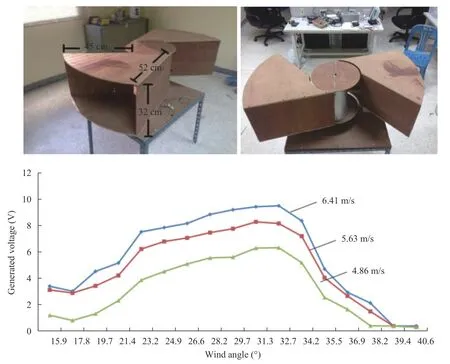
Fig. 6. Dependence of wind speed to generated energy of Savonius wind turbine [12].
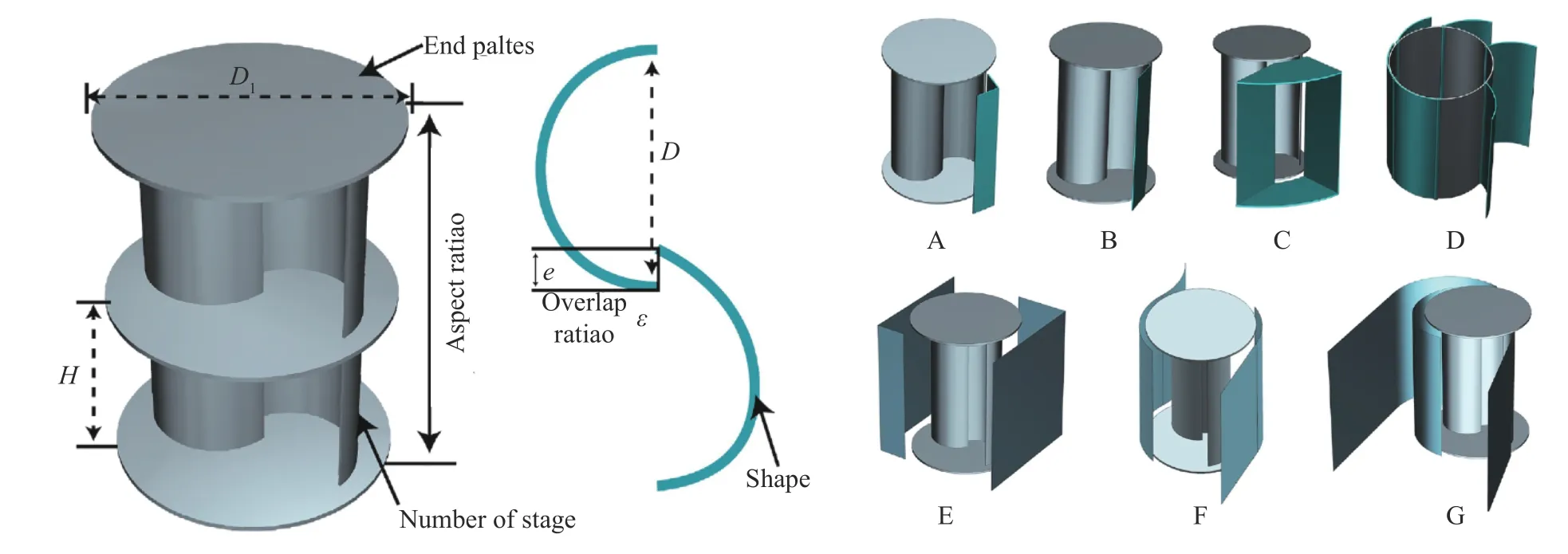
Fig. 7. Modification of Savonius turbine with rear deflector. Various modifications are presented in seven geometrical configurations [16].
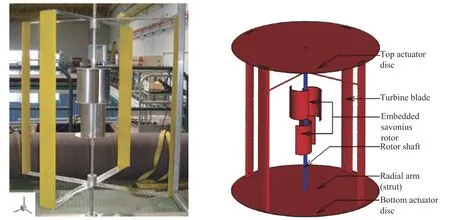
Fig. 8. Hybridization of Savonius turbine with Darrieus turbine by Fertahi et al. [25].
Investigation of stage influence to Savonius performance is indeed attracting attention of various researchers and scholars,as this geometrical factors may directly affect the generated energy of the rotor. Experimental design was proposed by Kamoji et al. [31] to conduct a comparative study regarding single stage,two stage and three stage conventional Savonius rotor. Results as presented in Tables 1 and 2 indicate that the highest coefficient of power maximum (Cpmax) is achieved by single stage Savonius with blockage ratio 35%. On the other hand, three stage Savonius produced the lowest coefficient with value 13.1 in blockage ratio 31%. Comparison of three stage types in same rotor aspect ratio 1.0 suggested that difference of theCpmaxbetween single stage and two stage is approximately 9.938%,while the difference between the single stage and three stage is 18.634%. Other notable works in terms of rotor stage on Savonius rotor are Kothe et al. [32], Prabowoputra et al. [33] and Kumar and Saini [34].
Besides rotor stages, numbers of blade are considered as theinfluencing geometrical factor to performance and behaviour of Savonius wind turbine. Previously conducted research by Wenehenubun et al. [35] indicates that TSR of the 3 blades are superior to 2 blades and 4 blades for assessed wind speed in the range of 1-10 m/s. Nevertheless, the actual torque of the 4 blades is the highest among the proposed blades. This phenomenon occurs since wind turbine model with four blades has more drag force at any position when the wind rotor is in rotational position. Accounting for the speeds, pressure differences between the areasin front and at the back of wind turbine blades (Table 3) suggested that setting with the 3 blades is lowest with values 8.207,19.11 and 787.21 Pa for wind speeds 1, 5, 10 m/s, respectively.Ahmed et al. [36], Tartuferi et al. [37], Saad et al. [38] and Saeed et al. [39] are also involved in previous studies related to blade shape of Savonius turbine.
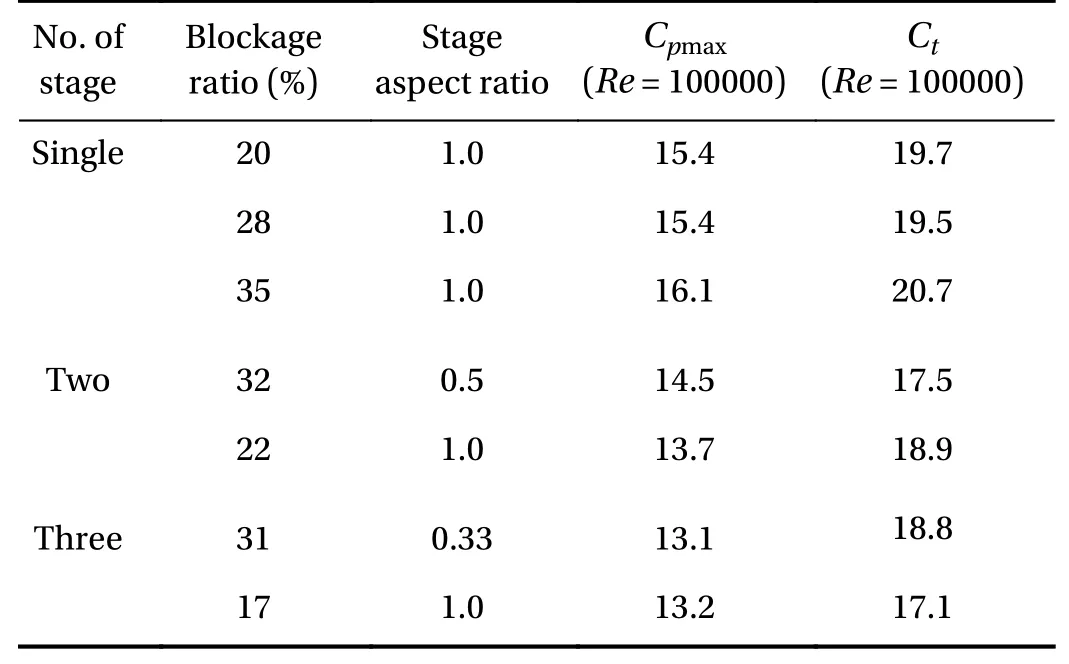
Table 1 Results of experimental studies: Cpmax and Ct [31].
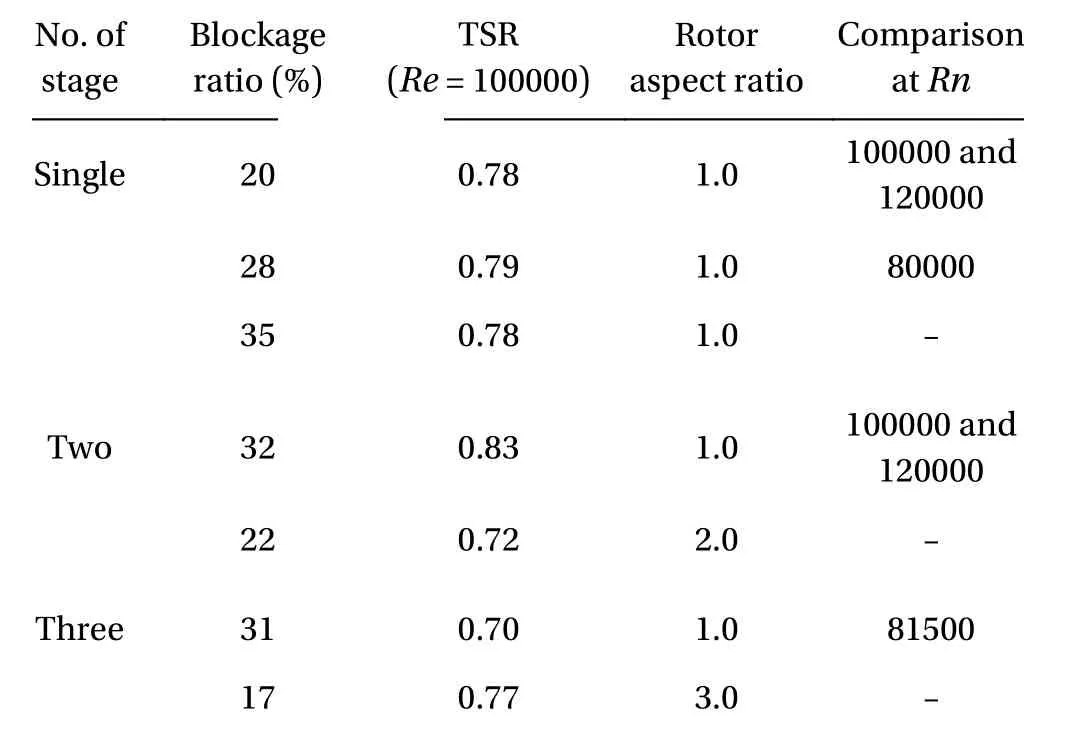
Table 2 Results of experimental studies: TSR, rotor aspect ratio and Rn [31].

Table 3 Results of experimental studies: Cpmax and Ct [35].

Table 4 Comparison of the VAWT and horizontal axis wind turbine (HAWT) [40].
Future development of Savonius turbine is predicted to follow a similar path of other types of turbine, which in terms of the wind turbine, implementation of horizontal type has been implemented for technical means. Even though Savonius is now dominated by VAWT type, it is reasonable to summarize performance of horizontal axis type based on investigation of previous scholars. One of the major contributions is presented by Pope et al. [40] who introduced investigation to quantify the performance of horizontal and vertical axis wind turbines (see Table 4). Savonius turbine was accounted in this study and included in the vertical type. Obtained results as shown in Table 4 indicates that coefficient power of the HAWT is higher than the vertical type which consists Savonius and Zephyr. FX 63-137 which is the highest produces significant differences with the vertical type, i.e. 61.702% with Savonius and 76.596% with Zephyr. Opportunity to improve wind turbine, especially Savonius can be considered by applying horizontal axis, which works from Borg and Collu [41] and óskarsdóttir [42] may be used as initial references in development stages. Consideration to calculation methodology is also demanded more details in order to properly model various phenomena, which in terms of advanced aerodynamic and hydrodynamic analysis, computational fluid dynamics as presented in pioneer works of Refs. [43-49]may be referred for setting and configuration. Interaction of turbine/rotor with surrounding environment can be accounted for,especially in terms of extreme conditions which lead to accidental. Several studies dedicated to structural strength and design crashworthy in Refs. [50-55] are good literatures to idealize and optimize turbine design.
This work is addressed to discuss involved and influencing factor on Savonius turbine technology for water and open-air operation in order to increase its performance in harvesting water and wind energy. Solid background regarding high level pollution due to fossil fuel is explained in the initial work, which is followed by discovering economical advantage of Savonius turbine as energy harvest instrument. Discussion is continued by identifying influencing factors related to Savonius design and operation, which is divided into two categories, namely water and wind. In terms of water, it is found that the highest work efficiency is achieved when ratio of depth operation and rotor diameter is 1.00, while adding horizontal nozzle on Savonius turbine is concluded as the best modification methodology in terms of resulting efficiency. On the other hand, larger diameter of rotor gives advantages in capturing wind during the Savonius is implemented on the moving train, which leads to better average generated power. Furthermore, power coefficient suggests that optimum turbine distance from train is 0.5 m. Future works on Savonius technology still needs sustainable improvement, especially in increasing its efficiency, and its implementation for archipelago and windy countries is strongly recommended.
 Theoretical & Applied Mechanics Letters2020年4期
- Theoretical & Applied Mechanics Letters的其它文章
- The nonlinear response of Cattaneo-type thermal loading of a laser pulse on a medium using the generalized thermoelastic model
- Review on charging model of sand particles due to collisions
- On plane Λ-fractional linear elasticity theory
- Nonlinear energy harvesting from vibratory disc-shaped piezoelectric laminates
- Deformation and failure in nanomaterials via a data driven modelling approach
- Particles-induced turbulence: A critical review of physical concepts,numerical modelings and experimental investigations