中蘇文化協會舊址
2020-08-31 14:45:31楊艷
重慶與世界 2020年8期
關鍵詞:文化
楊艷
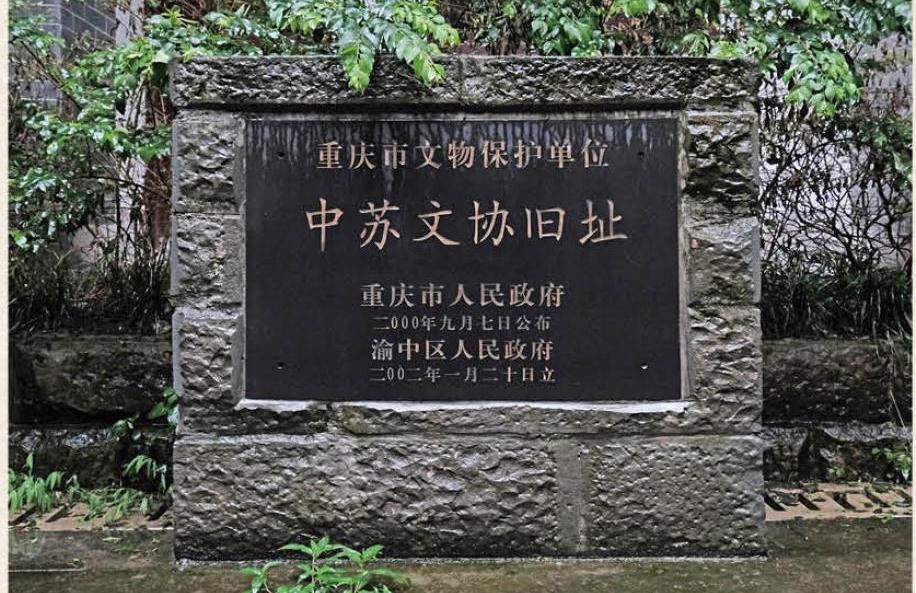
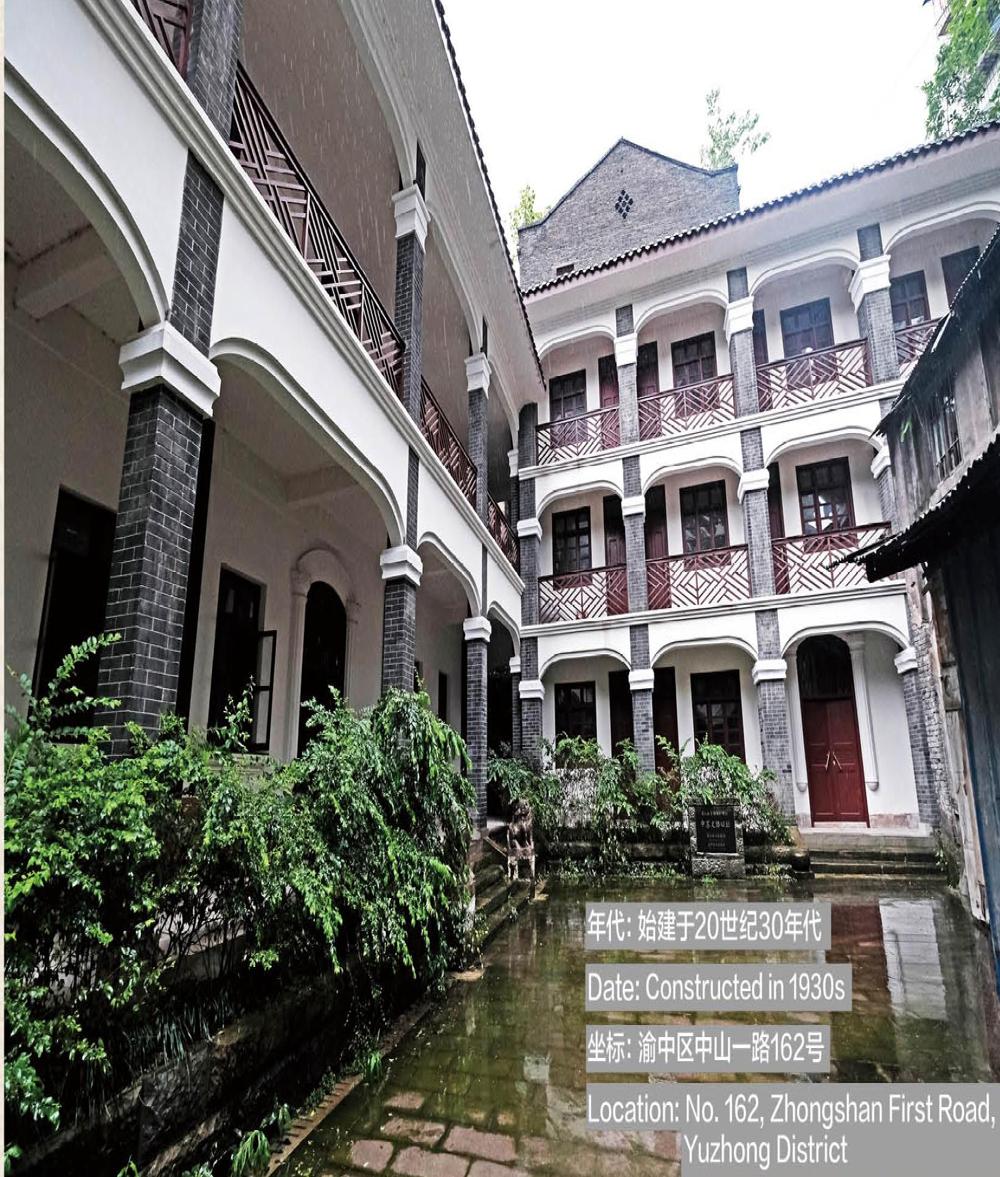
渝中區七星崗通遠門外的主干道中山一路旁,有兩棟別致小樓,主樓和副樓相連,中西式磚木結構建筑,這就是中蘇文化協會舊址。
兩棟建筑均為小青瓦歇山式屋頂,西式檐廊,外墻為磚砌抹灰,底層為石板鋪地,基礎為石作。建筑總面積約940平方米,占地面積910平方米。主樓坐東向西,一樓一底,石梯前有一對1米高的石獅。副樓坐北向南,二樓一底。
中蘇文化協會的創辦人張西曼,是著名的國民黨左翼人士、中國最早傳播馬列主義的社會活動家之一。五四運動前后,他參與發起社會主義研究會,翻譯出版《俄國共產黨黨綱》。
1935年10月,張西曼與長兄張仲鈞、畫家徐悲鴻等人在南京發起創建了中蘇文化協會。抗戰時期,中蘇文化協會遷到重慶黃家埡口(現渝中區中山一路與捍衛路交匯處附近),該機構在中共中央南方局支持下,實際成為大后方文化抗戰的活動中心,也是南方局聯系各界人士,開展統一戰線工作的重要陣地,特別是郭沫若、屈武、陽翰笙等重要人物和秘密黨員進入文協領導層后,該機構為中共加強與蘇聯以及國際反法西斯同盟國的聯系,爭取國際社會對中國抗戰的支持發揮了重要作用。
抗戰時期,中共中央南方局經常利用中蘇文化協會舉辦講演會、紀念會、座談會、展覽會,聯系各界人士,吸引和團結民眾。曾舉辦陜甘寧邊區木刻展,上映過蘇聯影片,中華劇藝社也曾在此排練進步戲劇。中蘇文化協會作為公開的民間機構,是中蘇開展民間文化交流的重要渠道,文化及社會各界合法交際的重要場所,曾很好地起到增進和推動中蘇兩國人民了解和友誼的橋梁作用。
中蘇文化協會是研究抗戰史、外交史、南方局史的重要物證,具有不可替代的重要歷史和文物價值。2000年,中蘇文化協會舊址由重慶市人民政府公布為市級文物保護單位。現已修復完畢,即將對外開放。
圖片/重慶市文物保護志愿者服務總隊提供
There are two distinctive small buildings beside the main road of Zhongshan First Road outside the Tongyuan Gate of Qixinggang in Yuzhong District. The main building and the annex building are connected with Chinese and Western-style brick-wood structure. This is the former site of the Sino-Soviet Cultural Association.
The two buildings are both constructed with small grey tiles and Xieshan-style roofs, western-style eaves, brickwork and plastering on the exterior walls, slate paving on the bottom floor, and stone foundations. With a total construction area is about 940 square meters, they cover an area of 910 square meters. The main building faces west with two floors. There of a pair of 1-meter -high stone lions in front of the stone stairs. The annex building faces south, with three floors.
Zhang Ximan, the founder of the Sino-Soviet Cultural Association, was a well-known leftist member of the Kuomintang and one of the earliest social activists in China to spread Marxism-Leninism. Around the May Fourth Movement, he participated in the launch of the Socialism Research Association, translated and published the Russian Communist Party Programme.
In October 1935, Zhang Ximan, his elder brother Zhang Zhongjun, painter Xu Beihong and others initiated the establishment of the Sino-Soviet Cultural Association in Nanjing. During the War of Resistance against Japanese Aggression, the Sino-Soviet Cultural Association moved to Chongqing Huangjiayakou (now near the intersection of Zhongshan First Road and Hanwei Road in Yuzhong District). With the support of the Southern Bureau of the Communist Party of China, the organization actually became the center of anti-Japanese cultural activities in the rear area and also an important position for the Southern Bureau to contact people from all walks of life to carry out united front work. In particular, after Guo Moruo, Qu Wu, Yang Hansheng and other important figures and secret party members entered the leadership of the Cultural Association, the institution played an important role in strengthening the ties of Communist Party of China with the Soviet Union and the international anti-fascist allies, and winning the support of the international community for China's War of Resistance against Japanese Aggression.
During the War of Resistance against Japanese Aggression, the Southern Bureau of the Central Committee of the Communist Party of China often used the Sino-Soviet Cultural Association to hold lectures, commemorative meetings, symposiums, and exhibitions to contact people from all walks of life to attract and unite the people. It has held a woodcut exhibition in the Shaanxi-Gansu-Ningxia Border Region, and has shown Soviet films, and the China Theatre Company has also rehearsed progressive dramas here. As an open non-governmental organization, the Sino-Soviet Cultural Association was an important channel for Sino-Soviet non-governmental cultural exchanges and an important place for legal communication between cultural and social sectors. It had served as a bridge to enhance and promote the understanding and friendship between the peoples of China and the Soviet Union.
The Sino-Soviet Cultural Association is an important material evidence for studying the history of the War of Resistance against Japanese Aggression, the history of diplomacy, and the history of the Southern Bureau, giving it an irreplaceable important historical and cultural value. In 2000, the former site of the Sino-Soviet Cultural Association was announced by the Chongqing Municipal People's Government as a Chongqing Cultural Relics Protection Unit. It has been repaired for now and will be opened to the public soon.
Picture/Chongqing Cultural Relics Protection Volunteer Service Corps
猜你喜歡
中國德育(2022年12期)2022-08-22 06:16:18
湖北教育·綜合資訊(2022年4期)2022-05-06 22:54:06
金橋(2022年2期)2022-03-02 05:42:50
金橋(2022年1期)2022-02-12 01:37:04
英語文摘(2019年1期)2019-03-21 07:44:16
小天使·一年級語數英綜合(2018年9期)2018-10-16 06:30:16
西部大開發(2017年8期)2017-06-26 03:16:12
西部大開發(2017年8期)2017-06-26 03:15:50
人民中國(日文版)(2015年10期)2015-04-16 03:53:52
人民中國(日文版)(2015年9期)2015-03-20 15:08:05