
Right to Roam
2020-12-21 03:21:57YefrenNye
漢語世界(The World of Chinese)
2020年6期
Yefren Nye
Trekking Chinas old “western frontier”。
重走西口路:山西長城徒步露營之旅。
Iwas sure that the wall of the tent I borrowed from a friend had been vertical when I set it up in a small gully and lay down in it, cadaver-like, with my back against the bumpy ground.
But when, around midnight, I found it caressing my face and straining to lift me bodily off the ground like some demented and feeble Valkyrie, I started to think that pitching up in this open Shanxi valley might not have been an ideal way to get a restful night.
I barely slept a wink that night, but when I gave up on sleep around 4 in the morning and looked out at the ancient valley washed in a deep fruity orange, I had to conclude that it had all been worth it.
Back in my hometown in the UK, I would often spend my weekends in the hills to the north—packing a stove, a camping mat, and occasionally a tent, and heading off along the lanes which crisscross the English countryside. I relished the sense of freedom that this kind of travel brought me, the animals eye view and the open space denied to us city-dwellers.
Early this summer, the wandering urge began to build in me once again. The snag was that I had relocated to Beijing. Chinese laws are unclear about the right to roam on public lands. Many parts of Beijing that look tempting to the would-be rambler belong to private interests or the military, or are otherwise barred to wandering foreigners by zealous and ever-present security guards.
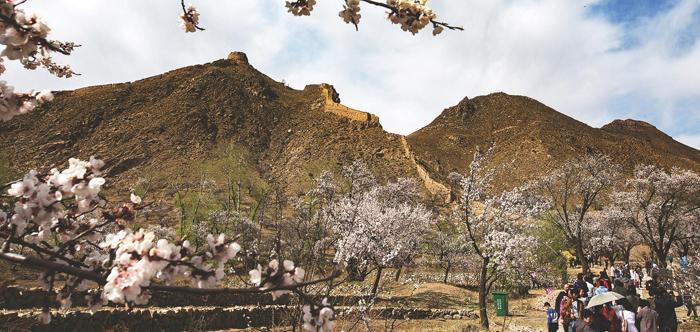
Not to be deterred, I set my sights on an ambitious target: a three-day walk along a wild—and hopefully unguarded—section of the Great Wall in the north of Shanxi province. I had seen the area from the window of a train to Datong in the winter. The dusty hills, dotted with what looked like the remains of walled villages, had fired my imagination. With the guidance of a hostel owner, who assured me that the length of the Wall was not blocked by private land or no-go areas, I began planning my trip.
The toughest part would be navigation. Chinese news sources occasionally report on hikers getting lost and injured in the hills, and such stories usually attract less-than-sympathetic comments. Not wanting my spiritual gluttony to become some local newspapers cautionary tale, I ended up downloading a series of open source Soviet military maps produced in the 1980s. Made in the aftermath of the Sino-Soviet Split, they remain the best cartographic resource for the modern hiker in China, even while economic growth has filled up much of the empty space on them with urban sprawl.
West from Beijing and Hebei province, the mountains come down like the diagonal blade of a guillotine. The train crosses a few sharp ridges of mountains and the green fields of Hebei before climbing into the dusty mountains between Zhangjiakou and Shahukou (殺虎口, “Tiger Killing Pass”), two passes in the northern wall.
The Great Wall is often thought of as a border, literally and symbolically isolating China from the “barbarians” outside. The most recent structure built in the Ming dynasty (1368 – 1644), an often fiercely xenophobic state born out of the reaction to the Mongol conquest, largely served that function.
However, when the Manchu people from the northeast conquered the Ming in the 17th century, the new empire controlled land on both sides of the Wall. The Kangxi Emperor of the new regime forbade his subjects to repair the Wall, hoping to finally remove this symbol of the old division between Chinese and Barbarian, though the Qing still put strict controls on who could settle north of the Wall in the early days of their rule.
I left the train at Tianzhen, a yellowing town with a main road leading up to the gleaming bone white high speed rail station, and headed toward the hills of the north side of the valley. I wasnt sure if camping in the open was strictly legal, though Chinese history is not without famous adventurers, like the Ming travel writer Xu Xiake (徐霞客). More recently, the area I was to travel through had been a thoroughfare for desperate migrants escaping over the Wall from what is todays Shanxi, Shaanxi, and Hebei to seek a better life on the Mongolian steppes.
This dangerous journey, known as zou xikou (走西口, “traveling the western frontier”), was undertaken by tens of thousands during the Qing dynasty (1616 – 1911), peaking during three years of drought in Shanxi between 1877 and 1879. With their feet blistering and skin peeling, the migrants faced an uncertain future of hunger and struggle with the Mongolians on the steppe: “You say you will go west/ I am full of tears…How long will it be before you return? My hair will grow white while I wait,” goes a Shanxi folk song called “Zou Xikou,” sung by a wife to a husband who was leaving for the frontier.
Given this heartbreaking history, I wondered if the locals I met today would see the appeal in my choosing to rough it in their fields. But I neednt have worried: I had walked about two kilometers when a van pulled up beside me, the driver squinting incredulously. “Ni na de (where are you from)?” he inquired in a throaty Shanxi dialect.
I replied that I was from the UK, at which point he gestured at the passenger side of his car and instructed me to get in. The floor was littered with beer bottles and I had scarcely pulled my pack onto my lap when he cracked open another and offered it to me with an exuberant grin, his foot already jammed on the accelerator as we headed toward the hills.
My explanation that I was planning to walk along the Wall was perfectly satisfying to him, and once we arrived at his farm, he introduced me to his donkeys and bid me good luck on my trip, offering to come and pick me up if I got stuck in a storm.
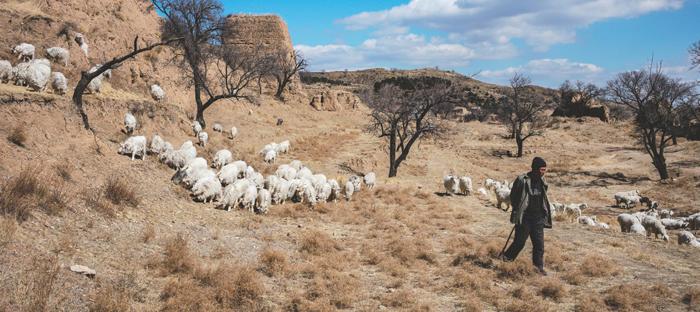
On the first day, I followed the Wall through brown terraces and browner villages, and past shepherds herding long-necked, wiry sheep. Here none of the original stone wall remained. Every brick and stone had long been taken to build houses in the area, and in some places, barns and farmhouses have been built into the Wall itself. I walked all day through desiccated villages, finally setting up camp by a tower that had partially collapsed, so that in the yellow evening glow it resembled the rotted stump of a tooth of an elderly man.
A man passing the other way showed me where to get water. He walked as if he had nowhere in particular to be, and greeted me jovially in such a strong accent that I was momentarily paralyzed. After some gesticulating and writing on a notepad, we established that I wasnt from Xinjiang, wasnt Hui, and I was looking for water, I followed him up the path to where a muddy trickle oozed out from the corner of a field by a stone wall. I boiled it twice that evening, hoping that would be enough to kill anything it had picked up in that field, and getting through most of my fuel.
After a sleepless, windy night, the next morning I followed a long, paved road for kilometer after kilometer, passing donkey-drawn carts, vast banks of solar panels, huge quarries, and little village churches distinguishable from the surrounding buildings only by the red neon crosses on their roofs. The day before, a man in a village told me that the people in this area were all Christians. In the late 19th century, Protestant missionaries from England raised a small congregation in the city of Datong, where 32 were killed during the Boxer Rebellion in 1900.
My destination, Datong, had been the capital of another great dynasty from the northeast, the Northern Wei, founded by the nomadic Xianbei people during the Northern and Southern Dynasties period (420 – 589). For a century, this area had been the heartland of a multi-ethnic state, one of the first to introduce Buddhism to China. It wasnt hard to imagine the caravans of merchants and soldiers, and the pilgrims who traipsed up these valleys to see the grottoes, wooden temples, and vast stone Buddhas built during this period. In those days, the statues would have been painted in bright psychedelic hues, though now they are the same color as the cliff they were carved out of.
I felt rather jealous of these travelers from the past: If part of the joy of hiking is in the effort required to find those moments of peace with nature, how much greater must their experience have been, with the prospect of enlightenment in front of them? My short break from city life was nothing in comparison.
That day, I had the only negative encounter of my trip. I found myself on the main road, with no room for pedestrians, and decided to try hitchhiking to the next section of the Wall. After around 20 minutes, a flashy white SUV pulled up on the other side of the road. An unsmiling man got out and crossed over, ignoring the angry honking of several passing trucks, and took my picture, snapping at me not to move. With a creeping fear, I asked him who he was, and he flashed a police ID at me contemptuously.
After establishing my identity, and trying to dissuade me with warnings about mudslides, cold weather, and Covid-19, he eventually got rid of me by giving me a lift further up the route to a windy plateau a mere kilometer from Inner Mongolia. I walked away from the road contemplating my freedom, and came across an old fort at the highest point of the plateau. Constructed to garrison Ming troops during the wars with the Mongol Altan Khan in the mid-16th century, when control over the north of Shanxi changed hands several times, the fort still commands the view across the Inner Mongolian border.
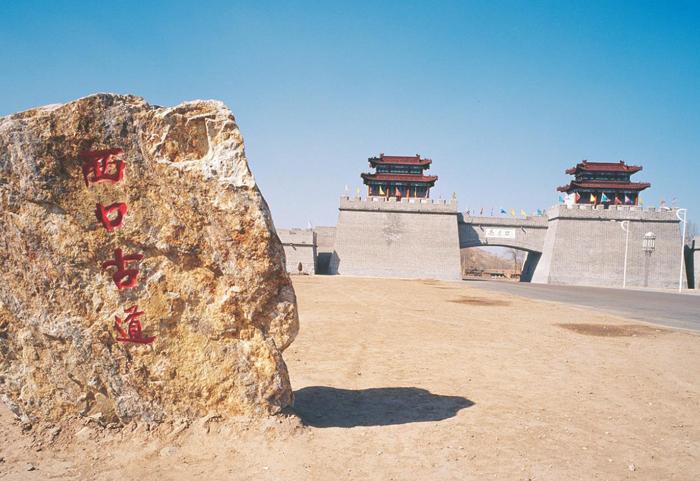
To my surprise, I found that there were still people living inside the fort in three-walled houses which backed against the fortress walls. Their homes had sloping roofs coming down from the walls, and intricately latticed wooden shutters over the windows. How long they will stay, though, is uncertain: Outside the fort was a brand new “Ming-style” town, built by the local government to bring tourist revenue to the area as part of Chinas poverty alleviation drive.
The circumstances which drove the migrants to zou xikou for the green Mongolian hills might be in the past, but the local tourism bureau hopes it can improve the lives of the residents in a still isolated and harsh region by selling the Wall as a place to travel for sunlight, air, exercise, and Han-Mongolian cultural exchange. The new town, like many of Chinas newly built “historical” tourist spots, looked gaudy and artificial next to the remains of the old wall and fort, which seemed almost like they grew out of this ancient land. But then, I reflected that everything old was once new.
The workers building the shiny new clock tower that will welcome the expected busloads of tourists asked me where I was going to sleep that night. I answered that I would camp in a field in the shelter of the old wall, to which they just smiled, and told me to stay safe.
登錄APP查看全文
 漢語世界(The World of Chinese)
2020年6期
漢語世界(The World of Chinese)
2020年6期
- 漢語世界(The World of Chinese)的其它文章
- 光影
- You’ve got questions? she’s got answers
- 助
- Game On!
- Deity Defying
- words of love