
Advanced Space Laser Communication Technology on CubeSats
2021-01-19 04:07:44
ZTE Communications 2020年4期
(China Academy of Space Technology,Xi'an 710001,China)
Abstract:The free space optical communication plays an important role in space-terrestrial integrated network due to its advantages including great improvement of data rate performance,low cost,security enhancement when compared with conventional radio frequency(RF)technology.Meanwhile,CubeSats become popular in low earth orbit (LEO)network because of the low cost,fast response and the possibility of constituting constellations and formations to execute missions that a single large satellite cannot do.However,it is a difficult task to build an optical communication link between the CubeSats.In this paper,the cuttingedge laser technology progress on the CubeSats is reviewed.The characters of laser link on the CubeSat and the key techniques in the laser communication terminal (LCT) design are demonstrated.
Keywords:space laser communication;laser communication terminal;CubeSat
1 Introduction
Due to the advantages of high bandwidth,low power consumption,superior real-time performance,strong anti-interception and anti-jamming capabilities,laser communication has been developed rapidly,which becomes the main means of future space communication.Currently,multiple laser communication validating links between inter-satellite and satellite-to-ground have been successfully carried out internationally and domestically[1-3].The establishment of space information networks with the help of laser links has the preliminary hardware requirements.In addition,space information networks (SIN)is the next step in the development of satellite laser communication.
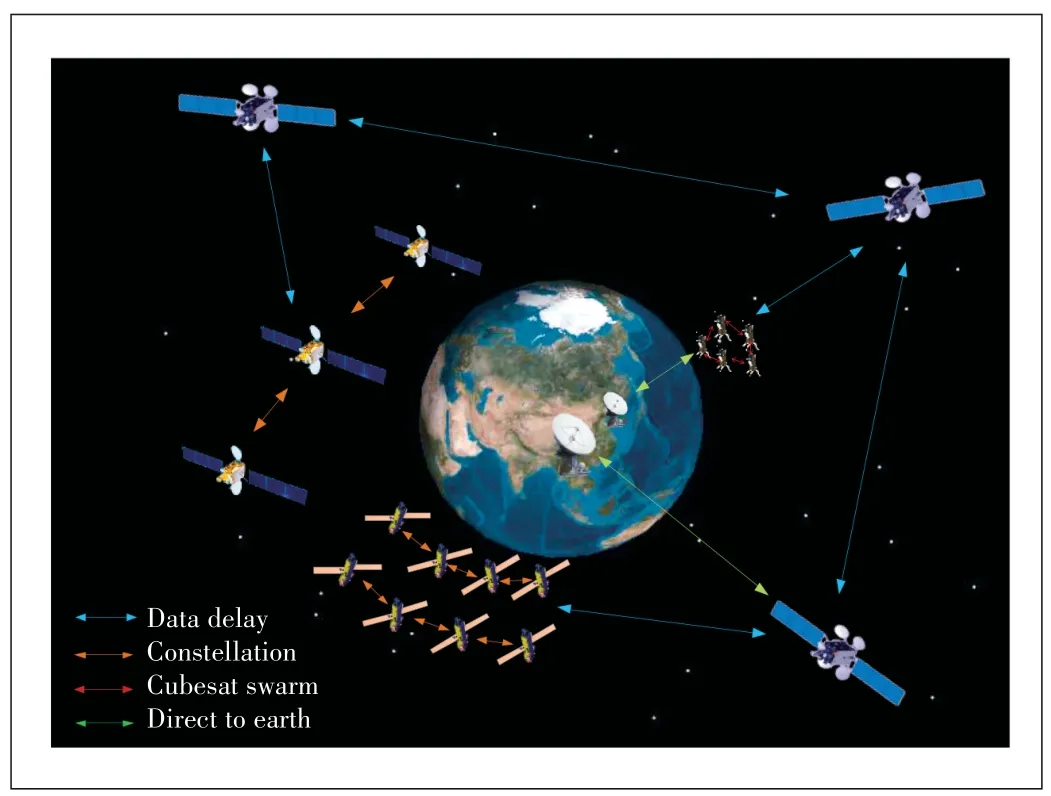
▲Figure 1.Schematic of space laser network.
The space laser communication network is the cornerstone for the high-speed information transmission and relay among multiple platforms,as shown in Fig.1,the construction of integrated space-based and ground-based information network,and the protection of space information security.Therefore,it has great military significance as well as economic and social benefits.SpaceX in the United States launched its first“Starlink”mission in May 2019,by sending 60 satellites into the low-Earth orbit.The laser communication link will be part of the second generation satellite network.Laser Light in Europe will deploy an all-optical hybrid global communication network plan called high articulation laser optics (HALO)in 2020,using medium earth orbit (MEO)satellites to interconnect more than 100 ground nodes around the world,with a communication capacity of 33 Tbit/s.China's representative plans for the space information network include“Hongyan”and“Hongyun”projects,which were proposed by China Aerospace Science and Technology Corporation and China Aerospace Science and Industry Corporation respectively.“Hongyan”will constitute a global satellite communication system consisting of 300 low-orbit small satellites.Meanwhile,“Hongyun”plans to launch 156 satellites by the end of 2023,aiming at constructing an integrated information system of communication,guidance and remoteness.At present,combined with satellites at low earth orbit(LEO),geostationary earth orbit (GEO) and MEO,the spatial information network nodes will further develop toward swarm constellations of small satellites[4-7].
CubeSat is one kind of the LEO satellites less than 10 kg,with basic volume element of 10 × 10 × 10 cm3(1 U),and generally operates in orbits of 250 km to 1 000 km altitude.Due to its high performance,low cost,fast response and other promising characteristics,CubeSat has become an important part of low-orbit SIN construction,as well as space exploration,technical verification,and scientific research[8-10].Europe,the United States and Japan have carried out comprehensive and in-depth research on the key technologies of laser communication terminal (LCT) on CubeSat[11-12],of which important results and the initially completed on-orbit test have been obtained.In this paper,the latest development of CubeSat LCT is summarized,and the characteristics,key technologies and solutions of CubeSat LCT are also discussed.
2 Latest Progress over Laser Links on CubeSats
There has been a great deal of interest in the research of CubeSat LCT in recent years.Globally,the main research institutions includes the USA National Aeronautics and Space Administration (NASA),the USA Jet Propulsion Laboratory(JPL),the European Space Agency (ESA),the German Space Center (DLR) and National Institute of Information and Communication Technology (NICT) in Japan and China Academy of Space Technology(CAST)(Xi'an).
2.1 European
In 2008,Germany's TerraSAR-X satellite and United States'NFIRE satellite successfully established the first coherent laser communication link,achieving a communication distance greater than 5 000 km and a rate of 5.6 Gbit/s.This marks that the space laser communication has stepped on a new stage.The TESAT satellite is equipped with the laser terminal LCT135 developed by DLR,which becomes the standard configuration of European Data Relay Satellite System(EDRS)[13-14].It undertakes the mission of major load,with up to 12 years in-orbit lifetime.LCT135 has made important contributions to the establishment of high-orbit satellites backbone networks and low-orbit satellites swarm constellations.
After more than three decades of research and technical accumulation,TESAT has developed a series of new LCT products,as shown in Table 1.
In 2018,TESAT,KSAT and GomSpace jointly developed an advanced CubeLCT providing full optical communications capability for new innovative small satellite missions and space-based services[15].As shown in Fig.2,this product is the smallest laser terminal product in the world.Specifically,its signal light is 1 550 nm,and the intensity modulation/direct detection is utilized.The communication rate of downlink is 100 Mbit/s,while the uplink rate is 1 Mbit/s.The required attitude control system (ACS) accuracy for satellite is about ±1°.According to the original plan,the CubeLCT would perform the first on-orbit laser link verification be-tween CubeSats equipped on a 3-unit platform at the end of 2019,but the schedule has been delayed.
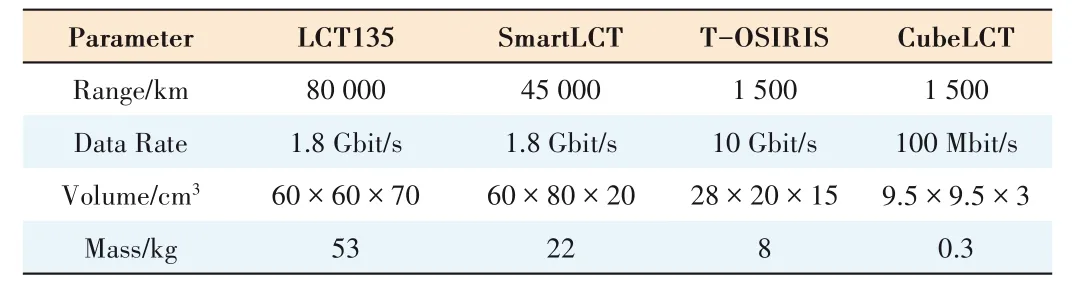
▼Table 1.TESAT LCT
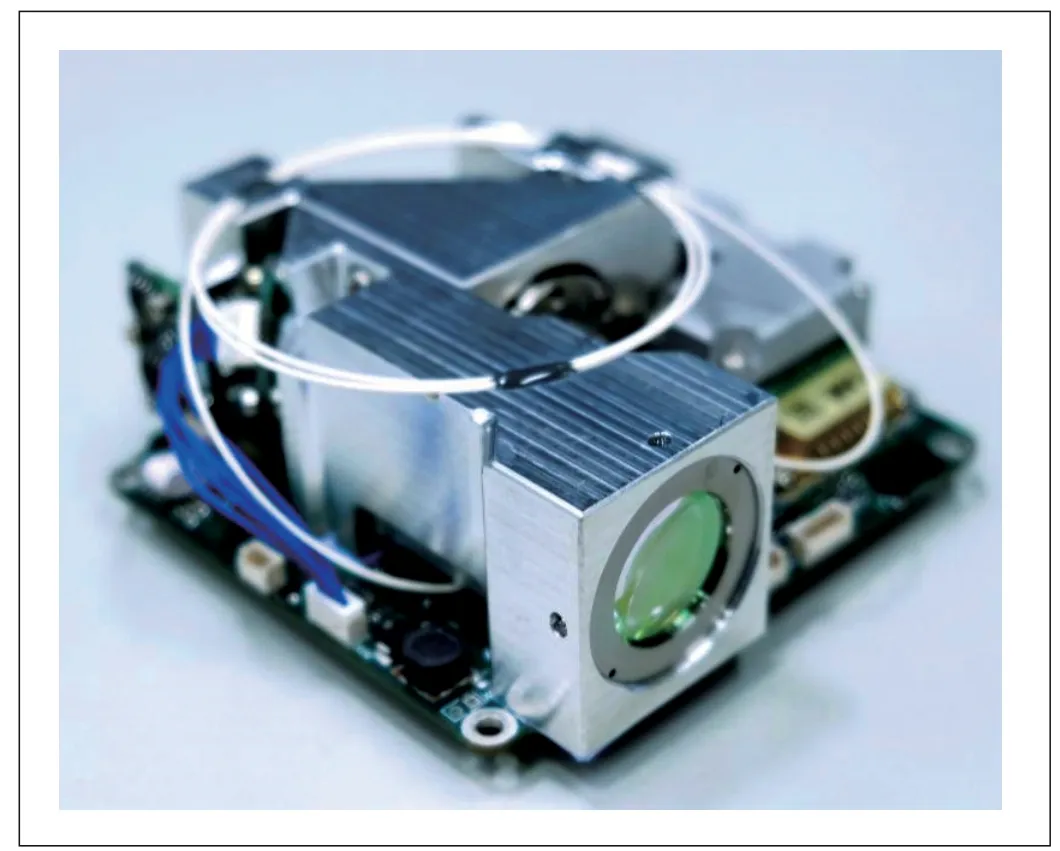
▲Figure 2.Photo of TESAT CubeLCT.
CUBE ISL,an improved item on the basis of CubeLCT,which is designed to implement the low-orbit inter-satellite bidirectional laser link and the LEO-aircraft laser link,would be adopted to the CubeSat mega-constellation.The volume and weight of CUBE ISL are 2 U and 3 kg,respectively.The link distance is 3 800 km,with the communication rate of 150 Mbit/s.Telescopes and coarse pointing assemblies (CPAs) with apertures of 15 mm,30 mm,and 60 mm could be supported.
2.2 USA
The United States has developed a large number of microsatellite laser terminals.The representative laser links include the optical communication and sensor demonstration (OCSD),the nano-satellite laser downlink (NODE) plan,the CubeSat infrared laser bidirectional communication (CLICK),Q4 mission and terabyte infrared delivery (TBIRD) high-speed data transmission plan.The main parameters are shown in Table 2.
2.2.1 OCSD
NASA's optical communication and sensor demonstration(OCSD)[16-17]focused on the problems that CubeSat laser links have encountered in common.One is to verify the high-speed data transmission,and the other is to improve the inter-satellite short-range communication.OCSD was successfully launched in October 2015.This was the first CubeSat laser payload mission in the world.The OCSD plan included three 1.5 U CubeSats,sent into orbit by two independent launch tasks.Each CubeSat had a volume of 10 ×10 ×17 cm3and a weight of 2.5 kg.The OCSD accomplished LEO-ground optical communication demonstration verification at night and under clear weather conditions.In the initial stage,the pointing of CubeSat LCT was aligned with the ground station as a preparation,and then the high speed laser communication link was established with the ground terminal on Mount Wilson in Southern California.The laser link is shown in Fig.3.The feasibility of using existing commercial devices and micro-system integration technology for CubeSat and other tiny aircrafts was confirmed.The ground station was equipped with a 30 cm diameter receiving antenna,supporting 5-50 Mbit/s communication rate,and could be extended up to 2.5 Gbit/s.
2.2.2 CLICK
The goal of CLICK project[18-19]is to use two 6-unit CubeSats in the same orbit to achieve bidirectional communication at a distance of 25-580 km.The data rate is higher than 20 Mbit/s.CLICK A is the first mission.The laser terminal uses mature fiber optical devices and commercial off-the-shelf (COTS) optical devices to reduce cost.The data rate could be extended up to gigabit per second.Meanwhile,the precise pointing alignment performance of the fast steering mirror (FSM) control loop will be verified and will provide technical support for subsequenttasks.CLICK B and C plan to establish bidirectional laser link in the same orbit.The LCT basically inherits CLICK A's status and key technologies,working at 1.5 μm band with separated transmitting and receiving wavelengths.RF signals with broad beam width will be utilized in the initial pointing,acquisition and tracking (PAT) process to reduce requirements for the stability of platforms.In addition,both CubeSats are equipped with compact low-power on-chip atomic clocks to verify the high-precision inter-satellite clock synchronization and ranging at the 10 cm level.NASA's subsequent tasks of CLICK are constructing CubeSats constellation or a swarm network via laser links,aiming to achieve high-speed transmission and processing for high-resolution image and sensing field.Fig.4 shows the LCT's internal structure of CLICK A and CLICK B/C,where the green part is the electronic processor.The project is scheduled to launch from 2020.

▼Table 2.NASA's CubeSat laser link demonstration
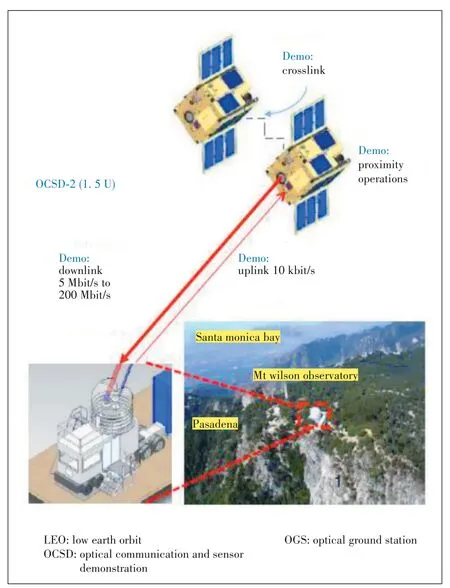
▲Figure 3.OCSD LEO-OGS link.
2.2.3 Q4 Mission
In 2018,JPL proposed the Q4 mission[20-21],a new generation of swarm platforms based on an inter-satellite omnidirectional optical communicator (ISOC).The Q4 mission enables simultaneous communications with multiple CubeSats at gigabit per second data rates,which represents the most advanced interorbital laser links,as shown in Fig.5.The Q4 mission mainly verifies three main features:1) the signal sending and receiving technology of the full-sky coverage (360° field of regard); 2) the high speed inter-satellite communication of up to 1 Gbit/s data rates; 3) the ability to maintain multiuser access at the same time.The ISOC will be equipped on four 6-unit CubeSats platforms,and high technology readiness level(TRL) components are selected to achieve successful link establishment.
2.2.4 TBIRD
NASA's TBIRD plan[22-23]will validate the key technology of 200 Gbit/s LEO-ground link.Up to now,the turbulent environment and space reliability has been tested.The 6-unit CubeSat for verification will be equipped with the LCTs,which include optical transmitters,optical amplifiers,telescopes,tracking detectors and uplink receivers.The key devices of the transceiver are two 1 550 nm optical fiber transmitters,supporting 100 Gbit/s.The transmission module realizes 200 Gbit/s data rate by employing the wavelength division multiplexing,and the output power of erbium-doped fiber amplifier (EDFA) is 1 W.The diameter of transmitting telescope is 12 mm.The LCT,equipped with high-density solid-state hard disk for terabits data cache,completes the LEO-ground communication at a rate of more than 100 Gbit/s during short link maintaining time.The diameter of the ground terminal telescope is 400 mm,and the wave front correction is performed through a broadband adaptive system to reduce fiber coupling loss.The coherent receiver is COTS components in terrestrial fiber optic communications.
2.3 Japan
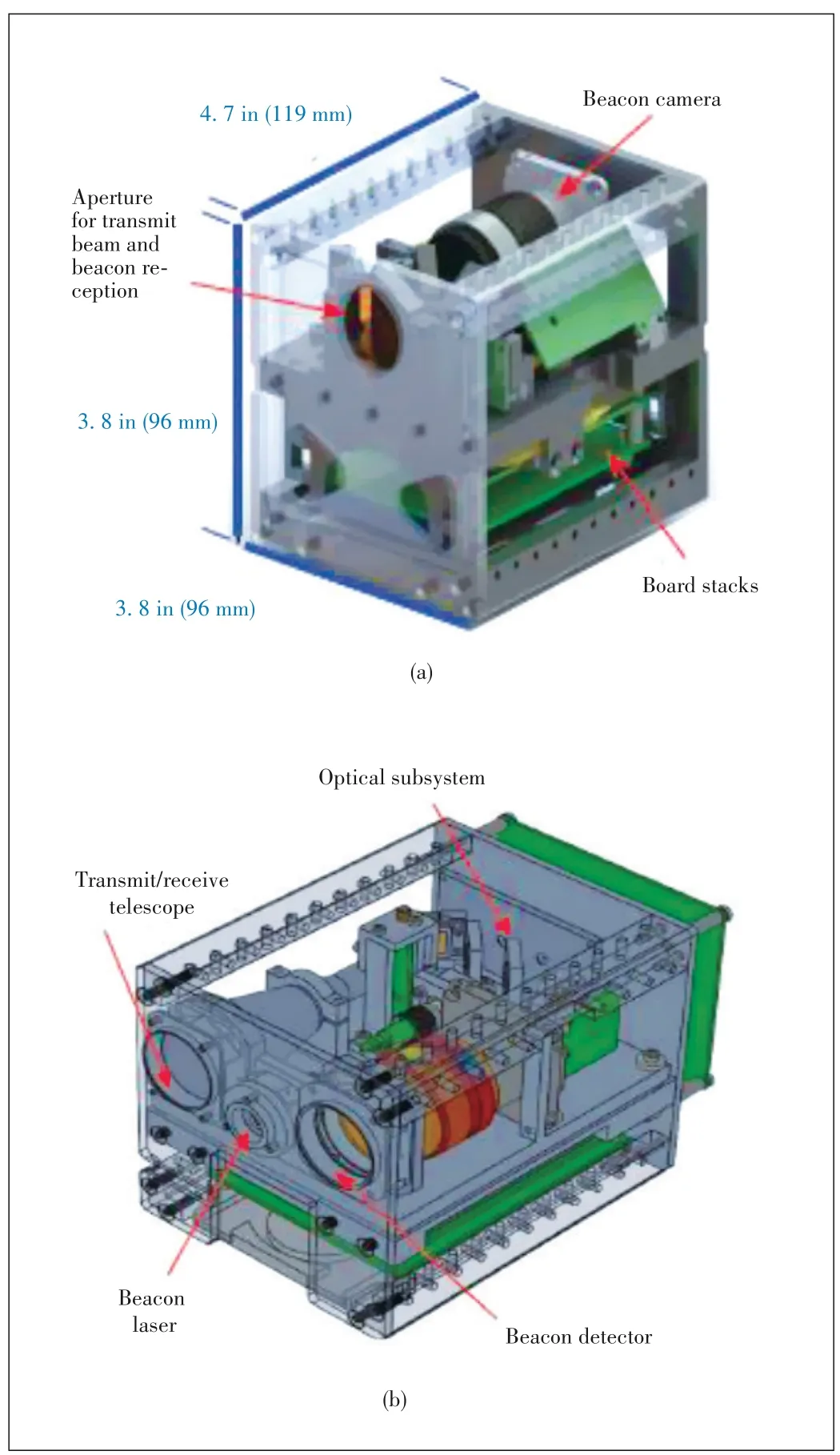
▲Figure 4.Internal structure of laser communication terminal (LCT):(a)CLICK A;(b)CLICK B/C.
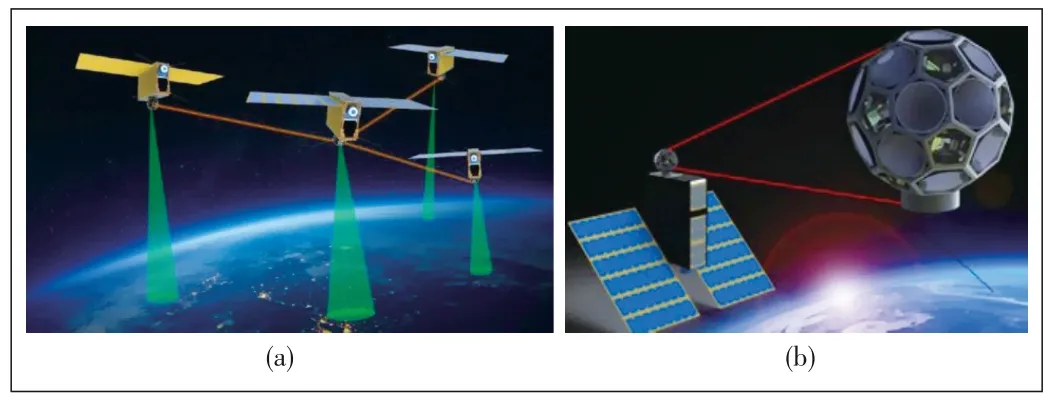
▲Figure 5.Interorbital laser links:(a) Q4 mission to demonstrate the inter-satellite omnidirectional optical communicator (ISOC) capabilities;(b)ISOC.
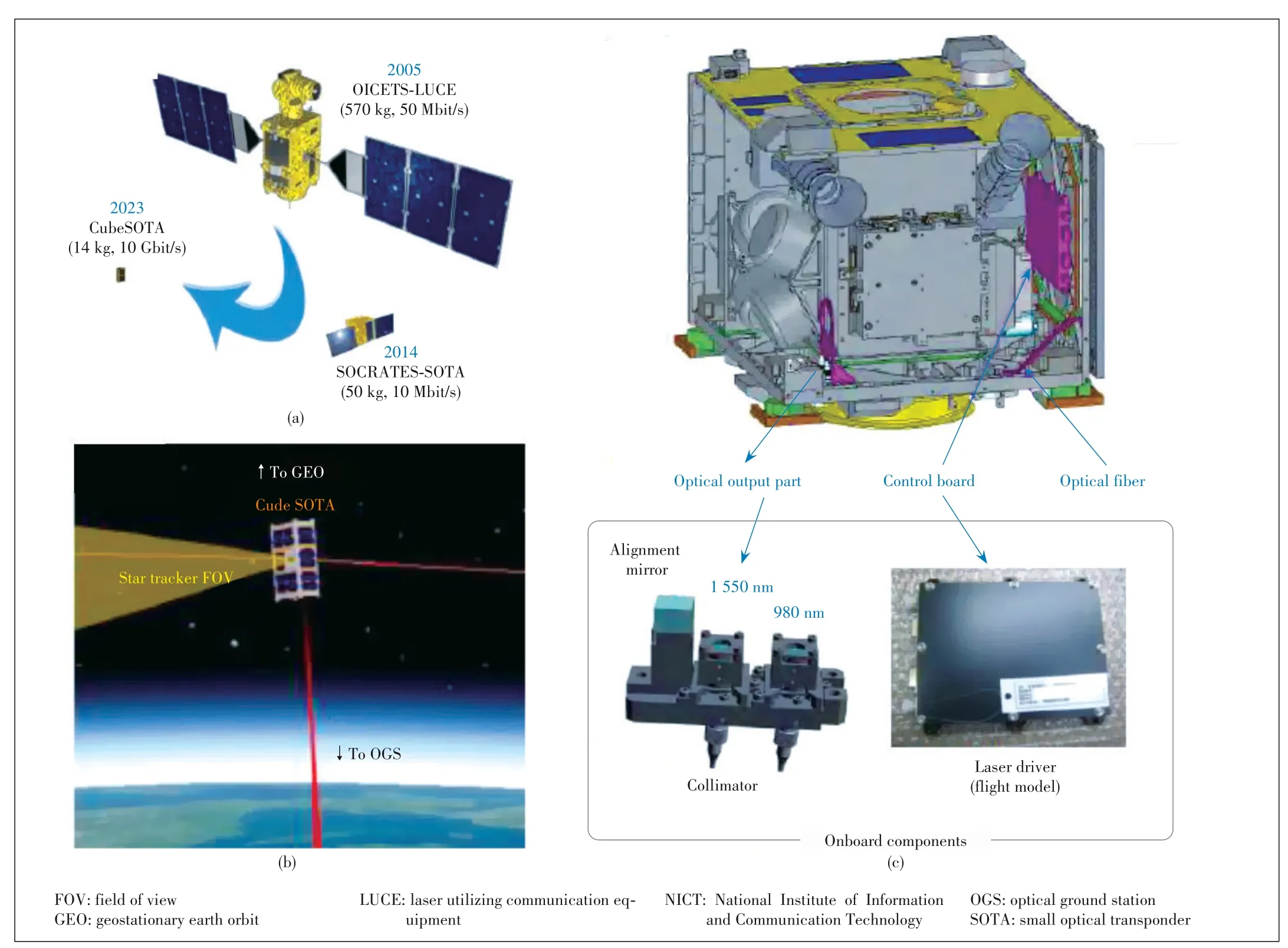
▲Figure 6.Development and architecture of SOTA:(a)history of NICT's lasercom low earth orbit(LEO)satellites(to scale);(b)conceptual illustration of CubeSOTA experiments;(c)very small optical transmitter(VSOTA)architecture.
NICT has investigated the space laser communication for a long period.In 2005,it first constructed a low-orbit satellite to ground bidirectional laser link.After ten years of development,the LCT had been improved from the 140 kg laser utilizing communication equipment (LUCE) to the 6 kg small optical transponder(SOTA).SOTA was the first LCT for small satellite platforms in the world,as shown in Fig.6.In 2016,NICT and the University of Tokyo collaboratively implemented a series of research on laser terminals suitable for the Cube-Sat platform,including high-bandwidth communications,precise attitude control,and technical verification of device miniaturization.The first CubeSat LCT mission is CubeSOTA[24-25],carried by a 6-unit CubeSat platform.The volume of LCT is about 3 units,and the total weight of the satellite is less than 14 kg.It is scheduled to be launched in 2023 with an orbital altitude of 390 km.It will establish an LEO-GEO unidirectional link at the speed of 10 Gbit/s with the high-orbit satellite ETS-9 in the mission of high-speed communication with advanced laser instrument (HICALI).In addition,NICT also plans to carry the very small optical transmitter(VSOTA) on the RiseSat,which is shown in Fig.6c,realizing a communication link from the CubeSat to OGS.The terminal has a mass of 700 g and a power consumption of 3.5 W every 10 minutes with a link distance of 700 km.The precision requirement for the platform's ADCS accuracy is 0.1°,with an expected communication rate of 50 Mbit/s.
2.4 China
CAST (Xi'an) and Shanghai Institute of Optics and Fine Mechanics (SIOM) make efforts to research the small LCTs on the satellites over the decades.The LEO inter satellite LCT technology by LaserFleet for“Xingyun”satellites has been successfully verified for the first time,realizing two-way communication with complete link building process and stable telemetry status.The LCT has made a breakthrough in quality and power consumption.It has achieved medium and long-distance inter-satellite communication on the basis of 6.5 kg and 80 W power consumption.
3 Key Technologies and Progress of Cube-Sat LCTs
Due to the small volume and weight of CubeSat,the requirements of CubeSat LCT's volume,weight and power consumption are extremely strict.As CubeSats are generally located in low-Earth orbit,the link maintaining time of LEO-OGS is quite short,about 10 min/pass.During this period,the typical microwave communication is performed with the data rate of 9.6 kbit/s,while the total data size is only a few Mega bits per second.If the laser link is established stably,the data rate of the laser communication is generally above giga bits per second,which is promising for real applications.
The traditional space laser communication technology has been verified.In addition to inheriting the advanced technology achievements,the CubeSat LCT still has to break through several key technologies,such as PAT technology and low SWaP technology.CubeSats network formation is the future development of satellite applications such as earth observation,resource detection,navigation and positioning.The LCT's pointing accuracy of LEO-to-ground link with stable communication above 50 Mbit/s only needs 0.25° by calculation[26-28].When establishing inter-satellite communication link,the attitude determination control system (ADCS)of CubeSat works on the basis of the GPS data and high-precision orbit measurement results to execute coarse pointing.The attitude,positioning accuracy,vibration and dynamics coupling characteristics of the platform will affect the tracking and targeting performance of the laser communication system.The overall parameters of CubeSat LCT are shown in Table 3.
3.1 High Precision PAT
3.1.1 LEO-OGS Links
The famous LEO-OGS link NODE mission in the USA could be considered as the representative to introduce the technology of downlink establishment[27].The ground station terminal emits the beacon light upwards to achieve coarse pointing,and the downlink realizes the second-level fine acquisition and tracking through the FSMs and the power monitoring loop.The signal wavelength is 1 550 nm and the beacon is 850 nm.The signal light divergence angle is 1.3 mrad.The PAT control system can adaptively switch between coarse tracking and fine tracking modes according to the satellite's vibration degree.At the beginning of the link establishment,the CubeSat LCT emits light to the ground station and waits for the uplink beacon light coming from the ground station.The field of view of the beacon light detector of LCT coversthe uncertain area.Once the uplink beacon is detected,the pointing of CubeSat is then adjusted to improve the uplink performance.Finally,FSM enables the emitted light enter the field of view of the detector of ground station accurately.According to the power undulation of the detector,the ground station generates an RF signal to the CubeSat until the received optical power reaches its maximum.At this point,CubeSat LCT then completes its pointing adjustment according to the RF feedback loop,and the downlink is successfully established.The tracking accuracy of±90 μrad (3σ)is achieved by using this two-stage tracking mechanism.
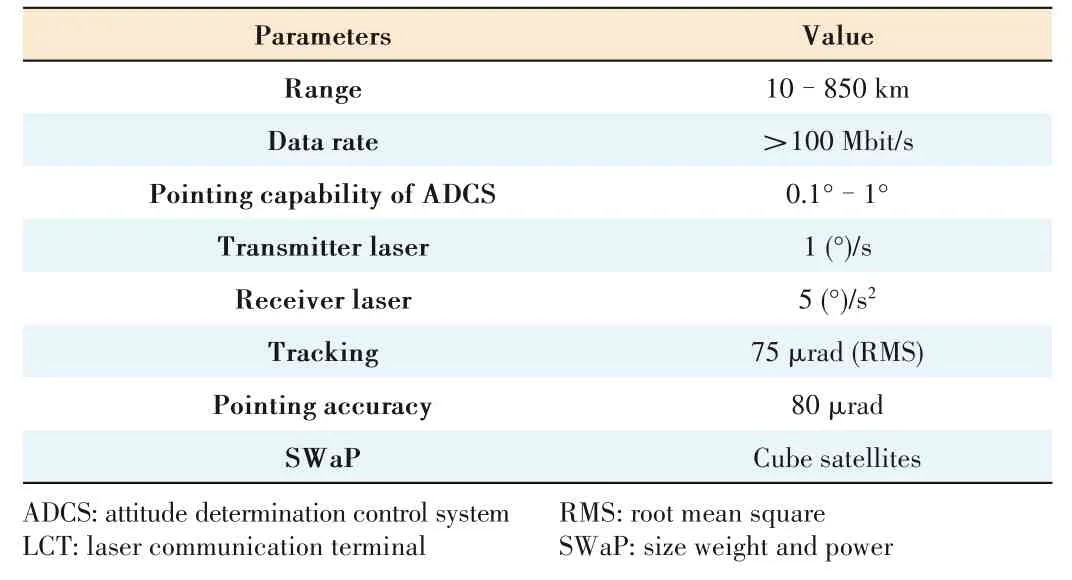
▼Table 3.Overall parameters of LCTs on the CubeSats
3.1.2 LEO-LEO Satellites Bidirectional Communication
The CLICK project is a typical bidirectional laser communication link between CubeSats[28].There are three detectors in the PAT loop,including the beacon light camera,precision tracking detector-4 quadrant detector (4QD) and communication detector-avalanche photodiode (APD).FSMs are used to eliminate vibration.Table 4 shows the parameters of the CLICK PAT system.The link establishment includes 5 parts.
(1) Calibration:a calibration beam with the transmitting communication beam is centered on the 4QD by actuating FSM.
(2) Initialization:the altitude position and speed data are notified to each other through a low-speed radio frequency loop,and the distance information can be obtained in combination with the star tracker,GPS position and ephemeris data.In the initial stage of link establishment,each satellite obtains its own orbit information through star sensor data with an error of 25 km.CubeSat systems can achieve body pointing on the order of a few degrees with a reaction wheel assembly(RWA).
(3) Acquisition-closed loop coarse pointing:the closed loop fine pointing is achieved by targeting a 4QD with beacon light which provides closed feedback control to FSM.Then both sides emit beacon light and the beacon light detector performs“gaze”.Once one of the detectors receives signal,this stepcan increase the pointing accuracy to 10-100 arcsec.
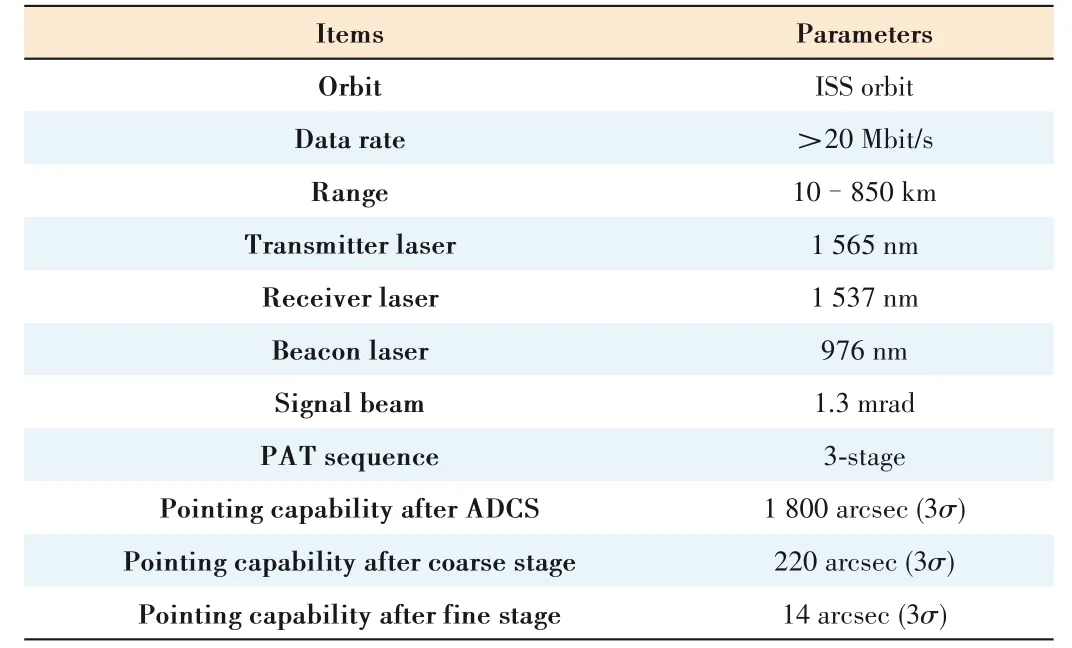
▼Table 4.Parameters of the CLICK PAT system
(4) Acquisition closed-loop fine pointing:the beacon light reduces the output power through the attenuator,scans the light to the 4QD detection target surface through the vibration of the FSM,and accomplishes high-precision tracking through closed-loop control.
(5) Communication:if the APD does not detect the received signal,FSM scans the beacon signal over the 4QD until the APD detects a signal.Therefore,FSM targets this offset location on the 4QD.The ultimate pointing accuracy is about 10 arcsec,meanwhile the platform jitter below 220 Hz can be suppressed.
The fine pointing mechanism of the CubeSat LCT generally uses a compact micro-electro mechanical systems (MEMS)-FSM with low consumption power.The representative products and corresponding performance are shown in Fig.7.The domestic research team includes YOU Zheng's team[29]from Tsinghua University.
In order to realize a fast user access into the space communication network dynamically,as well as the rapid establishment and switching among the lasers links of multiple dynamic users,the optical phased arrays[30]have attracted attention progressively,among which the liquid crystal phased array has relatively higher maturity.NASA and Vescent have jointly developed a liquid crystal-based light deflector[31],which is applied in the tracking loop with the field of view of 18° × 4°,as shown in Fig.8.Its scanning accuracy is 19.4 μrad×2.43 μrad,and the bandwidth is in the order of kilo hertz.The output beam propagation ratios M2is 1.02,the volume is 7 × 5 × 5 mm3,the weight is 10 g,and the power consumption is less than 50 MW.
3.1.3 New Laser Beam Pointing Methods
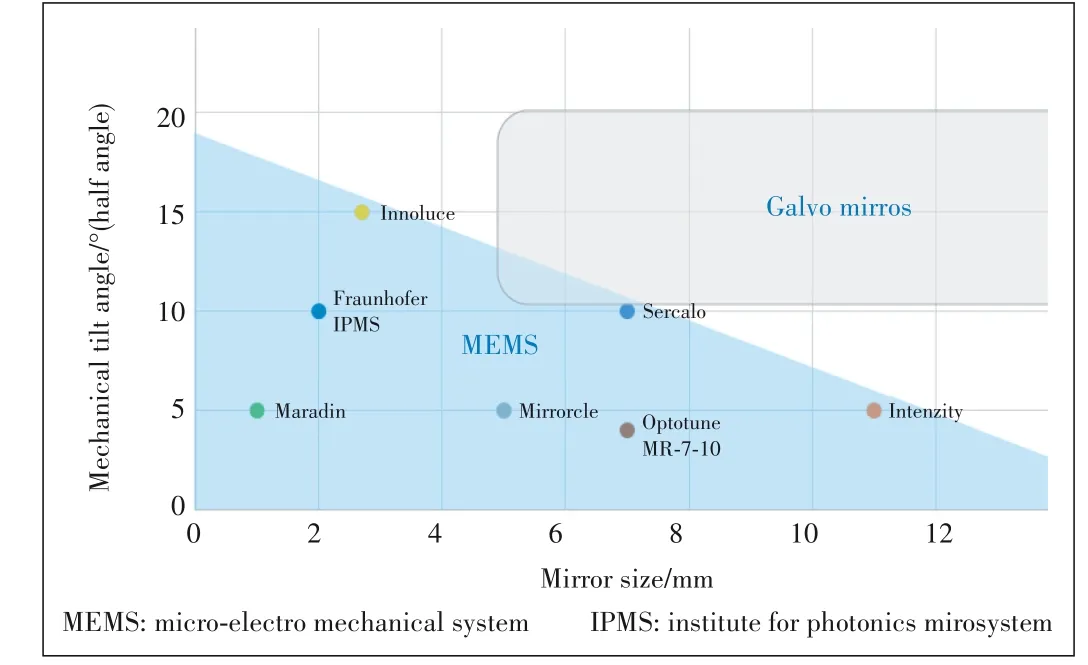
▲Figure 7.Micro-electro mechanical systems-fast steering mirror(MEMS-FSM)capability.
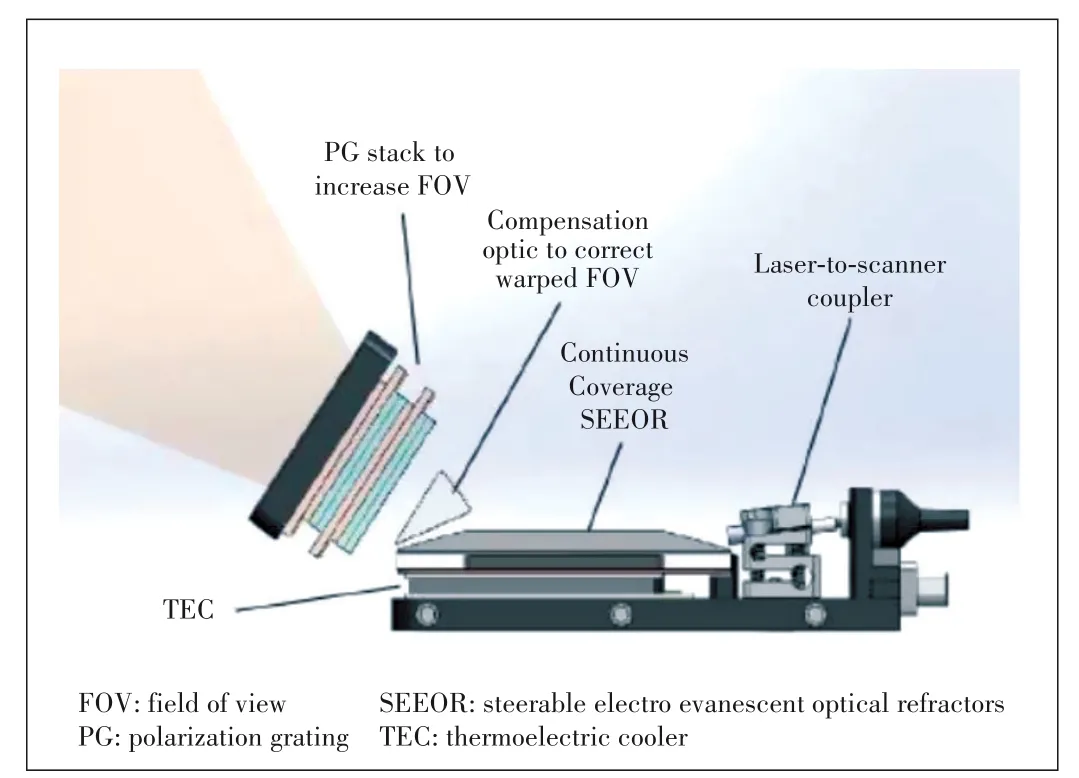
▲Figure 8.Low SWaP electro-optic beam deflector based on liquid crystal clad.
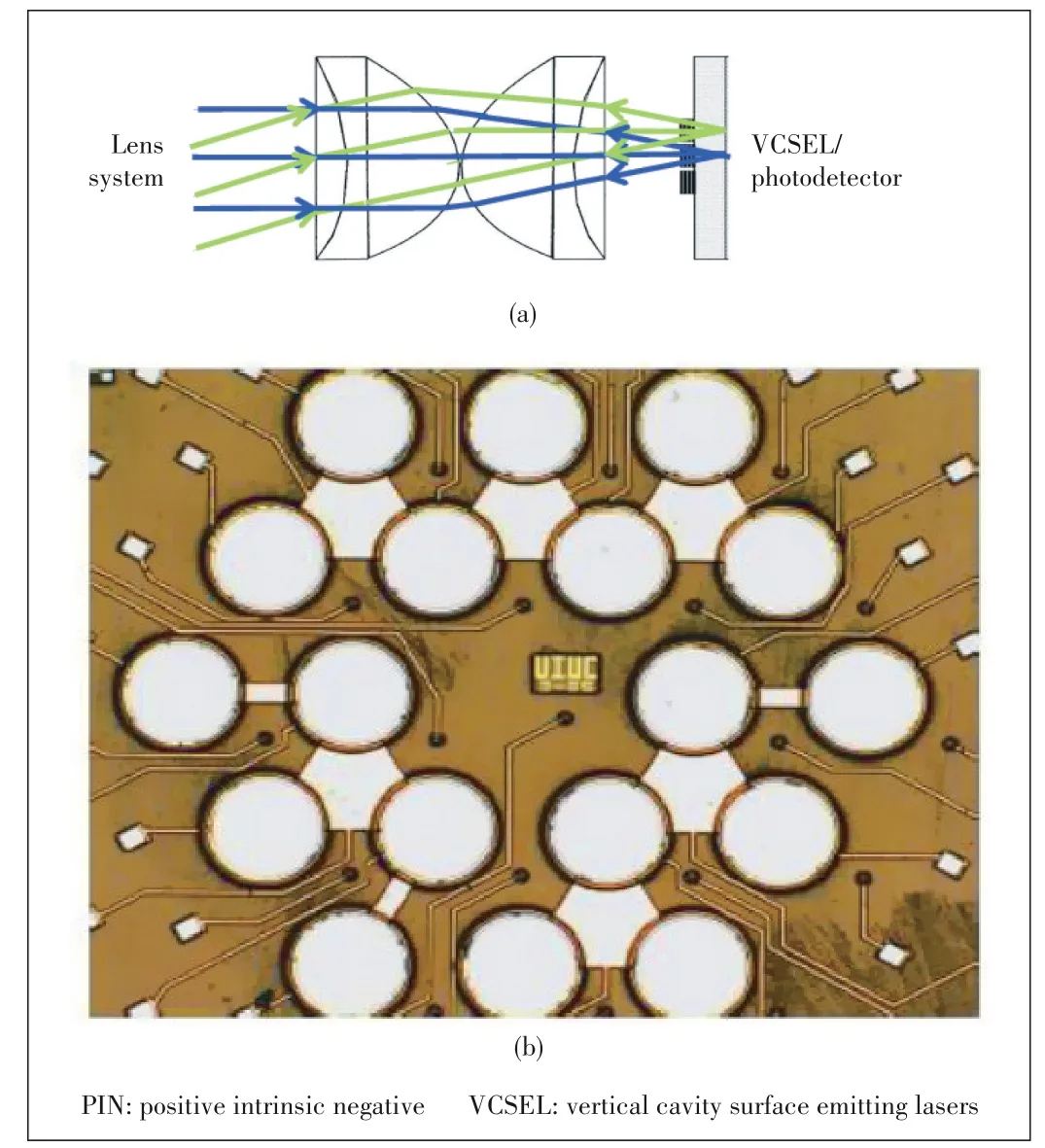
▲Figure 9.VCSEL/PIN detector array.
NASA's Goorjian[32]proposed a new technology that uses laser arrays to implement laser beam pointing instead of FSM,which is a static pointing method.As shown in Fig.9a,the signal light emitted from the ground enters the laser detector array through the telescope.Fig.9b gives a top view of the detector array.The small black dots in the figure present vertical cavity surface emitting lasers (VCSEL)and the large white circles are detectors of the positive intrinsic negative (PIN)structure.The detector has high sensitivity,and hence corresponds to extremely weak signals.Once the detector responds,the surrounding lasers will produce a strong return output light emitted by the same aperture,reaching the ground laser terminal.If the direction of the signal from ground terminal shifts,the corresponding detector in the array will respond,and the adjacent laser will turn on the light to realize the“handshaking”phase in the tracking loop.VESCEL laser array shows regular distribution,and the light emitted by each laser is an incoherent single mode beam to ensure that the beam does not interfere during transmission.The devices used are mature,which saves the use of FSMs and control software,reduces power consumption and design complexity,and features a large field of view and a fast response(GHz).
3.2 Low SWaP Design
In the satellite constellation,the satellites in inter-orbital planes have fast relative velocity of motion and large azimuth and elevation angle changes.The LCT needs to rely on CPA to compensate for orbital movements.CPA generally uses a turret structure,the biggest roadblock for realizing the lightweight of LCT,which includes azimuth and elevation axes,electric motors,and code disks.As shown in Fig.10,NASA has recently proposed an omnidirectional antenna design[20-21],which can omit CPA and other mechanical structures.The transmitting telescope aperture is 1 inch,and each component consists of a laser,a fixed-position reflector,and a MEMS-FSM.The laser emits an 850 nm wavelength beam with a divergence angle of 10°,compressed to 0.0095° by the collimator.The tilt range of MEMS is ±12°.The emission part is distributed in an array on the ISOC,and the emitted light covers the full field of view.
In order to realize the integration of communication transceiver,the application potential of novel photonic devices represented by photonics integrated circuits (PIC) should be fully exploited,enabling on-chip integration of active devices such as lasers,detectors,modulators with passive devices,as well as the high speed digital circuits.Highly integrated functional modules with extremely high bandwidth and lossless transmission should be developed,and properties should be tested under mechanical,thermal,and electromagnetic environment to show adaptability to the satellite platform.NICT applies the PIC fiber delay line[25-33]for the first time in the differential phase shift keying (DPSK) demodulation module in its HICALI LCT,which will verify its reliability performance in orbit.Compared with the traditional implementation approaches,NASA has also carried out research on the PIC module,and integrated the laser transceiver and digital processing circuits of LCT successfully,achieving a hundred fold reduction in SWaP,as shown in Fig.11a.Fig.11b is the picture of a small transmitter developed by G&H[33].
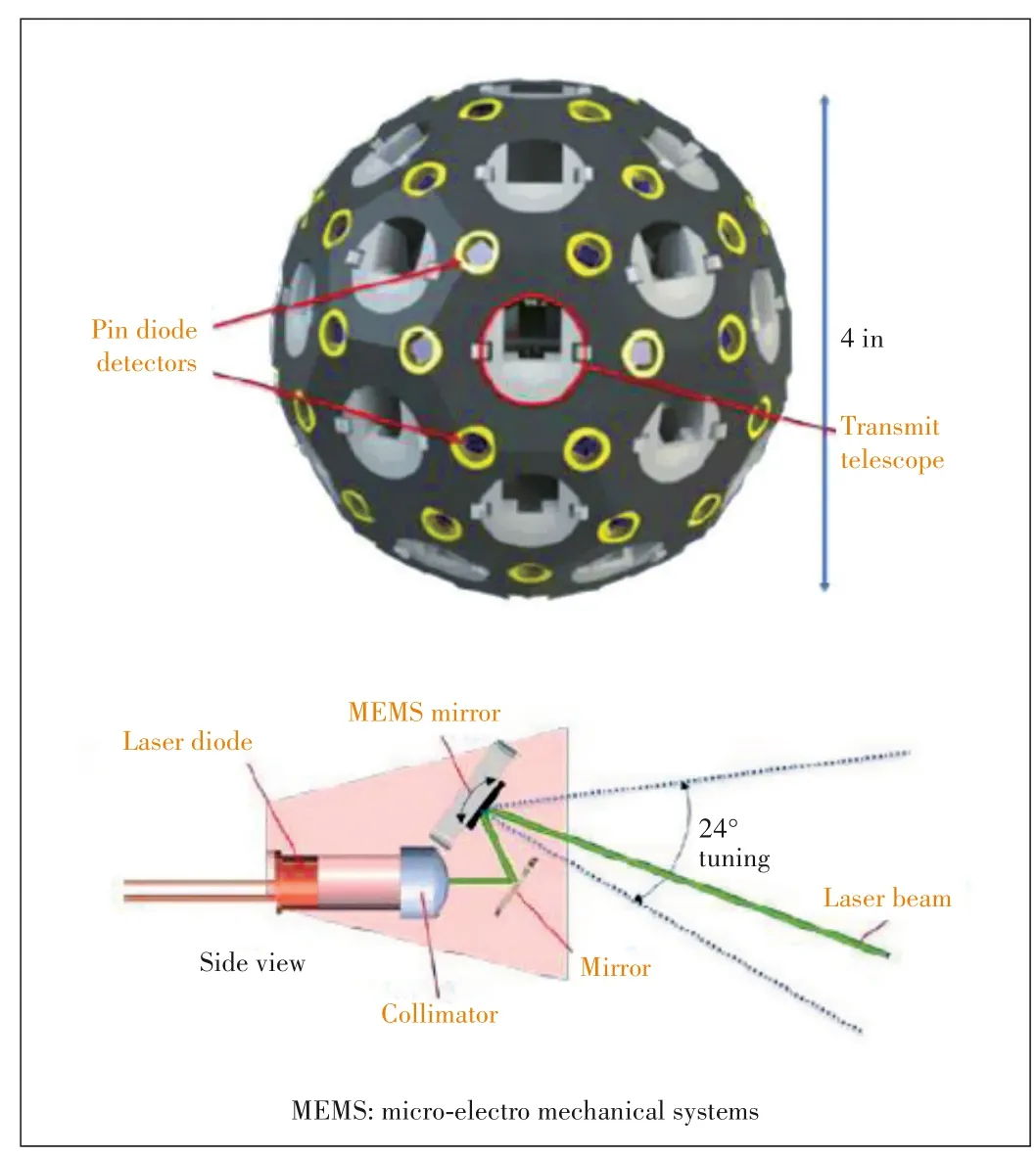
▲Figure 10.Inter-satellite omnidirectional optical communicator(ISOC)truncated dodecahedron and transmit telescope.
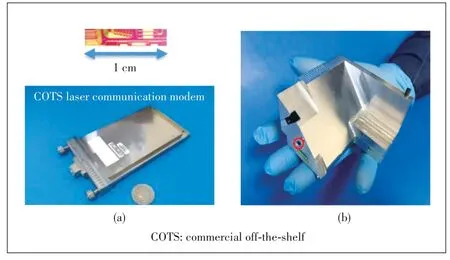
▲Figure 11.Small transmitter developed by G&H:(a) COTS laser communications modem based on photonics integrated circuits (PIC);(b)G&H transmitter.
The communication link is affected by the demodulation sensitivity.Under the condition that other constraints are determined including the distance,channel conditions and telescope aperture,sufficient link margin needs to be guaranteed to achieve high-bandwidth transmission.In general,there are two types of optical amplifiers with the output power greater than 1 W:high-power laser diode (HPLD) amplifier and master oscillator power amplifier (MOPA) structure fiber EDFA[34-35].Semiconductor optical amplifiers are small in size,easy to integrate,and low in power consumption.They have inherent advantages in photonic integration,but have difficulty in the design of high modulation bandwidth drive circuits and the improvement of the spectral quality.The technical development trend of EDFA is to improve its electro-optical efficiency and develop multi-channel optical amplifiers suitable for wavelength division multiplexing.Specifically,G&H has developed a highly integrated multi-channel C-band EDFA,which will be used for OPTEL-μ.It has a volume of 143 × 153 × 24 mm3and a weight of 650 g.The output optical power is 26 dBm,with electric power consumption lower than 6.5 W,and the reliability has been verified in the space environment test.
3.3 New PAT and Ultra High Integrated Transceiver System in CAST(Xi'an)
CAST (Xi'an) takes the lead in the development of small LCTs with advanced technology over decades.The beaconless acquisition strategy and coherent tracking technology are researched for the high precision PAT.Back propagation algorithm and Kalman filter is employed to improve the system tracking performance.Fig.12 shows the simulation analysis of the comparison of the power spectral density of the system tracking error by conventional method and by Kalman method.Coherent tracking is an effective method which adopts the integrated tracking and communication technology to maintain the communication link over the direct sunlight.
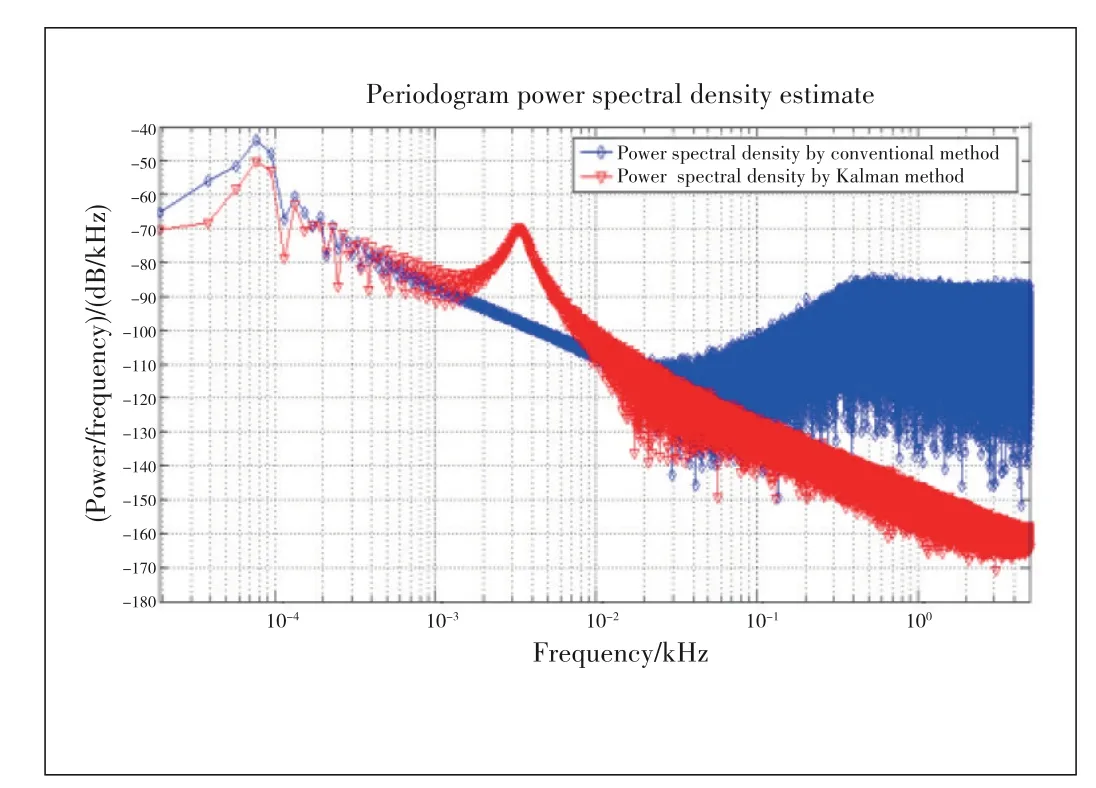
▲Figure 12.Power spectral density of beaconless system track error.
4 Conclusions
The paper summarizes the latest advanced technology development and the system design of CubeSat LCTs.The requirements of the CubeSat LCTs and key technologies for laser link establishment are discussed.PAT technology is one of the important issues,which relies on the satellite reaction wheel assembly (RAW) and FSM as the actuator.The indicators such as the beam width and the tracking accuracy are given.The typical CubeSat laser communication link establishments,including LEO-to-ground and LEO-LEO as well as the PAT process,are briefly demonstrated.The other key technology is the lightweight design of LCTs.Therefore,the optical phased array technology,highly integrated laser transceivers based on PIC,and low SWaP highly integrated optical amplifiers are all the key techniques in LCTs on CubeSats.
- ZTE Communications的其它文章
- Balanced Discriminative Transfer Feature Learning for Visual Domain Adaptation
- Robust Lane Detection and Tracking Based on Machine Vision
- M?IRSA:Multi?Packets Transmitted Irregular Repetition Slotted Aloha
- Feasibility Study of Decision Making for Terminal Switching Time of LEO Satellite Constellation Based on the SGP4 Model
- Adaptability Analysis of IP Routing Protocol in Broadband LEO Constellation Systems
- Satellite E2E Network Slicing Based on 5G Technology