
Upholding Multilateralism, Fairness and Justice and Promoting Mutually Beneficial Cooperation---Keynote Speech by State Councilor and Foreign Minister Wang Yi At the International Seminar on Global Digital Governance
2021-01-26 02:18:10WangYi
Peace 2020年3期
Multilateralism-implementing
Upholding Multilateralism, Fairness and Justice and Promoting Mutually Beneficial Cooperation---Keynote Speech by State Councilor and Foreign Minister Wang Yi At the International Seminar on Global Digital Governance
Beijing, 8 September 2020
Distinguished Guests,
Colleagues,
Ladies and Gentlemen,
Friends,
We are meeting under the theme "Seizing Digital Opportunities for Cooperation and Development", a topic that is highly relevant. I hope this seminar will be a prime opportunity for participants, from experts, scholars to business leaders, to look into the future of the digital economy, discuss ways to manage data security risks and promote global governance in the digital domain.
Our world today has come to a historic juncture. A new round of technological revolution and industrial transformation is in the making. Countries face the common task of integrating the digital economy with the real economy, speeding up the shift to new growth drivers, and cultivating new industries and new forms of business.
The global spread of COVID-19 has presented a major test to all countries and to our capacity of global governance. In the course of epidemic response, digital technologies, including artificial intelligence, big data and cloud computing, have made rapid progress. Telecommuting, cloud economy and other new business forms have played an important role in keeping the society running and countering the downward pressure on the economy.
According to the latest statistics, the number of mobile Internet users has reached 3.5 billion around the world, and the digital economy now takes up more than 15 percent of the global GDP. The explosive growth and aggregation of data, like the discovery of oil, is providing a new source of energy for economic growth and industrial transformation.
In the meantime, the mounting risks of data security have put national security, public interests and personal rights at stake, and posed new challenges to global digital governance. The frequent and massive cross-border data flow puts to the test the governance capacity of national governments in terms of governance philosophy, legislative framework and regulatory mechanism. The divergence of data laws and regulations in different countries has pushed up the compliance costs for global businesses. To reduce the deficit in global digital governance, countries face a pressing need to step up communication and coordination, build up mutual trust and deepen cooperation with one another.
Distinguished Guests,
Global issues call for global solutions. As President Xi Jinping pointed out, countries, although varied in national conditions, development stage of Internet and challenges, hold the same desire for promoting digital economy, same interests in tackling cybersecurity challenges and same expectations for strengthened cyberspace governance. Countries need to intensify pragmatic cooperation and embark on a path of mutual trust and collective governance, adding more vitality to a community with a shared future in cyberspace.
China believes that to effectively address the risks and challenges to data security, the following principles must be observed:
First, uphold multilateralism. Pursuing extensive consultation and joint contribution for shared benefits is the right way forward for addressing the deficit in global digital governance. It is important to develop a set of international rules on data security that reflect the will and respect the interests of all countries through broad-based participation. Bent on unilateral acts, a certain country keeps making groundless accusations against others in the name of "clean" network and used security as a pretext to prey on enterprises of other countries who have a competitive edge. Such blatant acts of bullying must be opposed and rejected.
Second, balance security and development. Protecting data security is essential for the sound growth of digital economy. Countries have the right to protect data security according to law. That said, they are also duty-bound to provide an open, fair and non-discriminatory environment for all businesses. Protectionism in the digital domain runs counter to the laws of economic development and the trend of globalization. Protectionist practices undermine the right of global consumers to equally access digital services and will eventually hold back the country's own development.
Third, ensure fairness and justice. Protection of digital security should be based on facts and the law. Politicization of security issues, double standards and slandering others violate the basic norms governing international relations, and seriously disrupt and hamper global digital cooperation and development.
Distinguished Guests,
Digital economy in China has been thriving. There are over 900 million netizens, including a fast growing group of 5G subscribers of 88 million, in China. Digital economy takes up more than one-third of China's GDP. We have clear legal provisions for protecting the lawful rights and interests of citizens and organizations, including data security and personal information. The Chinese government has acted in strict compliance with data security principles. We have not and will not ask Chinese companies to transfer data overseas to the government in breach of other countries' laws.
China has taken a constructive part in multilateral discussions on data security including at the UN, G20, BRICS and the ASEAN Regional Forum, contributing China's input to global digital governance. In view of the new issues and challenges emerging in this field, China would like to propose a Global Initiative on Data Security, and looks forward to the active participation of all parties. Let me briefly share with you the key points of our Initiative:
First, approach data security with an objective and rational attitude, and maintain an open, secure and stable global supply chain.
Second, oppose using ICT activities to impair other States' critical infrastructure or steal important data.
Third, take actions to prevent and put an end to activities that infringe upon personal information, oppose abusing ICT to conduct mass surveillance against other States or engage in unauthorized collection of personal information of other States.
Fourth, ask companies to respect the laws of host countries, desist from coercing domestic companies into storing data generated and obtained overseas in one's own territory.
Fifth, respect the sovereignty, jurisdiction and governance of data of other States, avoid asking companies or individuals to provide data located in other States without the latter's permission.
Sixth, meet law enforcement needs for overseas data through judicial assistance or other appropriate channels.
Seventh, ICT products and services providers should not install backdoors in their products and services to illegally obtain user data.
Eighth, ICT companies should not seek illegitimate interests by taking advantage of users' dependence on their products.
I hope the Chinese initiative will serve as a basis for international rules-making on data security and mark the start of a global process in this area. We look forward to the participation of national governments, international organizations and all other stakeholders, and call on States to support the commitments laid out in the Initiative through bilateral or regional agreements. We are also open-minded to good ideas and suggestions from all sides.
I encourage all of you to speak your mind at today's seminar and pool your insights and suggestions on data security and digital economy. By working together, we can jointly advance global digital governance and build a community with a shared future in the digital world.
In conclusion, I wish the seminar a great success!
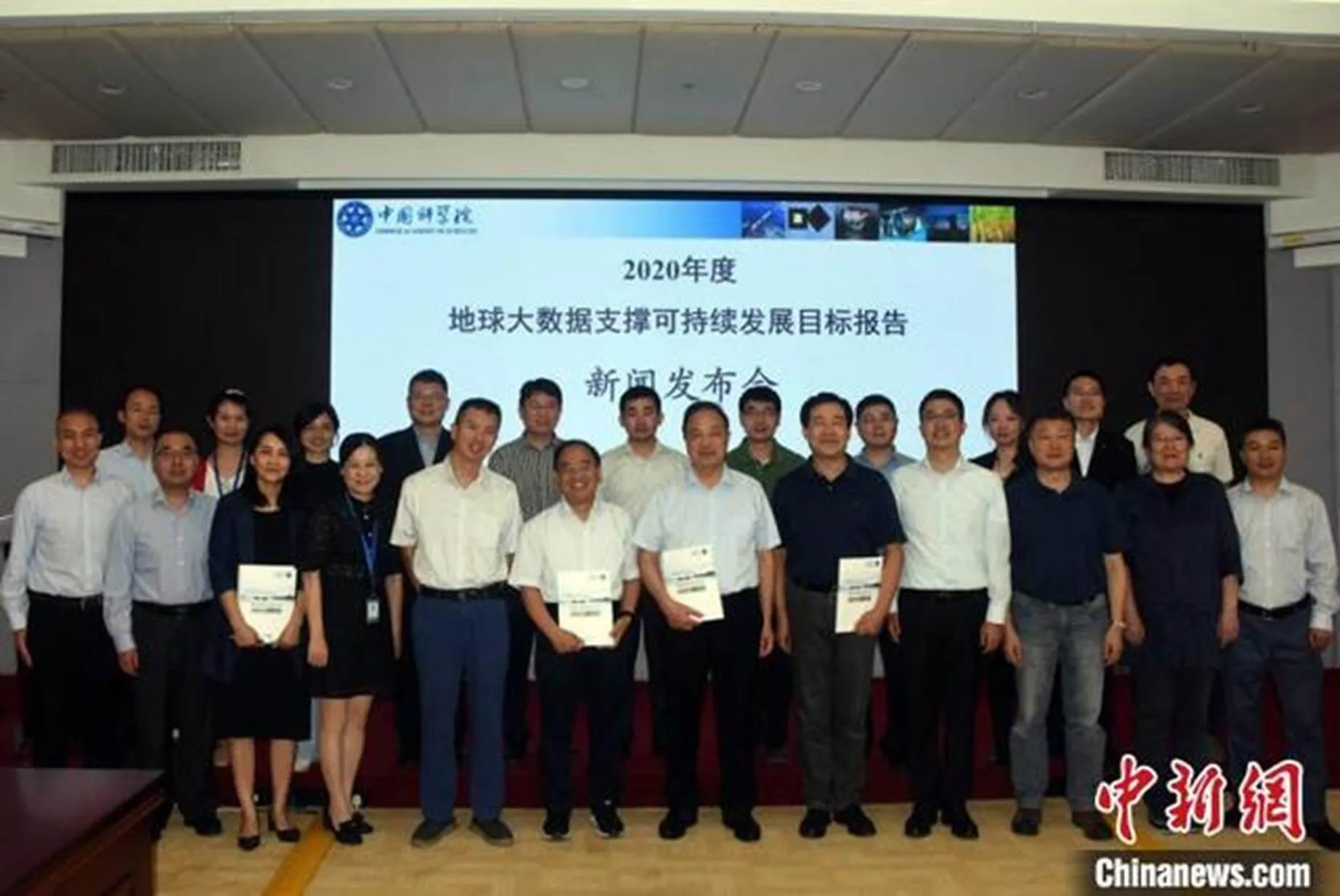
State Councilor and Foreign Minister Wang Yi briefed the Report on Global Data to Support the Sustainable Development Goal compiled by China’s Academy of Sciences at the South-South High-level Video Meeting on Cooperation on September 26, 2020.
- Peace的其它文章
- CPAPD International Exchanges
- Sharing Thick and Thin Calling for Unity and Cooperation
- WHO Secretary-General Tedros Adhanom Puts Forward Four Suggestions To Restart Economic and Social Life
- Message on the International Day of Peace From UN Secretary-General Antonio Guterres
- Working Hard To Bring Happiness to the Chinese People and Promote Progress of All Mankind
- Remarks by H.E. Xi Jinping President of the People's Republic of China At the Global Trade in Services Summit of The 2020 China International Fair for Trade in Services