
Novel rhino-like SHJHhr mice with thyroid dysfunction
2021-02-10 13:50:54YongChaoLiJinFengGaoYaLunGuanXiaoYueWeiXueJiaoLiYunFengLiZhongQiangHuangShuHuaLiuGeLiPingXuGuangJinPanYuZhang
Zoological Research 2021年6期
Yong-Chao Li, Jin-Feng Gao, Ya-Lun Guan,Xiao-Yue Wei, Xue-Jiao Li, Yun-Feng Li,Zhong-Qiang Huang, Shu-Hua Liu, Ge Li, Ping Xu,Guang-Jin Pan, Yu Zhang,*
1 Guangdong Provincial Key Laboratory of Laboratory Animals,Guangdong Laboratory Animals Monitoring Institute, Guangzhou,Guangdong 510663, China
2 Key Laboratory of Regenerative Biology, South China Institute for Stem Cell Biology and Regenerative Medicine, Guangzhou Institutes of Biomedicine and Health, Chinese Academy of Sciences, Guangzhou, Guangdong 510530, China
3 School of Pharmacy, Guangdong Pharmaceutical University,Guangzhou, Guangdong 510006, China
4 Shanghai Jihui Laboratory Animal Care Co., Ltd., Shanghai 201611, China
A new Hairless (Hr) gene mutant mouse line (SHJHhr) was identified, which showed hairless skin in adult individuals as reported in rhino mice.ThroughHrgene mutant identification with polymerase chain reaction (PCR) amplification and sequencing, seven mutants were identified, including nonsense mutant site 2134C→T (R467X), which produced a truncated Hr protein.Metabolic activity and heart rate were measured using a metabolic cage and blood pressure instrument, respectively.The SHJHhrmice showed a strong metabolic rate, high heart rate, and low blood pressure.Histological analysis of the thyroid gland of SHJHhrmice showed abnormal follicular structure and hypertrophic thyrocytes.Compared to ICR mice, thyroid function in 4-month-old SHJHhrmice showed lower thyroid stimulating hormone (TSH) levels, and in 9-month-old SHJHhrmice showed significantly higher TSH and thyroid hormone levels.These data indicate that SHJHhrmice may be in a hyperthyroid state with increasing age.Thus, based on the above results, we successfully established a novel mouse model with thyroid dysfunction.
Hyperthyroidism is a common endocrine disease involving thyroid dysfunction.It features high thyroid hormone (TH)levels, which can influence energy metabolism, hair growth,bone maintenance, heart rate, and cardiovascular function(Bassett & Williams, 2016; Contreras-Jurado et al., 2015;Jabbar et al., 2017; Mullur et al., 2014).Thyroid disease can also manifest in pregnancy (Stagnaro-Green & Pearce, 2012),elderly health (Boelaert, 2013), and alopecia areata(Lyakhovitsky et al., 2015; Puavilai et al., 1994).Many genetic variants involved in the hypothalamus-pituitary-thyroid (HPT)axis, including TSH receptors, thyroid hormone transporters and receptors, and deiodinases, can impact thyroid hormone set points (Medici et al., 2017).
TheHrgene is expressed in human and rodent tissues,such as the brain and skin (Cachon-Gonzalez et al., 1994;Garca-Atares et al., 1998).Hrplays an important role in hair follicle growth, skin structure, and various cancers (Maatough et al., 2018).Hrmutation can result in atrichia in humans(Ahmad et al., 1998a; Ahmad et al., 1999a; Ahmad et al.,1999b) and hairlessness in rodents (Ahmad et al., 1998b;Ahmad et al., 1998c; Garca-Atares et al., 1998; Zhang et al.,2005).The Hr protein acts as a transcription corepressor with the thyroid hormone receptor (TR), retinoic-related orphan receptor α (RORα), and vitamin D receptor (VDR) (Moraitis &Giguere, 2003; Potter et al., 2001; Thompson, 2009; Zarach et al., 2004), and participates in the recruitment of histone deacetylases (HDACs) (Djabali & Christiano, 2004; Liu et al.,2014).Thyroid hormone can induce and regulateHrtranscription, and the Hr protein interacts with the TR(Thompson & Bottcher, 1997).In the brain, the Hr corepressor complex binds to the thyroid hormone response element(TRE) region of the thyroid hormone-responsive gene to regulate thyroid hormone function, thereby increasing Hr protein via TRα (Potter et al., 2002).Research has indicated that Hr levels are lower in TRα-deficient mice but do not change in TRβ-deficient mice (Potter et al., 2002).Overall,these studies indicate that Hr may be involved in thyroid hormone regulation.
Here, based on novel rhino-like SHJHhrmice, we identified sevenHrmutant sites through PCR and sequencing analysis,including a nonsense mutant site that may result in truncated Hr protein.Physiological and histological analyses of the SHJHhrmice showed higher metabolism, abnormal thyroid follicular structure, and hyperthyroid state.Thus, these SHJHhrmice are a novel rhino-like strain withHrmutation and thyroid dysfunction.
Two male ICR mice with shedding hairlessness were identified at Shanghai Jihui Animal Care Co., Ltd.(China).After breeding for several generations, a rhino-like mouse population was established and named SHJHhr.These SHJHhrmice show normal hair growth from postnatal day 0 (P0) to P13 during the first hair growth wave.From P14, however, the mice begin to shed their hair, starting from the nose and head,then reaching the abdomen at 3 weeks of age, with complete hairlessness by about 4 weeks of age (Figure 1A).In 4-monthold SHJHhrmice, skin wrinkles first appear on the abdomen and back, then increase gradually, especially in female mice that have given birth.Thus, SHJHhrmice display similar characteristics to rhino mice regarding hair shedding (Ahmad et al., 1998b; Ahmad et al., 1998c) and show faster skin aging compared with ICR mice.Female SHJHhrmice also only give birth once or twice, indicating poor fertility (Panteleyev et al.,1998a).
The hairlessness of adult rhino mice and certain hairless mice is reportedly due toHrgene mutations, which result in hair growth failure during in the anagen phase (Panteleyev et al., 1998b).To identify the cause of hairlessness in SHJHhrmice, we first detected potentialHrgene mutants in the coding region and analyzed whether these mutant sites influence Hr protein.After PCR amplification, sequencing, and alignment,seven mutant sites in theHrtranscript were identified between ICR and SHJHhrmice (Figure 1B; Supplementary Table S1),including 1824A→G, 2314C→T, 2151C→T, 2443T→A, 2 516-2518del, 2703T→C, and 5527T→C.The nonsense mutant site 2314C→T (R467X) in theHrgene may produce a truncated Hr protein, which could explain the hairlessness of SHJHhrmice.
During the feeding process, the SHJHhrmice were found to have a slightly higher body temperature and were more active.As active mice expend more energy, we determined their metabolic rate using a metabolic cage.Results showed that SHJHhrmice consumed significantly more food and water per day than ICR mice (Figure 1C).Furthermore, SHJHhrmice excreted more feces than ICR mice and female SHJHhrmice excreted more urine than female ICR mice (Figure 1C),indicating that SHJHhrmice have a higher metabolic rate than ICR mice.
To further study the physiological features of SHJHhrmice,we measured heart rate and blood pressure.Result showed that SHJHhrmice had dramatically higher heart rates than ICR mice (Figure 1D).Furthermore, male SHJHhrmice had significantly lower mean arterial pressure (MAP) and systolic blood pressure (SBP) than male ICR mice.Female SHJHhrmice had mildly lower MAP, SBP, and diastolic blood pressure(DBP) than female ICR mice (Supplementary Figure S1).Therefore, SHJHhrmice had higher heart rate and lower blood pressure.
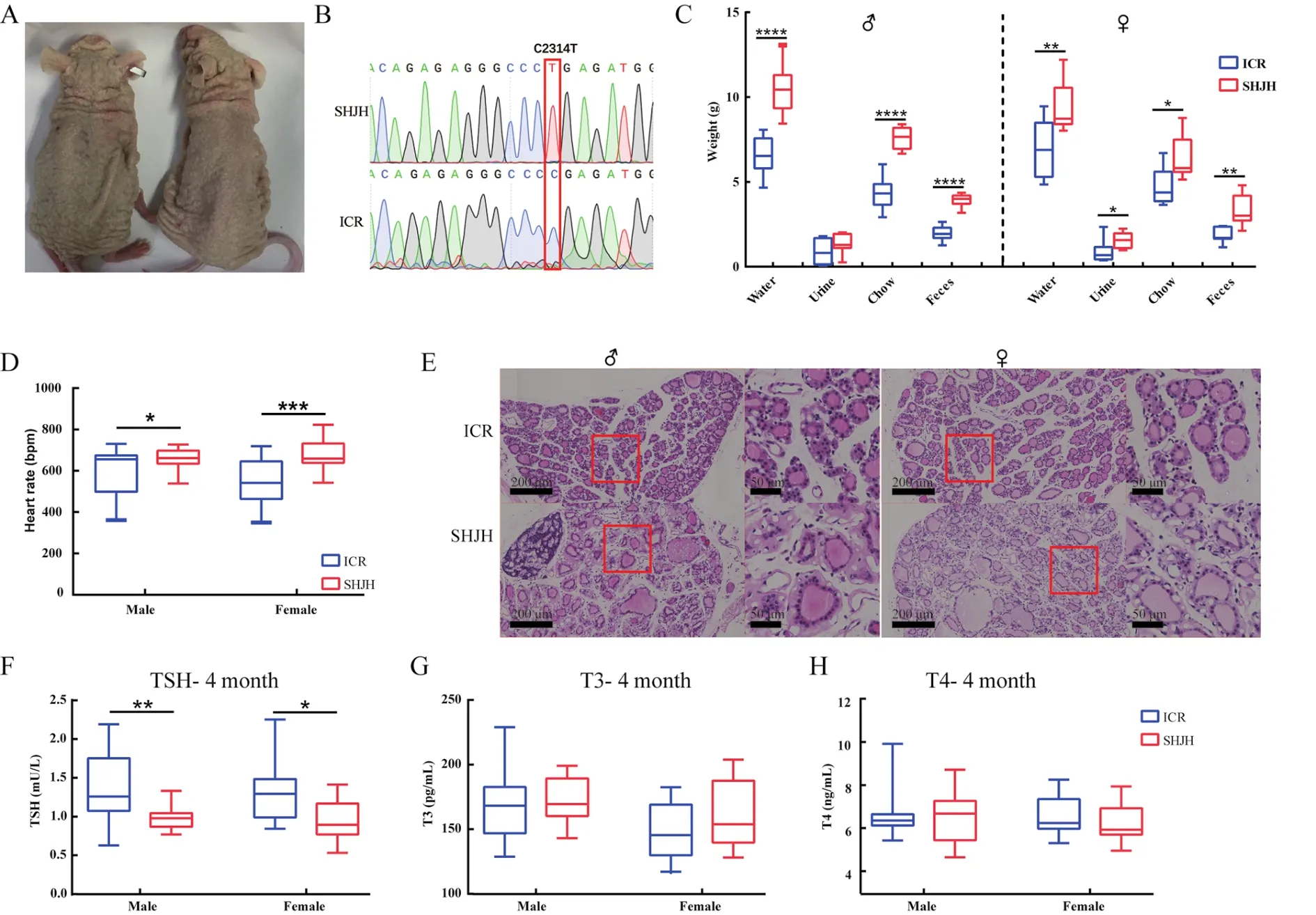
Figure 1 Adult SHJHhr mice with a Hairless nonsense mutant site and high metabolic level, high heart rate, and thyroid dysfunction
In humans, hyperthyroidism shows high metabolism and tachycardia (De Leo et al., 2016).Thus, we speculated that SHJHhrmice with higher metabolic and heart rates may have abnormal thyroid function.Previous studies have confirmed that theHrgene is involved in thyroid hormone regulation and interacts with the thyroid hormone receptor to form a transcription complex with ROR and VDR (Thompson &Bottcher, 1997; Thompson & Potter, 2000).Ahmad et al.(1998b) noted that in addition to the hairless and rhino phenotype,hrrhChrmice exhibit prominent dehydration and thyroid hypertrophy.From analysis ofHrmutants,hrrhChrmice also have a similar nonsense mutant site to SHJHhrmice.Thus, based on previous records and the characteristics of SHJHhrmice with higher metabolism, we reasoned that SHJHhrmice may have abnormal thyroid function.
To study whether SHJHhrmice exhibit thyroid dysfunction,we first analyzed the thyroid follicular structure in 8-week and 4-month-old mice.Compared with the ICR mice, the SHJHhrmice showed larger and more variable follicle size (Figure 1E;Supplementary Figures S2, S3).The 4-month-old SHJHhrmice showed abnormal follicles and obvious thyrocyte hypertrophy(Figure 1E).Further morphometric analysis of follicular structure (Kero et al., 2007; Ock et al., 2013), including number of cells per follicle, follicle epithelia (thyrocyte) area,and follicle lumen (colloid) area, showed that SHJHhrmice had an abnormal thyroid follicular structure.Compared with 8-week-old ICR mice, SHJHhrmice had significantly smaller thyrocytes (ICR 158.0 μm2vs.SHJHhr115.8 μm2), but larger number of thyrocytes per follicle (ICR 11.7 vs.SHJHhr14.8)and larger colloid size (ICR 1 832 μm2vs.SHJHhr2 863 μm2)(Supplementary Figure S2).Based on follicle morphometry,SHJHhrmice also showed differences in thyrocyte area, cell number per follicle, and colloid area compared with ICR mice(Supplementary Figure S2).Compared with 4-month-old ICR mice, SHJHhrmice showed a significantly larger thyrocyte area (ICR 131.3 μm2vs.SHJHhr199.0 μm2) and number of thyrocytes (ICR 13.4 vs.SHJHhr16.4), but comparable colloid size (ICR 1 387 μm2vs.SHJHhr1 483 μm2) (Supplementary Figure S3).Four-month-old SHJHhrmice showed differences in thyrocyte area and cell number per follicle, but comparable colloid size to ICR mice (Supplementary Figure S3).Together with the follicular structure results, SHJHhrmice had a larger thyrocyte area and more atypical follicles, suggesting abnormal thyroid function.
To determine whether SHJHhrmice exhibit abnormal thyroid hormones, we measured the serum levels of TSH,triiodothyronine (T3), and thyroxine (T4).Results showed that SHJHhrmice had abnormal serum levels of TSH and thyroid hormones.At 4 months of age, the TSH level in SHJHhrmice was significantly declined, but their T3 and T4 levels were comparable to those of ICR mice (Figure 1F–H).At 9 months of age, the SHJHhrmice had significantly higher TSH, T3 and T4 levels than ICR mice (Supplementary Figure S4).Thus,based on histological and hormone analysis, SHJHhrmice showed marked thyroid dysfunction characteristic of spontaneous hyperthyroidism.
Hrgene mutations have been found in rhino and other hairless mice, with the prominent phenotype involving skin,hair, and brain function (Ahmad et al., 1998c; Cachon-Gonzalez et al., 1994; Garca-Atares et al., 1998; Liu et al.,2010; Panteleyev et al., 1999; Seiberg et al., 1997; Tian et al.,2004; Zhang et al., 2005).Of theHrpolymorphisms(summarized in Supplementary Table S2), only one rhino mouse is noted with thyroid hypertrophy (Ahmad et al.,1998b).The SHJHhrmice have a similar nonsense mutant site in theHrcoding region as that of rhino Christiano mice(hrrhChr), which results in a truncated Hr protein (Ahmad et al.,1998b).In addition to the similar appearance of skin and loss of hair, the SHJHhrmice also exhibited strong metabolism and increased consumption of food and water.Moreover, SHJHhrmice had higher heart rates and lower blood pressure.The reasons for their high metabolic and heart rates could be because SHJHhrmice need to consume more food to maintain body temperature and other physiological causes due to their lack of hair.Overall, in addition to hairlessness and wrinkled skin, SHJHhrmice displayed several novel features, such as higher heart rate and metabolism.
In humans, HR mutations result in congenital atrichia,atrichia with popular lesions, and Marie Unna hereditary hypotrichosis (Ahmad et al., 1999b; Mehmood et al., 2016;Yun et al., 2014).Moreover, some patients with alopecia areata show hyperthyroidism (Patel et al., 2017; Puavilai et al.,1994), suggesting that HR mutations could be involved in thyroid dysfunction.Hyperthyroidism also shows high metabolism and tachycardia (De Leo et al., 2016).We found that SHJHhrmice showed high metabolic and heart rates,raising the question of whether SHJHhrmice have thyroid dysfunction.Based on thyroid histology, we found that SHJHhrmice showed an abnormal thyroid follicular structure at 8 weeks and 4 months of age.Compared with ICR mice, 8-week-old SHJHhrmice had a smaller average thyrocyte area and larger colloid area, while 4-month-old SHJHhrmice had a significantly larger average thyrocyte area but comparable colloid area.These results suggest that SHJHhrmice have an abnormal follicular structure and hypertrophic thyrocytes.Previous studies have found that IGF-1- and Gq/G11-deficient mice show an increase in thyrocyte area after TSH treatment(Kero et al., 2007; Ock et al., 2013).TSH can induce thyrocyte proliferation and hypertrophy in thyroid cell cultures (Kimura et al., 2001).Compared with ICR mice, 4-month-old SHJHhrmice showed lower serum levels of TSH, but no significant differences in T3 and T4.However, 9-month-old SHJHhrmice showed a dramatic increase in the serum levels of TSH, T3,and T4, suggesting that SHJHhrmice may develop from subclinical hyperthyroidism to overt hyperthyroidism,according to clinical standards (Biondi & Cooper, 2018; Jones et al., 2010).Although SHJHhrmice showed abnormal thyroid follicles and thyroid hormone levels, two questions need further study: i.e., whether otherHrmutant mice have similar thyroid dysfunction, and howHrmutants influence follicular structure and thyroid function.
The Hr protein plays an important role in skin and hair growth, as well as the cell cycle and apoptosis (Kim & Yoon,2013; O'Driscoll & Bressler, 2010; Thompson, 2009;Thompson et al., 2006).The Hr protein contains a zinc-finger domain, nuclear localization signal domain, nuclear matrix targeting motif, and JmjC domain (Maatough et al., 2018).Current knowledge about Hr interactions with proteins includes nuclear receptors (TR, RORα, and VDR), HDAC, and p53 (Maatough et al., 2018).As the Hr protein contains a TR interaction domain and nuclear receptor corepressor(Thompson, 2009), theHrgene nonsense mutant in SHJHhrmice produces a truncated protein without the TR domain,which prevents it from forming the TR complex and thus regulating thyroid hormone.Therefore, SHJHhrmice exhibit thyroid hormone dysregulation, which may result from the nonsense mutant of theHrgene.Due to the lack of genetic analysis, the relationship between thyroid dysfunction andHRmutations in patients with alopecia areata is still unclear.However, given that SHJHhrmice show obvious hyperthyroidism at 9 months of age, people withHRmutants should monitor their thyroid function at around 35 years of age, according to the age transition of humans and mice.
In conclusion, we identified a novelHrmutant mouse with abnormal follicular structure and thyroid function, as well as hairless and wrinkled skin.These mice could be applied as animal models of thyroid disease.
SUPPLEMENTARY DATA
Supplementary data to this article can be found online.
COMPETING INTERESTS
The authors declare that they have no competing interests.
AUTHORS’ CONTRIBUTIONS
Y.C.L., J.F.G., Y.L.G., X.Y.W., X.J.L., Y.F.L., Z.Q.H., and S.H.L.performed the experiments.P.X.established the SHJHhrmouse strain.Y.C.L., analyzed the data.G.L.and Y.Z.designed the project.Y.C.L.wrote the manuscript.G.J.P.and Y.Z.revised the manuscript.All authors read and approved the final version of the manuscript.
ACKNOWLEDGEMENTS
We thank Shanghai Jihui Animal Care Co., Ltd.(China) for providing the SHJHhrmice.
- Zoological Research的其它文章
- A new species of Micryletta (Amphibia: Anura:Microhylidae) from the Langbian Plateau in southern Vietnam
- The high diversity of SARS-CoV-2-related coronaviruses in pangolins alerts potential ecological risks
- Site-specific and seasonal variation in habitat use of Eurasian otters (Lutra lutra) in western China:implications for conservation
- Understanding autism spectrum disorders with animal models: applications, insights, and perspectives
- High-quality chromosome-level genome assembly of redlip mullet (Planiliza haematocheila)
- Challenging Wallacean and Linnean shortfalls:Ectatosticta spiders (Araneae, Hypochilidae)from China