
Bibliometric analysis of researches of Orem self-care model in China based on BICOMB
2021-03-01 08:53:26MiaoLiYueCheng
Nursing Communications 2021年1期
Miao Li,Yue Cheng
1 Graduate College,Tianjin University of Traditional Chinese Medicine,Tianjin,China
Abstract Objective: To analyze the hotspots of the Orem self-care model research from the construction of CNKI database to May 2019, and to understand the research status in this field and to explore its development trend.Methods:"Orem self-care model" was used as the search term to search CNKI database, and the Bibliographic Items Co-occurrence Matrix Builder (BICOMB) was used to perform bibliometric analysis on the annual distribution,authors, keywords, etc.in related articles, and SPSS 23.0 was utilized to cluster analysis of high-frequency keywords. Results: A total of 1845 associated articles were included.The annual change of Orem self-care model literatures showed an increasing trend and a total of 1604 first authors were extracted. Today Nurse published the most relevant literatures.The research extracted 56 high-frequency keywords, accounting for 50.88% of the total frequency.Co-word cluster analysis obtained five research hotspots: clinical application effect and patient satisfaction of Orem self-care model; self-care ability and quality of life of breast cancer patients; self-care behaviors for the elderly and community care; rehabilitation nursing of stroke and spinal cord injury; Orem self-care model, nursing theory. Conclusion: Analyzing the research hotspots of Orem self-care model in recent years is helpful to understand the current status in this field and future development trends, and provide references for future nursing clinical practice work and education and scientific research.
Keywords:Orem self-care model,Co-occurrence analysis system,Research hotspot,Bibliometric analysis
Introduction
The Orem self-care model was formally proposed by Orem, a well-known American nursing theorist, in her bookNursing:Concepts of Practicepublished in 1971[1].The Orem self-care model believes that individuals are responsible for their health, and proposes that self-care is an act created and taken by human individuals to ensure survival, maintenance, and improvement of health and tranquility.It also emphasizes that the ultimate goal of care is to restore and enhance the self-care of the individual and even the entire society's ability [2].The Orem self-care model is mainly composed of the theory of nursing system,the theory of self-care deficit and the theory of self-care.After decades of clinical testing and practice,the Orem self-care model has been increasingly improved, not only enriching the theoretical system of nursing but also gradually becoming one of the main theories that guide clinical nursing and scientific research.In this study,we used the Bibliographic Items Co-occurrence Matrix Builder(BICOMB)and SPSS to analyze the current status of the Orem self-care model in China,to understand its research focus and direction and provide a reference for future practice and research work.
Resources and methods
Literature source and retrieval strategy
Using CNKI, the search terms were "self-care theory,self-care model, Orem theory, Orem model,"connected by logic "OR", since the foundation of the database till May 31,2019.Inclusion criteria: journals,master's/doctoral dissertations and conference papers.By reading the title, abstract or full text, research inconsistent with the topic of "Orem self-care model"and irrelevant to the content was excluded.
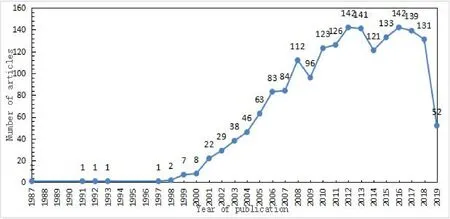
Figure 1:Annual change of domestic documents
Methods of analysis
A total of 2,604 articles were retrieved, and 1845 articles were included.Each record included the title,author, institution, keywords, citation year, etc.BICOMB was used as the primary tool for bibliometric analysis of 1845 documents, and extracted fields such as year, journal, first author, keywords, etc., counting the frequency of occurrence of corresponding fields.After intercepting high-frequency entries according to a certain threshold, an Excel table was generated and analyzed.Cluster analysis was performed using SPSS 23.0 to analyze the relationship between high-frequency keywords and obtain the structure of research hotspots.
Results
Annual trends of publications
According to the data of results, it has shown that the literature publication could be divided into three stages.The initial stage was from 1987 to 2000,with no more than 10 papers per year.The number of documents was increasing slowly.The rapid growth period was 2001-2009.Although there was a slight decline in 2009,the number of literatures presented an increasing trend, from 22 to 123.After 2010, the annual number of articles was about 130.In 2019, there were only 52 literatures due to the statistics in May.All were shown in Figure 1.
Author analysis
High-frequency first author statistics.A total of 1604 first authors were extracted in this study.There were 18 authors who published 3 or more "Orem self-care model" papers as the first author.The number of articles from high to low was Tian Suhong (6), Yuan Haobin (5), Shen Hui (4), Guo Yuexiang (4), Jiang Fengju (4), Liu Fang (3), and Wu Fengyun (3), Deng Shufang (3), Fu Lianying (3), etc.These 18 first authors published literatures, accounting for 3.61% of the total publications.
High-frequency author statistics.The study involved 3139 authors.The authors who published 3 or more articles from high to low were: Tian Suhong (6), Wu Fengyun (5), Yuan Haobin (5), Shi Xiaping (5), Chen Ying (4), Liu Fang (3), Fu Lianying (3), etc.The frequency of 30 authors with 4 or more published literatures at the ratio of 6.88%, and 80 authors with 3 or more at the ratio of 15.01%.
High-frequency journal statistics.Through the statistical publications, 472 journals were obtained,and the top 23 journals were selected, with more than 14 occurrences."Today Nurse" tops the list publishing 91 pieces, then comes "Journal of Qilu Nursing" 82 pieces, "Chinese General Practice Nursing" and"Nursing Research of China" follow with the amount of 56,as shown in Table 1.
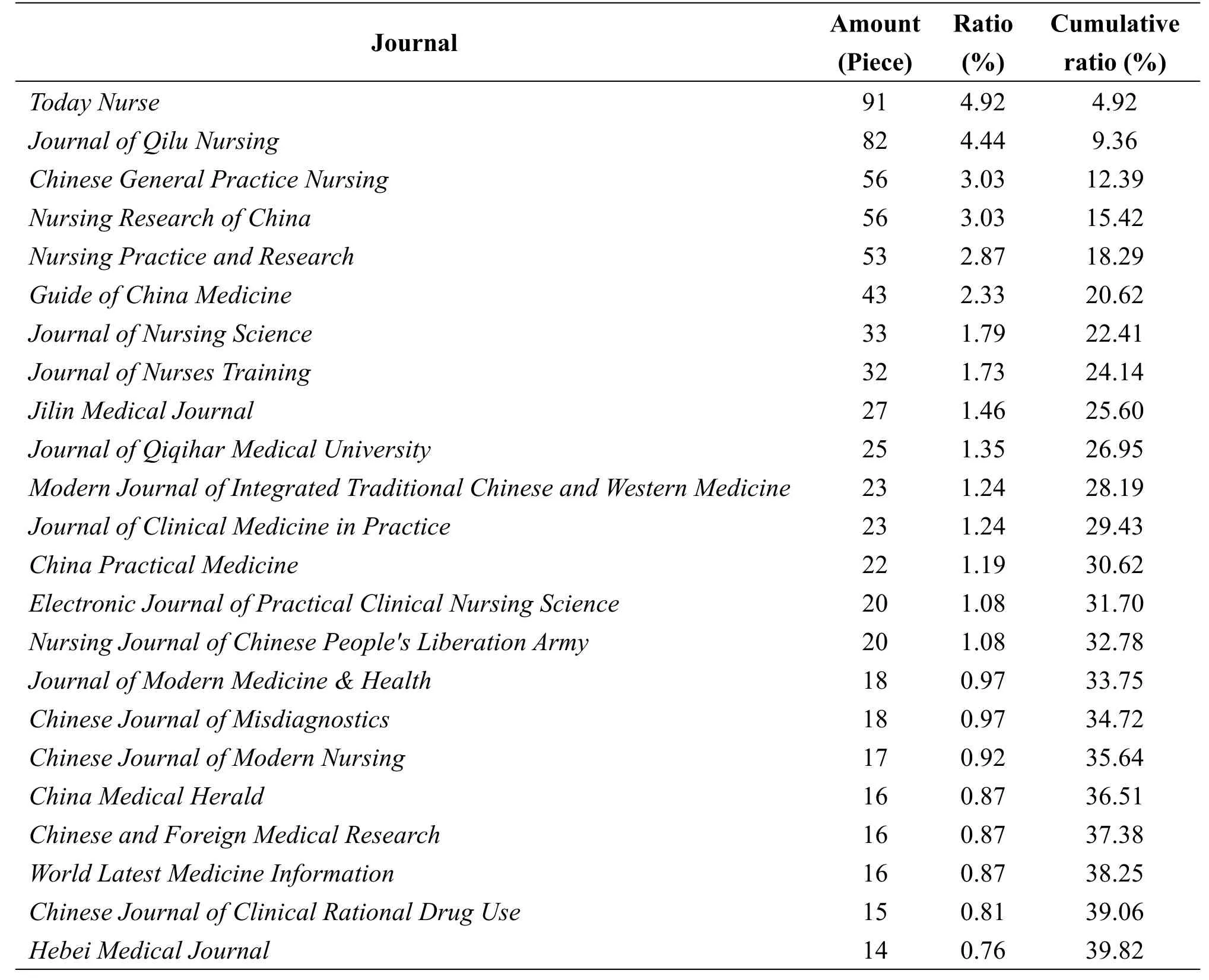
Table 1:Top 23 high-frequency journals
High-frequency keywords and cluster analysis
High-Frequency keywords and co-word matrix.Through the analysis of keywords, a total of 2085 keywords were extracted, a total of 7547 times.According to Donohue's high and low frequency word boundary formula: T=1/2(?1+√1+8×I), I was the number of words whose word frequency is 1,so T was 53 [3].Word frequency greater than 53 times was the high-frequency keyword of this study, but only 12.Therefore,in order to ensure the comprehensiveness of literature inclusion, this study took the top 50%words as high-frequency keywords.That is, 56 keywords were extracted according to the frequency threshold of 14 times.Among them, the highest frequency keyword was Orem self-care model, with 1382 occurrences(18.27%), while the top 40 keywords account for 47.57%, as shown in Table 2.By the co-word analysis method, a 56 * 56 co-word matrix was constructed,and some co-word matrices were shown in Table 3.
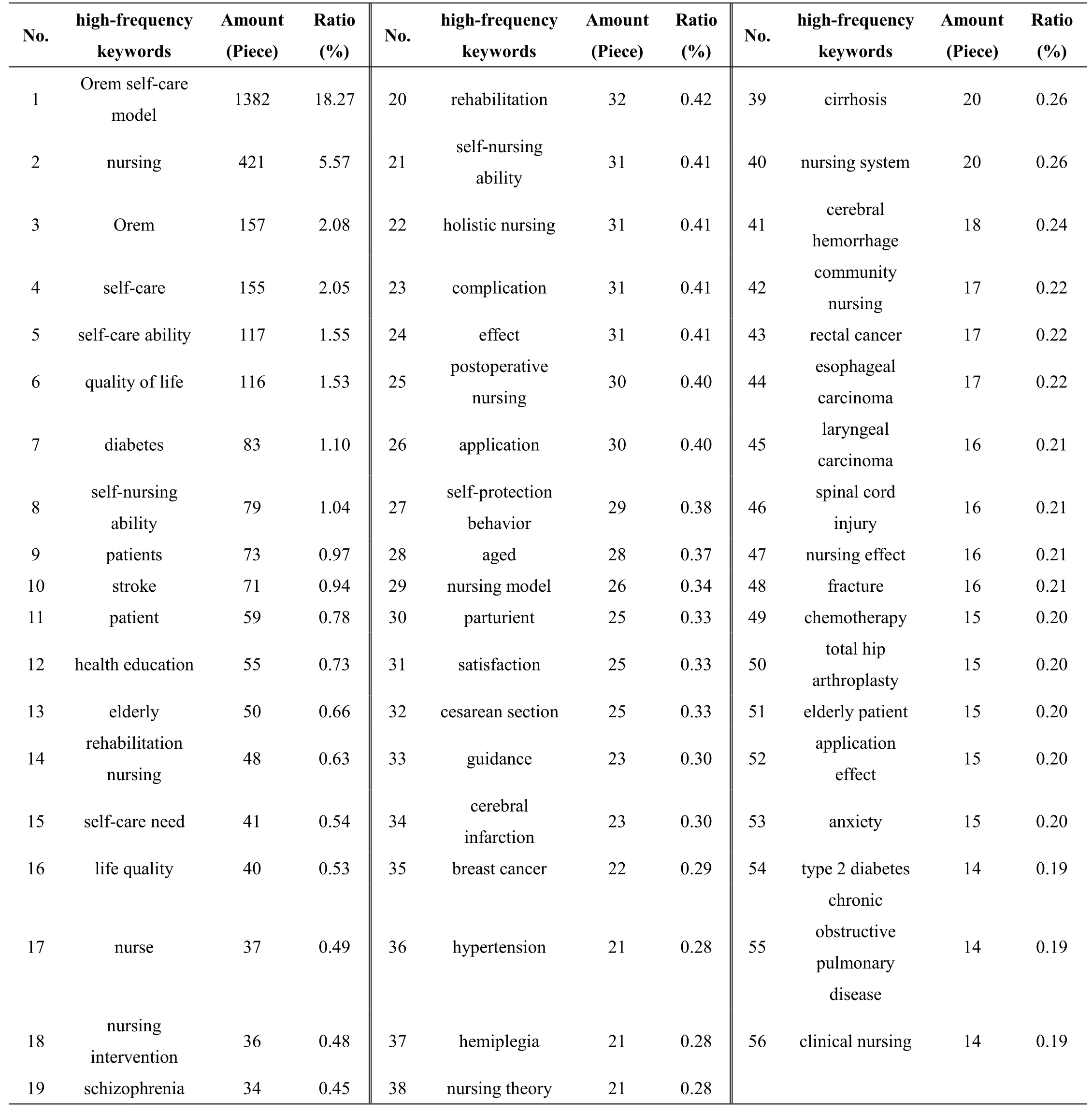
Table 2:Frequency statistics of high-frequency keywords
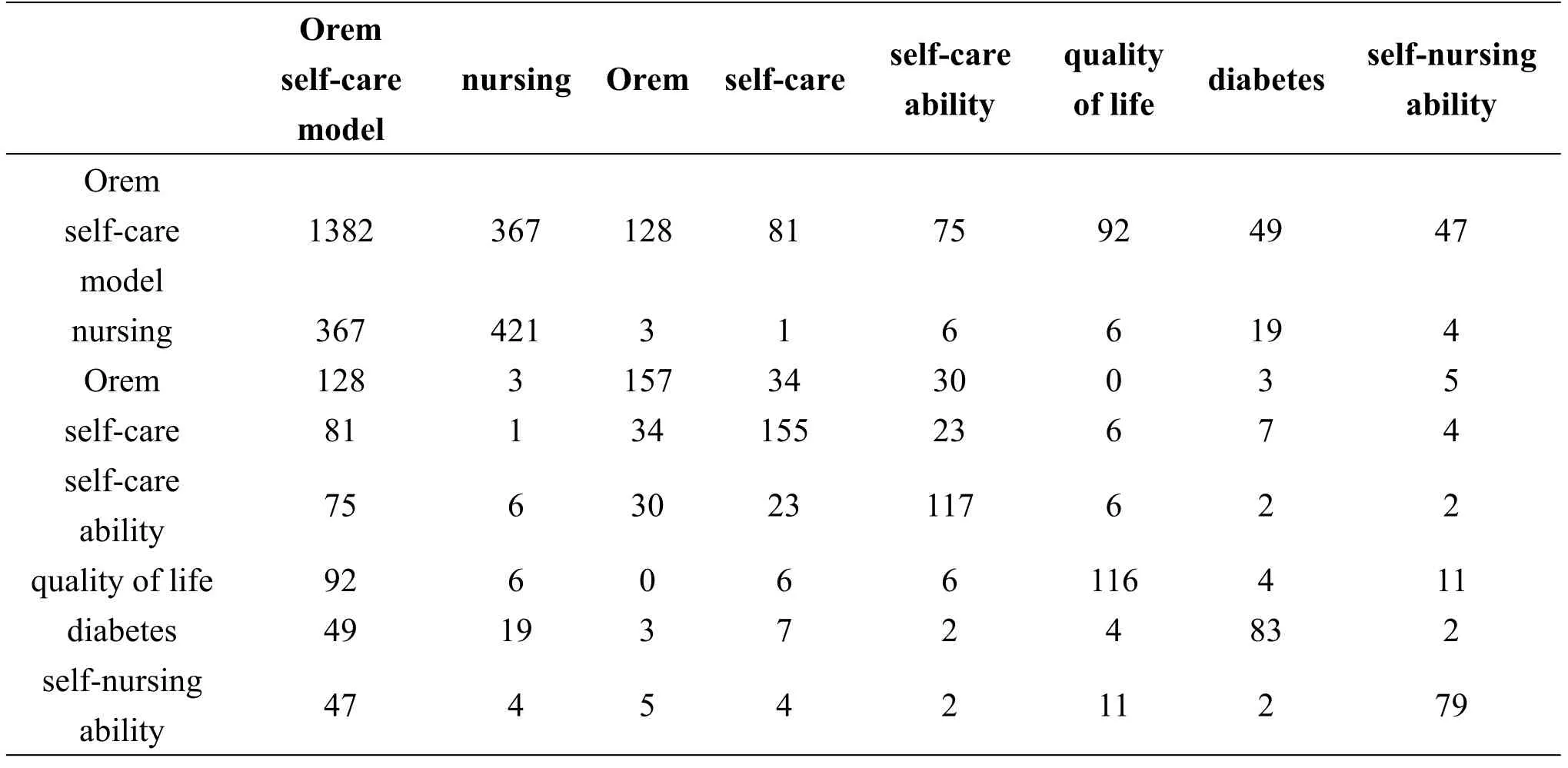
Table 3:Co-word matrix of high-frequency keywords
High-frequency keyword cluster analysis.SPSS23.0 was used for high-frequency keywords clustering analysis.The smaller the distance between the two keywords, the closer the connotation, the more occurrences in the same article,the more consistent the theme [4].Combined with professional knowledge, a total of 5 research hotspots were summarized,including: clinical application effect of Orem self-care model and patient satisfaction(keywords:1,2,6,43,8,46,31,40,50,24, 30,19,20,26), self-care ability and quality of life of breast cancer patients (keywords: 16,22, 35, 49, 21), self-care behaviors of elderly diseases and community care(keywords: 44, 54, 36, 28, 52, 7,12,27, 18), rehabilitation nursing for stroke and spinal cord injury (keywords: 10, 37, 14, 33, 48, 51); Orem self-care model, nursing theory (keywords: 25, 41, 42,11,17,3,9,15,34,5,4,39,29,38,23,32,56,45,13,55,53,47).
Discussion
Orem self-care model research heat increases year by year
After Professor Lu Shiyuan introduced the Orem self-care theory to our country [5], China gradually carried out some review of the theory and clinical application research.According to Figure 1,we can see that the number of publications before 2000 there were less than 10 papers, indicating that the self-care model was launched late in domestic research and had not received much attention in the early years.There was a period of rapid development in 2001-2009.Due to the growing number of chronic patients in recent years,the treatment and nursing during their hospitalization are short-lived, while the family and community treatment and nursing after discharge are long-term.As a result,the self-care model had gradually been valued and recognized [6].It has been a stable development stage since 2010, which shows that nursing work and researchers have deepened their understanding of the self-care model and the research connotation.
Analysis of authors
According to the results of this study,as the first author published the "Orem self-care model" in the 3 references and above and high-frequency author list is consistent.A few authors such as Wu Fengyun, Deng Shufang, Zhang Yan, Li Ping, and Lu Xiangning, etc.for the author list to appear more frequently than the first author 1 or 2 times.That indicates that there may be a collaborator, but cooperation is less and unstable.Most authors such as Tian Suhong,Yuan Haobin,Shen Hui, Fu Lianying, etc.focused more on independent research and had less cooperation.The results could guide other researchers to find experts and collaboration in the field of"Orem self-care model".
Research status and trends
From the top 56 high-frequency keywords, it can be seen that the research objects are mostly nurses, the elderly, diabetes, stroke, schizophrenia.And the research tends to focus on self-care ability, quality of life,the content of health education,postoperative care,satisfaction, rehabilitation care, etc., which reflects the hot spots of the current self-care model in China.In terms of journals, "Today Nurse" and "Journal of Qilu Nursing" are the main research literature on self-care model, followed by "Chinese General Practice Nursing", "Nursing Research of China" and "Nursing Practice and Research", reflecting the continuous exploration process of Chinese nurses on the self-care model.In this study, the co-word cluster analysis was applied to the research of the Orem self-care model,and five research hotspots were summarized according to the content.
Clinical application effect and patient satisfaction.The clinical application effect and patient satisfaction of the Orem self-care model are the hot topics in this field.The self-care model is when the person has self-care defects, and the nurse fully evaluates the patient's self-care ability and judges the patient's therapeutic self-care needs.Then nurse select and take care of patients from the wholly compensatory system,partial compensatory system, and supportive-educative system according to different stages of the disease to meet the needs of patients [7,8].The Orem self-care model gives different nursing measures based on the patient's self-care ability, optimizes individual guidance, respects the patient and gives full play to their subjective initiative, changes bad living habits,maintains physical and mental health, and achieves self-protection [9].Qin Fangfang summarized the application of the Orem self-care model in internal medicine, surgery, obstetrics, and pediatric nursing.She pointed out that self-care theory could help patients manage themselves in the state of illness,reduce the occurrence of complications, promote rehabilitation, deepen the connotation of nursing service and improve patient satisfaction[10].
Self-care ability and quality of life of breast cancer patients.Self-care ability and quality of life of breast cancer patients are the focus of this field.Liao Shuli et al.believed that the application of Orem self-care model to postoperative chemotherapy patients of breast cancer could provide the corresponding nursing according to patients' self-care ability and self-care needs,avoid blind nursing service of full compensation,and improve patients' self-care ability and recovery of physical and mental health [11].Yang Li et al.conducted a meta-analysis on the postoperative recovery effect of the Orem self-care model on breast cancer patients.The results showed it could promote postoperative functional exercise recovery of affected limbs, reduce the incidence of postoperative complications and improve their quality of life [12].Relevant studies abroad also had shown that the application of the Orem self-care model to the care of breast cancer patients could improve their quality of life[13,14].
Self-care behaviors of elderly patients and community care.Self-care behaviors of elderly and community care are hot topics in this research area.After decades of practice, the self-care model has been increasingly developed.The self-care model has a peculiar utility in chronic and elderly diseases.Gil,Eunha and Yang et al.showed that the self-care theory has practical applicability and effectiveness for chronic diseases such as hypertension and chronic heart failure[15,16].Deng Yongqing applied the Orem self-care model to 92 elderly patients with diabetic nephropathy,showing that it can mobilize patients' initiative, make them actively cooperate with treatment and nursing,and improve social function and cognition [17].Besides, continuous nursing in patients with hip arthroplasty based on the Orem self-care model could improve patients' joint activity and self-care ability,thus reducing disability rate [18].In related studies abroad, the Orem self-care model was not only applicable to the expansion of the population from patients to ordinary people and caregivers [19, 20] but also extended from medical institutions to families and communities[21].
Rehabilitation nursing of stroke and spinal cord injury.Rehabilitation nursing of stroke and spinal cord injury are hot topics in this field.Huang Xin et al.applied the Orem self-care model to patients with stroke during rehabilitation and suggested that nurses learn and apply this theory flexibly.Besides, patients should not rely too much on nurses and their families.They should increase their autonomy to increase their self-care awareness and ability.The application of this theory reduced the workload of nurses and enhanced the independence of patients[22].Elderly patients with cerebral infarction combined with the Orem self-care model in continuous care could effectively improve patients' exercise capacity,improve cognitive function and improve self-care ability [23].Shao Xiuqin et al.found that the application of the self-care model to patients with spinal cord injury could improve their self-care ability and reduce the occurrence of complications[24].
Orem self-care model and nursing theory.The Orem self-care model and nursing theory are hot topics in this field.The Orem self-care model is organized around the goal of nursing, that is, to maintain and promote patients'self-care to the maximum extent.Its model consists of three theories: theory of self-care,the theory of self-care deficit and theory of nursing system.The theory of self-care deficit is the core of this model.Orem proposed three types of nursing systems based on the degree of individual self-care defects[25]:(1)Wholly compensatory system: patients are not capable of self-care.They need comprehensive nursing assistance to meet all their needs.(2): Partly compensatory system: nurses and patients jointly participate in meeting the needs of therapeutic self-care,and patients' self-care capabilities are partially deficient, requiring appropriate help from nursing.On the one hand, nurses compensate patients for their self-care deficiencies, on the other hand, patients need to give play to their initiative and improve their self-care ability.(3): Supportive-educative system:when the patient can complete some self-care activities after learning, the help provided by the nurse is psychological support, technical guidance, and a suitable environment.
Summary
The connotation of the Orem self-care model is consistent with the development trend of nursing in the 21st century.As the WHO stated, "In the 21st century,the individual, family, and society in deciding on and meet the demand of the health will play an important role,the development of self-care is becoming a trend".At present, the majority of medical personnel have understood the self-care model and extensively used it in clinical work [26].This study reveals the current status of the theoretical research through bibliometric analysis and co-word clustering analysis of related literatures on the Orem self-care model and summarizes 5 research hotspots of the Orem self-care model.It helps researchers to define Orem self-care model the hotspots and development trends and provide references for clinical nursing work and educational research so as to promote further research on self-care model in China.However, this study only searches the CNKI database.The retrieval scope should be expanded to analyze the research hotspots of the Orem self-care model at home and abroad,compare the differences at home and abroad, and provide suggestions for better application in China.
- Nursing Communications的其它文章
- Electronic cigarettes-The Unvarnished Truth
- Focal Point of Nursing Management of PTSD Related to COVID-19 Infection,Quarantine,and Curfew
- Effectiveness of structured teaching programme on knowledge regarding therapeutic nurse-patient communication among the staff nurses
- Effect of foot reflexology on pain and physiological indicators in postoperative patients:A systematic review and meta-analysis