
Characterization of low-resistance ohmic contacts to heavily carbon-doped n-type InGaAsBi films treated by rapid thermal annealing?
2021-03-11 08:33:46ShuXingZhou周書星LiKunAi艾立鹍MingQi齊鳴AnHuaiXu徐安懷JiaShengYan顏家圣ShuSenLi李樹森andZhiJin金智
Chinese Physics B 2021年2期
Shu-Xing Zhou(周書星), Li-Kun Ai(艾立鹍), Ming Qi(齊鳴), An-Huai Xu(徐安懷),Jia-Sheng Yan(顏家圣), Shu-Sen Li(李樹森), and Zhi Jin(金智)
1Hubei Key Laboratory of Low Dimensional Optoelectronic Materials and Devices,Hubei University of Arts and Science,Xiangyang 441053,China
2State Key Laboratory of Functional Materials for Informatics,Shanghai Institute of Microsystem and Information Technology,Chinese Academy of Sciences,Shanghai 200050,China
3Hubei Key Laboratory of High Power Semiconductor Technology,Xiangyang 441021,China
4Institute of Microelectronics,Chinese Academy of Sciences,Beijing 100029,China
Keywords: InGaAsBi,electrical properties,contact resistance,rapid thermal annealing
1. Introduction
For the increased scaling of InP terahertz devices such as InP heterojunction bipolar transistors (HBTs)and high electron mobility transistors (HEMTs) for highspeed communications,[1,2]ultra-low resistance metalsemiconductor ohmic contacts with shallow diffusion depths and minimal lateral penetration are very important.[3–6]Usually,heavily silicon-doped InGaAs cap layers have been used as contact layers to achieve low contact resistance fabricated by ex situ or in situ non-alloyed contacts in InP HEMTs[7–9]and HBTs.[10–12]The efficacy of high silicon-doping concentrations in InGaAs cap layers to obtain contact resistance of 4×10?8Ω·cm2has been demonstrated because the use of high semiconductor doping concentrations is known to promote current transport due to the tunneling effect.[13–15]However, it is difficult to further reduce the contact resistance by increasing the silicon-doping concentration in InGaAs,which can only be doped to the 19th power owing to the doping solubility limit. Further efforts are needed to reduce contact resistance, such as fine-tuning of surface preparation procedures and various alloy-contact selection.[16]
It has been recently reported that dilute InGaAsBi,latticematched to InP, is promising to be used as a contact material for InP terahertz devices because of its higher doping solubility limit[17,18]and narrower band gap compared with InGaAs[19,20]by virtue of bismuth being a very heavy and large atom and the valence band anticrossing (VBAC).[21–23]The author’s previous work has first proved that bismuth incorporation into InGaAs induces extremely high n-type carbondoped InGaAsBi films, and its carrier concentration can exceed 1021cm?3, which is almost two orders of magnitude higher than the doping concentration of silicon in InGaAs.[18]It implies that a lower specific contact resistance of InGaAsBi can be obtained than that of InGaAs according to the tunneling effect.[24]
To fully make use of its potentials for high-speed electronics device fabrication, we have investigated the electrical properties and contact resistance of n-type carbon-doped InGaAsBi films with and without rapid thermal annealing(RTA). With RTA, the electron concentration has a sharp increase, and the specific contact resistance shows a noticeable reduction. An ultra-low specific contact resistance of 1×10?8Ω·cm2is observed after RTA, and the corresponding electron concentration is 1.6×1021cm?3. To the best of the authors’ knowledge, this is the highest reported roomtemperature electron concentration for n-type III–V semiconductor materials to date.
2. Experimental details
A series of ~500 nm thick n+carbon-doped InGaAsBi films were grown on (100) semi-insulating InP substrate using a V90 gas source MBE system. The 7N-purity elemental Ga, In, and Bi were used as the group-III and group-V sources. The arsenic and carbon beams were obtained by thermal cracking of arsine (AsH3) and carbon tetrabromide(CBr4) at 1000?C and 70?C, separately. The growth rates for In1?yGayAs1?xBix(y ~0.5) epilayer and In0.53Ga0.47As buffer layer were approximately 1μm/h. Samples were grown at 275?C under different CBr4supply pressures of 0.18,0.15,0.12, 0.09, 0.06, and 0.03 Torr, respectively. Growth details can be found in Ref.[18]. Hall-effect measurements with indium dots as ohmic contacts located on the sample periphery were performed to measure the electronic transport properties of these samples taken from half of the wafer. The portion of the wafer coated with Ti/Pt/Au (15 nm/15 nm/270 nm) by an electron beam evaporation was processed into transmission line model (TLM) structures for contact resistance measurement, as shown in Fig.1. After processing, the TLM pattern lengths and widths were verified with a scanning electron microscope (SEM). The SEM image of the TLM pattern with mesa etching is shown in Fig.2. The TLM pattern lengths and widths are about 100 μm and 150 μm, respectively. The contact separations were from 4 μm to 32 μm. The contact resistance was determined by TLM and a four-point(Kelvin)probe technique and measured using an Agilent 4155C semiconductor parameter analyzer. The RTA process was carried out at 200?C for 2 min in an atmosphere of nitrogen.

Fig.1. Cross-section schematic of the metal–semiconductor contact layer structure used for TLM measurement. Ti/Pt/Au (15 nm/15 nm/270 nm) is deposited by an electron beam evaporation.

Fig.2. A microscope image of the TLM pattern used for the contact resistivity(ρc)measurement,with contact width W =150μm.
3. Results and discussion
3.1. Electrical properties
Figure 3 shows the dependence of carrier concentration and mobility on CBr4supply pressure for n-type InGaAsBi grown at 275?C in previous work[18]and n-type InGaAsBi annealed at 200?C for 2 min duration in this work. As shown in Fig.3, both the net electron concentrations of asgrown and annealed C-doped InGaAsBi films increase almost linearly with the CBr4supply pressure. It has been found that the electron concentration of n-type InGaAsBi films increases sharply and saturates at a maximum concentration of 1.6×1021cm?3under the CBr4supply pressure of 0.18 Torr is achieved after annealing at 200?C for 2 min duration.It is higher than the reported electron concentration to date for n-type III–V semiconductor materials.[25–27]An apparent increase in the electron mobility was observed for the annealed C-doped InGaAsBi films with the carrier concentration lower than 1019cm?3, and when the carrier concentration is greater than 1019cm?3,the mobility has no obvious improvement.As-annealing treatment eliminates defects and improves the electrical properties of carbon-doped InGaAsBi films and,meanwhile, drives more C onto group-III sites as donors,which increases the electron concentration and mobility.[18]A possible mechanism is that as-annealing treatment eliminates Bi-related defects,[28–30]drives more Bi onto group-V sites,and increases the number of activated carbon donors by forming C–Bi bonds around the Bi-related defects.[18]Besides, a self-compensation and the incorporation of the carbon atoms in interstitial sites may also be part of the reasons.

Fig.3. Dependence of carrier concentration and mobility on CBr4 supply pressure for as-grown and annealed C-doped InGaAsBi films.
3.2. Contact resistance
Contact resistivities were measured on samples A, B, C,D with four different electron concentrations varying from 1.69×1019cm?3to 1×1021cm?3, and the corresponding CBr4supply pressures are 0.09,0.12,0.15,and 0.18 Torr,respectively. Resistance measurements were taken both before and after sample annealing in an N2environment at 200?C for 2 min. Figure 4 shows the measured resistivity versus gap spacing obtained from room-temperature TLM measurements on the n-type InGaAsBi films using the four-point probe technique. For all four samples with and without annealing, the sheet resistance(Rsh)and specific contact resistivity(ρc)were extracted from the slope and the y-axis (resistivity) intercept of their corresponding linear fits,respectively,as mentioned in Ref.[31]. Figure 5 shows the Rshvalues obtained from roomtemperature Hall-effect measurements of the samples with and without annealing compared to those extracted from the TLM measurement. All of them are in good agreement. The Rshof the samples with and without annealing decreases with increasing carrier concentration,as expected.

Fig.4. Measured resistance vs contact separation for the contacts. Contact width is 150 μm. The sheet resistance and contact resistance are calculated from the slope and y-intercept of the line fit.

Fig.5.Sheet resistance versus carrier concentration obtained from room temperature TLM measurements and Hall measurements before and after samples were annealed.
Figure 6 shows the dependence of the specific contact resistance on the carrier concentration for as-deposited and annealed n-type C-doped InGaAsBi films. As shown in Fig.6, the specific contact resistance decreases gradually with the increase of carrier concentration, revealing that it depends greatly on the doping level. This decrease suggests that the dominant electron transport mechanism is the tunneling effect.[24]It has been found that the specific contact resistance shows a noticeable reduction after RTA, and a minimum specific contact resistance of 1.0×10?8Ω·cm2is achieved for the annealed C-doped n-type InGaAsBi film with an electron concentration of 1.6×1021cm?3. We speculate that as-annealing treatment eliminates Bi-related defects in the metal-semiconductor interface and leads to the increase of carrier concentration by activating the inactivated carbon donors mainly by forming C–Bi bonds around the Bi-related defects.[18,28]Additional ionized donors and a shallower depletion at the metal-semiconductor interface exists, thereby reducing the Schottky barrier to electrons and the tunneling resistance,consequently decreasing the contact resistivity.[32]

Fig.6. Specific contact resistance as a function of the carrier concentration for as-deposited and annealed C-doped InGaAsBi films.
3.3. Contact material design
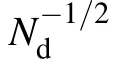

Fig.7. Specific contact resistance as a function of the reciprocal square root of the carrier concentration (Nd) for annealed Ti/Pt/Au/n-InGaAsBi:C and Ti/Pt/Au/n-InGaAs:Si systems.[24]
4. Conclusion
In summary,we have investigated the effect of rapid thermal annealing on the electrical properties and contact resistance of n-type carbon-doped InGaAsBi films. After RTA,the electron concentration undergoes a sharp increase, and the specific contact resistance shows a noticeable reduction.An annealed n-InGaAsBi film with a carrier concentration of 1.6×1021cm?3exhibited an ultra-low specific contact resistance of 1×10?8Ω·cm2,revealing that it depends greatly on the doping level. From comparative studies of Ti/Pt/Au contacts to n-InGaAsBi:C and n-InGaAs:Si, it is evident that dilute InGaAsBi is suitable to be used as a contact material for InP multi-terahertz devices.
- Chinese Physics B的其它文章
- Statistical potentials for 3D structure evaluation:From proteins to RNAs?
- Identification of denatured and normal biological tissues based on compressed sensing and refined composite multi-scale fuzzy entropy during high intensity focused ultrasound treatment?
- Folding nucleus and unfolding dynamics of protein 2GB1?
- Quantitative coherence analysis of dual phase grating x-ray interferometry with source grating?
- An electromagnetic view of relay time in propagation of neural signals?
- Negative photoconductivity in low-dimensional materials?