
DISTANT PASTURES
2021-04-13 02:36:50BYTINAXU徐盈盈
漢語世界 2021年2期
BY TINA XU (徐盈盈)
Li Juan’s memoirs of pastoral life give glimpses into disappearing livelihoods in the Altai Mountains
新疆作家李娟和她筆下的阿勒泰:行將消失的生活方式與獨特的生活體驗
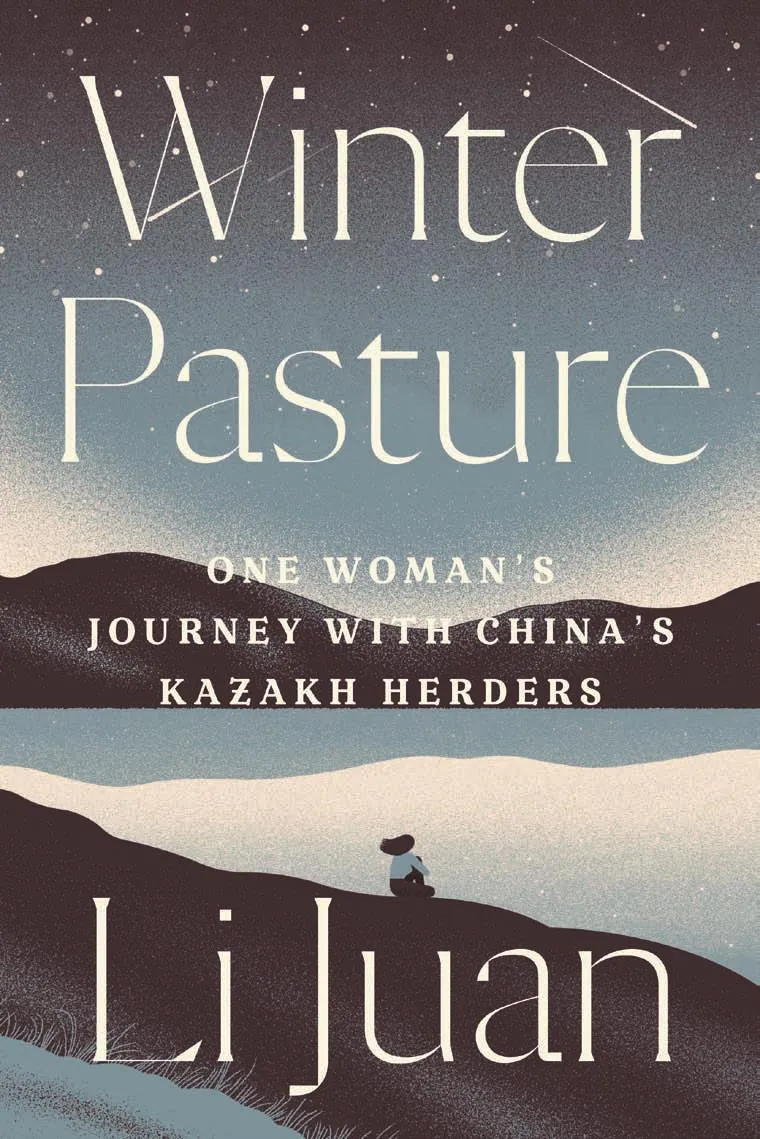
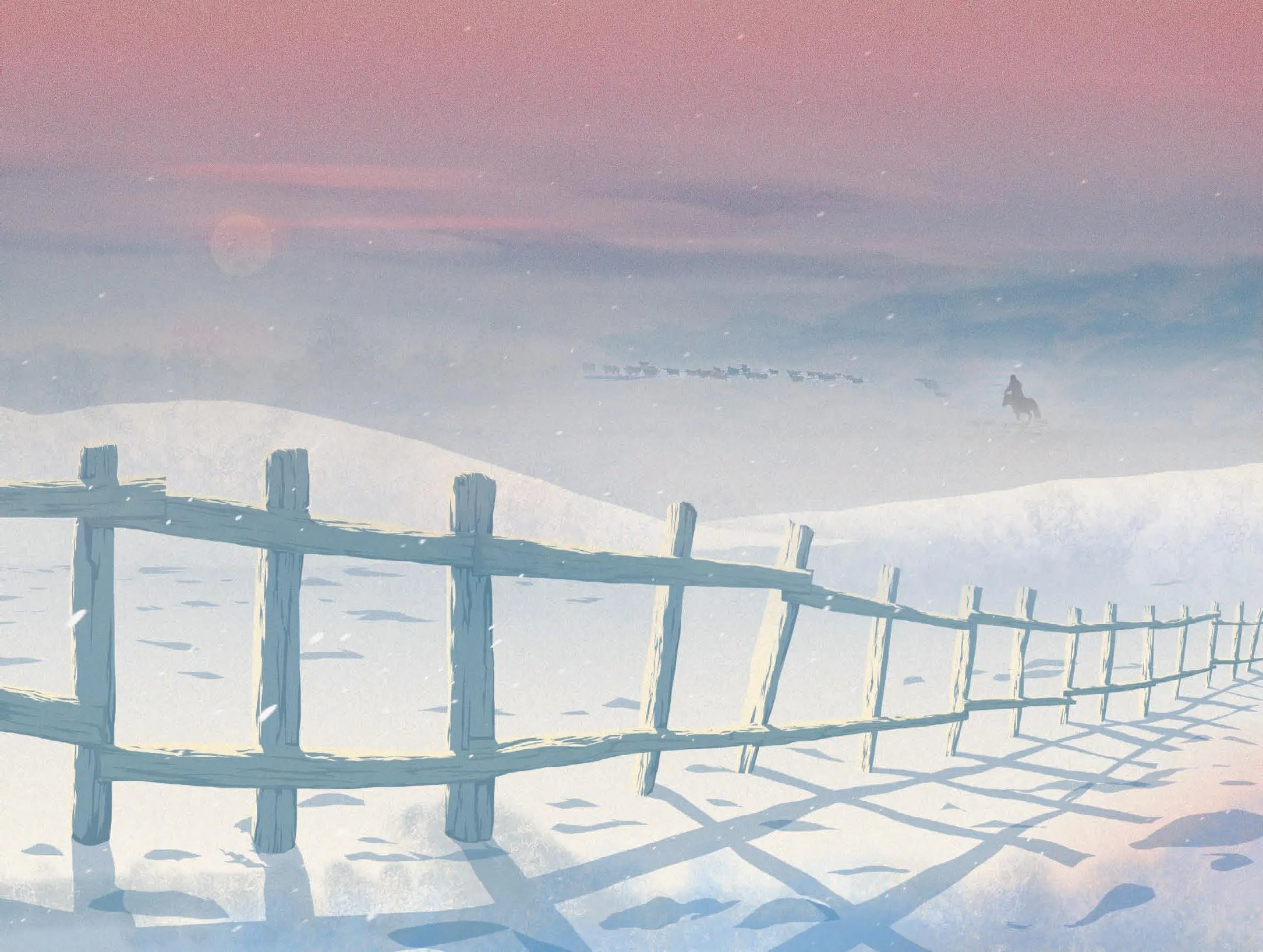
To express surprise, 9-year-old Nurgün exclaims“Aiya!” in Mandarin, while everybody else in her Kazakh family would say, “Allah!” This is one of many everyday observations Li Juan makes inWinter Pasture.The book follows a Kazakh family whose children have come home for winter break, subtly transformed by their education at a free public boarding school.
Translated into English for the first time, Li Juan’s writings are timeless in their portrayal of loneliness,vastness, and death—yet bear the marks of the times in cross-cultural collisions on a shifting grassland.Two books by the Xinjiang-born, ethnic Han writer were released in English this February, cementing her arrival onto the international literary scene.
Winter Pasture, translated by Jack Hargreaves and Yan Yan, records a grazing journey Li takes in 2010 with an ethnic Kazakh family and their 100 sheep, over 50 cattle,six horses, and three camels, living in burrows dug intothe snow-covered ground in the Altai Mountains.Originally published in 2012, it is a masterpiece of vivid character sketches.Distant Sunflower Fields, translated by Christopher Payne, is a later work from 2017.It spans the years Li sought to cultivate 100 hectares of sunflowers on a plot of rented land with her mother and grandmother, and turns meditatively inward toward her own life and family.
Li Juan was born to an agricultural family in Chushur county of Xinjiang Uyghur Autonomous Region in 1979.After dropping out of high school,she headed to ürümqi to work on an assembly line.She later worked as a clerk and a magazine editor, before joining her mother on the sunflower fields.
Like many young Chinese writers today, Li’s first literary community was online, where she blogged about her life under the screen name “Li Juan of Altai.” She published her first book,Nine Pieces of Snow, at the age of 24.In the two decades since, Li has written nine books.Distant Sunflower Fields,her most recent, garnered an award in essay prose category at the prestigious Lu Xun Literary Prize.
The cross-cultural premise ofWinter Pasturecould have easily come off as voyeuristic, but is saved by Li Juan’s biting, self-deprecating honesty.She discloses that Cuma, the father of the family, probably agreed to host her for the winter because he owed her family some money.
The characters light up the story.Cuma, who feels that “idleness is destruction,” turns to all kinds of antics to fill time: spray painting the family cat pink (thus earning it the name Plum Blossom), casting family members in reenactments of television dramas, and inventing tales about Li Juan for the other herders.“There was no limit to his creativity,” notes Li.Thus, the other herders confusedly believed she was an unemployed vagabond out to steal herding secrets,a furloughed reporter from the county TV station, or the child of a high-level official banished to the countryside.
Li notes she could have queried about their lives with “a professional tone…except I wasn’t stupid; I knew that these high-minded questions were actually quite silly.” Instead of an authoritative account of Kazakh life or culture, she purports only to record her own experiences and feelings as she works alongside the family.Her burning self-awareness imbues her writing with awkward grace.
The cross-cultural communication is more entertaining and revealing when it fails.When Li cannot understand Cuma’s jumbled explanation of the Kazakh calendar,she concludes, “Anyway, I write essays,not dissertations; better stick to the basics.”
The “basics” are the unflinching descriptions of daily life among the herders, such as the process of removing camel testicles, or padding the walls of their burrow with manure for warmth.Li is at her most tender when writing about Kama, the eldest daughter of the family, who dropped out of school to support her younger siblings.Yet Li adds a rare note of indignation when Cuma’s wife puts more food on her son’s plate than on her daughter’s, seething in the text,“This was clearly favoritism!”
Li shrewdly chronicles the growing rift between generations—when 15-year-old Zhada returns for winter vacation “as fashionable as a city kid…Cuma picked up the new coat that had been discarded on the felt mat on the bed and studied it from every angle before asking the boy how much it cost.It was moments like these that revealed that his boy was slowly becoming a stranger.”
Cuma gives Zhada money to visit the doctor, but instead he buys a mobile phone so he can listen to music.He never goes herding without it, and insists on taking his sister’s phone too, in case his runs out of battery.“Zhada was the son of a shepherd,” Li concludes, “so of course he loved the land, but what truly inspired him was the glittering life beyond the pastures.”
The book reveals near the end that this winter journey could be the family’s last.Under a new grassland restoration policy, herding families would receive a government subsidy of several hundred thousand RMB in exchange for fencing off their overgrazed pastures for several years.Li writes that the subsidy would be enough for Cuma to fulfill his dream of buying a car, and feed the whole family for the duration of the grazing ban.Yet although Cuma looks down on the “pathetic, deprived lives” of farming, he sighs over the loss of his land, on which he could grow all the feed for their animals.
The disappearing livelihoods of the Altai region include not only the nomadic lifestyle of the Kazakhs,but Li’s mother’s convenience store,which serves herders arriving in the town of Akehara after slaughtering and selling their animals.Even farming is becoming passé, as desertified lands are gradually stripped of nutrients, and the city exerts its magnetism on young people.After an unsuccessful harvest, many of Li’s neighbors simply pack up and leave.
WhileWinter Pasturecontains a clear narrative within the herders’journey,Distant Sunflower Fieldsmeanders through Li’s thoughts and memories without much of an overarching structure besides the change of seasons on the farm.However, it is in the sunflower fields that we glean the most unguarded insight into the author as she comes to terms with her own sense of rootlessness.
For Li, and three generations of women in her family, restlessness is an inheritance—she calls herself “an expert at leaving.” Li’s mother, an agricultural scientist who traveled from Sichuan province to Xinjiang working on land reclamation projects with the Kuitun Construction Corps,moved towns every few months when Li was young.When Li’s grandmother is evicted from her low-rent six-square-meter home in Sichuan, she is forced to join them on a sunflower field the family has rented in Xinjiang.
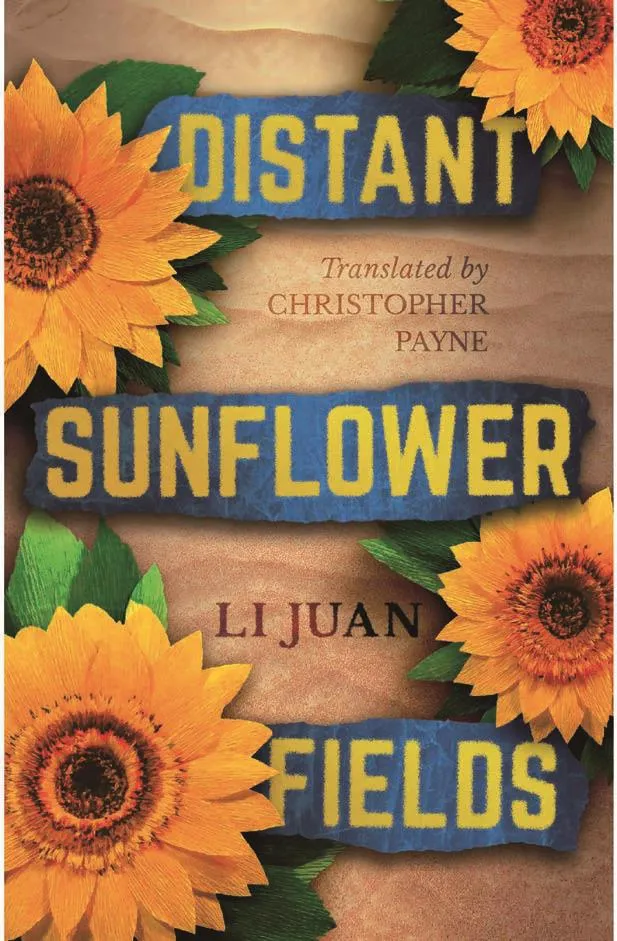
When grandmother arrives, Li Juan writes, “Walking stick in hand, she toured the underground pit, then strode out onto level ground, looked in every direction, and began to cry.”Already in her 90s, Li’s grandmother finds it difficult starting over again in a new place.Family history is no source of comfort either—Li notes that unlike the Kazakhs, who learn the names of all their ancestors going back nine generations, she does not even know the names of her grandfathers: “I imagine a sober drunk knew much more of their place in the grand scheme of things than I did,” she writes.
The cast inSunflower Fieldsis mostly non-human.There’s a chapter for each of the family dogs Saihu and Chouchou (the village’s infamous shoe thief), a cat (who “ignored any and all rules of combat.The Geneva Convention meant nothing to it”),and the chickens, cows, and rabbits worth several hundred thousand RMB on the farm.The menagerie provide ample comedy: a constant stream of barefoot neighbors arrive at their door in search of lost footwear;and Li’s mother sewing clothes for the chickens and underpants for the dog(which doubles as a form of canine contraception).
Page by page, the narrative vacillates between aching and awe in a timeless land.Year after year, the family waits for sunflowers to burst forth from the desert, and their toil is punctuated by euphoria.Standing in a field on an early spring day, meeting the gaze of a lizard, Li writes, “And in that moment, I found that I could suddenly say all those things I’d been too shy to say before.I could talk of‘love’ and ‘attachment’…I felt love for my home, for the day-to-day realities of living, the complexity and the messiness of it all, the contradictions and weight that went with it.”
The largest detractor ofSunflowerFieldsis that Christopher Payne translates the word “Han,” a Chinese ethnicity, to “Chinese,”a nationality.While this may be a shortcut to make the book more accessible to international readers,the conflation results in phrases throughout the book like: “My whole family were Chinese, which meant it wasn’t always convenient for us to try and follow Islamic rules regarding what was OK to eat and what wasn’t.” The equating of ethnicity with nationality negates the reality of a multiethnic and multi-religious Chinese identity(substitute “Chinese” with any other nationality—Indian, French—and see how that sentence sounds).
Inevitably, an assumed metropolitan audience is coded into Li’s writing.The sunflower fields are “distant,”but the “center” is never identified.Cuma’s family know they are not the intended audience for the programs on their TV.In China’s Han-centric cultural establishment, portrayals of Xinjiang’s ethnic diversity still come largely from Han creators.Han director Wang Lina’sA First Farewell,a film about Uyghur communities,was screened in theaters across the country in 2020.In contrast,Eternal Lamb, a novel by the ethnic Kazakh writer Yerkex Hurmanbek, saw a limited showing when it was adapted into China’s first Kazakh-language film in 2010.
Many of Li’s readers are romantics,urbanites who ache for the supposed purity of rural life.One fan commented on her online blog,“Please keep your innocence and genuineness, and don’t be polluted by the city and reality!” Li replied that true innocence does not need to be maintained.“Nobody can avoid the mark of the era,” Li said to journalists in 2019.“If you are strong, you are not controlled by it.If you are weak, you hide from it.”
猜你喜歡
國畫家(2022年2期)2022-04-13 09:07:46
四川文學(2021年4期)2021-07-22 07:11:54
少年博覽·小學高年級(2016年12期)2017-01-16 12:48:35
特別文摘(2016年19期)2016-10-24 18:38:15
37°女人(2016年5期)2016-05-06 19:44:06
爆笑show(2016年1期)2016-03-04 18:30:28
爆笑show(2015年6期)2015-08-13 01:45:40
文理導航·科普童話(2015年6期)2015-07-29 16:46:21
絲綢之路(2014年9期)2015-01-22 04:24:46
兒童與健康(2011年4期)2011-04-12 00:00:00
