Analysis of Electronic Supercharger Technologies Application on 48 V Hybrid Vehicles
2021-08-03 06:10:26YuChanghongWuQinglong
汽車文摘 2021年8期
Yu Changhong,Wu Qinglong
(1.New Energy Vehicle Development Institute,China FAW Corporation Limited,Changchun 130013;2.State Key Laboratory of Comprehensive Technology on Automobile Vibration and Noise&Safety Control,Changchun 130013)
【Abstract】The structure and function principles of 48 V mild hybrid system and electronic superchargers are expounded,and the application of electronic supercharger technologies on 48 V hybrid vehicles is analyzed in this paper.Based on the current situation of technological development,the performance improvement,control integration and test verification of the electronic superchargers are discussed.The results show that the matching electronic superchargers can greatly improve the dynamic performance and economy of 48 V hybrid vehicles.Meanwhile the development of electronic supercharger technology is summarized and prospected,which can be used to provide design references for relevant engineers.
Key words:48 V hybrid system,Electronic supercharger,Performance analysis,Control integration,Test validity
Abbreviations
BMS Battery Management System
BSG Belt-driven Starter/Generator
CAN Controller Area Network
EMC Electromagnetic Compatibility
EMS Engine Management System
HCU Hybrid Control Unit
HVAC Heating,Ventilation and Air Conditioning
MCU Motor Control Unit
MHEV Medium Hybrid Electric Vehicle
PHEV Plug-in Hybrid Electric Vehicle
SOC State Of Charge
TCU Transmission Control Unit
1 Introduction
In the context of ever increasing pressure of energy shortage and environmental pollution,stringent fuel consumption standards are formulated by governments of various countries for passenger cars.The researches and developments on new energy vehicles have been paid much attention by automobile industries and academia,and different types of hybrid electric vehicles have been introduced and promoted in the market worldwide[1].The 48 V hybrid vehicle is matched with BSG motor and 48 V battery pack based on the original traditional powertrain system[2].Compared with the other hybrid vehicles,the cost increment for 48V hybrid vehicle is less than that MHEV or PHEV offers[3],so 48 V hybrid system offers an easy and cost effective way to reduce energy consumption and emission[4].48 V system can alsobeused tomatch different dynamic systemconfigura?tions.
Moreover,with the development of highly electrified vehicles,the 12 V battery electrical architecture can no longer be able to meet the growing demands for electrical appliances,nor be able to match with the advanced automotive electronic technologies(eg:electronic super?charger).Therefore,it is imperative to improve the vehi?cle voltage,which is one of the development trends of newenergy vehicles.
48 V hybrid system currently offers a cost-effective hybrid electrification solution,which can not only reduce CO2emissions,but also provide more energy for vehicle electrical components[5].For example,it can make full use of electronic supercharger technologies,electronic power steering and electric HVAC technologies.The re?sponse that electronic superchargers delivered is much more rapid under 48 V battery.48 V hybrid system and assembly componentshavebeen developed by many man?ufacturers,such as 48 V e-supercharger developed by Magna and e-booster developed by Borger Warner[6].The application of electronic superchargers on 48 V hybrid systemcan beused effectively to solvetheproblemof tur?bine hysteresis,and improve the dynamic performance as well asemission reduction.
This paper analyzes the application of electronic su?percharger on 48 V hybrid vehicle.Based on the current situation of technological development,the performance improvement,control integration,test verification of the electronic superchargers are discussed,which can be used to provide design references for the further develop?ment.
2 48 V System Operating Principle
2.1 48 V Powertrain Structure
The powertrain structure of 48 V hybrid vehicle is shown in Fig 1.It is mainly composed of engine,gearbox,BSG motor,48 V battery pack and clutch.The related controllers include HCU,BMS,MCU,EMSand TCU.As an integrated starter and generator,BSGmotor isconnect?ed with the engine through the belt pulley system.The 48 V hybrid system can not only provide motoring drive,but also jointly drive the vehicle with the engine.The combination of 2 dynamic sources can make the vehicle more powerful.Meanwhile BSG motor can be used to recover energy in the process of vehicle coasting and braking.
It was found that with the increase of vehicl e mass,the energy recovery efficiency of 48 V hybrid system is better,but the fuel economy of light car is the best[8].This shows that when the engine is miniaturized and the vehicle is lightweight,and matched with 48 V hybrid sys?tem and electronic supercharger,the vehicle fuel econo?my can be further improved under the premise of ensur?ing power output,and the total CO2emission can be re?duced toabout 20%based on theoriginal figure[9].
2.2 48 V System Operating Principle
Based on the core operation algorithm of HCU,the differ?ent driving cycles are realized through the cooperative control with EMS,MCU,BMS and TCU in 48 V hybrid system.HCU is used to distribute the torque outputs of different power sources.A variety of hybrid system func?tions and operation modes are realized in HCU software.The system functions include power management,engine start and stop,driver torque demand calculation,system torque distribution,assembly capacity calculation,ener?gy management and safety monitoring.The operational modes that can be designed to include engine start and stop,motor assist,engine drive,engine and motor com?bined drive,idle charge,drive charge and energy recov?ery.
HCU receives motor signals from MCU and controls BSG motor to enter different working modes,such as torque mode and speed mode.HCU sends signals to MCU through CAN bus,and controls BSG motor to out?put torque to meet the demand value of vehicle driving,and then the operation modes of motor assist,combined drive and energy recovery are realized.HCU receives the signals of battery voltage,battery current,SOCand mode status from BMS,HCU sends signals to BMSto close the main relay of 48 V battery in order to realize the func?tions of power up and off.HCUreceives the signals of wa?ter temperature,warm-up request from EMS,and HCU sendssignals to EMSto control engine start or stop.HCU receives gear signals from TCU,and sends signals to closetheclutch torealizetheshift function of thevehicle.
3 Electronic Supercharger Working principle
3.1 Electronic Supercharger Structure
The amount of exhaust gas produced by the traditional turbocharged engine at low speed is little,and it will take some time for the exhaust gas to drive the impeller to work normally.This phenomenon of slow transient re?sponse of the abandoned turbocharger is called turbine hysteresis.Due to the existence of turbine hysteresis,the engine power is improved slowly at low speed,which leads to the poor acceleration performance and emissions of the vehicle.Because electronic supercharger offers the characteristics of fast response and flexible working mode,so it is widely concerned by many different auto?mobilemanufacturersin theworld[10].
Fig.2 shows a structure of electronic supercharger and exhaust gas turbocharger in series.This independent electronic supercharger device is composed of electronic compressor,motor and control unit.According to the po?sition of the device,it can be divided into two categories:front and rear positon.The engine performance will be better developed if it is matched with the electronic su?percharger and 48 V hybrid system,and the vehicle fuel consumption and emissions will be further reduced[12].
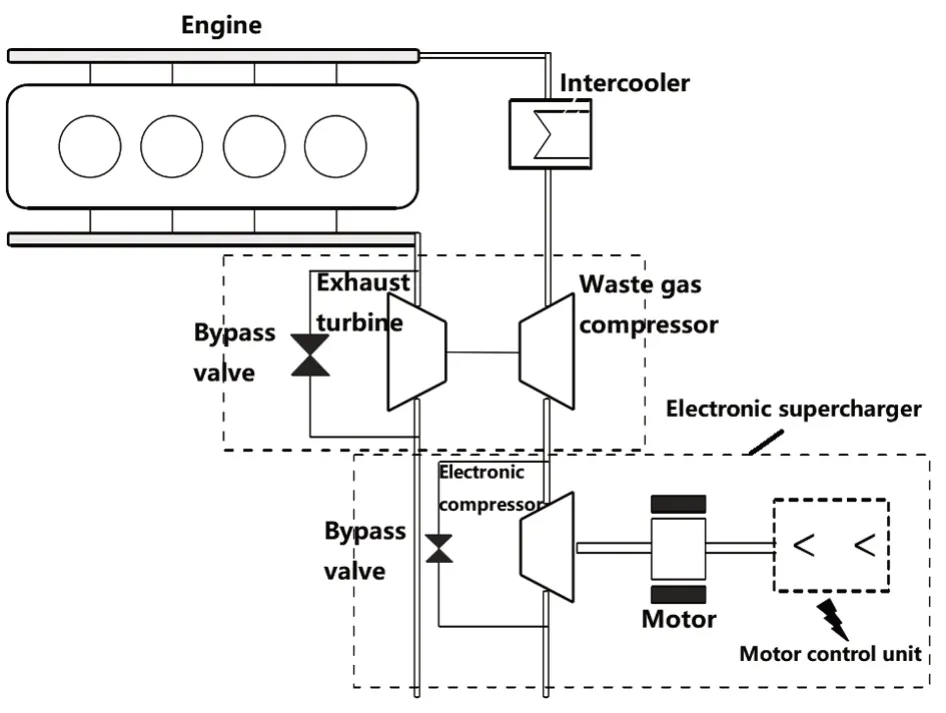
Fig.2 Thestructureof electronic supercharger[11]
3.2 Electronic Supercharger Working Principle
Turbocharger is used to push the turbine to rotate through exhaust gas,so that the intake side can inhale more air,and finally achieve the maximum working ef?fect.Electronic supercharger uses a motor instead of ex?haust to drive the turbine,because the motor control is much more accurate,so the dynamic response is very fast.Electronic supercharger is not restricted by the en?gine speed range,it can significantly improve perfor?mance at low engine speed and eliminate the turbine hys?teresis.
The electric motor of electronic supercharger re?sponds quickly and drives the impeller to rotate rapidly,which provides enough air intake for the early accelera?tion of the engine,so as to alleviate the turbine hystere?sis.It is believed that an excellent electronic supercharg?er offersthe following characteristics.
(1)Theability of quick start;
(2)Small volumeand light weight;
(3)Good mechanical strength;
(4)Good heat resistanceand lower cost[13].
Relevant research shows that:Comparing with the prototype vehicle without electronic supercharger,the time from starting to reach the maximum engine speed is 0.7 s and the response time is much faster if the vehicle matched with electronic supercharger[14].
3.3 Fuel Saving Analysis
At present,electronic supercharger is only applied on 48 V system,because 48 V system has enough battery ca?pacity and voltage compared with 12 V system.The dy?namic power and economy of vehicle have been signifi?cantly improved with 48 V system.Now many manufac?turers have series products equipped with 48 V system and electronic superchargers,the effects of some cars equipped with electronic superchargers are shown in Tab.1.
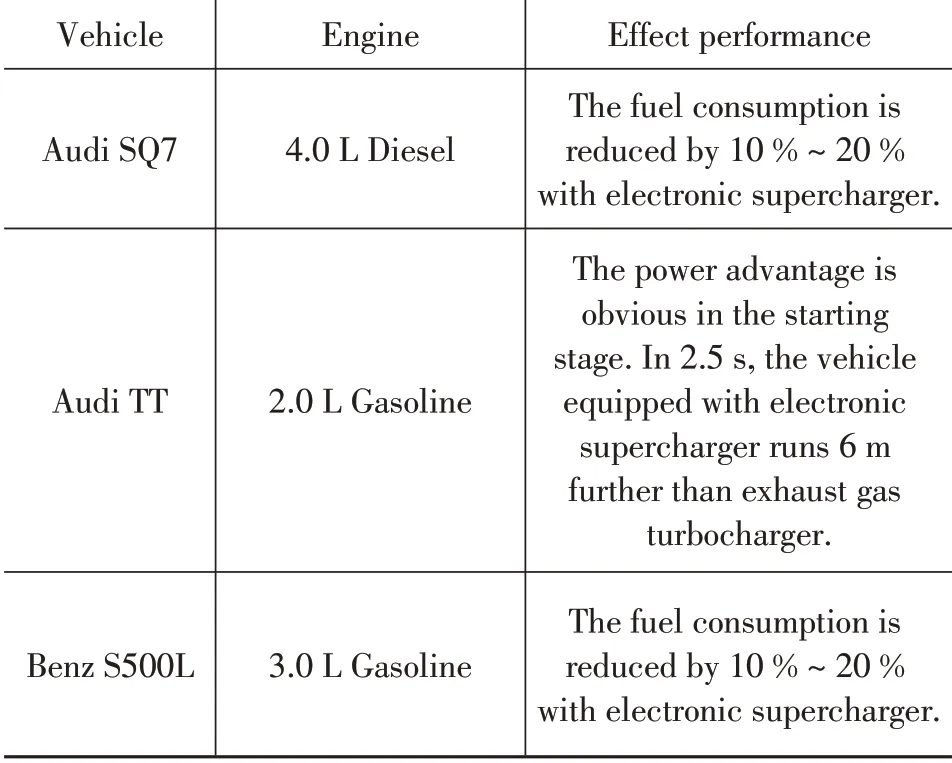
Tab.1 Effectsof vehiclewith electronic supercharger
It can be seen from the Tab.1 that electronic turbo?charger can be used to reduce turbine hysteresis,im?prove low torque responsiveness of engine and reduce fu?el consumption.48 V system technology can realize the function of fuel saving,in the case of less increase in cost,the fuel saving rate can reach 10%~20%,so 48 V hybrid is acost-effectiveenergy-saving technological so?lution.
4 Electronic Supercharger Performance Analysis
4.1 Overall Requirements of Performance Develop?ment
At present,with theemergenceof morestringent regulato?ry limits,international suppliers,such as Bosch,Conti?nental and Schaeffler,have invested heavy on research of 48 V hybrid system and related hardware.BorgWarner,Magna and Valeo have carried out in-depth development of electronic superchargers,as shown in Fig.3,a 48 V eSupercharger produced by Magna[15].Audi and Mer?cedes Benz have launched their own 48 V hybrid systems with electronic superchargers.
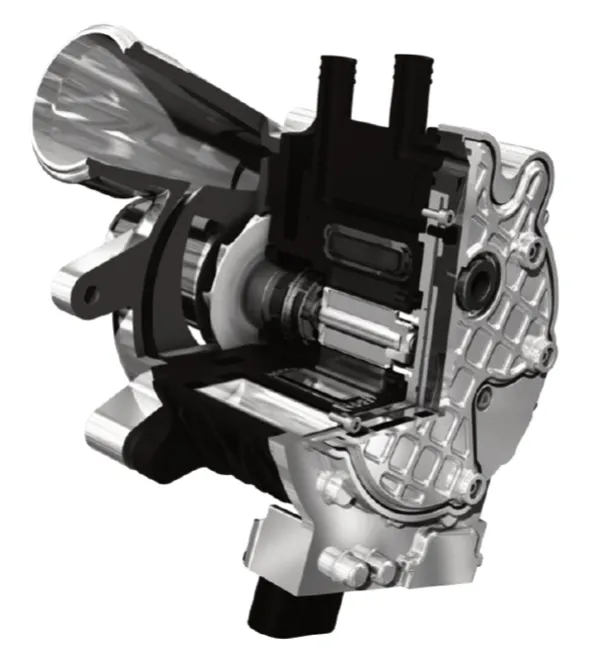
Fig.3 48 V eSupercharger produced by Magna[15]
In order tomeet therequirementsof performancede?velopment,the following objectives are decisive in devel?opingtheelectronic supercharger[15]:
(1)High Revolution Per Minute(RPM)gradient for short acceleration times;
(2)Highest&widest possiblecharacteristicsmap;
(3)High continuous power for low-end torque sup?port;
(4)High overall efficiency factor;
(5)Minimized component size;
(6)Lowcomponent costs.
4.2 Acceleration Performance
The acceleration response that electronic supercharger offers is fast, which can effectively avoid the phenomenon of turbine delay on traditional engine,and the energy consumption with electronic supercharger is alsolow.
The acceleration performances of the electronic su?percharger are showed in Fig.4 and Fig.5.In addition to a good transient behavior against various loads,it is ulti?mately important to achieve the desired pressure ratio for the charging pressure build-up of the internal combus?tion engine.For example,the desired pressure ratio pr=1.6 has already been applied around 300 ms for a load jump to200 kg/h.
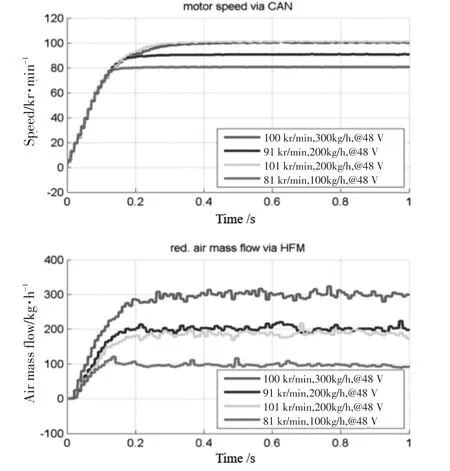
Fig.4 Acceleration and massflow[15]
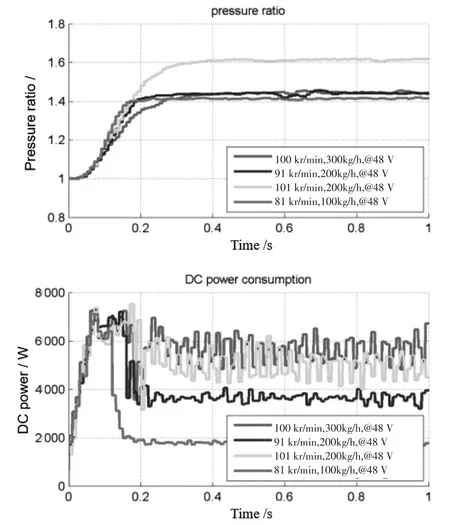
Fig.5 Pressurebuild-up and power consumption[15]
4.3 Performance in Engine Environment
Through the simulation of 2.0 L engine equipped with Magna electronic supercharger,the time of full torque ac?celeration is less than 0.5 s at the low speed of engine.It can be used to optimize the system operation efficiency and reduceenergy consumption.
A high pressure ratio is required for the function of the low-end torque support,which must be maintained over an extended period of time.As is shown in Fig.6,it can be seen that the booster compressor is worked at RPMs of up to 70 000 r/min and the range of continuous powers required here is from 1 kW DC to 1.8 kW DC.Themaximum RPMis100 000 r/min here,and it can cre?ate a sufficient RPM reserve.Meanwhile the efficiency factor over wide RPMrangesisat aconstant high level.
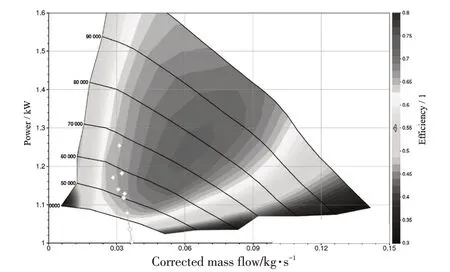
Fig.6 Low-end torquesupport[15]
The 48 V electronic supercharger developed by Magna,due to its high-RPM design with a rated RPM of 100 000 r/min and a continuous power of 2.2 kW,is suit?able to meeting the demandsof ahighly supercharged de?sign of a 4-cylinder gasoline engine that performs like a 6-cylinder engine[16].
5 Electronic Supercharger Control and Inte?gration
5.1 Electronic Integrated Development
The external structure of electronic supercharger devel?oped by Borger Warner is shown in Fig.7,an eBooster has been applied on models from Mercedes Benz.Mer?cedes-Benzhas implemented a high degreeof electrifica?tion in the M256 6-cylinder engine.Fig.8 shows the electronic booster on the Mercedes-Benz M256 6-cylin?der gasolineengine.
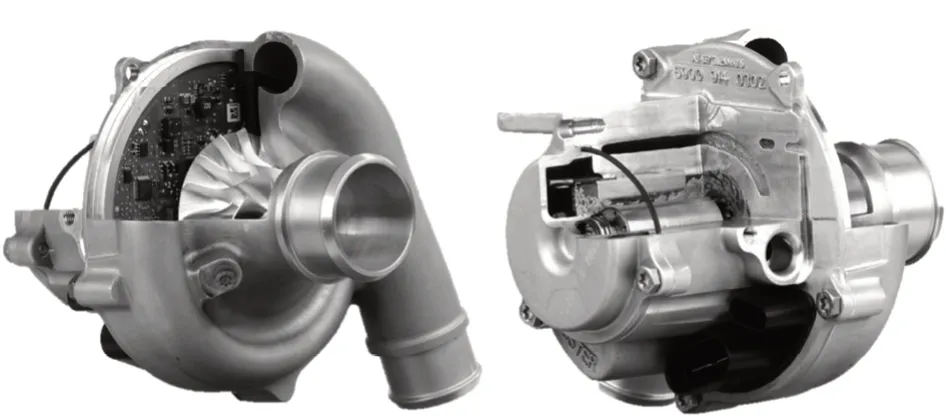
Fig.7 48 V eBooster produced by Borger Warner[17]
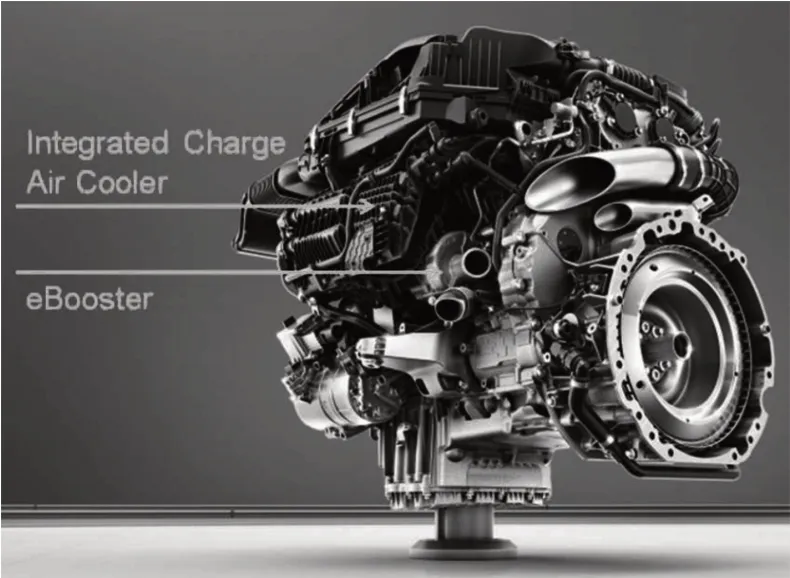
Fig.8 Mercedes-Benz M256 enginewith eBooster[17]
In this 48 V hybrid vehicle,the Mercedes-Benz M256 engine integrated starter generator in which regen?erativebraking and boost functions contribute significant?ly to the outstanding fuel consumption values of the en?gine[18].The eBooster was integrated very successfully with good voltage and energy stability under the 48 V hy?brid system.
As shown in Fig.9,the supercharger is controlled via CAN interfaces with a simple,clearly structured log?ic.The input includes speed request and related bound?ary conditions,the output includes operating and compo?nent status.The electronic supercharger was electrically designed such that it delivers optimal performance in the range of 36 V to 52 V.And the electronic supercharger is activated by a speed request from EMSwhich has been carefully optimized for the specific engine application.
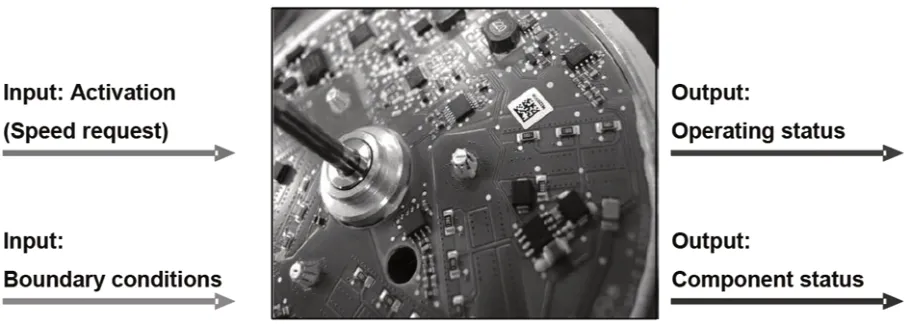
Fig.9 CANInterfacesof electronic supercharger[17]
5.2 Analysisof Operational Mode Strategies
There are 4 operational modes in electronic supercharger control strategies,and the power request and response time of each mode are different.The operational modes include Free wheeling mode,Idle mode,Operational mode and Hold mode.In 48 V hybrid system running,one of 4 possible operational modes is selected via CAN bus.
The choice of various modes is depended on envi?ronmental conditions,energy management requirements and expected operational modes.The associated opera?tional logic is shown in Fig.10.For example,it needs to be accelerated if the control strategy switches from Hold Mode to Operational Mode.In the normal operation,which means under normal ambient conditions and with sufficient electrical energy,the controlled operational mode is used because the ramp up time of electronic su?percharger isthe quickest.
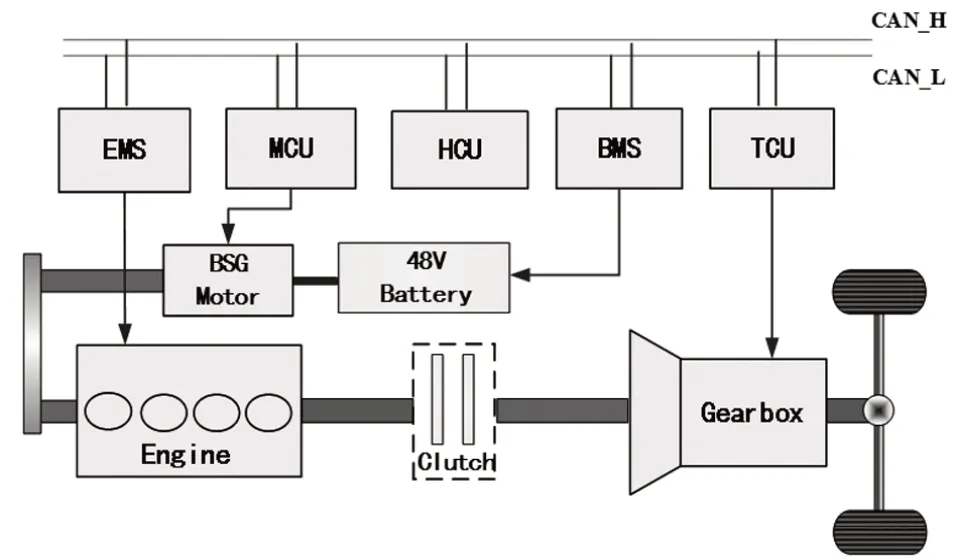
Fig.1 Thestructure of 48 V powertrain[7]
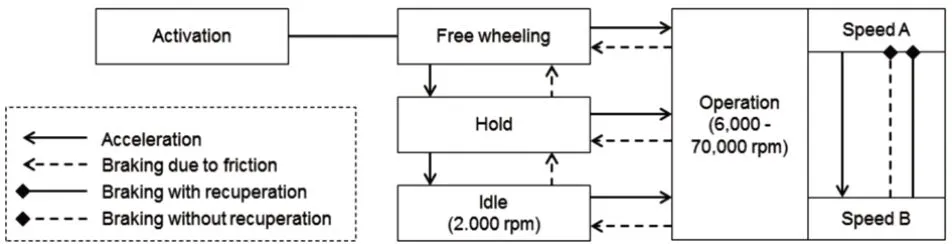
Fig.10 Schematic view on the operational modes[17]
6 Electronic Supercharger Test Analysis
6.1 Brake Energy Recovery Test
In order to be able to develop a futureproof operational strategies and the performance classes of 48 V compo?nents required in the vehicle,it is necessary to know the recuperation potential in the driving cycles and subse?quently in real drivingmodes.
The recuperation potentials of two different vehicle types in the WLTC cycle are shown in Fig.11.The test results are summarized as follows.With a vehicle mass of 1 400 kg,the maximum recuperation power is 20 kW.With a vehicle mass of 1 800 kg,the maximum recupera?tion power is 25 kW.The recuperation potential and pow?er of different vehicletypesarenot thesame.

Fig.11 Recuperation potential of 2 vehicles[15]
6.2 EMC Test
The EMC requirements arising from relevant standards have been achieved and successfully validated by component and vehicle tests.As shown in Fig.12,EMC test results at component level show that interference voltage level is significantly lower than the base borderline average,which indicates that the 48 V elec?tronic supercharger will not affect the EMCtest results at component level,the test results show the success of the function development and application.This test fully shows that it is a remarkable achievement considering thehigh currentson the 48 V sideof theelectronic super?charger.
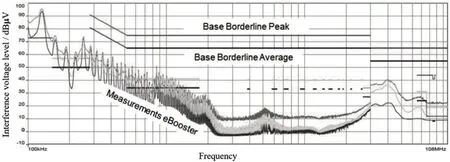
Fig.12 EMCmeasurementsof theelectronic supercharger[17]
6.3 Low Speed Boost Test
The core advantage of electronic turbocharging lies on the convenience of control.The turbocharger of exhaust gas can only be used at a certain speed,while the elec?tronic supercharger isdriven by amotor,which isnot lim?ited by the amount of exhaust gas,it can be used to real?izetheintaketurbochargeat variousspeeds.
For M256 engine with eBooster,it can be seen from the low-speed supercharge comparison test in the Fig.13.Theengineequipped with electronic supercharger hasob?viously faster intake supercharger,the boost pressure with electronic supercharger is achieved considerably earlier than without electronic supercharger,and the en?gine acceleration will also becomefaster.

Fig.13 Transient operation boost pressure[17]
7 Summary and Prospects
With the increasingly stringent fuel consumption stan?dardsfor passenger carsin China,moreand morenew en?ergy vehicleswill be developed in order to achieve thefu?el consumption target.48 V hybrid system is an energy saving technology that can effectively compromise cost and fuel saving rate.The dynamic performance and econ?omy of the vehicle can be further improved if it is matched with electronic supercharger technologies.
With the help of electronic supercharger technolo?gies,the shortcomings of traditional turbocharger system technology can be reduced.Electronic supercharger tech?nologies make full use of 48 V power supply,which can meet the actual supercharge demand and improve the performance of engine at low speed.The output of low speed torque region is optimized,and the turbocharging hysteresis is effectively avoided.The dynamic perfor?mance is improved and the higher fuel efficiency is real?ized,which is providing more excellent driving enjoy?ment for the driver.
The electronic supercharger technologies analyzed in this paper can provide technical reference for the matching electrical technologies of 48 V hybrid system.Although the electronic supercharger has many advantag?es,its reliability still needs to be further explored.In the future,the intelligent matching between 48 V hybrid sys?tem and electronic supercharger should be further stud?ied on the basis of existing technical products,so as to achieve the best power and economy of the vehicle and improvetheemission performance.