王炳南王安娜夫婦住所“馬鞍山28號”中國共產黨最早外事機構重要辦公地
2021-08-23 02:24:49鄭犁
重慶與世界 2021年7期
鄭犁
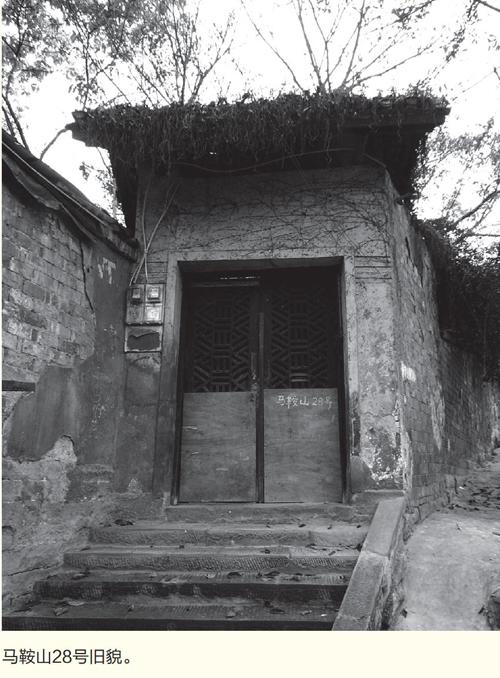
重慶市人民大禮堂旁,有一處因兩頭高、中間低,形似馬鞍的地形而得名的“馬鞍山”,這里有多座精致小院和多棟洋樓等民國時期建筑,抗戰時期沈鈞儒、李公樸、沙千里、茅盾、王炳南等知名愛國進步人士在此居住活動。而馬鞍山28號,這幢始建于1930年代的建筑因王炳南、王安娜夫婦在此居住辦公,成為中國共產黨最早外事機構重要辦公地。
20世紀30年代,重慶久裕錢莊經理李正銓在馬鞍山修建了3棟小樓,自上而下分別以他3個兒子李忠良、李忠孝、李忠厚名字起名“良莊”“孝第”“厚廬”。“厚廬”后來成為沈鈞儒住所,旁邊的“良莊”則被中共中央南方局外事組以王炳南、王安娜夫婦的私人身份租下開展工作。這里逐漸成為以周恩來為書記的中共中央南方局同各民主黨派、進步民主人士聚會、座談,共商國是的重要場所。
1927年“四·一 二”反革命政變后,國民黨大肆屠殺中共黨員,從1927年到1928年上半年,被殺害的中共黨員和革命群眾達31萬多人,年輕的中國共產黨遭受著前所未有的考驗。在這危急時刻,1927年8月7日,中共中央政治局在漢口召開緊急會議,史稱“八七會議”。它給正處在思想混亂和渙散中的中國共產黨指明了新出路,中國共產黨的工作重心開始由城市轉向農村。然而,中共的根據地被國民黨重重包圍,當時除了與蘇聯共產黨有秘密交往以外,失去了與世界各國政府和組織交往的條件,國際社會對中國共產黨的主張和根據地的真實情況知之甚少。
1937年盧溝橋事變爆發后,日本帝國主義發動全面侵華戰爭,中國共產黨和國民黨開始由武裝敵對轉變為合作抗日,國共第二次合作逐漸形成,中國共產黨的政治地位也由“地下”慢慢變得“公開”。因首都南京淪陷,國民政府遷都重慶,重慶一度成為當時中國的軍事、政治、經濟、文化中心和國際反法西斯力量遠東指揮中心。美、蘇、英、法、澳等30多個國家在重慶設立使館,中美、中蘇、中英、中緬、中越等10多個文化協會,塔斯社、路透社、國民先驅報等世界著名通信社、報社以及反法西斯國際機構、團體先后在重慶設立派駐機構,世界各國使者、知名人士和國際民間團體頻繁來渝,這為中國共產黨充分利用國共第二次合作形成的有利條件,走出延安,走向全國和海外,大力開展外事工作提供了便利。
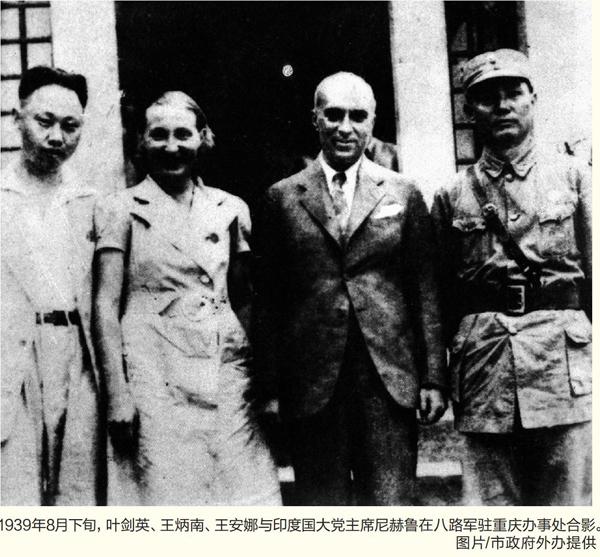
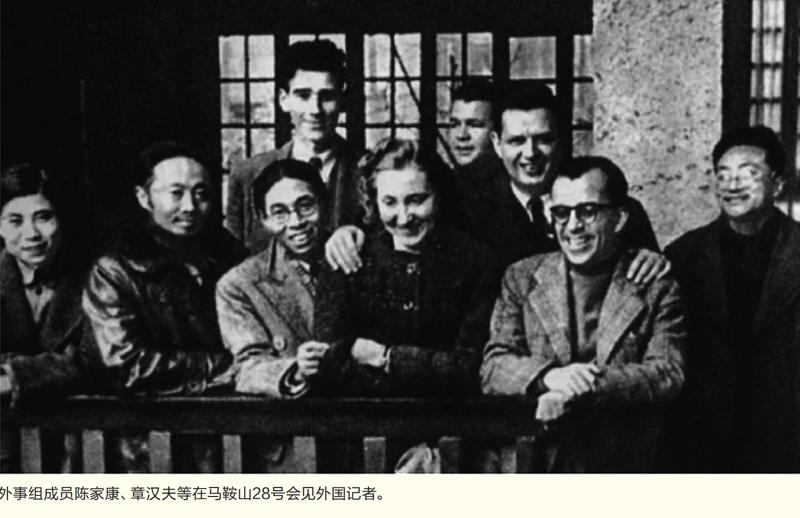
1939年中共中央南方局在重慶成立之始,就建立了對外宣傳小組(1940年12月改稱“外事組”),這便是中國共產黨最早的外事機構。外事組受周恩來直接領導,周恩來回延安時,由董必武或王若飛領導,統籌開展國際外交工作。外事組組長王炳南,陜西乾縣人,1926年加入中國共產黨,并擔任乾縣第一任黨支部書記。1929年,王炳南赴日本留學,后又轉德國柏林大學就讀。抗日戰爭時期,王炳南在中共中央南方局外事組任組長,從事統一戰線、國際宣傳和外事工作。根據周恩來“廣交朋友、深交朋友”的指示,王炳南利用自己在重慶的住所—馬鞍山28號,廣泛接觸各國使館人員和記者,闡明中國共產黨的立場,揭露國民黨反動派的反共真相,他還組織外事組工作人員編輯大量外文宣傳材料,通過德籍妻子王安娜托國際友人帶到國外。喬冠華、龔澎、陳家康、章漢夫、章文晉這些新中國的外交官都曾在外事組工作過。
在重慶期間,外事組積極組織開展工作,在與世界各國各界在華人士密切交流中提供有關中國抗日戰爭的材料,宣傳中國共產黨的主張,努力讓國際社會尤其是美、英等國盡可能多地了解中國抗戰的真實情況,在廣泛結交國際上有影響的外國名流,擴大國際統一戰線,沖破國民黨反動派政府的種種限制、干涉,團結國際友人,爭取國際上廣大民主進步力量的同情和支持,最終取得抗戰勝利中發揮了非常重要作用。中共中央南方局外事組在對外宣傳、外事活動、對外斗爭等諸多方面都積累了初步經驗,培養了一批外事干部,為新中國開展外交活動打下了堅實基礎。
圖片/重慶中國三峽博物館提供
編輯/楊艷
Next to Chongqing People's Auditorium, a mountain, named 'Maan Shan' in honor of its saddle-like terrain with two ends high and the center low, is dotted with many exquisite courtyards and multi-storey houses dating back to the Republican period. Prominent patriotic and progressive personages such as Shen Junru, Li Gongpu, Sha Qianli, Mao Dun, and Wang Bingnan lived and worked there during the War of Resistance against Japanese Aggression. A house, located at 28 Maan Shan and built in the 1930s, became a key office for the earliest foreign affairs agencies of the Communist Party of China, as Wang Bingnan and Anna Wang lived and worked here.
In the 1930s, Li Zhengquan, the manager of Chongqing Jiuyu Qianzhuang (old-style Chinese private bank), built three small houses at Maan Shan, named “Liangzhuang”, “Xiaodi”, and “Houlu” after his three sons, Li Zhongliang, Li Zhongxiao and Li Zhonghou, respectively, from top to bottom. The “Houlu” later became the residence of Shen Junru, while the adjacent “Liangzhuang” was rented by the Foreign Affairs Group of the Southern Bureau of the Central Committee of the Communist Party of China in the private capacity of Wang Bingnan and Anna Wang. It gradually became an important place for the Southern Bureau, with Zhou Enlai as its secretary, to meet and talk with democratic parties and progressive democrats, and to discuss national issues together.
After the counter-revolutionary coup on April 12, 1927, the Kuomintang massacred members of the Communist Party of China, and from 1927 to the first half of 1928, more than 310,000 CPC members and revolutionaries were killed. At this critical moment, the Political Bureau of the CPC Central Committee held an emergency meeting in Hankow on August 7, 1927, known as the "August 7th Meeting". It pointed out a new way out for the CPC, which was in a state of confusion and disorganization, and the focus of the CPC's work began to shift from the cities to the countryside. Yet the Communist Party's strongholds were heavily surrounded by the Kuomintang and, apart from secret contacts with the Soviet Communist Party, it had no access to governments and organizations around the world. The international community had little knowledge of the Communist Party's ideas and the real situation in the base areas.
After the outbreak of the Lugou Bridge Incident in 1937, the Japanese imperialists launched a full-scale war of aggression against China, and the Communist Party of China and the Kuomintang began to change from armed hostility to cooperation against Japan, with the Second Cooperation between the Kuomintang and the Communist Party of China taking initial shape. The Communist Party's political status slowly changed from "underground" to "open". As a result of the fall of Nanjing, the Nationalist government moved its capital to Chongqing, which became the military, political, economic, and cultural center of China and the command center of the international anti-fascist forces in the Far East. More than 30 countries such as the United States, the Soviet Union, Britain, France, and Australia set up embassies in Chongqing, 10 or more cultural institutions including the Chinese-American, Chinese-Soviet, Chinese-British, Chinese-Burmese and Chinese-Vietnamese associations, world-renowned news agencies and newspapers such as TASS, Reuters and the National Herald, as well as anti-fascist international agencies and groups set up postings in Chongqing, and emissaries, celebrities and international civil society groups from all over the world came to Chongqing frequently. This facilitated the CPC's efforts to make full use of the favorable conditions created by the second cooperation between the Communist Party of China and Kuomintang, to go beyond Yan'an to the whole country and overseas, and to vigorously carry out foreign affairs work.
In 1939, when the Southern Bureau of the Central Committee of the Communist Party of China was established in Chongqing, it set up an international communication group (renamed the Foreign Affairs Group in December 1940), the earliest of this kind in the history of the Communist Party of China. When Zhou Enlai returned to Yan'an, the Foreign Affairs Group with Dong Biwu or Wang Ruofei as its chief, coordinated and directed the international diplomatic work. Wang Bingnan, the head of the Foreign Affairs Group and a native of Qian County, Shaanxi, joined the Chinese Communist Party in 1926 and served as the first secretary of the CPC Qian County Committee. In 1929, Wang Bingnan went to Japan to study and later transferred to Berlin University in Germany. During the Anti-Japanese War, Wang Bingnan served as the head of the Foreign Affairs Group of the Southern Bureau of the Central Committee of the Communist Party of China, responsible for united front, international publicity, and foreign affairs work. Acting on Zhou Enlai's instructions - "making friends widely and deeply", Wang Bingnan used his residence at 28 Ma'anshan in Chongqing to reach out to embassies and journalists from all over the world to explain the position of the Chinese Communist Party and expose the anti-communist truth of the Kuomintang reactionary faction. He also organized the staff of the Foreign Affairs Group to compile many materials in foreign languages and made them taken abroad by international friends through his German wife Anna Wang. Qiao Guanhua, Gong Peng, Chen Jiakang, Zhang Hanfu, and Zhang Wenjin, all diplomats of the new China, worked in the Foreign Affairs Group.
During its time in Chongqing, the Foreign Affairs Group proactively organized and undertook work to provide materials on China's War of Resistance against Japanese Aggression in close exchanges with people from all walks of life in China from all over the world, to publicize the ideas of the Communist Party of China, to try to let the international community, the United States and Britain in particular, know as much as possible about the real situation of China's resistance efforts, to make extensive contacts with influential celebrities abroad, to expand the international united front, and to break through the restrictions and interference of the reactionary Kuomintang government, uniting international friends and gaining the sympathy and support of the vast democratic and progressive forces in the international arena, and ultimately achieving victory in the war. The Foreign Affairs Group of the Southern Bureau of the Central Committee of the Communist Party of China accumulated initial experience in many aspects of international publicity, foreign affairs activities, and external struggle, and trained a group of foreign affairs cadres, laying a solid foundation for the development of diplomatic activities in the new China.
Photos/Provided by Chongqing China Three Gorges Museum
Editor/ Yang Yan
猜你喜歡
環球人文地理(2022年8期)2022-09-21 03:49:42
散文詩(2022年13期)2022-07-29 09:06:10
西江月(2021年3期)2021-11-13 08:56:04
當代陜西(2021年16期)2021-11-02 06:45:34
小天使·一年級語數英綜合(2021年8期)2021-08-17 02:21:42
當代陜西(2021年12期)2021-08-05 07:45:08
當代陜西(2021年12期)2021-08-05 07:45:06
意林·全彩Color(2019年11期)2019-12-30 06:08:38
重慶行政(公共人物)(2018年5期)2018-11-06 07:42:18
重慶文理學院學報(社會科學版)(2017年5期)2017-10-23 01:30:02