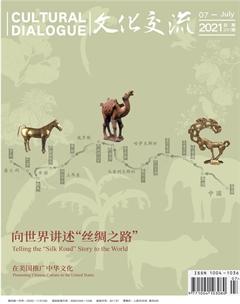
“絲綢之路周”是如何誕生的?
2021-09-06 05:31:24周婭鵑
文化交流 2021年7期
周婭鵑
2020年6月19日,“2020絲綢之路周”盛大啟幕:聯合國教科文組織世界遺產中心等六大國際組織為開幕式發來賀信賀詞;近40家文博機構通力合作為公眾奉獻了“眾望同歸:絲綢之路的前世今生”和“一花一世界:絲綢之路上的互學互鑒”兩大特展;來自10個國家31位專家點評推薦的《2019絲綢之路文化遺產年報》首次發布;得到聯合國教科文組織“絲綢之路項目”大力支持的13國合作項目《世界絲綢互動地圖》正式啟動;全球14個國家的約200余家文化機構踴躍參與“絲路百館百物”短視頻接力、“一花一世界” 絲路文物海報接力等活動;截至2020年6月24日,國內社交媒體平臺閱讀量超3億次,觀看量近2億次,“絲綢之路周”話題在Facebook、Twitter等社媒上相關閱讀量超過1200萬。
2021年6月18日,“2021絲綢之路周”再次拉開帷幕:來自14個國家和地區的23多位政界人士、博物館館長、專家學者等發來祝賀視頻;“萬物生靈:絲綢之路上的動物與植物”、“方寸錦秀:絲巾上的絲綢之路”和“絲路攝影展”3大展覽同期開幕;除杭州主會場外,在陜西西安、甘肅蘭州和福建福州三地設立分會場,在法國、意大利、比利時等地舉辦絲路主題特別活動;全球18個國家的42個機構共同參與建設的“絲綢之路數字博物館(SROM)” 正式推出;由30多位各領域的國際專家推薦與評選的《2020年絲綢之路文化遺產年報》發布;截至6月24日,“絲綢之路周”話題閱讀總量超2.8億次。
兩屆“絲綢之路周”活動均由國家文物局、浙江省人民政府主辦,中共浙江省委宣傳部、浙江省文化和旅游廳、浙江省文物局承辦,中國絲綢博物館、國際絲綢之路與跨文化交流中心執行承辦,活動精彩,成果豐碩,引發了國內外文化遺產界的熱烈反響。
舉辦基礎:國際合作與專業網絡
中國絲綢博物館是一個以中國絲綢為核心的紡織服裝文化遺產收藏、保護、研究、展示、傳承和創新的國家一級博物館,也是世界上最為重要的紡織服飾類博物館之一。
經過近30年的積累沉淀,中國絲綢博物館在絲綢之路文化遺產領域的調查、研究、保護、展示和弘揚上取得了一定的成績,在絲綢之路國際舞臺上逐漸形成具有一定影響力與知名度的專業力量:從1993年至今,赴境外舉辦絲綢主題展覽多達33次,與美國費城藝術博物館、瑞典軍事博物館、丹麥國家博物館、美國自然歷史博物館、哈薩克斯坦國家藝術博物館、烏茲別克斯坦考古研究所均有具體合作項目。而本館與美國布萊恩特大學、韓國傳統文化大學、法國里昂紡織博物館、俄羅斯國立歷史博物館、加拿大安大略皇家博物館等13家境外機構達成了合作,初步構建了一個國際合作的專業網絡。
中國絲綢博物館先后發起國際絲路之綢研究聯盟(主席單位、聯盟秘書處所在地)、絲綢之路國際博物館聯盟(副理事長單位)、絲綢之路文物科技創新聯盟(常任理事單位),并積極參與其他專業聯盟的各項活動。
在聯盟機構之外,中國絲綢博物館還與聯合國教科文組織(UNESCO)、國際博物館協會(ICOM)、國際博物館文物修復協會(ICCROM)、國際古跡遺址理事會(ICOMOS)、國際古代紡織品研究中心(CIETA)、國際絲綢協會、國際絞纈組織(WSN)等國際組織建立工作關系并積極對接,加大國際機構間的合作與交流。
2019年5月,中國絲綢博物館設立“國際絲綢之路與跨文化交流研究中心”,為國際同行特別是絲路沿線國家和地區提供共享、研究、交流、合作的平臺。該中心也成為了“絲綢之路周”活動執行承辦方之一。同年,浙江理工大學與中國絲綢博物館合作共建國際絲綢學院。2020年,中國絲綢博物館入選浙江省首批國際人文交流基地。
策劃思路:各界參與和互學互鑒
“絲綢之路周”是由中國文化遺產界創意和主導、社會各界參與和實施,與絲路沿線國家和地區形成互動,在國際社會中發出中國聲音并產生良好影響的長久性年度國際人文交流活動。
“絲綢之路周”的LOGO 是一匹生有雙翼的飛馬珀加索斯(Pegasus),象征著絲綢之路上的文化交流。它來自古希臘神話,傳說是詩人靈感的來源。它的形象從古希臘的陶器出發,漸漸東來,飛過波斯,飛過粟特,飛到大唐,與從東向西傳播的絲綢一路相遇,成為絲綢之路沿途使用最為廣泛的織錦紋樣。
“2020絲綢之路周”的主題是“互學互鑒促進未來合作”。數千年來,絲綢之路促進了不同地域、不同群體之間的物質流通、技術傳播和文明交融,其中,互學互鑒成為絲綢之路精神的核心。首屆“絲綢之路周”的兩個特展,用一縱一橫的不同維度,以學術梳理和實際案例來講述絲綢之路的來歷和互學互鑒的具體體現。
“多元共存和包容發展”則成為了“2021絲綢之路周”的主題。本次絲綢之路主題展覽“萬物生靈:絲綢之路上的動物與植物”凸顯了生物多樣性,生物多樣性又關乎人類福祉,是人類賴以生存和發展的重要基礎。而絲綢之路的文明史也揭示出不同文明、宗教、種族相互尊重、求同存異、開放包容的重要性,由此深切認識到只有互鑒互通,才能攜手繪就共同發展的美好明天。
區別于傳統的一次性、短期性的國際交流活動,“絲綢之路周”更注重長期性、有成效的國際交流,以學術為引領,以研究為核心,以項目為主導。于是,“絲綢之路周”組建了國際學術團隊,以期對絲路文化遺產及絲路精神進行國際表達。
“絲綢之路周”的舉辦,得到了國際組織、社會各界的高度認同與支持。首屆“絲綢之路周”開幕式上,聯合國教科文組織世界遺產中心、國際古跡遺址理事會、國際文化財產保護與修復研究中心、國際博物館協會、聯合國教科文組織絲綢之路網絡平臺等國際組織發來賀信賀詞,代表世界文化遺產界的頂級政府間合作組織為活動點贊。聯合國教科文組織世界遺產中心主任梅希蒂爾德 · 羅斯勒稱活動高度契合1972年《世界遺產公約》精神,絲路精神值得發揚光大。同時他強調“絲綢之路”還將作為世界文化遺產成為未來國際合作的共同基礎和起點,為人類構筑心靈的和平屏障;聯合國教科文組織駐華代表夏澤翰則在“2021絲綢之路周”開幕式現場表示,重溫(絲綢之路)這一人類歷史上的偉大成就、學習絲綢之路精神,是應對當今跨文化對話面臨挑戰的必經之路。“2021絲綢之路周”是增進各國人民相互了解和理解的經典案例。
作為一項國際人文交流活動,“絲綢之路周”在海外傳播方面也是煞費苦心。首屆活動中,“國絲之友”海外社交媒體賬號共發文(包括轉發)500余篇,帖文瀏覽量超317萬,絲路周話題在海外社交媒體的總瀏覽量達1200萬。
除了依靠官方主流媒體,中國絲綢博物館還積極聯動權威領域機構,聯合國教科文組織(UNESCO)絲綢之路網絡平臺在其官網發布了絲路周的介紹文章。大英博物館、大英圖書館敦煌項目等4家國際機構在推特上與“絲綢之路周”賬號互動。海外博物館界專業媒體Museum Views為活動開設專題頁面,并進行更為廣泛的采訪和互動。
“2021絲綢之路周”的海外宣傳特別聚焦了今年重磅推出的絲綢之路數字博物館項目,其上線的英文報道共被20個國家的媒體轉載192次,平均潛在受眾達204萬人次。原文被翻譯成德語、日語、法語、西班牙語、韓語5種語言,在歐洲和亞洲的主流媒體上大大增加曝光率,這些媒體包括韓聯社、韓國先驅報、日本共同社、京都新聞、澳大利亞通訊社、西班牙歐羅巴通訊社、意大利Adnkronos通訊社、德國財經在線、新加坡Asia One等。
一點思考:國際視野與浙江特色
作為世界上最大的絲綢專題類博物館,中國絲綢博物館與絲綢、絲綢之路主題緊密相連。在各部門大力支持、合作機構鼎力相助的大背景下,中國絲綢博物館積極對接國際機構,不斷延伸本館的國際合作空間;從“絲綢之路文化遺產年報”項目、“世界絲綢之路互動地圖”國際合作項目、“絲綢之路主題策展人”研修班項目、“絲綢之路數字檔案”項目,到今年新提出的“絲綢之路數字博物館”項目,所有的活動和合作,無一不在充分發揮專業優勢的基礎上穩扎穩打融通中外。
這些項目的開展與推進,成為策劃“絲綢之路周”的主要框架。通過多年耕耘,中國絲綢博物館擁有了一個國際化的“朋友圈”,與一批科學家、考古學家、策展人、藝術家、設計師等保持長期穩定的合作交流關系,他們的參與,為活動提供了有力支撐。
國際交流活動的開展,往往受到諸多條件的影響與限制。如去年展覽活動籌備期間,正是新冠肺炎疫情暴發之時,面對面的交流受到限制,在線觀展成為新風向。中國絲綢博物館一直在思考和探索如何利用互聯網,為對絲綢之路感興趣的人們提供更為廣闊的學術助力。于是,聯合國內外與絲綢之路相關的知名博物館,共享全球絲綢之路數據的“絲綢之路數字博物館”項目就這樣順勢而生,吸引了全球40余家知名博物館及文化機構共同參與。數字博物館還特別開辟“云上策展”的共享平臺,讓普通觀眾能在線策劃設計自己的展覽作品,足不出戶共享全球資源。
在“2020絲綢之路周”開幕式上,《2019絲綢之路文化遺產年報》首次發布,以其具有全面性、學術性、國際性的鮮明特色,在文化遺產領域引發極大反響和熱議。《2020絲綢之路文化遺產年報》項目在啟動之初,保留了上一年的專家評審環節,又作出了全新的嘗試,即攜手國際古跡遺址理事會西安國際保護中心、中國考古學會絲綢之路考古專業委員會、南京藝術學院國際博物館學院、浙江大學歷史學系、北京大學中國古代史研究中心等業內專業機構,對考古發現、陳列展覽、學術研究、文化事件4個板塊分別進行了權威推薦。
作為具有國際主題、中國特色和浙江風采的文化活動,第二屆“絲綢之路周”沒有把開幕式、閉幕式都放在杭州,而是把閉幕式選在了“古代海上絲綢之路”重要始發港、“21世紀海上絲綢之路”重要節點城市的寧波,為本屆“絲綢之路周”畫上了圓滿的句號。
“一枝獨秀不是春,百花齊放春滿園”。接下來,“絲綢之路周”還將在絲路沿線不同省份或不同國家和地區舉辦,形成一個社會各界全面參與互動的年度文化盛典。作為活動的發起者,中國絲綢博物館將不忘初心,繼續開展絲綢之路文化遺產保護、研究與展示相關的國際人文交流活動,踐行絲綢之路精神,與各方高質量地共建絲綢之路文化遺產共同體。
The Birth of? the “Silk Road Week”
By Zhou Yajuan
From its conception to its implementation, the success of the Silk Road Week in 2020 and 2021 is not a fluke and no mean feat.? In 2020, the inaugural edition of the Silk Road Week saw #silkroadweek viewed for 12 million times on Facebook, Twitter as well as other major social media platforms. Then in 2021, topics on the second edition of the event have been viewed for more than 280 million times on the Chinese social media alone.Starting from 2015, the China National Silk Museum has been holding major exhibitions every single year and engaging in worldwide cultural and people-to-people exchanges on the Silk Road, living up to the Silk Road Spirit and showcasing the unique charm of China and Zhejiang. How was the Silk Road Week born? And what are the foundation and underlying curatorial concepts?
One of the first state-level museums in China, the China National Silk Museum focuses on the collection, protection, studying, displaying, inheritance and innovation of the silk textile and clothing cultural heritage. It is one of the most important textile and clothing museums in the world.
Indeed, since the museum opened on February 26, 1992, it has made quite some accomplishments in these areas and gradually established itself as a major international research institution on the Silk Road cultural heritage. So far, the museum has held a total of silk-themed exhibitions in Hong Kong and Macao, two of Chinas international hubs, and overseas. It has conducted collaborative projects with the Philadelphia Museum of Art, the Swedish Army Museum and the National Museum of Denmark, among others. And it has built an international research network with 13 foreign organizations, including the Bryant University in the US, the Korea National University of Cultural Heritage, Musée des Tissus et des Arts Décoratifs, the State Historical Museum in Russia and Royal Ontario Museum in Canada.
Moreover, the China National Silk Museum initiated the International Association for the Study of Silk Road Textiles, the International Alliance of Museums of the Silk Road, the Alliance of Silk Road Cultural Heritage Science and Technology, and has been an active participant in a host of other major international alliances, associations and organizations.
To facilitate the sharing, research, exchange and cooperation on the Silk Road cultural heritage for international researchers, especially those along the Silk Road, the museum set up Institute for Intercultural Dialogue on the Silk Roads in May 2019, which became the de facto “enforcer” of the Silk Road Week.
The “Silk Road Week” was first introduced at the China National Silk Museum and organized by the International Association for the Study of Silk Road Textiles and the Chinese Museums Associations Committee of Museums along the Silk Road. It is an annual event that aims to educate the public about the histories of the Silk Road, and to strengthen the protection of the sites and relics along the road.
Pegasus, the winged horse, was chosen as the logo of the Silk Road Week, a symbol of cultural exchanges along the Silk Road. Coming from the Greek mythology, Pegasus is said to be the source of inspiration for poets. Its image, first found on Greek pottery, slowly traveled to the east, flowing over Persia and Sogdiana before reaching Tang China. It is one of the patterns used most extensively on brocades along the Silk Road.
The “2020 Silk Road Week”, the first edition, was themed “Mutual Learning for Future Collaboration”. For thousands of years, the Silk Road has promoted the material flow, technology transmission and cultural integration between different regions, with mutual learning and mutual benefit at its heart. Two exhibitions, one from the geographical perspective and one from the chronological perspective, were held to tell the history of the Silk Road through real cases.
“Cultural Diversity and Sustainable Development“ is the theme of the “2021 Silk Road Week”, not only because the theme exhibition Creation from Creature: Plants and Animals on the Silk Road highlighted biodiversity, but because biodiversity has a significant bearing on the wellbeing of mankind, whose very existence and development depend on it. The history of the Silk Road also shows the necessity for different civilizations, religions and races to respect each other, seek common ground while reserving differences, and be open and inclusive. Only in this way can the world work together for a better future of common development.
Unlike the traditional one-off and short-term international exchanges, the Silk Road Week focuses more on the long-term effects, centering on academic research and concrete projects. An international academic team was organized accordingly, winning widespread support from global academic community. Indeed, the success of the Silk Road Week is not possible without the backing and recognition from international organizations such as the UNESCO World Heritage Center, the International Council on Monuments and Sites, International Centre for the Study of the Preservation and Restoration of Cultural Property and many others.
Mechtild R?ssler, director of the UNESCO World Heritage Center, said in a video message to the “2020 Silk Road Week” that it echoes the spirit of the World Heritage Convention announced in 1972, and the Silk Road Spirit would lay a solid foundation for future collaboration. Shahbaz Khan, representative of the UNESCO Beijing Office, praised during the opening ceremony of the “2021 Silk Road Week” that it is a classic case of enhancing mutual understanding among people of all countries.
Media coverage has also been remarkable. Major news organizations and networks in 20 countries reported on the event. Over 500 posts were published by Friends of China National Silk Museum, official accounts of the China National Silk Museum, on major social media platforms, with over 3.17 million views, and #silkroadweek garnered more than 12 million views.
However, it is not all plain sailing. The outbreak of the COVID-19 greatly hampered the preparations for the first edition. Notably, face-to-face exchanges were greatly limited. To facilitate effective communication, the China National Silk Museum turned to online technologies, partnering with more than 40 museums worldwide to create the Silk Road Online Digital Museum. As well as displaying collections of these museums, it also allows the public to curate their own unique visiting routes and collections, enjoying global cultural heritage with just one click.
Looking to the future, the Silk Road Week will be held in different provinces or different countries along the Silk Road, making itself into an interactive annual cultural gala with more diverse participants.
猜你喜歡
少先隊活動(2022年5期)2022-06-06 03:45:04
家庭科學·新健康(2022年3期)2022-05-10 00:32:13
小獼猴智力畫刊(2022年3期)2022-03-29 01:09:44
金橋(2022年2期)2022-03-02 05:42:52
中老年保健(2021年2期)2021-08-22 07:31:10
少先隊活動(2021年1期)2021-03-29 05:26:36
快樂語文(2020年30期)2021-01-14 01:05:38
小太陽畫報(2020年4期)2020-04-24 09:28:22
海峽姐妹(2018年3期)2018-05-09 08:20:40
童話王國·原創版(2016年4期)2016-11-23 16:06:06