
Anti-Terrorism in Afghanistan after the Taliban’s Recapture of Power
2021-11-25 17:54:03LiWei
當代世界英文版 2021年4期
LiWei
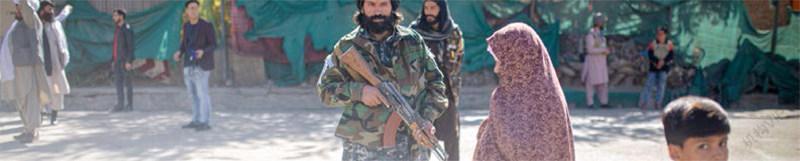
In the name of “anti-terrorism”, the United States has conducted a 20-year long war in Afghanistan, ending up in disorganized withdrawal. As the Afghan government collapsed immediately, the Afghan Taliban has recaptured power and taken over “a shambles”, an awful mess where people can hardly make a living. At the same time, terrorism is overgrown in Afghanistan which not only stands in the way of future security and stability of the country but also poses a serious threat to the international community. Therefore, how to counter terrorism is a “touchstone” if the new Afghan government can be integrated into the international community and premise and basis for economic reconstruction.
US “War on Terror” Turns Afghanistan into a Paradise of Terrorism
The War in Afghanistan launched by the US has resulted in turbulence, economic stagnation and humanitarian disaster in Afghanistan, creating even more fertile soil and still broader space for the growth of terrorism in the country.
I.The US Advances Itself in the Name of “Anti-Terrorism”
First of all, the US raised high the banner of “anti-terrorism” in preparation for invading other countries. After the 9/11 attacks, the US availed itself of the position of a “victim”, played the “tragic loss sympathy card” and unscrupulously wielded the big stick of its military power. Internationally, the US distinguished friend and foe by “anti-terrorism”, whoever was with it on “anti-terrorism” was taken for a friend and whoever was against it there, a foe. This gained the US sympathy and support of the world countries, “justifying” its military actions against other countries in the name of “anti-terrorism”.
Secondly, the US by means of its military “anti-terrorism” sought to “reshape” its adversary with its own style of democracy. The US destroyed al-Qaeda's training camps in Afghanistan, killed its chieftain Osama bin Laden, and disabled its capacities to launch large-scale terrorist attack to the US homeland. By then, the US had fulfilled the UN authorization for the US military anti-terrorism. ?However, by nature, the US was to advance itself in the name of anti-terrorism and sought to turn Afghanistan into a pro-American America-style democracy in search of its geopolitical interest.
Finally, the US was not satisfied with “democratic transformation” of Afghanistan alone but wished to “democratically transform” a number of countries in the Middle-East. In the third year of the War in Afghanistan, making a side stroke of its sword, the US launched the War in Iraq based on fake intelligence of Iraq “possessing weapons of mass destruction” and having ties with the al-Qaeda and got around the UN Security Council, which eventually gave rise to the birth of the terrorist organization the Islamic State (ISIS). ?Afterward, the US joined its European allies in beating Libya into a country of chaos partitioned by warlords and continuously troubled by armed conflicts. ?To overthrow the Syrian government under Bashar al-Assad not to its liking, the US, in the name of striking at the ISIS, militarily intervened in the Syrian Civil War, vigorously supporting the Syrian oppositions and intensifying the Syrian Crisis. Furthermore, the US is behind its allies in the Middle East to support one faction against another in Yemen, resulting in a civil war lingering on for long years.
II.The US-forced transplanting of Western-Style Democracy Leads to Turbulence and Intranquility
First of all, the electoral system of America-style democracy turned Afghanistan into an arena for various political forces in the country. Every of presidential elections saw chaos. To pursue political and economic interests, various factions and forces representing different ethnic and tribal interest fought for power, accusing one another of fault and bribery, and refusing to recognize the election results. Therefore, the Afghan people gradually lost confidence in “democratic” elections. In 2014, the voter turnout for the first presidential election in Afghanistan reached 70%, whereas in 2019, the same figure dropped to 26%. Having recaptured power in the country, the Taliban made a clear-cut statement that “the parliamentary democracy is absolutely unnecessary”, which had not any foundation in Afghanistan. The above fully illustrates that in Afghanistan there is hardly market for America-style democracy, whose acclimatization problems are serious.
Secondly, the War in Afghanistan and America-style democracy got Afghanistan into serious economic troubles. Though in the past two decades, some “prosperity” has appeared in only a few major cities in the country, but in actual figure, the war has brought real sufferings to the ordinary Afghan people. According to incomplete statistics, since the occupation of Afghanistan by the US-led NATO forces, more than 20,000 Afghan civilian lives have lost in various military actions of the NATO forces, over 100,000 civilians have been injured, and over 10 million people have been displaced. On the average, the war havoc costed Afghanistan US$60 million per day. The War in Afghanistan seriously damaged infrastructure of the country, 90 percent of bridges and roads being thoroughly destroyed. In 2020, Afghanistans GDP was merely US$19.1 billion, only US$581 per capita. At present, 72% of Afghan population live under poverty line, unemployment rate running as high as 38%.
III.The US “Selective Anti-Terrorism” Results in Ever Increasing Terrorism in Afghanistan
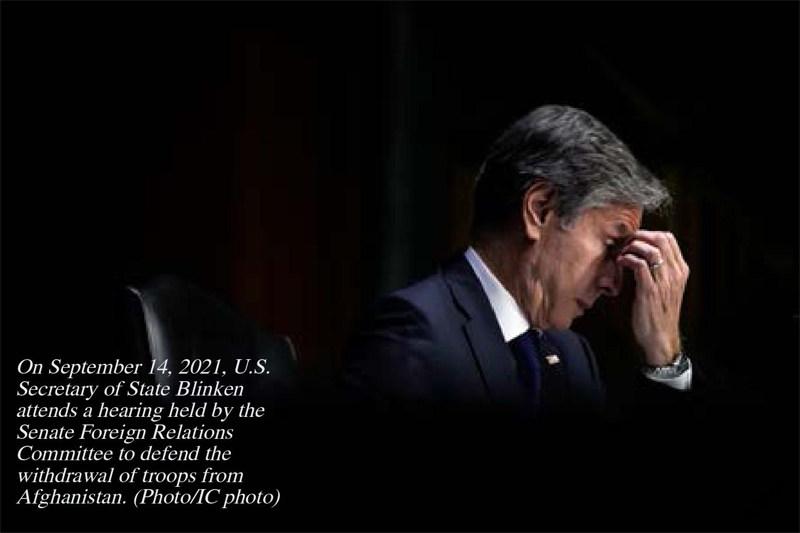
First of all, the adversary of the US in its “War on Terror” in Afghanistan was not terrorist organizations. Although the US launched the War in Afghanistan in the name of “anti-terrorism”, its greatest adversary in the country was the Taliban. At the their peak, the US-led NATO forces reached 100,000, but in spite of it, they failed in thorough destruction of the Taliban in their tens of thousands of men in arms. The US-trained Afghan government forces, though claimed to have 300,000 troops, could not do a thing about the Taliban. In the end, the US, under the pretext of dealing with the challenge of “major country competition”, could do nothing but free itself from the “quagmire” of Afghanistan. On February 29, 2020, the US and the Taliban signed the Doha agreement for a full US withdrawal of troops, and by August 30, 2021, the US pulled out all its forces in a very disorganized manner. Though the US is gone, the chaos created and left behind by it still remains.
Secondly, the “selective anti-terrorism” of the US has turned Afghanistan into a haven of quite a number of terrorist organizations. The US “anti-terrorism” served its political purpose. In 2015, as the Taliban held talks with the Afghan government, the US released the intelligence that Mullah Omar, the leader of the Taliban, had died of illness in Karachi three years before, causing a split within the Taliban and creating an opportunity for the ISIS to penetrate the organization. Now those who pose a real terrorist threat to Afghanistan are some of the members of the “Khorasan Province” (ISIS-KP), extremists split from the Taliban. The US boasted powerful anti-terrorist intelligence and striking capacities in Afghanistan. Then, the question is why the US had failed to strike effectively at the ISIS-KP in the five years before its withdrawal? Former US Secretary of State Pompeo even announced to remove the Eastern Turkistan Islamic Movement (ETIM) from the list of US designated international terrorist organizations, which could not but reflect the underlying US considerations of “anti-terrorism”. Though the US has withdrawn from the country, the many terrorist organizations it left behind continue to threat and harm Afghanistan and other countries.
Anti-Terrorist Dilemma and Prospect Facing the New Taliban Government
The problems and troubles left behind by the War in Afghanistan continue to affect the overall situation of Afghanistan. Especially, terrorism that poses a great threat to the security of the country is the outstanding issue in Afghanistans future construction, development and peoples well being. If the Taliban can resolve this thorny issue as it has promised not only has to do with Afghanistans future but also causes one of the major concerns of the international community.
I.The Many Terrorist Organizations in Afghanistan Pose a Serious Threat to the International Community
Terrorist organizations in Afghanistan mainly fall into two categories. One category is terrorist organizations in antagonism with the Taliban, mainly the branch organization of the ISIS, the ISIS-KP, whose founding leader had been a former member of the Taliban and the Tehrik-i-Taliban Pakistan (TTP) who pledged allegiance to al-Baghdadi, the chieftain of the ISIS. Since June 2020 when al-Muhajir became the new leader of the ISIS-KP, its terrorist attacks have been on the increase. According to statistics, in the first four months of 2021, the ISIS-KP launched 77 terrorist attacks, much more frequent than in the same period of 2020.
Another category is terrorist organizations that are inextricably linked to the Taliban. Not only do they take Afghanistan for a place of hiding, training and developing, they also have contributed forces fighting for the Taliban against foreign occupation forces, the previous Afghan government force and the police, those groupings mainly including the al-Qaeda and its branch organizations al-Qaeda in the Indian Subcontinent (AQIS), the Haqqani network, the TTP, the ETIM, and the Islamic Movement of Uzbekistan (IMU). The al-Qaeda, with al-Zawahiri as its current leader, has expanded its sphere of influence to fifteen provinces. The AQIS is likely to become even more active in the Indian subcontinent. The Haqqani network, though attached to the Taliban in name, is indeed a semi-independent organization, its current leader Sirajuddin Haqqani being a member of the leadership of the Taliban. In November 2012, the UN Security Council put the Haqqani network on its sanction list on the ground of “participating, financing and supporting the activities planned by the Taliban, and posing a threat to peace, stability and security in Afghanistan”. At present, there are thousands of TTP combatants in Afghanistan, which generally recognized by the international community as a terrorist organization aiming to overthrow the Pakistani government. The ETIM in Afghanistan is mainly engaged in terrorist blackmailing and kidnapping activities to raise funds, its main target of attack being China. The members of the IMU are mainly from Uzbekistan, having moved to North Afghanistan after being crippled in Central Asia, and they depend on the Taliban for financing and arms.
II.Taliban Honoring Its Anti-Terrorist Promise Is the Key
The Taliban has, time and again, pledged to the international community that it will not allow any terrorist organization to carry out terrorist activities on the Afghan soil, and committed to cutting ties with terrorist organizations such as the al-Qaeda. Not only is it necessary for the Taliban in consolidating its governance position, it is also the inevitable path for its integration into the international community. For this, the Taliban has taken some early actions in preparation for removing terrorist organizations from the outside. In February 2021, it published through social media an order issued by its military commission that it shall be prohibited to recruit foreign nationals into the ranks of the Taliban, that it also shall be prohibited to provide them asylum, and that violators of the prohibition shall be driven out of its ranks. At present, the Taliban exerts control on the concerned terrorist organizations in the country through measures such as to disallow their terrorist attacks, to limit their mobility, to subject their action to approval, and to register their personnel. As its relations with the terrorist organizations vary, there may be various modes for the Taliban to “cut” ties with them.
First, the Taliban ought to severely strike at the branch of the ISIS, the ISIS-KP. Since its founding in 2015, the ISIS-KP has always been on the Talibans hit list. Assuming political power, the Taliban is enabled to more forcefully attack the said organization to show the international community its willingness and determination to counter terrorism. The result may be weakening the presence of the ISIS-KP in Afghanistan or kicking it out of the country.
Second, it ought to make the Haqqani network to fade away or simply to disband it. As an armed force of the Taliban, being designated “terrorist organizations” by the US and other Western countries, it is difficult for the Taliban to cut ties with it. Now, in the new temporary Afghan government, its leader Sirajuddin Haqqani has been appointed Acting Minister of Interior, and it would be justified to say that the Haqqani network has already fulfilled its “historical mission”. In the future, the Haqqani network will lose its target for violent attack. Nor is it necessary for it to go on any longer.
Third, it ought to publicly declare to cut its ties with the al-Qaeda. The relations between the Taliban and the al-Qaeda can be traced back to “intermarriage across racial and ethnic boundaries, fighting shoulder to shoulder, joint training and unanimous convictions”. In the future, it is likely for the Taliban to stop the al-Qaeda from raising its banner in Afghanistan, but it can hardly stop the latter from continuing to hide in the country.
Fourth, it ought to limit the TTPs activities in Afghanistan, but it can hardly completely sever its relations with the TTP. The TTP are made of the Pakistani Pashtuns, the same people who constitute the main body of the Taliban. The TTP was established with the help of the Taliban and has provided certain support for the latter in its fight against the US troops. Therefore, after recapturing power, it is difficult for the Taliban to thoroughly sever its ties with the TTP, but it is likely to limit the TTPs terrorist attacks on the Afghan soil.
Fifth, it ought to drive away terrorist organizations like the ETIM and the IMU, but it is very difficult for it to hit them hard. Because of the same religious belief, for a Taliban driven by religion and ideology, it is liable to induce internal dispute and even split to strike at terrorist organizations that share so much with it there. However, it would not help the Taliban win recognition and concurrence for the legitimacy of its government to allow these terrorist organizations to exist in Afghanistan. Therefore, to drive the above terrorist organizations away from the country would help maximize the Talibans interest.
III.Afghan Anti-Terrorism Calls for Common Efforts of the Taliban and the International Community
There are a number of factors attributing to the fact the Afghanistan is a source of terrorism. The issues like Afghan domestic, ethnic, tribal, political and economic problems cannot be fundamentally improved in the short run. Therefore, it is difficult to expect the Taliban to resolve the issue of terrorism ?immediately, comprehensively and at underlying level after recapturing power. It is necessary for the international community to provide Afghanistan with more help in anti-terrorism.
First of all, the Taliban ought to proceed form the overall interest of Afghanistan and strengthen its willingness on anti-terrorism. Being a common enemy of all mankind, terrorism is also an enemy of the Taliban. If Afghanistan remained a sanctuary of terrorism, the Taliban in government would be isolated in the international community. Although terrorism cannot disappear from Afghanistan overnight, it is necessary for the Taliban display its willingness to make a thorough break from terrorism, and to resolutely strike at terrorist organizations and terrorists in the country. Only by doing so can the Taliban be better integrated into the big family of the international community.
Secondly, the international community ought not to stand idly by but actively help and support Afghan reconstruction. It is imperative for Afghanistan to rebuild its economy so as to rekindle the Afghan peoples confidence, which is the fundamental strategy in removing the soil of terrorism. A reading of experiences and lessons of various countries of the world in anti-terrorism attests to the fact that be it strong or weak any country alone cannot resolve the issue of terrorism, the same with Afghanistan. China promotes the vision on anti-terrorism of “an integrated policy to address both the symptoms and root causes” is right guidance to resolving the issue of terrorism. The international community ought to provide more help to Afghanistan in restoring security and stability, facilitating economic development and improving peoples livelihood. Only by doing so can it better help promote Afghan anti-terrorism and help the country take the road to prosperity and development.
Li Wei is a Senior Research Fellow of China Institutes of Contemporary International Relations

- 當代世界英文版的其它文章
- Ecological Thoughts of Germany’s Green Party
- China-ASEAN Strategic Partnership in Post-pandemic Era
- Russia-China Strategic Coordination in a World with Great Changes
- China’s Whole-process People’s Democracy
- A Nature Positive Future for All Life on Earth
- Global Biodiversity Protection and China’s Role