
Pakistan:Culture,Economy and Bilateral Relations with China
2021-11-26 02:51:19ByHussainHaider
China’s foreign Trade 2021年3期
By Hussain Haider
Introduction
The Year 2021 marks the 70th Anniversary of the establishment of diplomatic relations between Pakistan and the Peoples Republic of China. Throughout these 70 years, Pakistan has attached high importance to its bilateral relations with China, which are based on mutual trust and respect and mutually beneficial cooperation. The two countries are time tested, all-weather friends, strategic allies and iron brothers. During the pandemic, China has provided Pakistan with generous material and technical assistance. Pakistan was the first country to have received vaccinations for the treatment of COVID-19 from China.
It is heartening to note that in recent years, bilateral economic and trade relations have grown remarkably well, reflecting strong political relations and immense bilateral good-will. China has become Pakistans biggest trading partner, the largest source of imports and the second largest destination for exports as well as the largest source of foreign direct investment into Pakistan. Likewise, Pakistan is Chinas second largest trading partner in South Asia. The China-Pakistan Free Trade Agreement (CPFTA) and China-Pakistan Economic Corridor provide a solid foundation for strong commercial and economic engagement between the two countries and in the years to come will take it to even higher levels.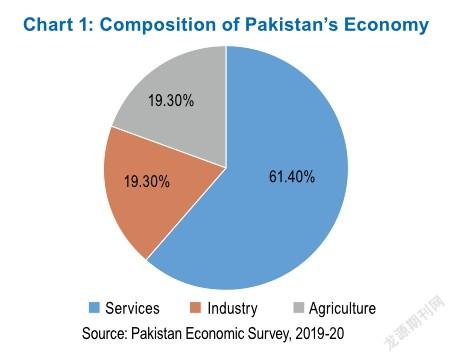
Pakistans Culture and Economy
Pakistan has a rich and diverse culture and a long history, which dates back to the Indus Valley Civilization, one of the oldest civilizations in the world. The area that constitutes Pakistan has also been a center of the Gandhara Culture. In the course of time, people from different regions of the world, including the Middle East and Central Asia came and settled here, and their culture amalgamated with the local culture. As elsewhere, cross-border trade has also been a source of cultural diffusion. As a result, a rich and diverse culture evolved, incorporating elements from different religions and civilizations. The richness of Pakistans culture is well embodied in the vast array of artifacts, arts, and crafts as well as eloquently expressed in festivals and festivities.
With a population of around 215 million, Pakistan is the 6th largest country in the world. More than 64% of the population is under the age of 29, making Pakistan one of the youngest countries in the world with respect to age distribution. A predominantly young population means an increasing demand for goods and services, which makes Pakistan an attractive trade and investment partner.
Pakistan has all four seasons and possesses a variety of terrains from rocky mountains to fertile fields and from fast flowing rivers to expansive deserts. Pakistan has one of the best irrigation systems in the world, which is the lifeblood of the national economy.
Pakistan is also known for the variety of its cuisine, which reflects the nations ethnic and cultural diversity. It consists of traditional spicy and mild food, international cuisine and fast food. Chinese cuisine is very popular in Pa- kistan, and Chinese restaurants can be found in all the major cities. When our Chinese brothers and sisters visit Pakistan, they can have traditional Pakistani food as well as Chinese food.
From an economic standpoint, Pakistan has several distinctions. Pakistan is the 4th largest producer and 3rd largest consumer of cotton, 4th largest producer of milk, 5th largest producer of sugarcane, 6th largest producer of dates and mangoes, and 8th largest producer of wheat. Pakistan has the worlds 2nd largest salt mine. Eight out of the 20 highest peaks in the world are located in Pakistan, including the worlds second highest peak, K2, which is located in the famous Karakoram Range. The Karakoram Highway connects Pakistan with China.
The service industry is at present the largest sector of Pakistans economy followed by the industry and agriculture sectors. In 2019-20, the service sector accounted for 61.4% of the economy, while the share of industry and agriculture was 19.3% each. Wheat, cotton, sugarcane, rice, and maize are the major crops, while textiles, food & beverages, minerals, leather, automotive, chemicals and pharmaceuticals are major industries. Pakistan is the 8th largest exporter of textiles in Asia. Pakistan is one of the few countries in the world that have a complete textile chain starting from the production of raw cotton and leading up to the manufacture of finished garments. Pakistan is also known for manufacturing top quality footballs, which are used in all the important sport events in the world including the FIFA World Cup.
In the service sector, Pakistan has thriving trade, transport & communications, financial, and information technology and communication sectors. The ITC industry has witnessed tremendous growth in recent years. The number of mobile phone subscribers went up from 99 million in 2009-10 to 169 million in 2019-20 and the number of broad-band subscribers went up from 0.688 million in 2009-10 to 87 million in 2019-20.
Pakistan has three seaports, which play a lead role in the promotion of Pakistans foreign trade. Two ports are located in Karachi, while the third is the Gwadar Port situated in Balochistan province, which is Pakistans largest province with respect to area. The Gwadar Port is the worlds largest deep-sea port, and has been built with Chinese assistance. The Port is an important part of the China-Pakistan Economic Corridor, which is a key component of the Belt and Road Initiative, the flagship initiative of China, which aims to promote multilateral cooperation and shared development through policy, infrastructure, trade, financial, and people-to-people connectivity. The China-Pakistan Economic Corridor connects the Xinjiang province of China with the Gwadar Port. Pakistan is also the key conduit for the overseas trade of land-locked Afghanistan.
Pakistan has the most liberal trade and investment regimes in South Asia. In principle, import and export of all commodities is freely allowed, and no government permission is needed. In Pakistan all economic sectors, except four, which pertain to national security, are open to foreign investment, and foreign investment is fully protected by law. Up to 100% foreign ownership is allowed; there is no minimum requirement for amount of foreign equity investment; investors have full freedom to repatriate profits and dividends. Pakistan offers a business friendly environment. In 2020, Pakistans ranking on World Banks Ease of Doing Index im- proved by 28 points to reach 108, which is one of the biggest improvements among all countries.
Pakistans liberal trade and investment regimes, an effective legal framework for protection of foreign investment, geo-strategic location as a gateway to South and Central Asia, East Asia, and the Middle East, and business friendly policies make the country a very attractive destination for foreign investment. Pakistans Special Economic Zones and Export Processing Zones provide a number of incentives to investors in the form of exemption from import duties for import of plant and machinery, income tax holiday, and provision of utilities and land connectivity.
Pakistans total foreign trade in goods in 2019-20 amounted to USD 65.94 billion. This figure included USD 21.39 billion in exports and USD 44.55 billion in imports. Likewise, the total trade in services in 2019-20 amounted to USD 13.73 billion, including USD 5.45 billion in exports and USD 8.28 billion in imports. Pakistans foreign trade in goods and services over last few years is given in graphs below:
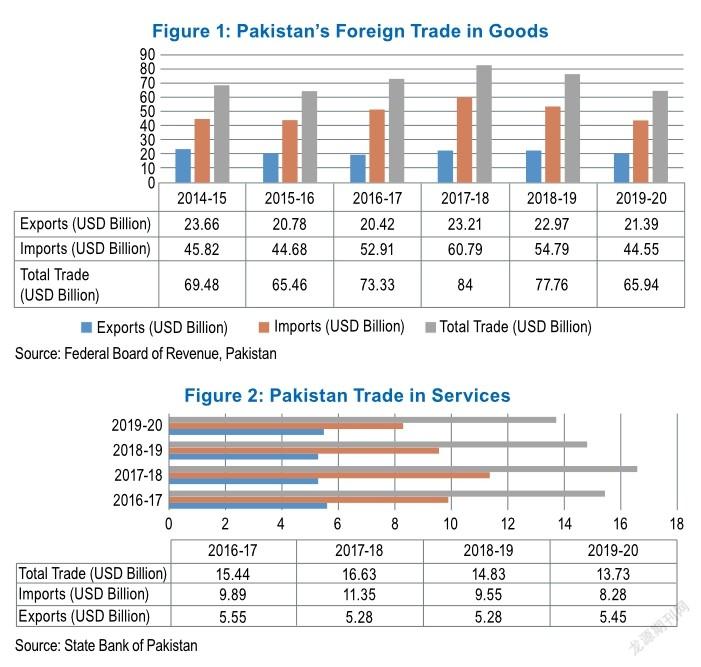
In trade in goods, textiles and clothing is the largest exporting sector with USD 12.52 billion exports in 2019-20. The second largest exporting sector is the food sector (USD 4.36 billion in exports. Chemicals and pharmaceuticals, leather and leather articles, medical and surgical equipment and sports goods are the other major export-oriented sectors or sub sectors.
Petroleum products dominate imports (USD 10.42 billion imports in 2019-20). The other major imports pertain to machinery and equipment, chemicals, food products, metals, textiles and transport groups.
In Pakistans export of services, information, telecommunication and computer (ITC) services have the largest share. In 2019-20, USD 1.44 billion worth of ITC services were exported. Among these, the share of computer services was USD 1.11 billion. These include hardware and software consultancy services, computer software, maintenance and repair of computers and other computer services. In fact, the export of ITC services has seen robust growth in recent years from USD 201 million in 2015-16 to USD 1,440 million in 2019-20.
Bilateral Economic Relations
Economic relations between China and Pakistan are on an upward trajectory. For reasons of space, this writeup focuses on trade and investment. We begin with trade.
To look at the growth of bilateral trade, we may go as far back as 2009-10. During 2009-10, bilateral trade presented a relatively modest figure of USD 5.56 billion including USD 1.15 billion in exports from Pakistan and USD 4.41 billion in exports from China to Pakistan. Gradually, the trade volume increased reflecting increased engagement between the businesses from the two countries. Bilateral trade peaked at USD 17.48 billion in 2017-18 before dropping during the following two financial years. However, during the first three quarters of the current financial year, namely 2020-21, the bilateral trade has rebounded to reach USD 12.17 bil- lion compared with USD 10.24 billion during the first three quarters of 2019-20, registering year-on-year growth of nearly 19%.
The major reason for the increase in bilateral trade is the China Pakistan Free Trade Agreement (CPFTA). The agreement was signed on the 24th November 2006 and became operational in July of 2007. Phase-I of CPFTA completed in 2012. Under Phase-I, Pakistan and China liberalized 35.5% of tariff lines each. Both sides subsequently entered into negotiations to enhance the product coverage of the FTA. Under the second phase of the CPFTA, which entered into force on January 1, 2020, both countries will liberalize 75% of their tariff lines (10 years for China and 15 years for Pakistan) including immediate liberalization on 45% of tariff lines each. The expanded scope of CPFTA will provide a very solid platform for further increase in bilateral trade. Increased market access will drastically reduce trade costs for businesses in both countries and will ramp up trade flows.
The China Pakistan Free Trade Agreement is complemented by the China Pakistan Economic Corridor(CPEC), an important corridor of the Belt and Road Initiative. Greater connectivity under CPEC would change the destiny of people of China and Pakistan and bring prosperity to two countries and the region. Due to the CPEC, China has become the largest source of FDI into Pakistan. The first phase of CPEC focused on energy and infrastructure development. The focus of Phase-II is on industrial and agriculture development and socio-economic uplift of the people. Under CPEC nine Special Economic Zones are being set up in different parts of Pakistan, which will go a long way in improving supply-side situation in Pakistan, broadening and upgrading the manufacturing and export base and increasing productivity of the factors of production. Chinese capital and technology and Pakistans human and natural resources and a liberal investment environment can combine to usher in a win-win outcome.
People-to-people Cooperation
Cultural and people-to-people contacts are another important component of Pakistan-China bilateral relations. Currently, more than 25,000 Pakistani students are studying in various Chinese universities, reflecting the deep-rooted friendship between the two countries as well as Chinas growing stature as a powerhouse of science and technology. This is one of the highest figures of Pakistani students studying abroad. The two countries are working on various initiatives to enhance co- operation in education, particularly in science and technology.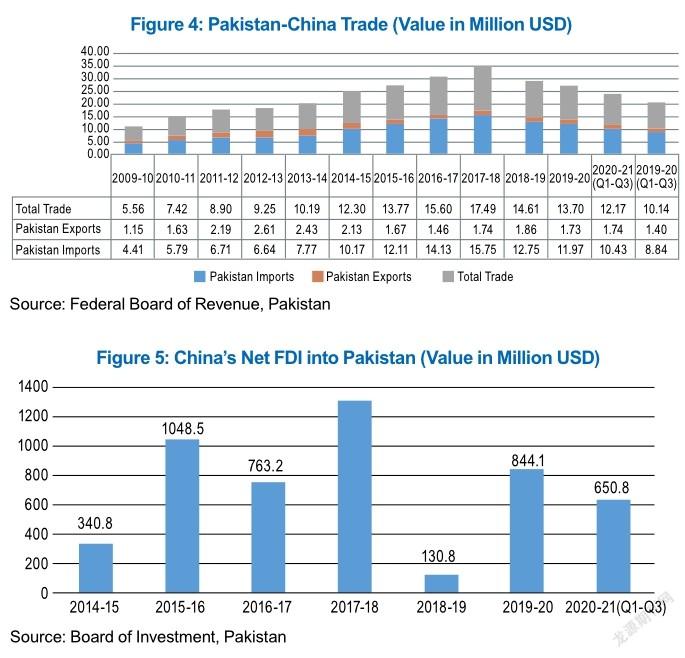
Tourism is one of the most promising areas in boosting people-to-people contacts and bilateral cooperation. Both countries hold tremendous attraction for tourists from the other side. In particular, as foreign tourism has gained tremendous currency among Chinese in recent years, Pakistan is looking forward to receiving more tourists from China after the pandemic is over and normal travel resumes.
Concluding Remarks
During the last 70 years, the Pakistan-China bilateral relationship has a number of accomplishments to its credit in wide-ranging areas. Under the vision of the leadership of the two nations and their peoples unflinching resolve, the worlds strongest bilateral relationship will scale new heights in the years and decades to come.
- China’s foreign Trade的其它文章
- The Automobile Consumption Market Welcomes Consumers of Younger Generations
- A Huge Party for the Youth
- Carbon Pricing Requires More International Cooperation and Dialogue
- The Digital Transformation Produces Higher Demand for Technology Talent
- The Segment Pet Markets Become Increasingly Popular
- “Invest Liaoning”Platform Promotes Integrated Development of Liaoning’s Open Economy