
Mobile health applications for the care of patients with breast cancer:A scoping review
2021-12-11 13:55:56TingtingCiYueshiHungYuxiZhngZhenqiLuQingmeiHungChngrongYun
Tingting Ci ,Yueshi Hung ,Yuxi Zhng ,Zhenqi Lu ,Qingmei Hung ,Chngrong Yun ,*
a School of Nursing,Fudan University,Shanghai,China
b Nursing Department,Shanghai Zhongshan Hospital,Shanghai,China
c Nursing Department,Fudan University Shanghai Cancer Center,Shanghai,China
Keywords:Breast neoplasms Health promotion Mobile application Nursing care Patients Scoping review
ABSTRACT Objectives:In recent years,the use of mobile health applications (mHealth apps) to deliver care for patients with breast cancer has increased exponentially.This study aimed to summarize the available evidence on developing mHealth apps to care for patients with breast cancer and identify the need for systematic efforts.Methods:A scoping review was performed according to Arksey and O’Malley’s framework,aiming to identify eligible research studies in PubMed,CINAHL,and Web of Science between January 2010 and December 2020.All identified studies were screened,extracted,and analyzed independently by two reviewers.Results:A total of 676 studies were retrieved,and eight eligible studies were finally included.Four themes emerged:the involvement of patients and health professionals in the phases of design and development,patients’ preferences,the characteristics of patients,and the motivators to use mHealth apps.The results indicated promising prospects for using mHealth apps to care for patients with breast cancer and identified the need for systematic efforts to develop and validate relevant apps.Conclusions:The attributes of patient characteristics,needs,and patient-reported outcomes data are vital components for developing mHealth apps for patients with breast cancer.Additionally,collaborative efforts,including patients,nurses,and other significant health professionals,should develop mHealth apps for breast cancer care.Additional research focusing on the design and development of mHealth apps for patients with breast cancer is warranted.
What is known?
· Current interventions for breast cancer do not optimally satisfy patients’ individual care needs,and there is a growing demand for long-term care services throughout the cancer continuum.
· In recent years,the wide use of mobile technologies has provided innovative possibilities for advancing the delivery of health care.
What is new?
· Current evidence supports promising prospects for using mobile health applications (mHealth apps) in caring for patients with breast cancer.
· The attributes of patient characteristics,needs,and patientreported outcomes data are vital components for developing mHealth apps for patients with breast cancer.Additionally,collaborative efforts,including patients,nurses,and other significant health professionals,should develop mHealth apps for breast cancer care.
1.Introduction
Breast cancer is the most commonly diagnosed cancer among women [1].Improved screening and advances in early detection have led to a decline in mortality and increased survival rates for patients with breast cancer [2,3].In addition,improved medical treatment continues to transform breast cancer into a chronic disease [4].During survivorship,patients greatly need care but have fewer opportunities to obtain assistance from health professionals [4].Current interventions for breast cancer do not optimally satisfy patients’individual care needs,and there is a growing demand for long-term care services throughout the cancer continuum [5].Addressing the care needs of patients with breast cancer has been increasingly emphasized.
One promising way to provide long-term care to this population is by using mobile health applications (mHealth apps).In recent years,the wide use of mobile technologies has provided innovative possibilities for advancing the delivery of health care [6-8].As mobile devices become widely accessible,their potential as personalized care platforms attracts more researchers’ attention.Currently,mHealth apps are designed for various purposes,such as raising public health awareness,transmitting health information,receiving instant therapeutic feedback,and maintaining timely interactions for patient-provider communication [9].In conjunction with the rising number of cancer patients and the increasing use of mobile devices,some studies have developed mHealth apps to cater to patients’ various care needs [10,11].Compared with traditional intervention,apps show advantages in collecting selfreport data,offering user-friendly interfaces,and reducing researchers’ bias [11].With the help of mHealth apps,patients can report the side effects of treatments promptly.Furthermore,mHealth apps provide accessible health care information at a minimal cost and motivate patients to achieve the goals recommended by health professionals because patients can obtain instantaneous feedback [12,13].
Currently,several apps have been specifically developed for patients with breast cancer [7,12].However,there is a lack of synthesized evidence focusing specifically on the design and development of mHealth apps targeting the care of patients with breast cancer.This gap will prevent an understanding of care via mHealth apps and hinder digital health intervention strategies that support these patients.Given the increasing needs of patients with breast cancer,the magnitude of the care burden,and the wide use of mHealth apps,it is necessary to review the available evidence to improve care in this population.Therefore,this study systematically maps recent literature on mHealth apps specifically developed to care for patients with breast cancer and identifies the need for systematic efforts to develop and validate the apps.
2.Methods
2.1.Review design
A scoping review was performed using the framework recommended by Arksey and O’Malley[14,15].The framework consists of five steps:identifying the research question;identifying the relevant studies;developing eligibility criteria for study selection;charting the extracted data;and collating,summarizing,and reporting the results.
2.1.1.Identification of the research question
The review question of this scoping review was as follows:How were mHealth apps designed and developed for the care of patients with breast cancer?
2.1.2.Identification of relevant studies
Based on the review question,the mnemonic “PICo” (population,interest,context) was utilized to identify relevant keywords and search terms[16].The search strategy is presented in Table 1.
The data searched in the databases PubMed,CINAHL,and Web of Science were from January 2010 to December 2020.Two reviewers performed the procedures in December 2020.Search terms included “breast neoplasm,” “neoplasm of the breast,” “breast cancer,” “breast tumor,” “mobile health application,” ”smartphone app,” “mobile phone app,” “mobile app,” “app,” “care,” and “intervention.” All the terms were used during the search in different combinations (Table 1).
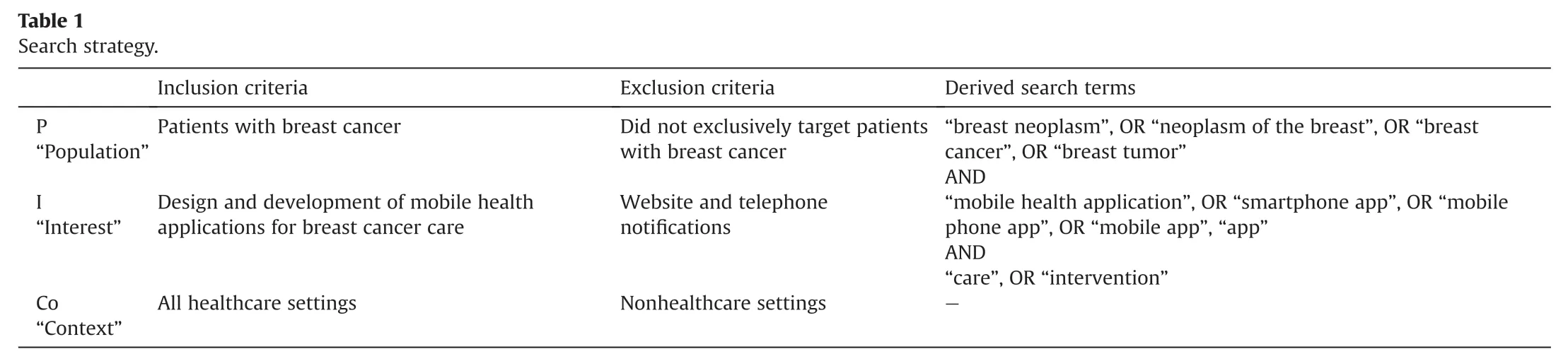
Studies that met the following criteria were included:1) published in English from peer-reviewed journals between 2010 and 2020;2) exclusively focused on the target group of patients with breast cancer,and 3)original studies that focused on the design and development of mHealth apps for the care of patients with breast cancer.The exclusion criteria were studies about telecommunication technologies (such as websites and telephone notifications),unlike mobile apps;studies targeting mixed cancer types;posters,abstracts,or reviews;and studies for which the full text was inaccessible.
2.1.3.Study selection
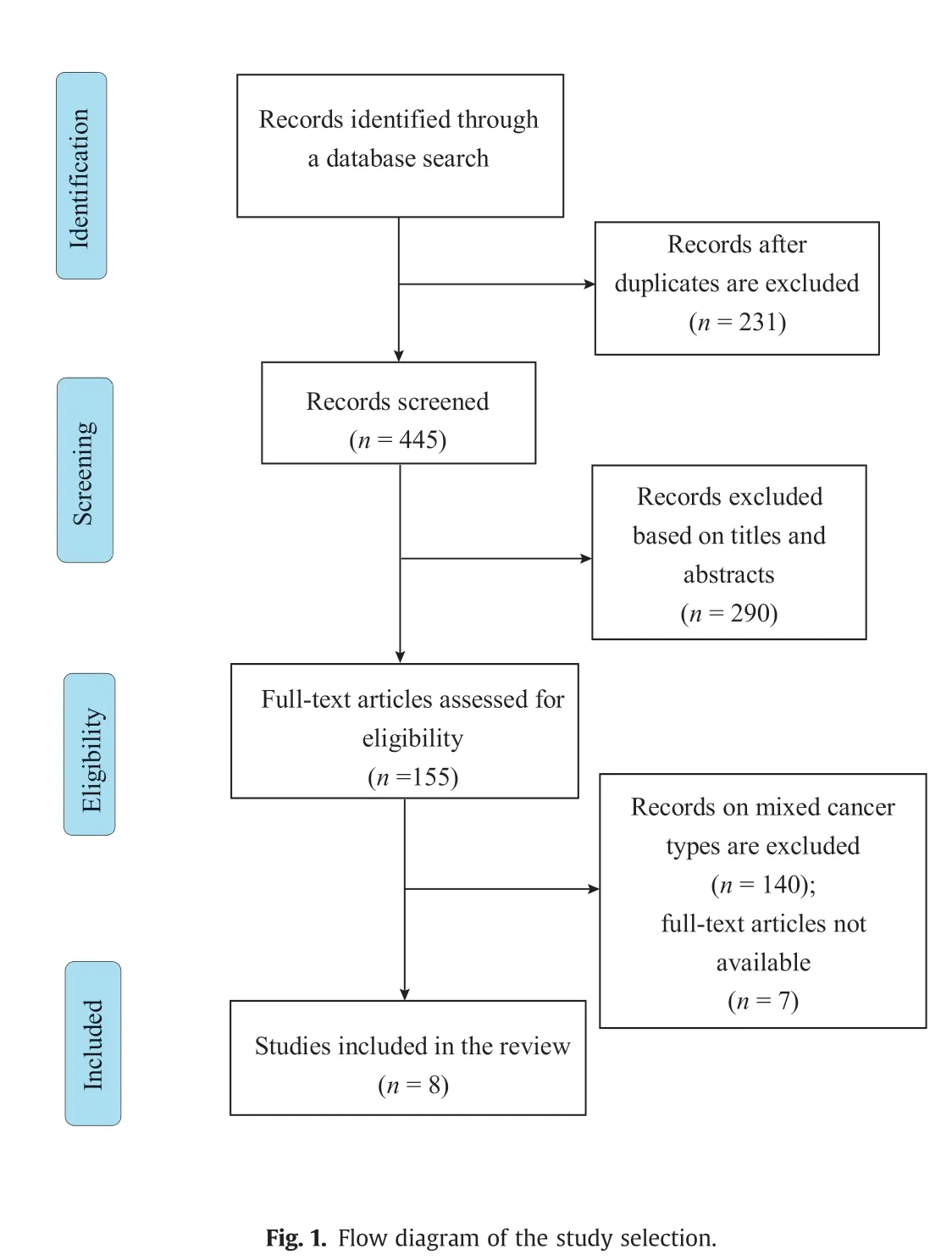
Two independent reviewers screened the titles and abstracts of studies according to the inclusion and exclusion criteria.A total of 676 records were identified and subsequently screened;from these,we excluded 231 duplicates.The remaining 445 articles were further scrutinized based on titles and abstracts,and 290 articles were later excluded.Further screening excluded 147 studies that did not exclusively target patients with breast cancer or where the full text was inaccessible.A final selection of eight articles was identified as the literature related to the topic of interest in this scoping review (Fig.1).
2.1.4.Charting the data
Relevant data were charted;these included author,year,country,study design,name of the app,target group,framework,features,components of the app,and findings (Table 2).
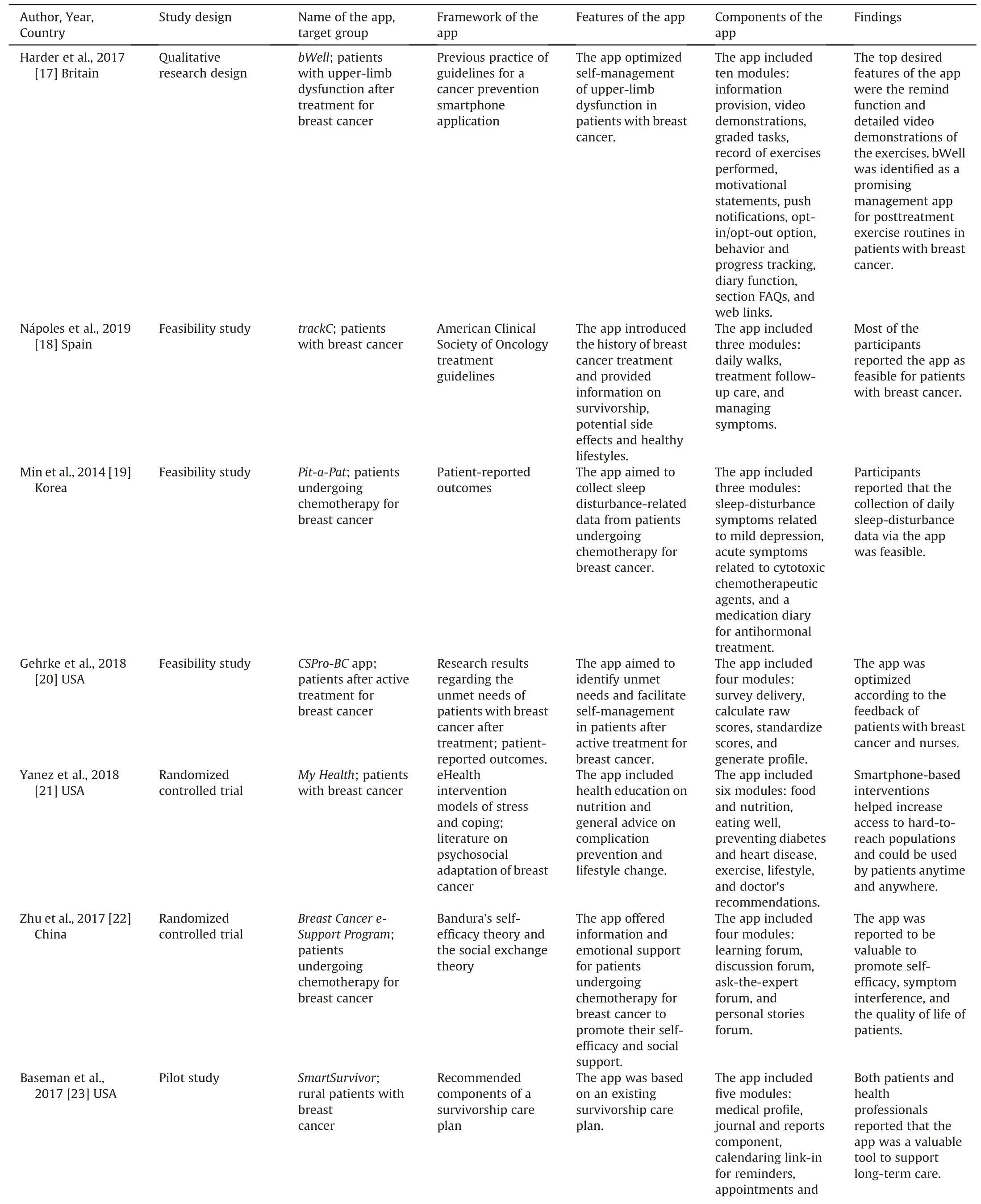
Table 2 A summary of research studies included in the review.

Table 2 (continued)
3.Collating,summarizing,and reporting findings
3.1.An overview of the findings
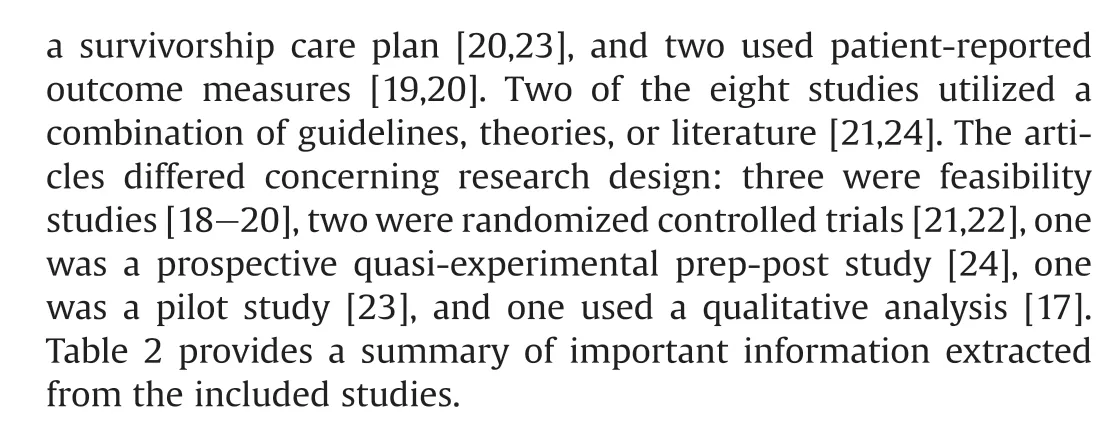
A comprehensive search resulted in 676 records,and eight eligible studies were finally identified after several rounds of screening.Seven of these studies were published in the past five years (2015-2020).The included studies were from different countries:three were from the USA,two were from Spain,and one was from Britain,Korea,and China.The objectives of the mHealth apps were sorted into four categories:functional exercise [17],lifestyle promotion [18,21,23,24],symptom management [19],and informational and emotional support [20,22].Regarding the technological characteristics,all the studies introduced the name of their apps.Two of the studies introduced an app targeted at general patients with breast cancer [18,24],and two introduced an app targeted at patients undergoing chemotherapy for breast cancer[19,22].Additionally,one introduced an app focused on patients with upper-limb dysfunction after treatment for breast cancer[17],two introduced an app for patients with breast cancer in a Hispanic population and rural patients with breast cancer [21,23],and one was an app for patients after active treatment for breast cancer[20].Regarding the framework of the mHealth apps,three studies utilized relevant guidelines [17,18,24].Theories used to develop mHealth apps included eHealth intervention models of stress and coping [21],the theory of learning,goal-setting theory,social cognitive theory [24],Bandura’s self-efficacy theory,and social exchange theory[22].Two mHealth apps utilized the findings from
3.2.Thematic analysis of the findings

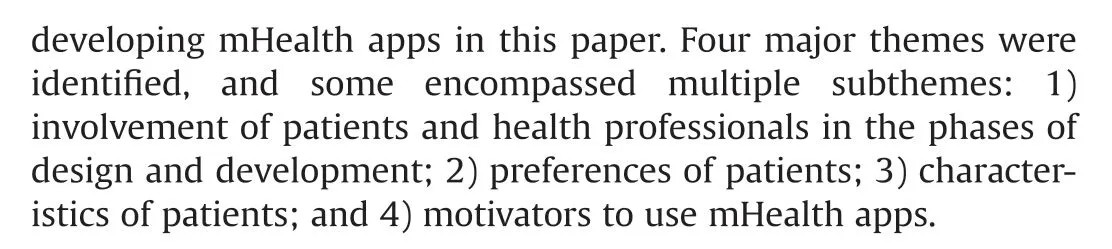
3.2.1.Theme 1:involvement of patients and health professionals in the phases of design and development
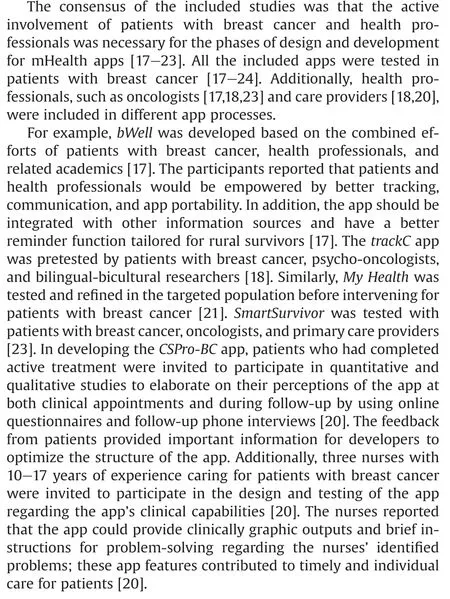
3.2.2.Theme 2:preferences of patients
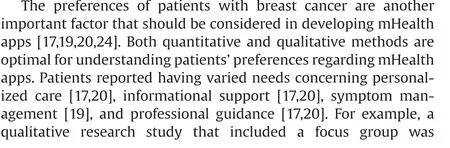
conducted to collect information on patients’ needs and preferences for bWell [17].The app was structured to have modules on assistance with information provision,video demonstrations,graded tasks,exercise recording,and other forms of support according to patients’ desired features [17].A dietary record questionnaire was incorporated into BENECA to record their diet for each meal;this app aimed to assist the patients with adherence to personalized diet plans [24].The CSPro-BC app included a module for patients with breast cancer to acquire online professional information for problem-specific links,including websites,social media,podcasts,and videos corresponding to potential problem areas from official websites to meet patients’ varied preferences[20].All resources were reviewed before delivery and were consistent with recent guidelines,literature,or clinical practices for patients following acute treatment for breast cancer and could thus motivate patients to adhere to self-management behaviors [20].The app could generate a personalized user profile of potential problem areas for every patient;this capability is conducive to providing medical and self-care options [20].
3.2.3.Theme 3:characteristics of patients
Most of the apps identified in this review had the characteristics of the targeted group considered in their development,such as patients’ health status [17],culture and religion [21],economic conditions [23],and treatment [20,22].
3.2.3.1.Health status.The arm and shoulder exercise programs in bWell were based on evidence-based exercise guidelines and practices for patients after treatment for breast cancer;these programs provided tailored guidance to facilitate lymphatic transport and rehabilitation of the affected arm and shoulder [17].In addition,the bWell exercises did not include patients with immediate breast reconstruction.The video exercises in the app were performed by a patient who had surgery for breast cancer nine months before filming,thus indicating that the app accorded with the patients’ ability [17].Considering that most of the patients did not have adequate exercise equipment,all the exercises in the app were performed without special equipment according to the patients’ability.
3.2.3.2.Culture and socioeconomic characteristics.My Health was specially designed to promote healthy lifestyle education for Hispanic patients with breast cancer[21].These patients compose the largest and fastest-growing ethnic minority group in the USA.They are reported to have culture-driven beliefs and language barriers that prevent them from acquiring cancer-related information[25].Additionally,patients in this population have low adherence to tailored cancer-related information during the follow-up period[25].Therefore,My Health was designed to be a culturally tailored app by Hispanic values and beliefs [21].The app consisted of a series of relevant modules on treatment,diet,exercise,disease knowledge,and medical recommendations targeted toward Hispanic women with breast cancer [21].The app provided patients with easier access to lifestyle change-related health education and enhanced their interaction with health professionals.Similarly,SmartSurvivor was explicitly developed for rural survivors of breast cancer [23].The app considered the characteristics of rural users and included modules on medical profiles,medical reports,reminders,appointments,and delivering tailored tips;these modules promoted and reminded patients to comply with their follow-up care.
3.2.4.Theme 4:motivators to use mHealth apps
It is vital to set motivators to encourage patients with breast cancer to use the apps [17-20,22,24].Motivators,specifically visible progress [18,20],targeted suggestions [20,24],professional guidance [24],vivid interfaces [19],and informational and emotional support from peers or other significant people [22,24],were applied in the identified apps.
3.2.4.1.Visual or auditory interface.bWell had a tracking and progress function,which motivated patients to adhere to the exercises and observe their progress [17].Patients could keep their history of daily steps in the visual maps of the achieved goal for personal daily actions and receive instant visual and auditory feedback in the trackC app,thereby motivating them to achieve their goals[18].Similarly,Pit-a-Pat used a 10-point rating scale for sleep quality and anxiety severity in the form of a thermometer to attract patients to use the app[19].
3.2.4.2.Timely feedback.Patients could acquire their personal treatment history and information on cancer survivorship through the trackC app,contributing to a better understanding of their disease and treatment [18].Similarly,BENECA automatically provided helpful suggestions for improving the energy imbalance regarding patients’ energy status and nutritional information[24].Patients could contact health professionals to communicate doubts[24].Online video tutorials were also available whenever they were needed [24].A range of expressions was displayed to indicate a change in mood in Pit-a-Pat [19].Participants received a push notification if they failed to report their data in the time required[19].
On the other hand,tailored information and reminders are also valued apps for patients with breast cancer.Patients with breast cancer often have unmet care needs of acquiring cancer-related knowledge and interacting with health professionals.The Breast Cancer e-Support Program aimed to offer information and emotional support for patients with breast cancer receiving chemotherapy[22].The app included several learning and forum modules,including an ask-the-expert forum and a personal stories forum.The learning forum was updated every two weeks based on the doubts and concerns expressed by patients [22].Patients could receive feedback from the ask-the-expert forum module within one day through the app.In addition,helpful questions and answers were added to the discussion forum when permitted by corresponding patients [22].The CSPro-BC app offered patients the opportunity to compare their scores with those of a group of patients with breast cancer who lived a median of two years post active treatment.Therefore,the app allowed app users to understand their health conditions and better self-management behaviors[20].
4.Discussion
To optimize care delivery for patients with breast cancer via mHealth apps,collaboration among patients and health professionals is imperative.The involvement of patients and health professionals is helpful to researchers for modifying the format,content,and delivery of mHealth apps [19,23].Practical mHealth efforts require providers to monitor and satisfy patients’ unmet needs,promote self-management behaviors [17-19,21,22],and identify high-risk patients [19,20].Therefore,health care professionals are required to assume a coaching role.Although nurses are influential health professionals in follow-up care,the design,and development of mHealth apps for patients with breast cancer lack the active involvement of nurses.Only one study in this review reported a mHealth app that involved nurses [20].Nurse-led follow-up has been an effective alternative to routine clinical follow-up with the advancement of mHealth apps[26,27].Evidence suggests that patients with breast cancer appear to be more satisfied with nurse-led follow-up than physician-led follow-up [4].Nurses often act as liaisons among multidisciplinary teams and are health professionals who work closely with patients,provide continuity of supportive care,and evaluate patients’individual support needs [3].As one of the most critical health professionals to conduct interventions via mHealth apps,nurses should be actively involved in developing the apps to maintain close contact with patients and ensure continuity of care[28].Therefore,collaborative efforts,including nurses,are highly recommended for using mHealth apps for breast cancer care[20].
The preferences and characteristics of patients with breast cancer may influence the usability and implementation of mHealth apps[17,19,20,24].Tailored apps might effectively promote the care delivery of patients from certain cultures or with specific characteristics,such as patients who have obstacles to accessing generic mHealth apps.For example,culturally tailored mHealth apps are a viable way to serve the unique needs of patients belonging to an ethnic minority [29,30].Language,cultural beliefs,values,and obstacles should be considered to develop apps tailored to individual circumstances and characteristics [21,23,31].However,patients were more likely to respond to apps to sensitive topics(e.g.,sexual function)they were unwilling to discuss during clinical visits [20].Therefore,patient-reported outcome measures are highly recommended to be incorporated into mHealth apps;these measures are optimal and comparable for understanding patients’ symptoms,functions,and preferences [32-34].
Motivators are essential factors promoting the continuity of care via mHealth apps.Instant visual feedback [18,20] is a crucial component that attracts patients and thus plays an active role in inspiring patients to use apps and achieve their goals [18].In addition,expressions or other vivid graphics,which motivate patients to use the apps,are recommended to be incorporated into the interface.Patients with breast cancer reported having limited access to resources that provide them with information and support during their survivorships [35].However,these patients are sometimes challenged by attendance barriers to face-to-face clinic visits.They often seek medical and lifestyle-related help during or after their diagnosis [35].mHealth apps can provide access to satisfy patient needs for support-seeking preferences from peers,health professionals,or others [36,37].When design modules are present to facilitate communication for patients,the views and stories of patients can be considered for sharing in the apps when permission from the patient is received [22].In addition,regular updates of the content are required to motivate patients to use the apps continuously.Therefore,when developing mHealth apps,there is a need to consider the motivators to maintain patients’interests in operating the apps.
5.Conclusion
This review highlights the need for further investigation with rigorous research designs to develop mHealth apps to care for patients with breast cancer.The attributes of patient characteristics and needs and patient-reported outcomes data should be considered in developing mHealth apps for patients with breast cancer.Additionally,collaborative efforts,including patients,nurses,and other significant health professionals,should develop mHealth apps for breast cancer care.
CRediT authorship contribution statement
Tingting Cai:Conceptualization,Methodology,Writing original draft,Writing-review &editing.Yueshi Huang:Data curation,review&editing.Yuxia Zhang:Review&editing.Zhenqi Lu:Review&editing.Qingmei Huang:Review &editing.Changrong Yuan:Conceptualization,Methodology,Writing original draft,Writingreview &editing.
Ethics approval
This study does not need ethical approval as it is a scoping review of literature.
Funding
This study was supported by the Natural Science Foundation of China (71874032) and the Natural Science Foundation of China(72074054).
Declaration of competing interest
The authors declare that there are no conflicts of interest.
Appendix A.Supplementary data
Supplementary data to this article can be found online at https://doi.org/10.1016/j.ijnss.2021.07.003.
 International Journal of Nursing Sciences2021年4期
- International Journal of Nursing Sciences的其它文章
- Nursing students’ attitudes toward mobile learning:An integrative review
- Nurses’ experiences in voluntary error reporting:An integrative literature review
- Second-order problem solving:Nurses’ perspectives on learning from near misses
- A study of the relationship between nurses’ experience,structural empowerment,and attitudes toward computer use
- Resilience of nurses at the epicenter of the COVID-19 pandemic in Lebanon
- Exploring the employment readiness and return to work status of breast cancer patients and related factors