高線公園 美國紐約市
2021-12-28 08:26:22ChiaraBaccarini,RobertCondon,HayleyEber等
世界建筑導報 2021年6期
關鍵詞:設計
合伙負責人:Ricardo Scofidio
合伙人:Elizabeth Diller,Charles Renfro,Benjamin Gilmartin
項目主管:Matthew Johnson
項目建筑師:Tobias Hegemann,Miles Nelligan,Ben Smoot,Trevor Lamphier
設計團隊:Chiara Baccarini,Robert Condon,Hayley Eber,Gaspar Libedinsky,Jeremy Linzee,David Newton,Dan Sakai,Don Shillingburg,Flavio Stigliano,Brian Tabolt,Dustin Tobias,Alex Knezo
景觀和城市設計:James Corner Field Operations
結構及工程管理:Burohappold
結構工程和歷史遺產保護:Robert Silman 設計事務所
照明設計:L’observatoire 國際公司
項目面積:310 000 平方呎
項目狀況:一期2009 年竣工;二期2011 年竣工;
三期2014 年竣工;支線2019 年竣工
項目攝影:Iwan Baan,Liz Ligon,Timothy Schenck
Partner-In-Charge:Ricardo Scofidio
Partners:Elizabeth Diller,Charles Renfro,and Benjamin Gilmartin
Project Director:Matthew Johnson
Project Architects:Tobias Hegemann,Miles Nelligan,Ben Smoot,Trevor Lamphier
Design Team:Chiara Baccarini,Robert Condon,Hayley Eber,Gaspar Libedinsky,Jeremy Linzee,David Newton,Dan Sakai,Don Shillingburg,Flavio Stigliano,Brian Tabolt,Dustin Tobias,Alex Knezo
Landscape Architecture and Urban Design:James Corner Field Operations
Planting Design:Piet Oudolf
Structural and MEP Engineering:Burohappold
Structural Engineering and Historic Preservation:Robert Silman Associates
Lighting Design:L’observatoire International
Size (GSF):310 000
Status:Phase I Complete 2009;Phase II Complete 2011;
Phase III Complete 2014;Spur Complete 2019
Photography:Iwan Baan,Liz Ligon,Timothy Schenck
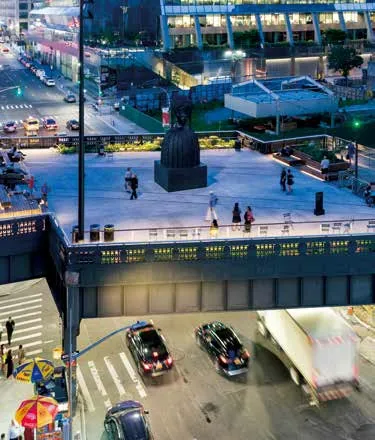
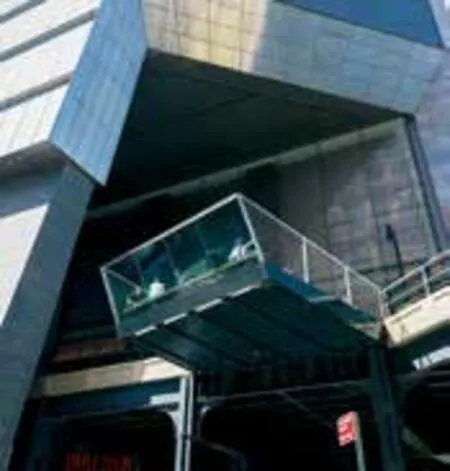
與 James Corner Field Operations 和 Piet Oudolf 聯合設計的紐約高線公園是一座1.5英里長的公共公園,建在一條廢棄的高架鐵路之上。這條鐵路從肉庫區一直延伸到曼哈頓的哈德遜鐵路站場。
Designed in collaboration with James Corner Field Operations and Piet Oudolf,The High Line is a 1.5–mile long public park built on an abandoned elevated railroad stretching from the Meatpacking District to the Hudson Rail Yards in Manhattan.
建設背景
這條高架鐵路曾經是至關重要的城市基礎設施,在廢棄之后重歸自然荒蕪。紐約高線公園的靈感來自于這座后工業時代廢墟的憂郁而肆意的美,詮釋了它的余韻。它將高架鐵路成為廢墟后的繁雜叢生轉化成鐵路沿線因地而異的城市微氣候,包括各種不同空間,有的陽光明媚、有的陰涼清爽、有的潮濕、有的干燥、有的多風、有的避雨。
Found
Inspired by the melancholic,unruly beauty of this postindustrial ruin,where nature has reclaimed a once vital piece of urban infrastructure,the new park interprets its inheritance.It translates the biodiversity that took root after it fell into ruin in a string of site–specific urban micro-climates along the stretch of railway that include sunny,shady,wet,dry,windy,and sheltered spaces.
設計理念
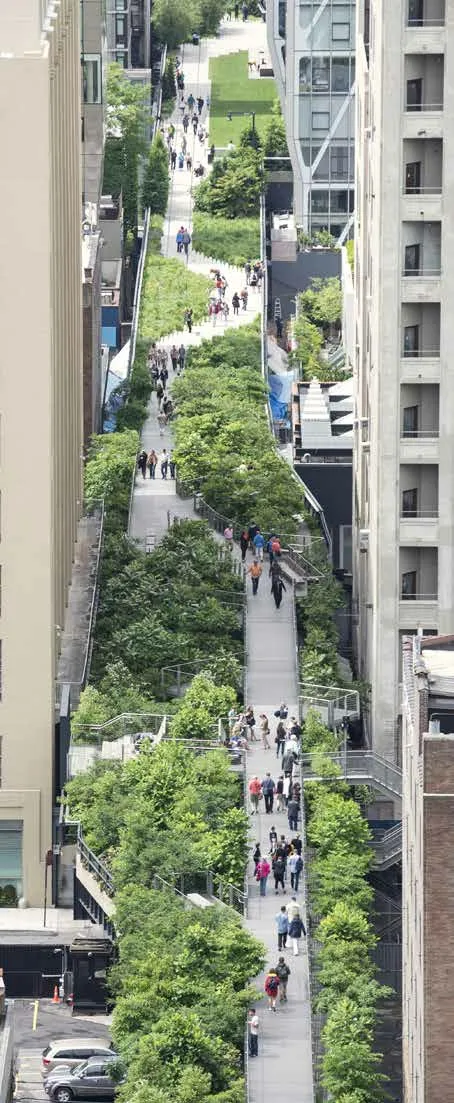
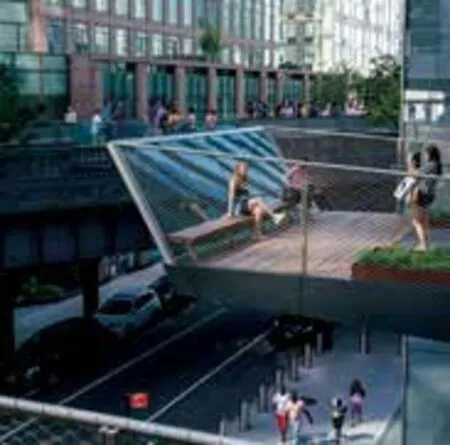
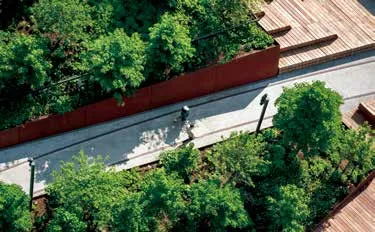
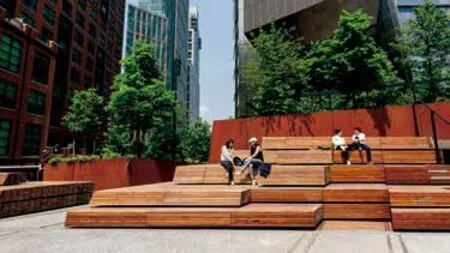
遵循“植-筑(部分植栽,部分建筑)”的策略,高線公園表面改變了步行道與植被的常規布局方式,將有機栽培與建筑材料按不斷變化的比例關系結合起來,從高步行率區(100%硬表面)到豐富的植載環境(100%軟表面),這些單元沿著1.5英里長的鐵路呈現多種硬軟比例關系。鋪砌面由單獨的預制混凝土板組成,結合處留有縫隙,方便植物生長,就像野草穿過人行道的裂縫一樣。長長的鋪砌單元末端逐漸變窄,形成一排排植床,創造出一種“無路可走”的神韻,公眾可在此隨意漫步。該設計解決了一攬子市政問題:收回無主公共空間、老舊基礎設施適應性再利用、廢棄建筑保存,不失為一項可持續發展的戰略舉措。該公園風格兼收并蓄,植栽精心培育,恰又保留了昔日的荒蕪,環境幽靜舒適,卻也適合休閑交際。
Design
Through a strategy of agri–tecture—part agriculture,part architecture—the High Line surface is digitized into discrete units of paving and planting which are assembled along the 1.5 miles into a variety of gradients from 100% paving to 100% soft,richly vegetated biotopes.The paving system consists of individual pre–cast concrete planks with open joints to encourage emergent growth like wild grass through cracks in the sidewalk.The long paving units have tapered ends that comb into planting beds creating a textured,“pathless” landscape where the public can meander in unscripted ways.The design addresses a multitude of civic issues:reclamation of unclaimed public space,adaptive reuse of outmoded infrastructure,and preservation as a strategy for sustainability.The park accommodates the wild,the cultivated,the intimate,and the social.
使用狀況
紐約高線公園第一段工程于2009年向公眾開放,其余部分也分別于2011年、2014年和2019年分階段開放。紐約市對該項目撥付1.15億美元。自建成以來,項目在刺激城市發展方面,已累計創造價值逾50億美元,新增1.2萬個就業崗位。起初人們僅僅將其視為一項想法怪異奇特的本地解決方案而已。然而去年高線公園累計吸引游客達800萬人次,儼然已成為一種全球發展模式而迅速走紅:全球已有逾百座城市受其啟發,將本地廢棄的市政基礎設施改造成公園綠地。
Post Occupancy
The High Line opened to the public in sections,starting in 2009,with phased openings in 2011,2014,and 2019.From New York City’s investment of $115 million USD,the High Line has stimulated over $5 billion USD in urban development and created 12,000 new jobs.Initially imagined as a singular,idiosyncratic,local solution,last year the High Line drew 8 million visitors and has “gone viral” as a global development model:over one hundred cities worldwide have been inspired to transform their obsolete urban infrastructure into public parks.
猜你喜歡
河北畫報(2020年8期)2020-10-27 02:54:06
現代裝飾(2020年7期)2020-07-27 01:27:42
流行色(2020年1期)2020-04-28 11:16:38
電子制作(2019年19期)2019-11-23 08:41:36
電子制作(2019年15期)2019-08-27 01:11:50
電子制作(2019年7期)2019-04-25 13:18:16
藝術啟蒙(2018年7期)2018-08-23 09:14:18
海峽姐妹(2017年7期)2017-07-31 19:08:17
Coco薇(2017年5期)2017-06-05 08:53:16
商周刊(2017年26期)2017-04-25 08:13:04