
Rough Cut
2022-02-25 13:44:32AlexColville
漢語世界(The World of Chinese) 2022年1期
關鍵詞:紀錄片
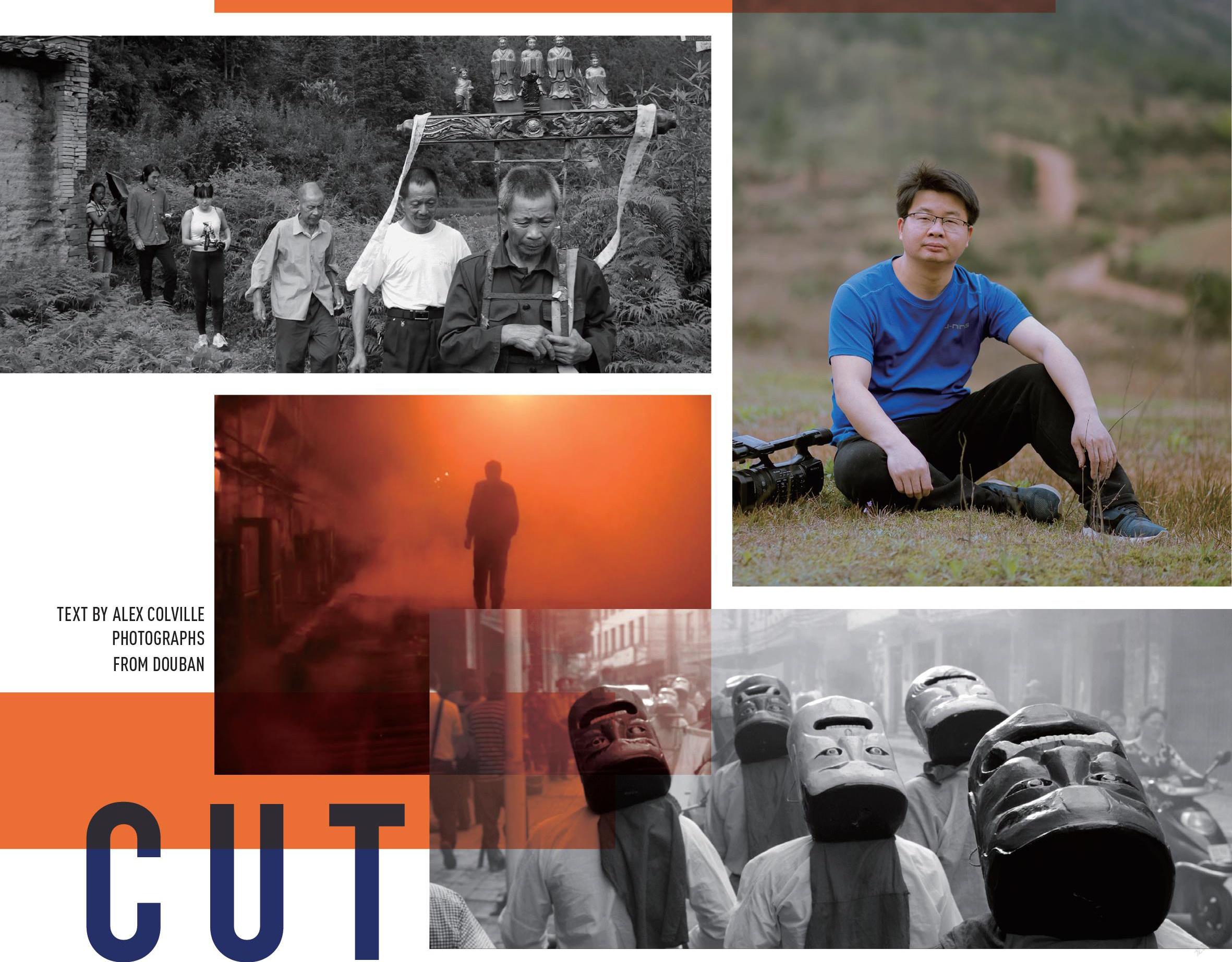

China’s independent documentary filmmakers have been turning out works of high artistic and social value since the 1990s. But their livelihoods are getting harder.
獨立紀錄片的艱難生存之路
Text by Alex Colville
Photographs from Douban
In 1990, a group of down-and-out Beijing artists sparked one of China’s lesser-known revolutions.
Between 1988 and 1990, former TV director Wu Wenguang had filmed five visual and performing artists who had migrated to Beijing from various parts of China. Mainstream society dismissed them as (盲流), or “vagrants,” who had dropped out of the state-sponsored work system. But so had Wu—who shot independently of state-run studios, used borrowed cameras and editing suites, and distributed the finished product? , privately among friends and media professionals.
Not for nothing is considered China’s first “independent documentary”—that is, a film about non-fictional subjects made without a permit, funding, or creative direction from one of China’s eight state-run film studios (which at the time had annual quotas on permits they gave out for documentaries), according to director and influential film writer Zhang Laodong, founder of film blog Aotu Doc.
Digital video recorders (“DVs”) appeared onto China’s mass market in the late 90s to early 2000s, meaning anyone with the desire—and not just those who studied filmmaking in university—could buy or borrow a camera and start shooting. Film students, bank employees, and small-town youths traveled into rugged terrains or looked to their communities to tell stories, unleashing a “rebellious spirit” and a “golden age” of independent documentaries, said Zhang in an interview with JustPod Pictures podcast in 2021—a golden age that he feels has now come to an end.
“‘Independent’ has become a toxic brand,” believes Chris Berry, a professor of Chinese Film Studies at King’s College London. Under current Chinese law, films cannot be shown in public cinemas or through online video-streaming platforms without a “Dragon Label,” which is shown in the opening credits to indicate that a work had been officially approved for screening.
For much of the last three decades, directors could screen their works at independent film festivals abroad or within China without getting the Dragon Label. In March of 2017, however, China implemented its first law codifying rules about how films were to be shot, distributed, and screened. It prohibits Chinese films going to foreign festivals without filing with the government, and stipulated punishments for producing, releasing, or screening without a permit, ranging from fines starting at 250,000 yuan to the confiscation of the film and the screening equipment.
To Berry, the new law effectively “requires that all films go through the censorship system,” whereas previously, the legality of films outside of that system was a “gray area,” though he notes he is not aware of any cases of prosecution for anyone making films illegally.
Three major independent film festivals—Yunfest (founded in Yunnan province in 2003), the China Independent Film Festival (founded in Nanjing, Jiangsu province, in 2003), and the Beijing Independent Film Festival (BIFF, founded in 2006)—consecutively shuttered in the last decade, depriving filmmakers a platform for networking and sharing their work, and audiences chances to see more documentaries. Likewise, two major grassroots organizations that host independent film screenings, Pure Movies and Qifang, have declined due to lack of works to show.
Of the remaining forums, the FIRST International Film Festival in Xining, Qinghai province (founded in 2011 in Beijing), had four independent documentaries abruptly removed before public screenings last year for “technical issues,” often a euphemism for political censorship.
“Around 2014, I was seriously depressed. I thought, this is it [for indie documentaries],” Zhang said on the podcast, citing Yunfest’s cancellation in 2013, and local police canceling BIFF by literally pulling the plug on its electrical power supply in both 2012 and 2014, alleging that the founders were “provoking quarrels” and creating a social disturbance.
Though the golden age may be over, Zhang believes the format lives on. In the same year the BIFF was shut down for good, Zhang participated as an actor in the filming of by director QiuJiongjiong, which was shot in the format of a play, and was intrigued by the new format. “I suddenly discovered that there were directors like that, who were so creative that they could make something magical out of nothing.”
Experimental techniques also seem to appeal to 24-year-old Li Kexin, a freelance documentary-maker whose short film , which she started making in 2016 while still a student, mixes fiction and nonfictional narrative techniques to tell the story of the last Nuo dance performance in a small village in Fujian province, which no longer has enough funds or performers to continue the thousands-year-old ritual. The film is a combination of both interviews with local village elders and imagined commentary by the deity worshiped through this tradition.
Berry, however, is skeptical of the trend toward experimentation in documentaries, calling it the “New Solipsism” of Chinese cinema. He notes that of the filmmakers who neither went abroad nor stopped creating after 2017, many have started making films that comply with the official review process, and are more likely to refer to themselves as “art film” directors.
“There has been an effort to generate a sector of the industry that supports art cinema,” he says, citing film festivals like FIRST and director Jia Zhangke’s Pingyao International Film Festival, as well as specialized art film venues like Broadway movie theater in Beijing.
“This pursuit of cinema as an art form has been marked by a greatly increased focus on the art form itself and a retreat from the interest in social issues that characterized a lot of independent documentary. Instead, issues of memory and dreaming and how to visualize it in film have come to the fore,” Berry writes to TWOC, citing works like Bi Gan’s and Gu Xiaoguang’s 2019 , neither of which are documentaries, though both have autobiographical elements. “[There is] a certain relaxation of the expectations of the Film Bureau [China Film Administration] to try and find a way to bring as many filmmakers as possible into the system.”
Before the late 80s, all documentaries had been state-run, taking the form of newsreels narrating national events— such as the launch of China’s first satellite—from big state-run studios, even to audiences in remote villages. The advent of TV in the 1980s brought about , or “special topic films,” which were carefully scripted and rehearsed. “Interviews were rare. Spontaneous and completely unstaged footage was almost non-existent,” writes Berry.
With DVs, however, filmmakers such as Zhao Liang, Xu Tong, Zhou Hao, and Wang Bing took to the road throughout the 1990s, 2000s, and 2010s, usually spending years living beside and documenting the lives of those overlooked in a rapidly changing country: residents of a decaying industrial neighborhood in Northeast China, figuring out their future after the closure of state-run enterprises in the 90s (Wang’s “West Rail District” trilogy, 2002); sex workers and a crippled fortune-teller striving against poverty and discrimination in the city (Xu’s “Migrants” trilogy, 2008 – 2011); lumberjacks spending one last winter in the woods before China’s logging ban (Yu Guangyi’s, 2006).
By necessity, many of these new films are shaky and grainy, lacking the polish of background music and professional lighting. Yet Li says she is very much inspired by forebears from the early 2000s, as their work is also based on innovations in creative storytelling techniques. “What I take from them is the courage to really go deep into the events,” she says.
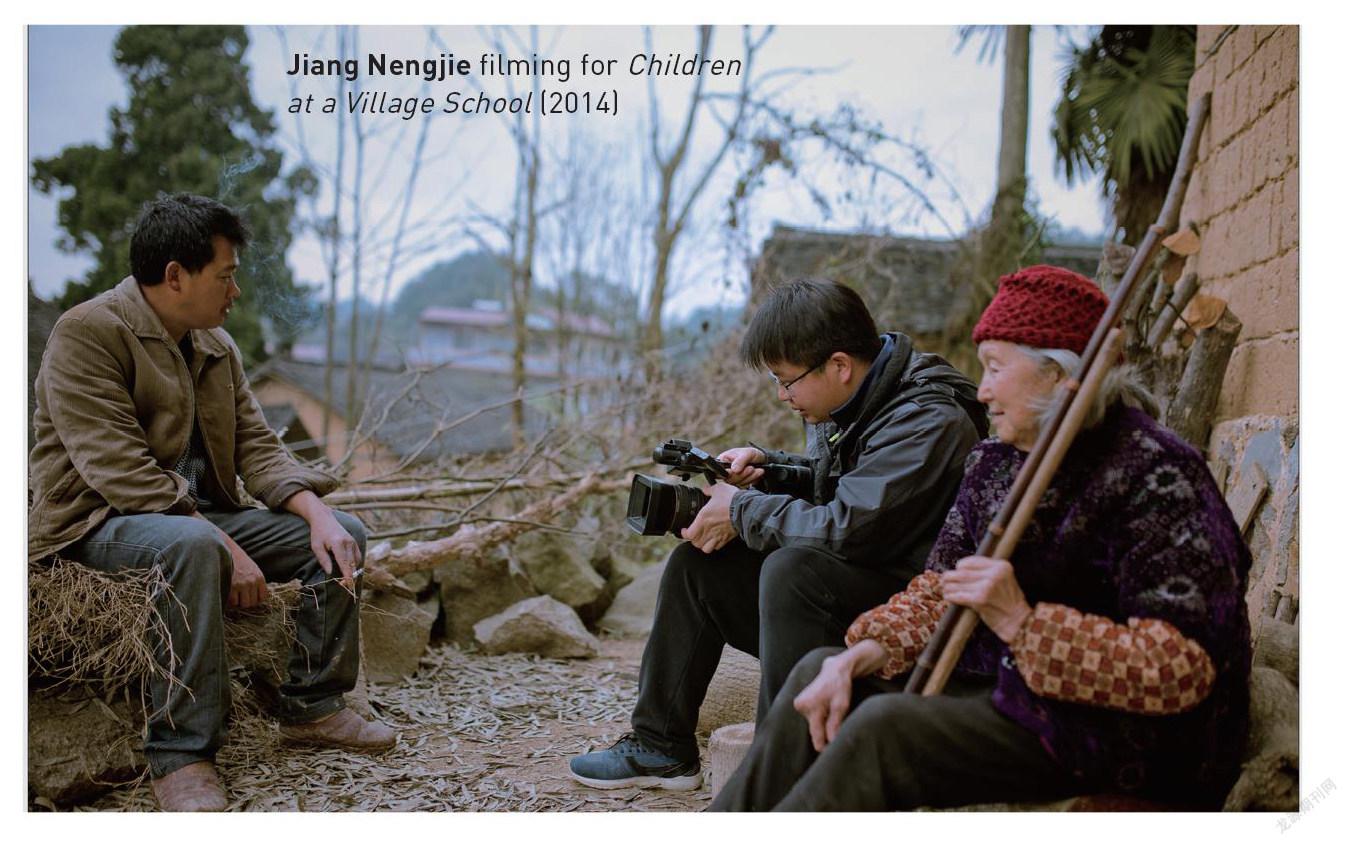
The filmmakers did not profit financially from their creations, considering themselves primarily as artists, activists, or archivists. “When my descendants want to understand the times that we lived through and the mistakes we made, the documentary is one of the best ways for them to understand,” 36-year old director Jiang Nengjie tells TWOC about his motivations to make documentaries, speaking from a village that has been swallowed by Guangzhou’s sprawl, the subject of his latest film.
From 2010 to 2018, Jiang filmed the dangerous work of illegal miners in his hometown with a DV camera, releasing in 2019. The film followed several miners, including Jiang’s own father and uncles, as they deal with the fatal condition of “black lung” due to long-term dust inhalation and inadequate compensation from mine bosses and local officials.
The film proved a hit, receiving over 10,000 viewers per Jiang’s estimate—impressive because Jiang decided to distribute it privately, sending the link to watch the film for free on Baidu Cloud to those who added him on WeChat or marked the film as “Want to Watch” on film-rating app Douban.
Jiang does not want to submit his work for government review, believing it will distort the message. “Many people know me by the nickname ‘the Baidu Cloud director,’” says Jiang. Recalling his time working in state TV, he still prefers the freedom of creating on his own. “I had to shoot what I was told to shoot, but I prefer to shoot what I want to shoot,” he says.
“Mainstream documentary sometimes can’t document everything,” agrees Li. “They probably only document what is important for most people. But there are people from special groups that have less power and need to be noticed.”
So far, however, Li has only screened at a smattering of film festivals and private screenings with friends, and says she’s “not sure” how many people have seen it—perhaps 200 at a film festival in South Korea, 100 in Beijing, and 30 to 40 at another in Xiamen, Fujian province. She and her crew funded the film out of their own pocket, with some support from the LAST Film Editing Residency for female filmmakers.
The dual pressures of censorship and profit make documentary an unattractive field for film graduates and other young people. “[Young filmmakers] want to try and have a way to talk about the same social issues,” Li says, but at the same time “get to more audiences.”
The cancellation of festivals also hit younger filmmakers harder. “I think it has had quite a big impact on my work,” says Li. “Every time I enter a film festival, I get a chance to be seen by the audience…by hearing from them, I know what I need to revise about my film.”
In the meantime, technology has made it easier than ever for would-be filmmakers to collect footage. Li brings up artist Xu Bing’s from 2017, which strings together CCTV footage that had been uploaded to the internet from all over the world, allowing viewers to rethink what is public and private.
Zhang warns against making either overly optimistic or gloomy predictions for the documentary market. “There are Dragon Label documentaries that are good, and there are also many bad independent documentaries—more bad ones than there are good ones,” he opines on the podcast. “Independence is not only a matter of funding, but also the origin of [a film’s] creation, its spontaneity.”
Li has big plans for her short film, aiming to turn it into a feature-length work to show at film festivals, galleries, and online streaming sites. The fewer opportunities for screenings, according to Li, means “we really value every chance we get to show our work.”
– Additional reporting by Anita He (賀文文) and Hatty Liu
Jiang Nengjie filming for (2014)
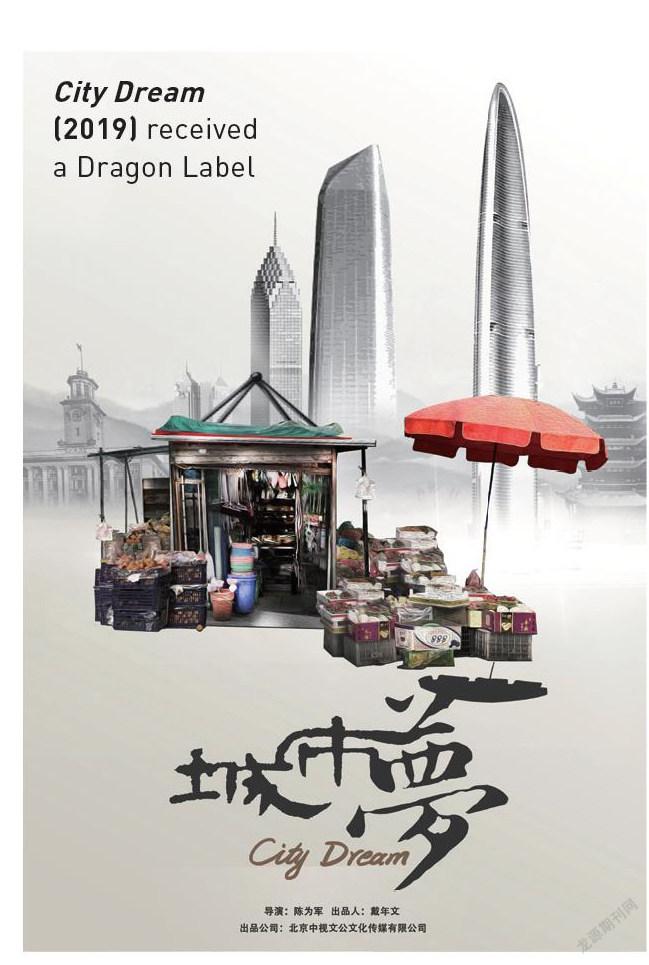
(2019) received a Dragon Label
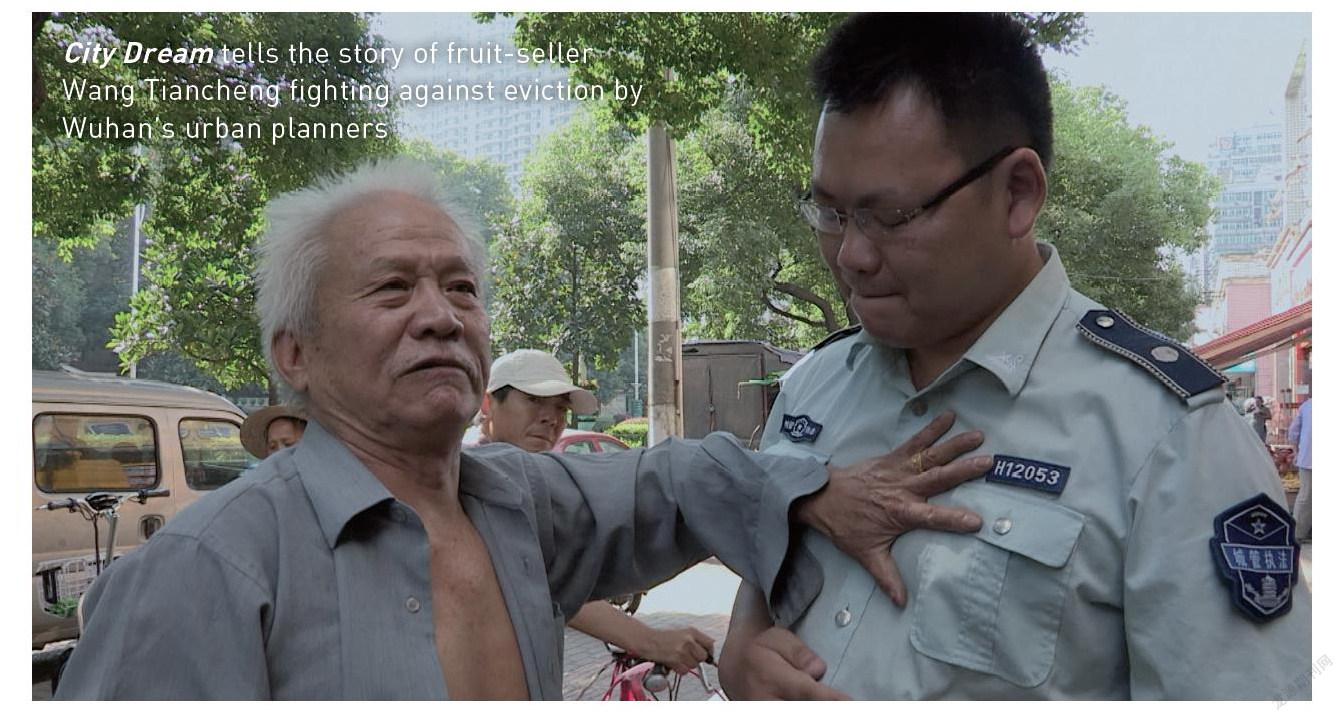
tells the story of fruit-seller Wang Tiancheng fighting against eviction by Wuhan’s urban planners
Jiang Nengjie lived with the miners he was filming in (2019)
This won Best Film at the Shanghai International Film Festival last year. Xu Dong needs to find a new home for his pet dog, now that his wife Mei Ling is pregnant, and places it in the care of a cash-strapped builder named Ma Qianli. The dog’s death leads all three into a collision course, not least because Mei Ling stumbles upon a secret Xu has been keeping from her. It’s full of dark humor and poetic lines, all set in a messy, freezing small-town in the Northeast, or Dongbei. It’s remarkable how aesthetic Dongbei’s brick and concrete rustbelt becomes when seen through the lens of director Geng Jun, whose penchant for wide-angle shots is reminiscent of Wes Anderson.
Single and parentless, 30-year old Rongjie works as a foot masseur while trying to keep her younger brother Xiaodong out of trouble. But when Xiaodong’s girlfriend becomes pregnant, this leads Rongjie down the rabbit hole of traumatic memories from her own extramarital pregnancy. It’s a somber portrayal of the lives of those at the bottom of society, striving to create a better life for themselves but being held back by the world around them. Li Yanxi won the Best Performer award at the FIRST Film Festival last year for her portrayal of Rongjie.
Don’t be put off by this film’s terrible English title—this is a romcom fresh enough to earn 8.3 points out of 10 on Douban. Golden Rooster-nominated director and actor Xu Zheng plays Lao Bai, a divorced middle-aged man who lives in Shanghai and teaches the elderly how to draw. Unlike the typical romcom featuring the young and beautiful, this film follows Lao Bai’s quiet, restrained courtship of three very different, strongly independent middle-aged women.is distinctly Shanghainese, complete with jokes, street scenes, and references to food only locals would truly understand. Director Shao Yihui (who lived in Shanghai for six years) boldly shoots whole scenes in Shanghai dialect, which impressed many Douban reviewers, even if they did have to read subtitles to understand.
I Am What I Am
The latest animated film to come out of China. Unlike previous CGI offerings, stuffed with ancient history and myth, is set firmly in the present. Ah Juan is a “l(fā)eft-behind” teenager in a village, who dreams of taking part in a traditional lion dance performance, learning from old masters, and setting up his own dance troupes with two young sidekicks. Some reviewers have praised this flick for its striking graphics and for focusing on the place of traditional Chinese culture in the modern world. But it has also been criticized for giving its animated characters small, slanted eyes, and accused of pandering to Western stereotypes of East Asians.– Alex Colville
猜你喜歡
紅領巾·萌芽(2022年10期)2022-11-24 06:03:38
漢語世界(2022年1期)2022-03-01 05:55:16
青年歌聲(2021年2期)2021-03-05 09:02:02
小讀者(2020年4期)2020-06-16 03:33:50
傳記文學(2019年3期)2019-03-16 05:14:34
電影(2018年12期)2018-12-23 02:18:40
Special Focus(2018年11期)2018-12-05 12:48:50
傳記文學(2018年11期)2018-11-13 08:48:26
電影(2018年9期)2018-10-10 07:18:40
新聞傳播(2016年11期)2016-07-10 12:04:01
