
China’s Farming Help in Laos
2022-05-30 07:57:55HuangJiangqin
中國東盟報道 2022年8期
Huang Jiangqin

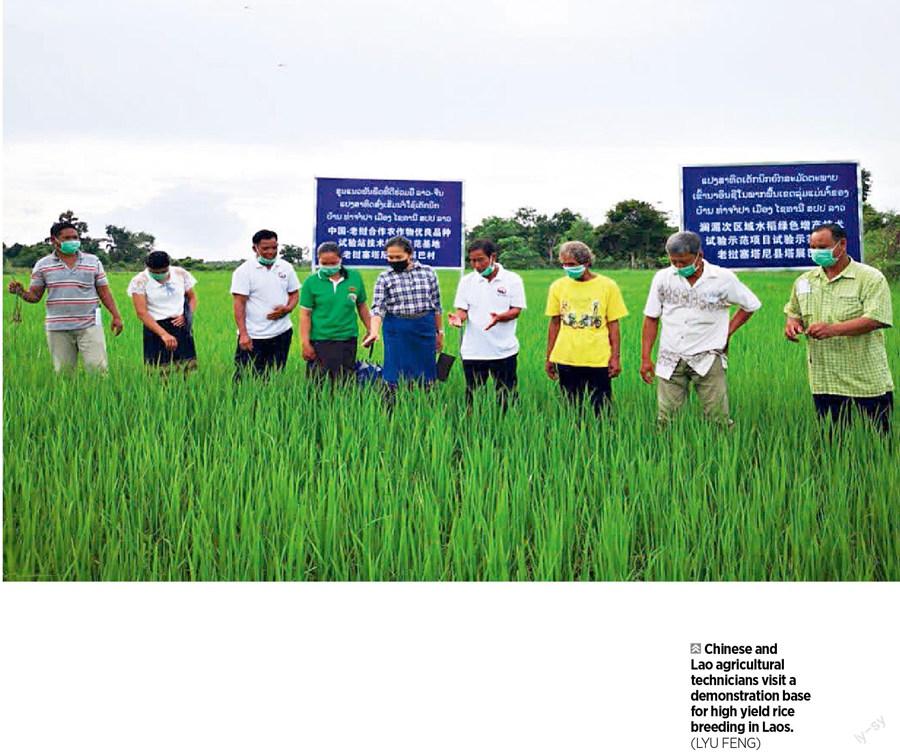
Chinas farming technology has helped boost agricultural economic development in its southern neighbor
Chen Jiuzhong, a Chinese technician at the China (Guangxi)- Laos Fine Crop Varieties Experimental Station located in Xaythany District, Vientiane, capital of Laos, has stayed firm at his post without returning to his homeland since he was assigned to the station nine years ago.
The Laos station is the first of its kind constructed by China in an ASEAN member state. Since it was established in December 2013, 270-plus varieties of crops have been trial planted with 67 of them found suitable for mass cultivation in Laos and more than 1,000 local technicians and farmers receiving professional training. An important platform for exchange of agricultural technology between China and Laos, the experimental station has developed into a modern research base integrating trial planting, new technology promotion, and agriculturerelated training.
More Difficult Than Expected
Over the past nine years, staff of the experimental station encountered enormous difficulties promoting new crop varieties, but managed to overcome.
When Chen Jiuzhong was first sent to Laos after graduating from university and started work in 2013, he encountered more difficulties than expected. “Local agricultural production was solely dependent on natural precipitation for irrigation in the rainy season,” he revealed. “Without any irrigation facilities, their farmland wouldturn into wasteland during thedry season.”Traditional methods of farming without pesticides or chemical fertilizers were oftenaccompanied by serious plantdiseases and pest problems aswell as low crop yields.
“Local farmers lackedsolutions to plant diseasesand pest problems and someresorted to primitive methods like chili pepper water to only a limited effect,”said Chenscolleague Lyu Feng, anotherChinese technician at theexperimental station.
With high temperatures throughout the year and abundant rainfall, Laos has a typical tropical monsoon climate. The country is endowed with ideal weather and a large number of plains and basins suitable for agricultural production, but due to the absence of modern farming systems and a lack of understanding of crop plant genetic resources, the production efficiency of food crops in Laos has long remained low and the quality of cash cropsis in great need of improvement.
To help Laos improve agricultural productivity, the experimental station selected 67 crop varieties suitable for local conditions but the farmers were hesitant to change at first.
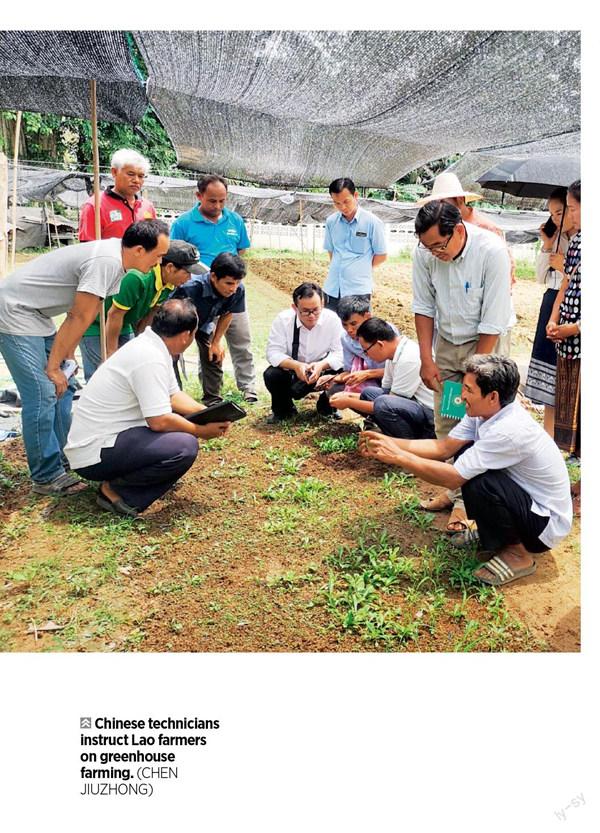
“We built eight vegetablegreenhouses in Ban ThaDokKham Village but the villagerswere not interested in ourstructures at all,”Lyu recalled. “They had never seen such afacility before, let alone growing crops in one.”
Noting the villagershesitation, leaders of the village led cultivating vegetables inthe greenhouse and provideda convincing demonstration.Local farmers eventuallyrealized that compared to theirtraditional methods, greenhouse farming increased crop yieldsand helped reduce the cycle ofgrowth from eight to six weeks. The greenhouses in the villagewere also equipped with a cropmanagement system integrating irrigation and fertilization,which made greenhousecultivation even more attractive to local villagers.
From Doubt to Acceptance
Every morning, both Chinese and Lao technicians andmanagers at the experimentalstation meet to plan theirschedule before assigning work to farmers and workers. In theafternoon, Chen Jiuzhong, LyuFeng, and other technicianswould visit the crop fields andgive the workers instructions.
The language barrier wasanother challenge plaguing staff in the early years of the station. Only one translator from theMinistry of Agriculture andForestry of Laos worked at thestation at the time, who couldnot satisfy the robust needs ofthe station staff. Thanks to nine years of study in his spare time,Chen, the most senior Chinesetechnician at the station, nowspeaks fluent Lao language.“Our work would be more productive if more agricultural technicians have good command of bothChinese and Lao languages,”sighed Lyu, who could hardlyunderstand his local colleagues in his first year.
Their first success arrived in 2014 when the station harvested cantaloupe after three monthsof trial cultivation. To celebrate, the countrys first cantaloupefestival was held in Vientiane. Local people excitedly pouredinto the station headquartersto taste the first-ever home-grown cantaloupe they dubbed “Chinese sweet melon.”
The station also heardvoices of doubt from locals.“At first, they refused to growa finer variety of banana weintroduced,”rememberedLyu.“When seeing the bananavarieties from China producebigger fruits and higher yields, some people were sure we used chemicals and didnt even want to taste the fruit.”
To remove doubt aboutChinese farming methods, thestation carried out multipleexchange activities and invitedagricultural officials and expertsfrom local governments tovisit the test plots and receivetraining.“From curiosity andmisunderstanding at firstto gradual acceptance, localfarmers are now eager to studyour new cultivation techniques.”
The experimental station has not only helped local farmersimprove the production andquality of their crops, butalso played an important rolein promoting agriculturaleducation in Laos. Besidesfarmers, other frequent visitors to the station include collegestudents, representatives ofagricultural firms, and officialsfrom relevant governmentdepartments.
From Wasteland to ProductionBase
After the outbreak ofCOVID-19 in 2020, local workers at the experimental stationwere sent home as required bythe containment policy of theLao government, and the fiveChinese technicians were leftwith all the work at the station. For a couple of months, thestation was operated by onlythree staff members. In addition to the shortage of manpower, thestations agricultural production was also affected by rising prices of farming-related productsand disrupted logistics between China and Laos.
The station staff managed tocarry on despite the mountingchallenges.“We worked outsolutions to our problems based on local conditions,”Lyu Fengtold China Report ASEAN.“When Chinese-produced fertilizersbecame hard to purchase, weselected and improved farmyard manure used by the localfarmers and such strategiesturned out effective.”
Since its establishment in 2013, the station has welcomed a number of Lao leaders who warmly applauded the efforts of the staff. “It is gratifying to know our work has been useful in improving the lives of local villagers,” said Chen Jiuzhong. “We built greenhouses in local villages and grew rice, vegetables, and fruits on the formerly wasted land, which set an inspiring example forvillagers to follow. They became active in improving their living standards through their ownefforts.”
According to Chen,greenhouse cultivation ofvegetables introduced by the station delivered tangiblebenefits to Ban ThaDokKham Village. After receivingtechnical training at the station, the villagers transformedwasteland in their hometowninto a vegetable productionbase that attracted manywholesalers and created jobs. At the same time, due to favorable temperature and sunshine inthe greenhouses, the vegetables grow faster, allowing for ashortened production cycle.
The success of theexperimental station markedChinas farming technologyhelping boost the development of the agricultural economy inLaos. Farm produce grown with the help of the station has alsobeen exported to the Chinese market, generating greaterprofits for Lao farmers.
Chinese Experience
Agricultural technology hasalways been an important area of cooperation between Chinaand ASEAN countries. Since the two sides established dialoguerelations in 1991, more than200 exchange programs inthis field have been carriedout and over 40 key projectssuch as the China-PhilippinesAgricultural Technology Center, China-Cambodia ModernAgricultural TechnologyCooperation Center, andthe Chinese AgriculturalDemonstration Center for Laos have been implemented. Suchprojects serve as a platformfor joint research, technologydemonstration and promotion, and personnel training andprovide technical support forthe sustainable development of agriculture in ASEAN countries.
Lyu Feng is planning to return to Laos and continue his workat the experimental station toput the long-term plans of thestation into operation.“Weare seeking cooperation withChinese-funded companies tofoster mass cultivation of ourcrop varieties and introduceChina to the fine crops we havecultivated in Laos,”he said.
China has long been a partner of Laos in agriculture, and theChina-Laos Railway is expectedto facilitate the transportation of agricultural products and closer cooperation between the twocountries. Chen Jiuzhong noted that the cost of cross-bordertransportation has already been significantly reduced by therail service. Laos has abundantland resources, suitable climate and low labor costs, so railaccess has made it increasinglyattractive to Chinese investorsand agricultural firms.
Implementation of the Beltand Road Initiative inspiredChina and Laos to enhance their cooperation on agriculturaltechnology and more Chinesecompanies to consider Laos anideal investment destination.Compiled by the Ministry ofAgriculture and Rural Affairs of China, the 2021 Report on Chinas Agricultural Foreign Investmentand Cooperation showed thatChinese direct investment inLaos was concentrated on cropproduction and mainly targeted at local farmers.
Lyu offered suggestions forChinese investors interestedin Laos. First, in-depth marketresearch is important. Laos hasno winter, and vegetables andfruits can grow throughout theyear, so its more profitable tosell farm produce from Laos tonorth China in the wintertime. Second, quick businessexpansion is not recommended. Companies unfamiliar withlocal natural conditions andplant diseases and pest controlin Laos should begin with small- scale cultivation and find thebest farming method throughtrial and error. Third, Chinesefirms should understand localagricultural policies and comply with the laws and regulations ofLaos.
With COVID-control measurestaking effect, the experimentalstation has now resumed itstraining sessions and exchangeactivities.“To better buildon Chinas experience inagricultural development inLaos, research institutions likeour station should seek to workwith commercial organizations,” Lyuopined.“Joint efforts byresearchers and firms canprovide stronger financial,technical, and personnelsupport to help Lao farmersharvest more fruits.”
