
Translating Chinese Literature:Cross-cultural Communication
2022-06-28 14:07:05byYinXing
China Pictorial 2022年5期
by Yin Xing
In 2012, Chinese writer Mo Yan won the Nobel Prize in Literature, and his works have since been translated into at least 40 languages with more than 200 versions read worldwide. In 2020, online Chinese literary works attracted more than 83 million overseas readers, a 160.4-percent increase year on year. Chinese literary works have become an important window for foreigners to understand Chinese culture. Translators, as messengers of cultural exchange between China and foreign countries, have played an important role.
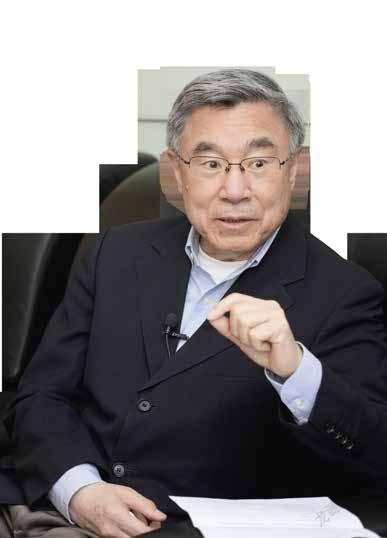
Huang Youyi, executive vice president of the Translators Association of China and former vice president of the International Federation of Translators, gave an exclusive interview to China Pictorial(CP) to outline his engagement with Chinas translation industry and his opinions on the changes and development of Chinese literature translation.
CP: As a senior Chinese translator and interpreter, what changes have you witnessed in the industry over the past four decades?
Huang: The translation industry has gone through extraordinary changes in terms of participants, related technology, and working methods and ideas. We now have more and more professional translators and interpreters. A big change is that previously, translators mainly focused on translating foreign languages into Chinese, but now translating Chinese into foreign languages is equally important. More crucially, our concept of translation has changed. We used to do word-for-word translation, rarely considering whether the content would be really accessible to a foreign audience. For example, we used to translate the term “新中國” directly to its literal meaning“New China,” but later we found that even foreigners living in China did not get its accurate meaning. So next time when the same Chinese term appeared in text, we translated it to “the Peoples Republic of China founded in 1949” to help foreigners accurately understand the term.
CP: You have rich experience in translation. Words convey culture. We can see obvious differences and even gaps among various cultures, highlighted by literature translation. What role do you think a translator plays in handling these disparities?
Huang: I think translation is a cross-cultural effort, bridging different cultures. Without knowledge of both cultures, a translator simply cannot work well even if he or she is proficient in both languages. And a translator must think across the two cultures. Cao Xueqin, the great Qing Dynasty (1644-1911) author of the classical novel Dream of the Red Chamber, made the character Granny Liu talk as an illiterate rural lady. To render her speech into English, therefore, the translator would have to abandon the erudite language he has learned in the classroom and adopt the kind of language an uneducated American woman at the lowest end of the social spectrum might speak.38A7110E-08E5-4A40-A371-471E19CF5E16
Literature translation involves direct dialogue between different cultures, testing the translators skills of both source and targeted languages and their understanding of both cultures. Only strong competence in both aspects can empower a translator to convey cultural connotations hidden in words.
Chinese literature rose from a history of 5,000 years largely of Confucian tradition and is based on Chinese linguistic culture in which a single Chinese character may represent a story of its own. This is vastly different from European and American literature based on Latin linguistic tradition. The differences in the two cultural traditions are so great that translation is rarely an easy task.
In Chinese literature, terms for addressing ones relatives are determined by which side they come from—the matrilineal or the patriarchal side. In English, the word “Uncle” means someone who can come from either side, and“Brother” can be either younger or older than the person in question. When translating foreign literature into Chinese, translators feel obliged to find exactly who the person is so as to apply the right Chinese characters. Likewise, in translating Chinese into English, it is customary for the translators to try their best to indicate clearly whether the character in the story is an elder brother or a younger brother, or whether the man is from the fathers side or the mothers side, or the translators may have trouble making the whole story explicitly understood.
While trying to overcome the difficulties brought by such problems in my translation jobs, I think that this is perhaps because male family members passed on family names and carried the mission of continuing the family bloodline in a traditional agrarian society with a huge population, limited resources, and distinctive characteristics of patriarchal system like China.
In Chinese literary works, uncles from different sides are often assigned with different functions and influences in the family. Their roles in the stories carry distinctive cultural traditions and make it evident which side they come from. Consequently, the family roots of an uncle character in a Chinese story should be crystal clear. It is obvious that a term to address someone is of crucial importance to cross-cultural communication.
CP: When Mo Yan won the Nobel Prize in Literature in 2012, judge Goran Malmqvist said that Chinese literature should have gone global long ago, but there are too few works translated into foreign languages. In your opinion, what are the main difficulties in translating Chinese literature?38A7110E-08E5-4A40-A371-471E19CF5E16
Huang: The difficulties are complex. Translators commonly agree that you shouldnt translate from your mother tongue into a foreign language. But foreigners able to read Chinese are limited, and sinologists are few. To render Chinese literature into other languages, alongside the ability to understand the literature itself, a translator needs knowledge about Chinese philosophy, history, religion, art, ethnic culture, folk customs, and dialects. China boasts a time-honored history, so many historical events are cited in literature. For instance, consider the “An-Shi Uprising.” The translator will have to determine that “An” refers to An Lushan while “Shi” means Shi Siming. Next, the translator will have to think hard about how to explain who these two guys were and why they rebelled against which emperor to foreign readers who do not know much about the history of the Tang Dynasty (618-917). Deeper, it is more difficult for the translator to figure out a way to best explain an event of such profound historical background contained in merely four Chinese characters.
There is a big difference between Chinese and Western cultures. The languages and cultures of major Western countries are of the same origin. Therefore, translation of Western literature between languages such as English, French, Spanish, German, Italian, and Portuguese is basically internal communication within the same large cultural circle. However, Chinese literature involves far greater differences in terms of ways of thinking, cultural background, and language structure. Some core components of Eastern culture such as “Qi” lack any sort of corresponding concept in Western culture at all. Some positive statements in one culture sound completely derogatory in another cultural context. For example, the dragon is sacred in Chinese culture, but in Western context it often represents evil.
Compared to Chinas global influence in the fields of economics, diplomacy, and politics, its cultural influence is disproportionate. I once asked a leading Chinese scholar of American literature whether any major American authors had not been introduced to China and whether any major U.S. literary works had not yet reached Chinese readers. The answer was no. In a country that does as much publishing as the United States, there are only about 10 translations of Chinese literature published there every year, while American works published in China can reach more than 100, an obvious asymmetry. Of course, there are many other reasons like American readers prefer English originals over foreign translations, and publishers are too cautious.38A7110E-08E5-4A40-A371-471E19CF5E16
CP: Because so few sinologists can translate Chinese literature, many Chinese experts undertake the work of translating Chinese literature into foreign languages. What do you think of the situation?
Huang: Yes, because of the scarcity of foreign sinologists, many Chinese translators have to do the work of translating Chinese literature into foreign languages. Thanks to their hard work, many Chinese literary works could be presented to foreign readers. Nowadays, the situation around literature translation is fundamentally changing. More and more foreign translators are engaged in translating literary works by Chinese writers. Works by foreign translators now far exceed those by Chinese translators. Chinese writers such as Mo Yan and Yu Hua both have literary agents abroad and dedicated translators for different languages.
Even when Chinese translators are involved, they are often paired with foreign translators. Actually, the “four great classical novels”of China were all translated into English by native speakers from either the United States or Britain, but all the foreign translators, with due respect to their superb understanding of Chinese culture, history, philosophy and literature, had assistance from senior Chinese translators and editors.
According to my experience, since translation of literature is a cross-cultural effort, the very act of translation should be a cross-cultural cooperative effort. Cooperation between Chinese and foreign translators and editors not only enables the translation process to go smoothly but also presents an opportunity for both sides to learn from each other and share their
unique understandings of different cultures and languages.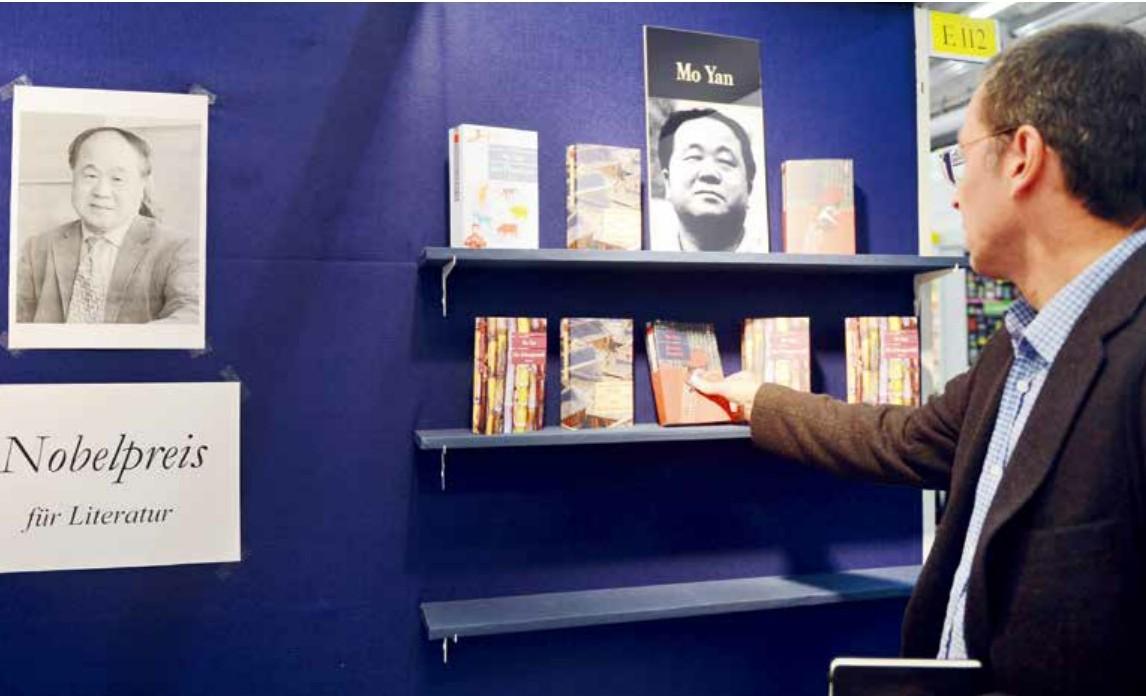
CP: How do you see the current trends of Chinese literature translation?
Huang: Chinese literature translation will happen in more languages and in more diverse forms of products. Previously, we often cared whether a certain book had an English version or whether it was published in Europe. But now, more books are expected to be translated not only into the common languages stipulated by the United Nations, but also into non-universal languages such as Thai, Korean, Bulgarian, what have you, to fill a gap in Chinese literature in those countries. In terms of form, it used to be more print books, but now products are more diversified, including film and television, short videos, and online literature. In particular, the literary atmosphere created by online reading is more suitable for the internet age and has won popularity among young people while exposing more overseas readers to Chinese literature.
In recent years, the Chinese government and publishing bodies have introduced various measures such as setting up publishing funds to support Chinese literature in interacting with foreign readers. As China develops with further opening up and more copyright cooperation with foreign publishing organizations, more Chinese literary works are expected to be translated and published globally.38A7110E-08E5-4A40-A371-471E19CF5E16
