
Recent Advance in the Solar Wind Magnetosphere Ionosphere Link Explorer (SMILE) Mission*
2022-08-18 09:00:54WANGChiBRANDUARDIRAYMONTESCOUBET
空間科學學報 2022年4期
WANG Chi BRANDUARDI-RAYMONT G ESCOUBET C P
1(State Key Laboratory of Space Weather, National Space Science Center, Chinese Academy of Sciences, Beijing 100190)
2(Mullard Space Science Laboratory,University College London,London RH5 6NT)
3(European Space Agency/European Space Research and Technology Centre, Noordwijk 2201 AZ)
Abstract The SMILE (Solar wind Magnetosphere Ionosphere Link Explorer) mission is a joint space science mission between the European Space Agency (ESA) and the Chinese Academy of Sciences (CAS),aiming to understand the interaction of the solar wind with the Earth’s magnetosphere in a global manner.The mission was adopted by CAS in November 2016 and by ESA in March 2019 with a target launch date in the year 2024–2025.We report the recent progress of SMILE mission by May,2022.
Key words SMILE,Soft X-ray Imager (SXI),Ultra-Violet Imager (UVI),Light Ion Analyzer (LIA),MAGnetometer (MAG)
1 Introduction
The SMILE[1]mission is a joint ESA and CAS space science mission,which aims at deepening our understanding of the interaction of the solar wind with the Earth’s magnetosphere by making global images of the dayside magnetosheath and cusps of the magnetosphere,and the aurorae at the North Pole simultaneously,while monitoring the in-situ plasma environment.The mission was adopted by CAS in November,2016 and by ESA in March 2019.
CAS is responsible for the development of satellite Platform (PF),Telecommand and Telemetry,Science Application System (SAS) as well as Ground Support System (GSS),and provides MAGnetometer (MAG),Light Ion Analyzer (LIA) and Ultraviolet Imager (UVI)measurement instruments.ESA is responsible for the development of Payload Module (PLM),Launch Vehicle,Launch Site,and science operation and ground receiving station supports when necessary,and also the development of the Soft X-ray Imager (SXI),intensifiers,mirrors with coating and calibration of UVI.
The SMILE Mission will use novel soft X-ray imaging technology to obtain,for the first time,the global image of the large-scale structures of the geospace.This is critical to quantitatively analyzing and understanding of the global feature of the magnetosphere.
The interaction of the solar wind with the Earth’s atmosphere leads to the formation of the large structures of the magnetosphere,including the bow shock,magnetopause,and the cusp regions.The position and shape of the magnetopause and cusps change constantly as the Earth’s magnetosphere responds to the varying solar wind dynamic pressures and interplanetary magnetic field orientations.Both the fast and slow solar wind can be interrupted by large,fast-moving bursts of plasma called interplanetary Coronal Mass Ejections (CMEs).When a CME impacts the Earth’s magnetosphere,it temporarily deforms the Earth’s magnetic field,changing its direction and strength,and induces large electrical currents;this is called a geomagnetic storm and it is a global phenomenon.The southward interplanetary magnetic fields,as presented in a CME event,could induce magnetic reconnection in the Earth’s magnetotail;this process accelerates protons and electrons downward toward the Earth’s atmosphere,where they form the aurora,resulting in substorms.
The Scientific objectives of the SMILE mission are summarized as:(i) explore the fundamental modes of the dayside solar wind/magnetosphere interaction;(ii) understand the substorm cycle;(iii) determine how CMEdriven storms arise and their relationship to substorms.
2 Modeling Update
The SMILE Modelling Working Group (MWG) performs studies on the predictions of X-ray signals and the reconstruction techniques from X-ray images to 3D magnetopause.Four approaches have been developed previously to derive the magnetopause position from Xray images,including the Boundary Fitting Approach(BFA),Tangent Fitting Approach (TFA),Tangential Direction Approach (TDA),and Computed Tomography Approach (CTA).It is found that the 3D X-ray emissivity in the magnetosheath can be reconstructed based on the CTA,if tens of images are provided from different viewing geometries under the same or similar solar wind conditions (seeFig.1)[2].To obtain the images required to better perform the CTA,87 different orbit locations are considered during one year to allow wide-angle coverage resulting from orbital precession.However the assumption that the magnetopause position does not change during the one year is not valid,preventing the application of CTA.This problem can be solved by dividing the solar wind conditions into several bins,and assuming that the magnetopause position corresponding to each solar wind bin is the same.An alter-native way is through machine learning techniques[3].A 3D GAN network is applied to supplement 2D X-ray images collected at finite angles within limited orbital time during which the magnetopause is almost static.By deriving the information about cusps from the X-ray image,it is revealed that the tangent direction of the cusp boundary is the direction with the appreciable increase of local standard deviation in X-ray intensity[4].Instrument simulations are also performed to provide the photon counts images expected to be observed by the SXI instrument.The effectiveness of TFA is validated based on the simulated photon counts images (seeFig.2)[5].

Fig.1 Reconstructed X-ray emissivity on the noon-midnight meridian plane (a),equatorial plane (b),and along the three lines marked in the top panel (c) based on the CTA

Fig.2 Instrument simulations of the X-ray photon counts.(a) X-ray image inside field of view of SXI.(b) SXI photon counts image corresponding to (a) without sky background.(c) SXI image after adding the constant sky background.(d) The X-ray maximum intensity of MHD and SXI photon counts images,and their best match curves by using TFA
3 Mission Update
3.1 Satellite System
The science orbit is a highly elliptical orbit with the apogee altitude of about 19Reand a perigee of about 5000 km.The inclination is 73° if launched with Vega-C as the baseline,or 98.2° with Ariane 62.
SMILE is a three-axis stabilized satellite which consists of Platform (PF) and Payload Module (PLM).The total mass of the satellite is less than 2250 kg including fuel that takes about 2/3 of the lunch mass.
The science data will be downlinked by an X-band transmitter with a data volume of 47 Gbit per orbit.The telemetry and telecommand will go through Unified Sband TT&C system.The nominal life time is 3 years by launch and with the possibility to extend the mission another 2 years.Fig.3andFig.4show SMILE satellite HEO orbit and structure.

Fig.3 SMILE satellite HEO orbit

Fig.4 Diagram of the satellite structure
SXI for imaging the magnetopause and cusps has passed Preliminary Design Review (PDR) and Structural Model (STM) environment test.The SXI Critical Design Review (CDR) is planned to begin in November 2022 (seeFig.5).
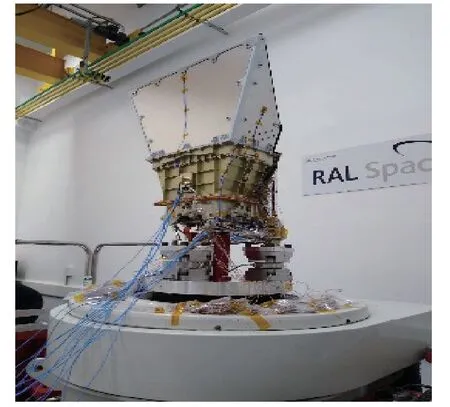
Fig.5 SXI STM on a shaker table at RALSpace,UK
Currently,the UVI instrument will image the Earth aurora is jointly developed by CAS and ESA. It is planned to begin CDR in December of 2022 (seeFig.6).

Fig.6 UVI assembly
MAG instrument will measure the magnetic field has finished PDR.MAG Engineering Model (EM) and MAG STM were delivered to Airbus for Assembly,Integration and Test (AIT) in 2021.MAG BOOM Qualification Model (QM) has been successfully deployed under the control of PLM in ESTEC (seeFig.7).It is planned to begin MAG CDR in June of 2022.

Fig.7 MAG BOOM deployment test in ESTEC
LIA instrument will monitor the in-situ plasma environment has passed PDR.LIA EM and Reduced EM(REM) have been delivered to PLM for the test (seeFig.8).It is planned to begin LIA CDR in June of 2022.

Fig.8 LIA electrical interface test in Airbus
Payload Module (PLM) which hosts SXI,UVI,MAG and X-band science downlink transmitter has finished PDR.PLM STM was integrated with instruments and has passed mechanical and thermal tests (seeFig.9).PLM also has finished functional and electric tests with MAG and LIA.PLM STM was delivered to China in March of 2022.It is planned to begin PLM CDR at the beginning of 2023.
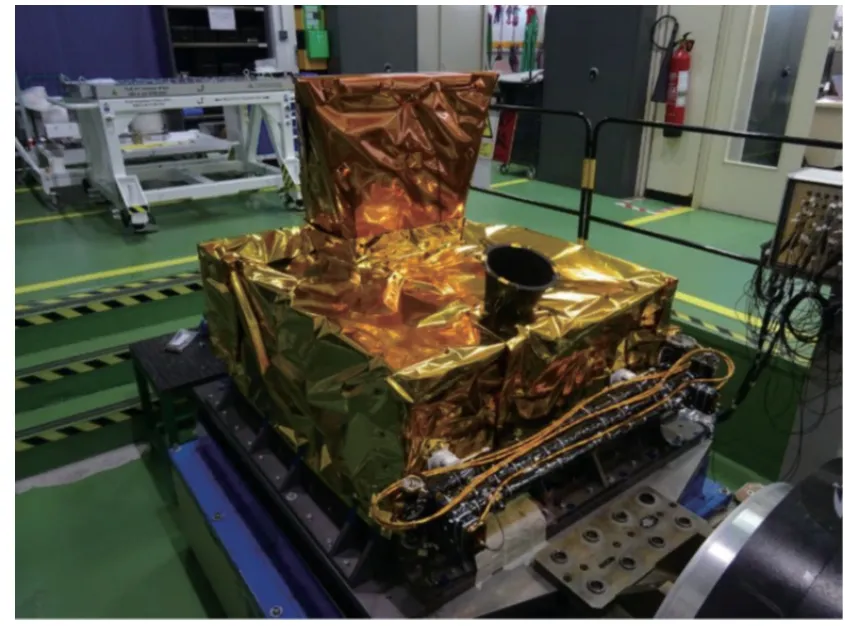
Fig.9 PLM STM on shaker in ESTEC
The Platform (PF) provides service for the whole satellite.PF also provides propellants and thruster for orbit maneuver from the insertion orbit to the HEO science orbit.PF also hosts two LIA sensors for 4π space measurement.All the PF QM units have been delivered to PF and have passed through electrical interface and functional tests.PF QM has been assembled and will pass the qualification level tests with PLM STM later(seeFig.10).PF CDR is planned to begin in Oct.of 2022.

Fig.10 PF electrical interface test
Satellite STM has passed environment test in China in 2020.From April of 2022,Satellite QM AIT campaign will start with PF QM and PLM STM in China.Satellite qualification level test will begin from April to August of 2022.After satellite qualification level test,we will begin fitness and separation tests with launch adapter in ESTEC in September 2022.It is also planned to do an electrical interface test in Madrid in October 2022.The mission CDR is scheduled to take place in March 2023.Fig.11showed satellite STM on the shaker.

Fig.11 Satellite STM on the shaker
3.2 Launch Vehicle
A single launch Vehicle is ESA’s responsibility.The baseline is single launching in Kourou with Vega-C.Vega-C is a solid launch vehicle.The launch capability is no less than 2250 kg for 700 km circular injection orbit or 2300 kg for 450 km×700 km injection orbit.
3.3 Launch Site
SMILE will be launched in Kourou.ESA is responsible for the Launch Site and Launch service,and will provide the ground segment support and logistics.
3.4 TC/TM
China Satellite Launch and Tracking Control General(CLTC) will be responsible for the TC/TM of SMILE satellite.European Space Operation Center (ESOC) will be responsible for the TC/TM before the satellite’s separation with the Launch Vehicle.In addition,ESA will also provide ground station support for orbit transfer from injection orbit to HEO science orbit and in case of emergency.
Satellite QM to ground S-band interface compatibility test was successful in 2020 (seeFig.12).

Fig.12 Satellite to ground S-band interface compatibility test
3.5 Ground Support System (GSS)
GSS has been constructed in China during the 12th Five-Year Plan Period and it will undergo some modifications according to the new requirements of the space science missions during the 13th Five-Year Plan Period.It is mainly responsible for the operation and management of the payloads,scientific data receiving,processing and distribution to the science community.
GSS has finished PDR.Some core software has finished requirement analysis and design.It has started joint test the Docker operation environment.It is planned to start joint GS CDR in June of 2022.
3.6 Science Application System (SAS)
CAS will set up SAS located at NSSC,and ESA will set up Science Operation Center (SOC) located in European Space Astronomy Center (ESAC).Both parties will cooperate closely to make a scientific strategic plan and observation plan,monitor the execution of the plan,analyze the performance of the payloads in orbit,calibrate the payloads in orbit,produce quick look scientific data,and scientific data products.
SAS has finished PDR.Software is in the status of requirement analysis and design.A joint data products definition has been completed for SMILE.
4 Future Schedule
Based on Payload Instruments,PLM and PF PDRs,the joint Mission PDR was completed successfully in January 2020 in Netherlands,which is the third joint review of the SMILE mission,marking the kick-off of Phase C activities.PLM STM finished all the mechanical and the thermal tests and was shipped to IAMC for integration with QM Platform.The next step is S/C level QM test before the end of July 2022.All the scientific instruments,PLM and SC will finish CDR and a joint mission level CDR will be conducted in March 2023.SMILE satellite is planned to be launched around 2024–2025.
AcknowledgmentsSMILE Mission is a joint project with support from CAS and ESA.Thanks for the great support of CAS Strategic Priority Research Program and the ESA science program.Also thanks to the study and engineering teams for their cooperation and hard work:National Space Science Center,Innovation Academy for microsatellites of CAS,CLTC,Shanghai Institute of Space Propulsion,National Center for Space Weather,Polar Research Institute of China,etc.from Chinese side; University College London,University of Leicester,Bergen University,OEAW Space Research Institute,University of Liège,Institute National de Técnica Aerospacial,Imperial College,Rutherford Appleton Laboratory,etc.from ESA side,as well as NASA Goddard Space Flight Center.
- 空間科學學報的其它文章
- Advances in China Space Medical Experiment Research
- Progress of Planetary Science in China*
- Advances in the Researches of the Middle and Upper Atmosphere in China in 2020–2022
- Magnetospheric Physics in China:2020–2021
- Space Solar Physics in China:2020–2022*
- Research Advances of the Chinese Meridian Project in 2020–2021