
Application of acupoint massage combined with acupoint application in stable stage of chronic obstructive pulmonary disease
2022-09-06 03:15:52FeiFanXuShuZhuYiLiuNanNanWangKunWangHaiBoHuXueChaoLuLiWangPeiXiaZhou
TMR Non-Drug Therapy 2022年3期
Fei-Fan Xu,Shu Zhu,Yi Liu,Nan-Nan Wang,Kun Wang,Hai-Bo Hu,Xue-Chao Lu,Li Wang,Pei-Xia Zhou*
1Qingdao Hospital of Traditional Chinese Medicine,PCCM(Pulmonary Medicine)Center,Qingdao 266033,China. 2Department of Qingdao Hospital of Traditional Chinese Medicine Nursing,Qingdao 266033,China. 3Qingdao Hospital of Traditional Chinese Medicine,Cancer center,Qingdao 266033,China.
Abstract Objective: To investigate the application of acupoint massage combined with acupoint application in pulmonary rehabilitation of chronic obstructive pulmonary disease. Methods:Inhaled drugs, oral expectorant, such as conventional treatment, select our hospital on June 6, 2019 ‐ March 2021 in lung disease clinics, a total of 130 patients with COPD, with digital method of random divided into control group and observation group, 65 cases in each group, control group given observation group in the control group on the basis of joint acupoint sticking therapy combined with acupuncture point massage, two groups of treatment for 15 days, respectively, The total effective rate, TCM syndrome score, lung function index and dyspnea degree score (mMRC) were compared between the two groups after treatment. Results: After treatment, the total effective rate was 81.54% in the control group and 93.85% in the observation group. After treatment, the symptoms of cough,expectoration, wheezing, shortness of breath, fatigue, chills and tenderness of waist and knee were significantly improved in the two groups compared with the control group. After treatment, the symptoms of cough, expectoration, wheezing, shortness of breath, fatigue,chills and tenderness of waist and knee were significantly improved in the observation group compared with the control group. Compared with before treatment, FEV1 and FEV1/FVC values in 2 groups were increased(P<0.05),and the two indexes in observation group were better than control group (P < 0.05), the differences were statistically significant. MMRC score in 2 groups was significantly lower than before treatment (P <0.05), and the improvement of mMRC score in observation group was significantly better than that in control group (P < 0.05), the difference was statistically significant.Conclusion: Acupoint massage combined with acupoint application can effectively improve the lung function of patients with chronic obstructive pulmonary disease, relieve patients with dyspnea, achieve the purpose of promoting pulmonary rehabilitation, clinical efficacy is positive, worthy of promotion.
Keywords: acupoint massage; acupoint application; chronic obstructive pulmonary disease;plateau
Background
Chronic obstructive pulmonary disease (COPD) is a common,preventable, and treatable heterogeneous disease characterized by persistent respiratory symptoms and obstructed airflow [1]. The latest epidemiological survey results show that [2] 99.9 million people in China have COPD, and it has become a chronic disease, which is as severe as hypertension and diabetes, constituting a major disease burden. Recently, with the increasing rates of incidence and mortality in COPD each year, chronic recurrent cough, expectoration and dyspnea, progressive decline of lung function, long course of disease,and relapse and disease aggravation have seriously affected the quality of life of patients with COPD [3].Traditional Chinese medicine(TCM) treatment has certain advantages in improving the clinical symptoms of patients with COPD at a stable stage. Among these advantages, the application of TCM external treatment methods for nursing intervention in patients with stable COPD can significantly improve the clinical symptoms of patients with stable COPD [4].Acupoint massage therapy is one such external treatment method for internal diseases in the TCM Theory of Meridians, which removes obstructions in the meridians, promotes the flow of qi and blood, and balances yin and yang. This method is safe, noninvasive, simple, and easy to operate and has significant therapeutic effect. It can be performed not only by the medical staff but also by the patients themselves and their family members after training; thus, this method is more widely applicable [5]. After years of clinical practice, we discovered the use of acupoint massage along with acupoint application with herbal medicine (“acupoint application” for short),which causes beneficial effects of TCM nursing intervention on the clinical outcome of patients with COPD.
Clinical data
Ethical approval
All the participants signed informed consent form. The study was approved by the hospital's ethics committee (2019HC12LS060) and signed informed consent was provided by patients or their families.
General data
A total of 130 patients with COPD hospitalized in the Lung Diseases Department I of our hospital from June 2019 to March 2021 were selected as the study participants. They were randomized to two groups, with 65 cases in each group. The control group comprised 39 males and 26 females aged 40–75 years, with an average age of 59.57± 10.37 years. Regarding the stage of the disease, 33 cases of stage I and 32 cases of stage II COPD were present in the study. The observation group comprised 38 males and 27 females aged 42–75 years, with an average age of 60.57 ± 10.85 years. Regarding the stage of the disease, 30 cases of stage I and 35 cases of stage II COPD were observed in this study. The baseline data of the two groups were compared, and it was found that the differences were not statistically significant (P≥0.05).
Inclusion criteria
The inclusion criteria were as follows: (1) patients who met the diagnostic criteria of COPD in the Guidelines for the Diagnosis and Treatment of Chronic Obstructive Pulmonary Disease (Revised in 2021) [6]; (2) those whose disease condition was at a stable stage; (3)those aged 40–75 years; (4) those with normal comprehension ability and verbal and written communication skills; and (5) those who signed the informed consent form.
Exclusion Criteria
The exclusion criteria were as follows (1) patients who did not meet the above diagnostic criteria or inclusion criteria; (2) those who were at a critical stage of the disease or those additionally affected by pulmonary heart disease or respiratory failure; (3) those with serious diseases of the heart, brain, kidneys, digestive system, or other systems; (4) those with an intellectual disability or psychiatric disorder that would impede their cooperation with the investigation;(5) those who could not comply with the study protocol.
Study methods
Treatment method
According to the Guidelines for the Diagnosis and Treatment of Chronic Obstructive Pulmonary Disease (Revised in 2021) [6], the control group was administered the following treatments: (1) ICS +LAMA + LABA triple therapy, which comprised budesonide,glycopyrronium bromide, and formoterol fumarate inhalation aerosol,with these components as the active ingredients (two inhalations bid)and (2) expectorant N‐acetylcysteine (Flumucil) (0.1 g bid). Based on the treatment of the control group, the observation group was additionally treated with acupoint massage along with a self‐made acupoint application prescription. The acupoint selection for acupoint massage included 11 acupoints of the lung meridian of Hand Taiyin(Zhongfu, Yunmen, Tianfu, Xiabai, Chize, Kongzui, Lieque, Jingqu,Taiyuan, Yuji, and Shaoshang). Table 1 presents a detailed analysis of the acupoint prescriptions. The massage method was to push, knead,and pat the acupoints along the running direction of the Lung Meridian of Hand Taiyin (starting from Zhongfu and ending with Shaoshang), so as to promote the dissemination of lung qi, invigorate the qi and blood meridians, remove obstruction in the channels of the meridians, and achieve the effects of dispersing lung qi, relieving and arresting cough, resolving phlegm, and relieving asthma. Each acupoint should be massaged for 1 min, once daily, for 15 consecutive days. The acupoint selection procedure for acupoint application was the same as described above. Regarding the selection of medicines,5 g each ofSinapis albaL.,Rhizoma Corydalis,Piper longumL., andAsarum sieboldiiMiq. were grounded into powder form and mixed with water to prepare a paste. Subsequently, 1‐cm pie‐shaped paste was formed and applied to the patient’s acupoints. The paste was covered with patches for fixation, and the application was maintained for 2–4 h. If the patient experienced a burning sensation, the patch could be removed early. The acupoint application was performed once every other day for 15 consecutive days.
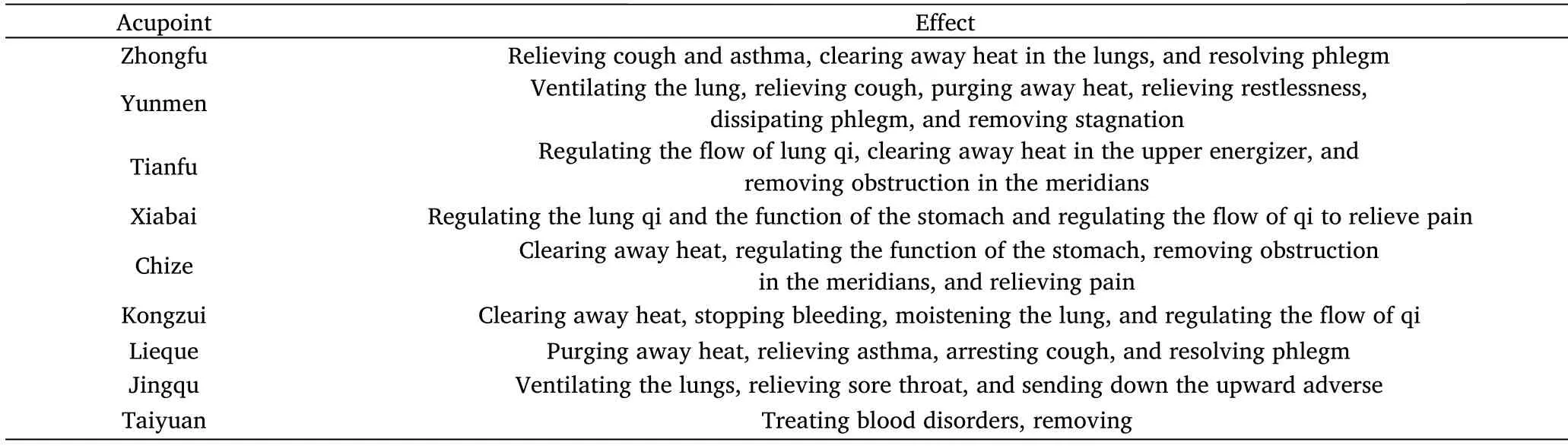
Table 1 Analysis of acupoint massage prescriptions
Outcome measures
Criteria for efficacy evaluation.(1)Overall response rate Overall response rate = clinically controlled + significantly responsive+ responsive
“Clinically controlled” indicates that the symptoms of cough,asthma, and expectoration have disappeared. “Significantly responsive” implies that the symptoms of cough, asthma, and expectoration have improved significantly. “Responsive” indicates that the symptoms of cough, asthma, and expectoration improved.“Nonresponsive” indicates that the symptoms of cough, asthma, and expectoration did not improve significantly after treatment or even worsened compared with those before treatment.
(2) Traditional Chinese medicine symptom scores Cough, expectoration, asthma, shortness of breath, asthenia, aversion to cold, and weak and sore waist and knees are some of the symptoms associated with COPD. Of these, cough, expectoration, asthma, and shortness of breath are the primary symptoms, which are scored as 0,2, 4, and 6 points, respectively, according to severity. Asthenia,aversion to cold, and weak and sore waist and knees are the secondary symptoms, which are scored as 0, 1, 2, and 3 points, respectively,according to severity. Changes in symptom scores before and after the treatment were recorded.
(3) Pulmonary function indicators The pulmonary function of the two groups of patients before and after treatment was measured. The first second forced expiratory volume(FEV1) and the ratio of the first second forced expiratory volume to forced vital capacity (FEV1/FVC) after inhaling a bronchodilator were recorded, and improvement after treatment was observed.
(4) Degree of dyspnea (mMRC score)
The dyspnea scale(mMRC) was used to score the degree of dyspnea,which is categorized into five grades: grade 0 indicates that dyspnea is only developed during strenuous exercise; grade 1 represents difficulty in breathing when in a hurry or when walking on a gentle slope; grade 2 indicates that the patient walks slower than their peers because they are short of breath or must stop to rest when walking at their own pace; grade 3 means that the patient needs to stop and rest after walking 100 yards (91.44 m) or after a few minutes; and grade 4 indicates that the patient cannot leave home due to dyspnea or experiences dyspnea when dressing and undressing.
Statistical methods.All data obtained in this study were analyzed using SPSS 19.0 statistical software. Th e enumeration data were represented by (n[%]) and tested using χ2test. The measurement data were represented by (±s), and the test was represented by t.P <0.05 indicated that the difference was statistically significant.
Study results
Criteria for therapeutic evaluation
Overall response rate.Table 2 shows that the overall response rate in the control group was 81.54%, whereas that in the observation group,which was additionally administered with acupoint massage along with acupoint application based on the treatment in the control group,was 93.85%.

Table 2 Comparison of overall response rate between the two groups
Traditional Chinese medicine symptom scores.A comparison of TCM symptom scores between the two groups after treatment and rank sum Mann–Whitney U test indicated that symptoms in both groups, including cough, expectoration, asthma, shortness of breath,asthenia, aversion to cold, and weak and sore waist and knees improved significantly after treatment. These symptoms improved more drastically in the observation group than in the control group(Table 3).

Table 3 Comparison of Traditional Chinese medicine symptom scores between the two groups
Improvement of pulmonary functions. The pulmonary function indicators FEV1 and FEV1/FVC of the two patient groups were improved after treatment compared with those before treatment, and both indicators were higher in the observation group than in the control group. The differences were statistically significant (P <0.05)(Table 4).

Table 4 Comparison of pulmonary function improvement between the two groups of patients before and after treatment
Comparison of mMRC scores between the two groups of patients before and after treatment.After treatment, the degree of dyspnea was improved in both groups of patients. The mMRC scores after treatment were lower than that before treatment, and the improvement in the observation group was more significant that in the control group. The difference was statistically significant (P <0.05) (Table 5).

Table 5 Comparison of mMRC score between the two groups of patients before and after treatment
Discussion
COPD is a common, preventable, and treatable disease characterized by persistent respiratory symptoms and obstructed airflow due to airway and/or alveolar abnormalities, usually resulting from exposure to harmful particles or gases [7, 8]. Although the disease can be prevented and treated,its incidence rate remains high and its course is prolonged and repeated, showing a progressive development [9, 10].The disease mainly affects the lungs but may cause systemic symptoms as it progresses [11]. The disease is mainly due to the impact of harmful gases or particles on the lungs, causing abnormal inflammatory reactions. Recently, epidemiological surveys have shown that the age of onset of this disease is decreasing, and it has become a major disease threatening the health of middle‐aged and older people [12]. Compared with the Western medicine, which follows single treatment method for COPD at a stable stage, TCM treatment is multifaceted, and external treatment for internal disease is one of the most distinctive methods[13,14].This disease belongs to the category of “l(fā)ung distention.” The etiology and pathogenesis are mostly due to congenital deficiencies caused by seven emotions (joy,anger, melancholy, anxiety, sorrow, fear, and fright) and invasion of six pathogenic factors (wind, cold, heat, dampness, dryness, and fire),leading to dysfunction of the lungs, spleen, and kidneys [15, 16],resulting in cough, expectoration, asthma, and other primary pulmonary symptoms [17, 18]. According to the treatment principle of “in emergency cases, treat the acute symptoms first; when these are relieved, treat its fundamental cause” along with the TCM belief of“external treatment for internal disease,” this study selected two TCM external treatment methods, namely acupoint application and acupoint massage for therapeutic intervention against COPD.
The prescription for acupoint application was prescribed by our hospital, and the medicines for application mainly includeS. albaL.,Rhizoma Corydalis,P. longumL., andA.sieboldiiMiq.S. albaL. acts on the Lung Meridian of Hand Taiyin and can warm the lung, eliminate phlegm, promote the normal flow of qi, and remove stagnation. It makes the skin congested, red, and swollen, guiding the medical ingredients into the meridians and directly targeting the infection[19]. Rhizoma Corydalis acts on the Lung, Heart, Spleen, and Liver Meridians. It can promote the circulation of blood, the flow of qi, and can relieve pain [20].P. longumL., a pungent‐flavored and warm‐natured medicine, acts on the Stomach and Large Intestine Meridians. It can warm the spleen and stomach to dispel cold, check the upward perverted flow of qi, and relieve pain. It has a good warming effect in patients with a prolonged disease course and hypofunction of the lungs and spleen with cold manifestations [21].A.sieboldiiMiq. acts on the Lung, Spleen, and Kidney Meridians, and it expels wind, clears away cold, warms the lungs, and helps in draining the retained fluid. It has a good therapeutic effect on expectoration,retained fluid, cough, and asthma [22]. A combination of these medicines can help warm the lung, resolve phlegm, promote the flow of qi, and relieve asthma. Mixing the herbal medicines together and pasting it at the Feishu, Dazhui, Dingchuan, and Tiantu acupoints can help disperse lung qi, relieve cough, and resolve phlegm. Acupoint massage is also a traditional external treatment method in TCM. There are abundant microvascular branches, nerve branches, and lymphatic branches at the acupoints [23, 24]. Massage can increase the blood perfusion of microvessels, improve blood flow around the nerves and lymphatic vessels, increase the excitability of nerve endings, and activate the regulation mechanism of neuroendocrine immune network through nerves, blood, and lymph nodes to improve both humoral and cellular immunity [25], thereby alleviating airway inflammation and improving dyspnea. The lung is infused through Feishu, an acupoint of the Bladder Meridian of Foot Taiyang. Massage at the Feishu acupoint can disperse lung qi and strengthen vital qi to eliminate pathogenic factors and ensure smooth flow of qi and blood and normal mechanism of dispersing lung qi for lowering adverse qi[26, 27]. The Tiantu acupoint is a key point for eliminating phlegm,and treatment at this point can also disperse lung qi for lowering adverse qi, resolving phlegm, and relieving asthma [28]. Treatment at the Dazhui acupoint can help eliminate exogenous pathogenic factors and expel wind to relieve pain [29]. The Lieque acupoint belongs to the Lung Meridian of Hand Taiyin, and treatment at this point can purge away heat, relieve asthma, arrest cough, and resolve phlegm[30]. The Dingchuan acupoint is a key point for arresting asthma, and treatment at this point can check the upward perverted flow of qi to relieve asthma [31]. Massage at these acupoints can relieve the primary symptoms of the lung. The results of this study showed that after treatment, improvements in overall response rate, TCM symptom scores, FEV1, FEV1/FVC, and mMRC scores of patients in the observation group were greater than those in the control group (P <0.05). Therefore, acupoint massage along with acupoint application can further improve the pulmonary function of patients with COPD,alleviate their dyspnea, and enhance their quality of life.
In summary, acupoint massage along with acupoint application with herbal medicine is an effective clinical treatment for patients with COPD at a stable stage and can help facilitate lung rehabilitation of patients with COPD. Its clinical efficacy is definite, and this method should be widely used.

- TMR Non-Drug Therapy的其它文章
- Neuroplasticity:a camouflaged cardinal in musculoskeletal rehabilitation
- Role of physical activity in renal rehabilitation:narrative review
- Physiological benefits of ambient far infrared energy within the 4-24 micron range
- Effects of 12 weeks of back-squat training program on jump performances and bone markers in female students
- Efficacy comparison of different acupuncture methods for herpes zoster: a systematic review and Bayesian analysis