
適用于不同農產品貯藏的CO2多溫區復疊制冷系統性能分析
2023-05-15 05:38:22楊俊玲王有棟張海倫章學來張振濤李曉瓊
農業工程學報 2023年6期
關鍵詞:系統
何 慶,楊俊玲,王有棟,3,張海倫,章學來,張振濤,李曉瓊
適用于不同農產品貯藏的CO2多溫區復疊制冷系統性能分析
何 慶1,2,楊俊玲2,王有棟2,3,張海倫2,章學來1,張振濤2,李曉瓊2※
(1. 上海海事大學商船學院,上海 201306;2. 中國科學院理化技術研究所,北京 100190;3. 天津科技大學機械工程學院,天津 300222)
為評估多溫區制冷系統性能,探究其在農產品冷庫貯藏中應用的可行性,設計了低碳環保型多溫區復疊制冷系統。該研究以CO2雙溫區與三溫區復疊制冷系統為研究對象,通過設置壓力調節閥(簡稱節流系統)和增壓壓縮機(簡稱增壓系統)解決不同并聯溫區間的壓差問題,建立兩類制冷系統的熱力學模型,分析了雙溫區和三溫區復疊制冷系統運行參數對其性能系數(coefficient of performance,OP)與?效率的影響,并在參考工況下對雙溫區和三溫區復疊制冷系統的兩種運行模式進行了對比。結果表明:增壓系統性能系數與?效率均高于節流系統,參考工況下雙溫區與三溫區增壓系統相對于節流系統性能系數分別提升30.4%和23.4%;雙溫區與三溫區復疊制冷系統各部件中,冷凝器具有最大的?損,采用壓力調節閥給節流系統帶來了更大的能量損失;同工況下,該研究所設計的雙溫區和三溫區增壓系統性能系數是CO2/R134a單溫區復疊系統的1.5和2.3倍;經濟性對比發現,雙溫區與三溫區復疊制冷循環增壓系統年度總成本比節流系統分別節省6 554和8 156美元。因此,多溫區增壓系統在熱力性能與經濟性上均優于節流系統,研究結果可為CO2多溫區復疊制冷系統的開發與應用提供理論基礎。
農產品;貯藏;CO2多溫區復疊制冷;節流系統;增壓系統;熱力性能;經濟分析
0 引 言
中國作為農業大國,每年生鮮農產品腐損率高,冷鏈物流需求日益旺盛[1]。2021年國務院辦公廳印發《“十四五”冷鏈物流發展規劃的通知》,在國家碳達峰碳中和戰略目標背景下,對冷鏈物流低碳發展提出了新任務,要加快推進低碳冷鏈技術發展,促進冷鏈設備減排降耗[2]。冷庫作為農產品冷鏈物流中的重要貯藏場所,對保持農產品新鮮度、延長其保質期具有重要意義[3]。制冷系統作為冷庫的核心,為冷庫提供冷量,當前國內大多數冷庫系統仍采用人工合成的氟利昂制冷劑,制冷運行能耗及制冷劑泄漏會帶來大量碳排放[4]。為助力實現國家雙碳目標,《冷庫低碳評價指標》團體標準明確表示將在2025年國內冷庫實現碳減排20%左右,力爭到2030年減碳約70%。冷庫系統減碳面臨巨大壓力,目前主要通過提升系統能效或采用環保型制冷劑來降低冷庫碳排放。自然工質CO2被稱為雙碳目標下制冷技術發展的最優途徑,該工質對臭氧層沒有破壞作用、還能緩解溫室效應,因其優良的流動和傳熱特性、安全性及化學穩定性等特性被廣泛應用于制冷循環系統中[5-6]。由于核心部件的限制,國內CO2制冷技術發展起步較晚,當前主要集中在理論和試驗研究方面[7-8]。在國家雙碳目標下,加快推進CO2制冷應用,對低碳冷鏈技術的發展具有顯著意義。
此外,針對不同種類農產品,其保鮮貯藏過程品質受溫度影響較大,農產品在其最佳貯藏條件下能夠有效延長保質期[9-10]。當前的冷庫設計大多數僅提供單一的溫度環境,只能滿足相同貯藏環境的農產品保鮮需求[11]。隨著冷鏈技術的發展,多溫區制冷系統也有著廣泛需求。目前,多溫區制冷系統的研究主要集中在CO2跨臨界增壓系統,通常為雙溫區模式,并在低溫級蒸發器后設置壓縮機以提升低壓壓力,其應用場合主要為商超領域中的冷柜。GULLO[12]采用?分析方法對比了CO2跨臨界常規模式和帶有平行壓縮兩種結構的增壓系統的不可逆性,并通過?效率與?損進行了量化。曹鋒等[13]采用熱力學方法評估了傳統CO2跨臨界制冷系統和雙溫區增壓系統性能,研究表明增壓系統較傳統跨臨界系統能夠有效提升效率10%以上。LIU等[14-15]對帶有雙蒸發溫度的超市CO2跨臨界增壓系統進行了熱力學分析,通過建立數值模型對比了常規增壓系統和帶有回熱器的增壓系統的熱力學性能,并評估了系統在中國不同氣候區的全年性能。CO2雙溫區增壓系統主要以跨臨界方式運行,高壓側運行壓力高,蒸發溫度較低時,壓縮機較高的壓比會使系統運行效率下降。復疊制冷系統由2個單級制冷循環耦合而成,克服了單級循環高壓縮比時系統性能惡化的問題,且CO2在亞臨界條件下運行,在農產品冷庫貯藏方面具有良好的應用前景。但在復疊制冷系統中采用多溫區運行模式的研究鮮有報道,多溫區復疊制冷系統運行特性尚不清楚。
基于此,本文根據復疊制冷系統寬溫區特性設計了雙溫區和三溫區復疊制冷循環,通過一個制冷系統便可提供多種農產品適宜的冷卻環境。由于制冷工況的差異,分別在高蒸發溫度蒸發器后設置壓力調節閥(簡稱節流系統)和低蒸發溫度蒸發器出口設置壓縮機(簡稱增壓系統)調節不同溫區間的壓差,對比分析多溫區復疊制冷兩種系統的熱力學性能與經濟特性,并與常規的單溫區CO2復疊制冷系統性能進行比較,為CO2多溫區復疊制冷系統在農產品冷凍、冷藏中的應用可行性提供理論研究基礎。
1 系統分析
針對所研究的多溫區復疊制冷系統,低溫級以自然工質CO2作為制冷劑,高溫級采用環保型過渡工質HFC/HFO混合物R513A為制冷劑,表1為2種制冷劑的熱物性參數[16-17]。
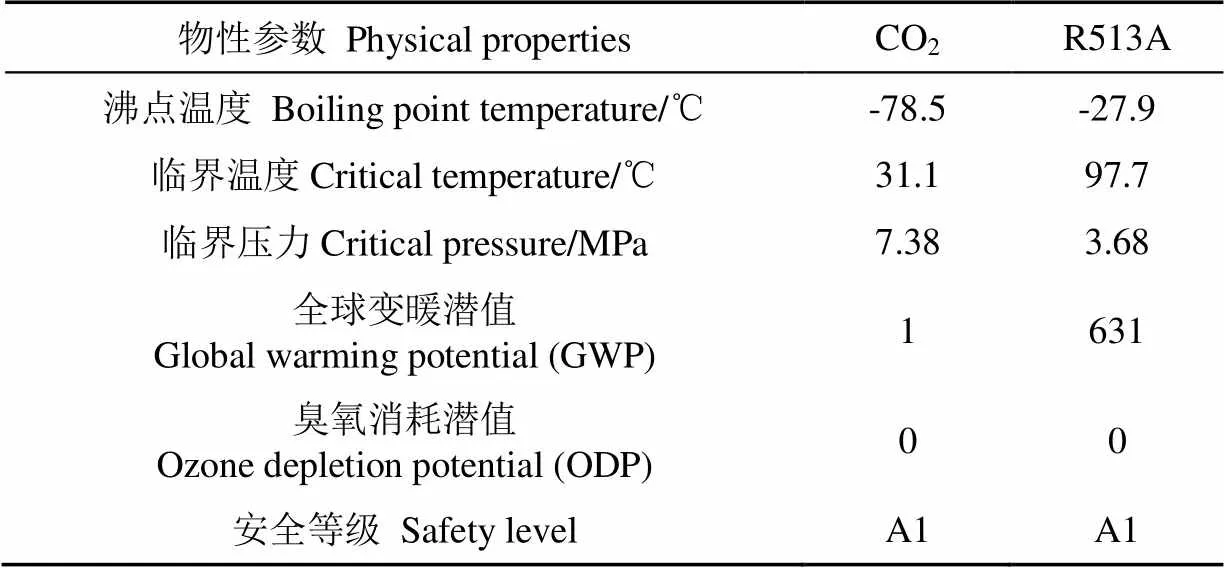
表1 制冷劑物性參數
1.1 雙溫區復疊制冷系統
圖1為雙溫區復疊制冷系統示意圖,兩并聯蒸發器經其前的膨脹閥Ⅰ和膨脹閥Ⅱ調節至不同的蒸發溫度。假設蒸發器Ⅰ蒸發溫度低于蒸發器Ⅱ,節流系統中,如圖1a所示,流過蒸發器Ⅱ的制冷劑經壓力調節閥降壓至蒸發器Ⅰ的壓力水平,與蒸發器Ⅰ出來的制冷劑混合進入低溫級壓縮機,壓縮后的高壓蒸汽在冷凝蒸發器中被冷凝成液體進入儲液器,通過膨脹閥分配至各回路的蒸發器進行制冷。高溫級制冷劑在冷凝蒸發器中吸收低溫級釋放的冷凝熱,經高溫級壓縮機壓縮后在冷凝器中排放熱量,節流后再次回到冷凝蒸發器,完成一個循環。增壓系統高溫級與節流系統高溫級循環過程相同,而低溫級則是利用增壓壓縮機將蒸發器Ⅰ流出的制冷劑壓力提升至蒸發器Ⅱ所處壓力水平,雙溫區復疊制冷增壓系統如圖1b所示。
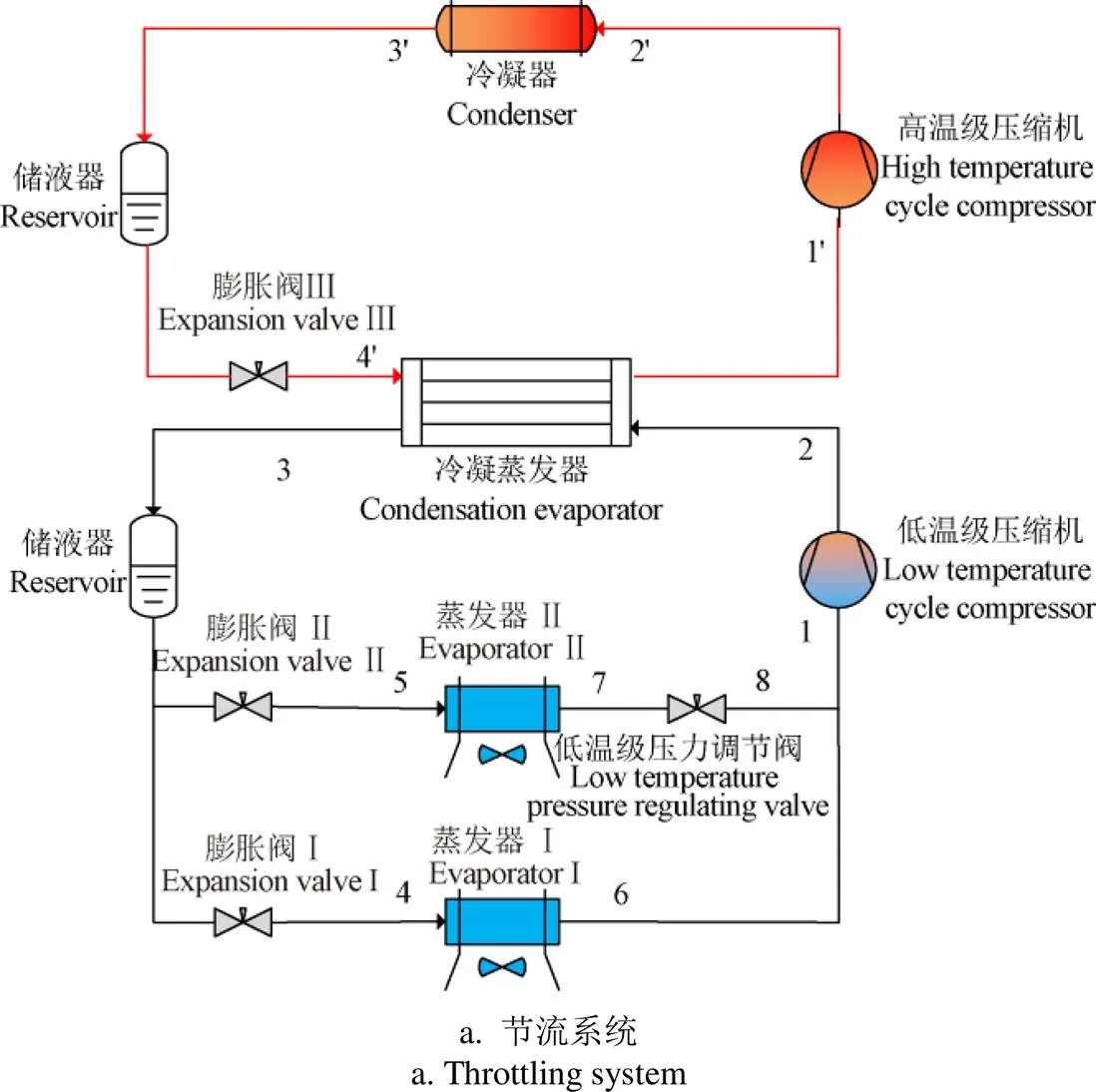
注:1~8為雙溫區復疊制冷系統低溫循環對應位置狀態點,1'~4'為雙溫區復疊制冷系統高溫循環對應位置狀態點。
Note: 1-8 are the corresponding position status points of the low temperature cycle and 1'-4' are the corresponding position status points of the high temperature cycle of the double temperature zone cascade refrigeration system.
圖1 雙溫區復疊制冷系統流程圖
Fig.1 Flow charts of double temperature zone cascade refrigeration system
1.2 三溫區復疊制冷系統
三溫區復疊制冷系統流程見圖2所示,其同樣在CO2低溫級設置了2個溫區,分別提供農產品冷凍與凍藏所需溫度,與雙溫區有所不同的是在R513A高溫級增設一個冷藏溫區,新增的蒸發器Ⅲ與冷凝蒸發器并聯,用于提供農產品冷藏所需冷量。圖2a所示為三溫區節流系統,在高溫級與低溫級均設置壓力調節閥,分別使高溫級與低溫級蒸發壓力高的一側節流至低蒸發壓力,在同等壓力下混合后進入壓縮機。增壓系統流程如圖2b所示,高低溫級均在低蒸發溫度的蒸發器出口設置壓縮機,使低蒸發壓力側經壓縮后升至高蒸發壓力。
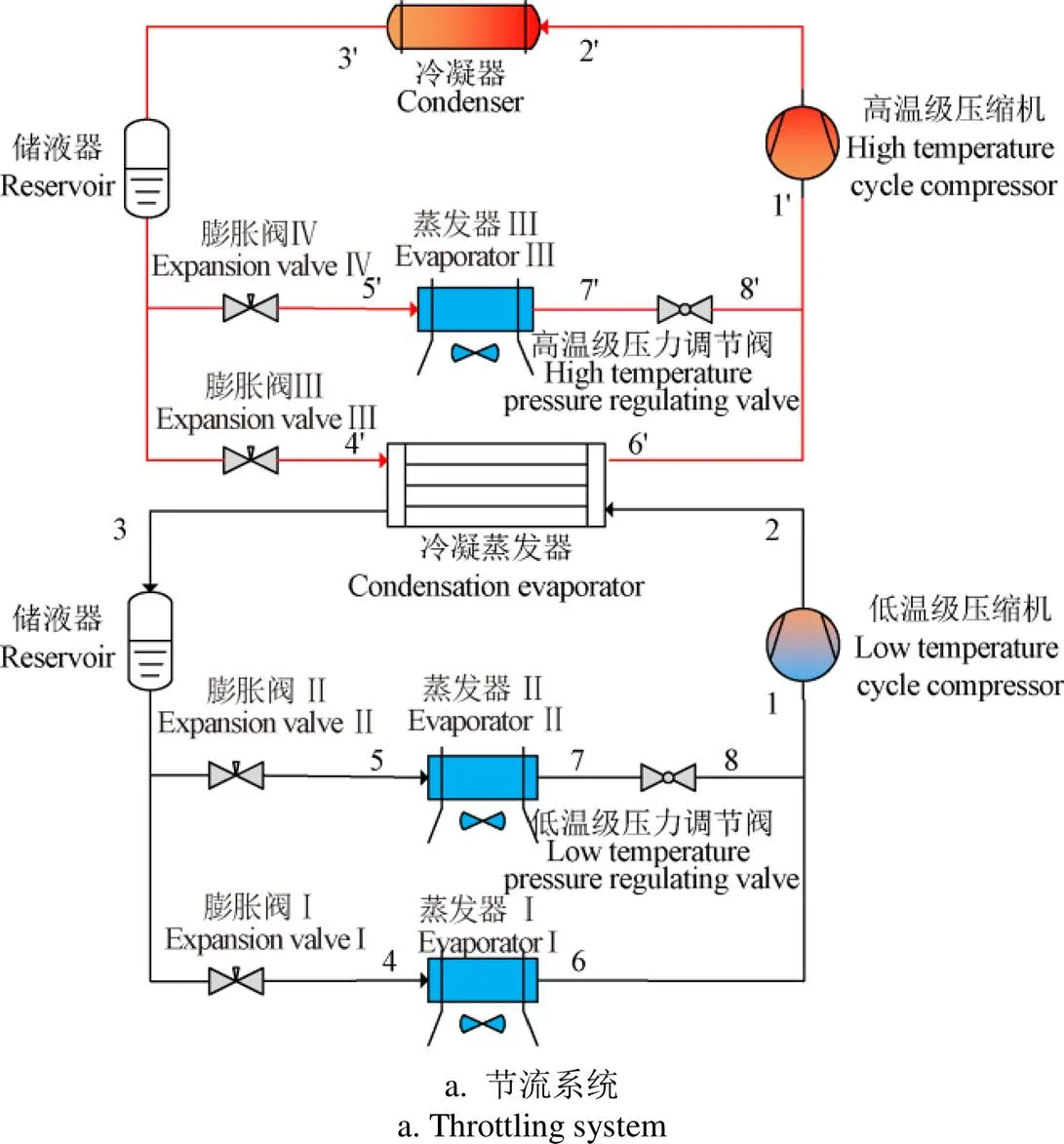
注:1~8為三溫區復疊制冷系統低溫循環對應位置狀態點,1'~8'為三溫區復疊制冷系統高溫循環對應位置狀態點。
Note: 1-8 are the corresponding position status points of the low temperature cycle and 1'-8' are the corresponding position status points of the high temperature cycle of the three temperature zone cascade refrigeration system.
圖2 三溫區復疊制冷系統流程圖
Fig.2 Flow charts of three temperature zone cascade refrigeration system
1.3 農產品貯藏溫度分布
根據CO2制冷劑特性,其蒸發溫度可達-55 ℃,能滿足大多數果蔬、食用菌和肉類等農產品的貯藏溫度范圍。制冷系統采用多溫區的運行模式,通過在冷庫中設置不同的隔間,并聯蒸發器冷風機依次置于隔間內,其溫度可通過蒸發器前的膨脹閥進行調節,其優勢在于根據溫區數量,多種農產品可同時進行低溫速凍、凍藏和冷藏,表2給出了多溫區復疊制冷系統中不同農產品的適宜貯藏溫區。
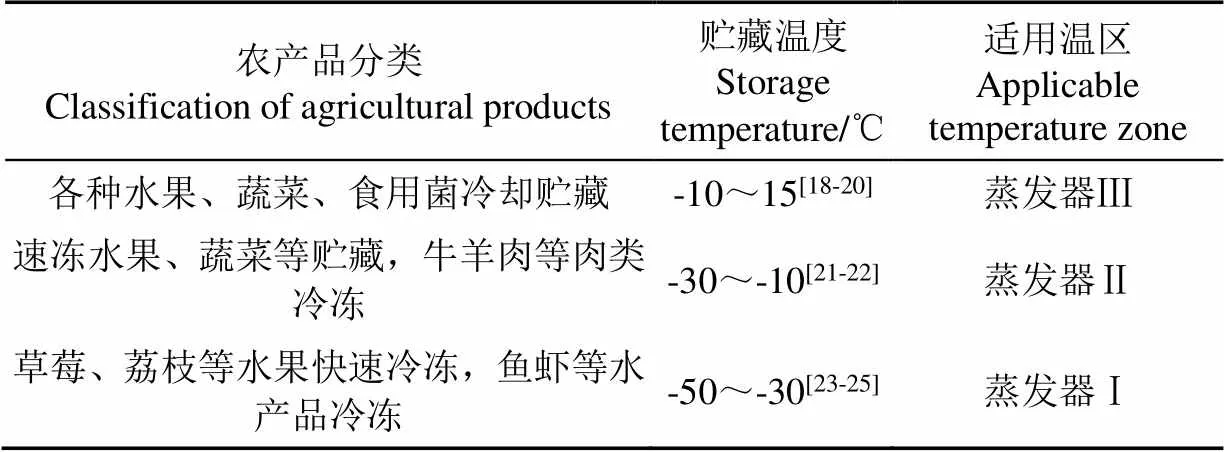
表2 不同農產品適宜貯藏溫區
1.4 系統運行控制策略
針對并聯溫區,節流系統通過執行壓力調節閥的PID控制或其他控制方式,以低溫側蒸發壓力為目標壓力,調節閥后壓力為反饋壓力,實時調控閥門開度實現反饋壓力達到目標壓力。增壓系統通過執行增壓壓縮機的PID控制或其他控制方式,以高溫側蒸發壓力為目標壓力,增壓壓縮機后的壓力為反饋壓力,實時調控壓縮機運行頻率實現反饋壓力達到目標壓力。
2 系統熱力性能分析
2.1 參數設定
為簡化研究過程,在進行熱力學循環特性分析前,對系統作如下假設[26-27]:
1)系統處于穩定流動狀態,各部件及管道中的壓損忽略不計;
2)高低循環中節流過程為等焓節流;
3)壓縮過程為絕熱壓縮,系統循環無過冷。
表3為雙溫區和三溫區復疊制冷系統熱力計算參考工況。
2.2 數學模型
圖3和圖4分別為雙溫區和三溫區復疊制冷循環壓焓圖,圖中的狀態點與圖1和圖2中流程圖的狀態點一一對應。基于熱力學第一定律和熱力學第二定律,采用能量分析方法和?分析方法對系統熱力性能進行評估,其中能量分析能夠有效反映系統能量在轉換、傳遞和利用過程中的數量變化,而?分析方法能夠表現出該過程能量質量的變化情況[28]。系統的?主要由物理?、化學?、動能?和勢能?組成,在制冷系統中,速度和高度的變化可忽略不計,系統不存在化學反應,因此在進行?分析時僅需考慮物理?的變化。狀態點的比物理?可表示為

式中e為狀態點的比物理?,kJ/kg;h為狀態點的比焓,kJ/kg;s為狀態點的比熵,kJ/(kg·K);0為環境溫度,℃;0為工質在環境狀態下的比焓,kJ/kg;0為工質在環境狀態下的比熵,kJ/(kg·K)。
雙溫區和三溫區復疊制冷系統熱力學分析過程所涉及的能量平衡及?平衡方程分別見表4和表5。

表3 雙溫區和三溫區復疊制冷系統計算參考工況
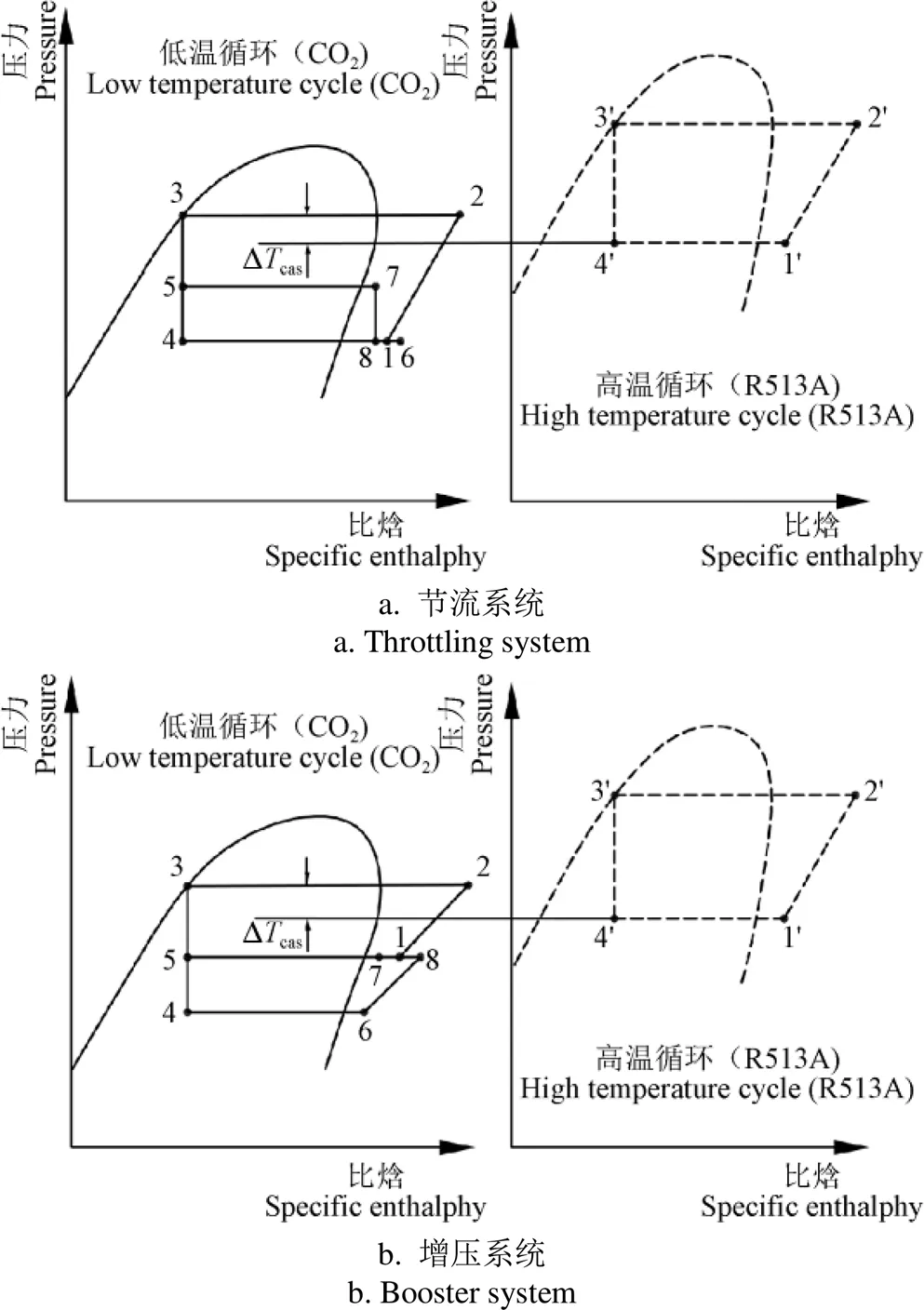
注:ΔTcas為冷凝蒸發器中的傳熱溫差,℃;圖中數字含義同圖1。
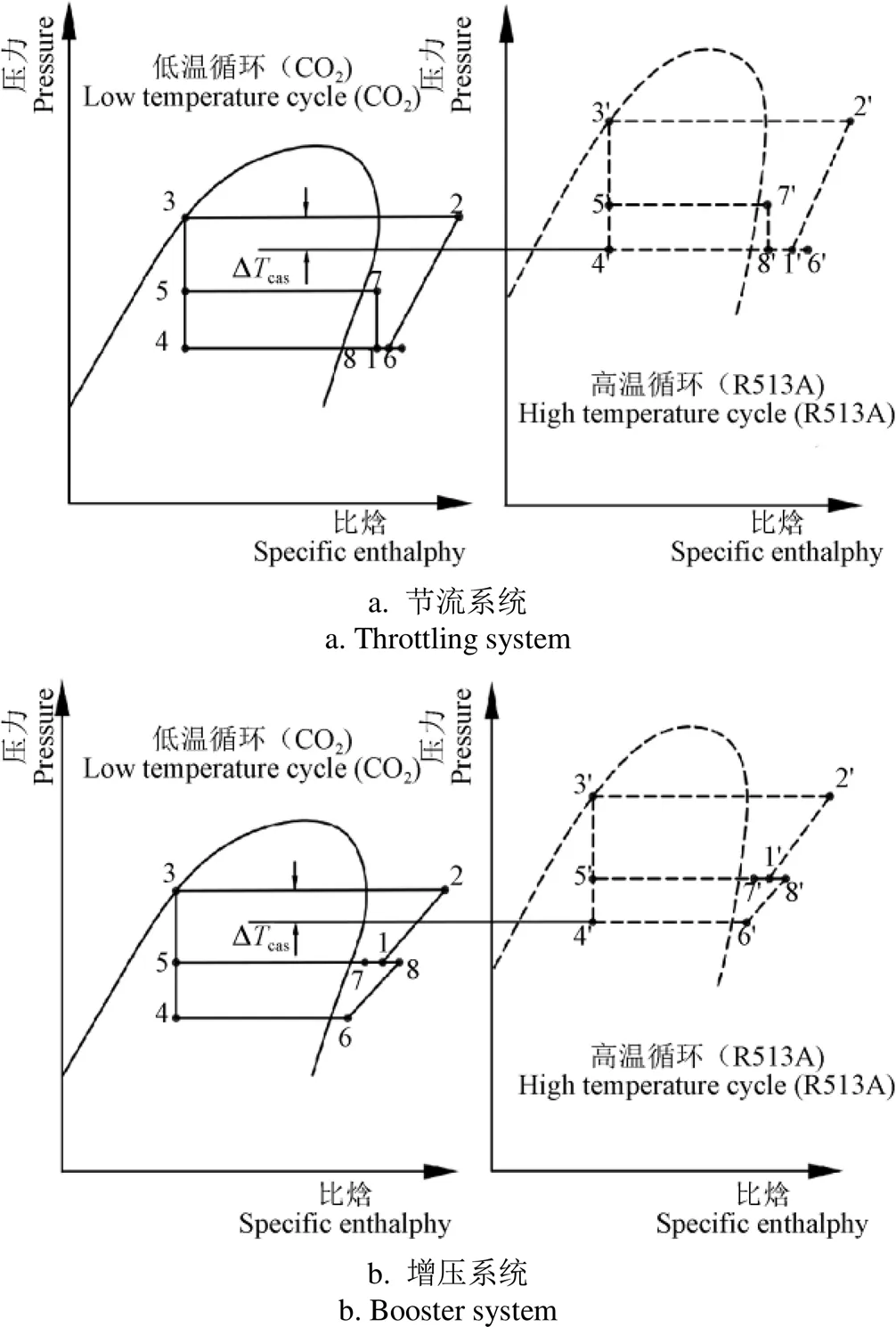
注:ΔTcas為冷凝蒸發器中的傳熱溫差,℃;圖中數字含義同圖2。
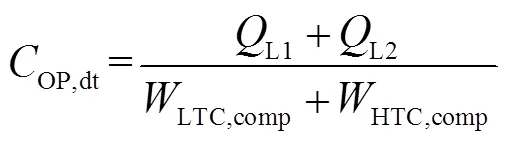
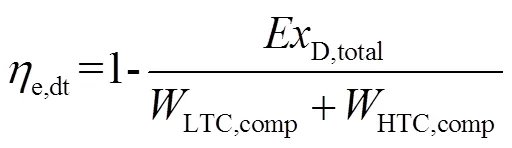
復疊制冷系統評價指標主要有性能系數(coefficient of performance,OP)和?效率(exergy efficiency,η),性能系數為系統制冷量與壓縮機耗功的比值,反應能量利用在數量上的變化;?效率是指系統的有效利用?與輸入?的比值,體現了系統能量轉換效果與有效利用程度。
基于表3中雙溫區系統參數設定值與表4中熱力學分析模型,計算雙溫區復疊制冷循環節流系統和增壓系統性能系數與?效率。
節流系統性能系數和?效率為:
增壓系統性能系數和?效率為:
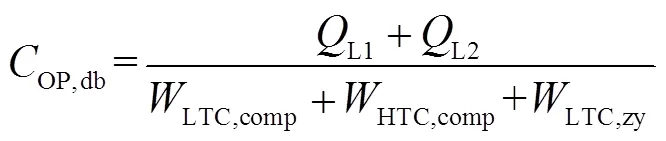
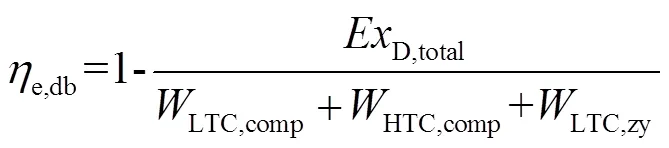
式中OP,dt為雙溫區復疊制冷循環節流系統性能系數;e,dt為節流系統?效率,%;OP,db為雙溫區復疊制冷循環增壓系統性能系數;e,db為增壓系統?效率,%;D,total為總?損(相應系統所有部件?損之和),kW。
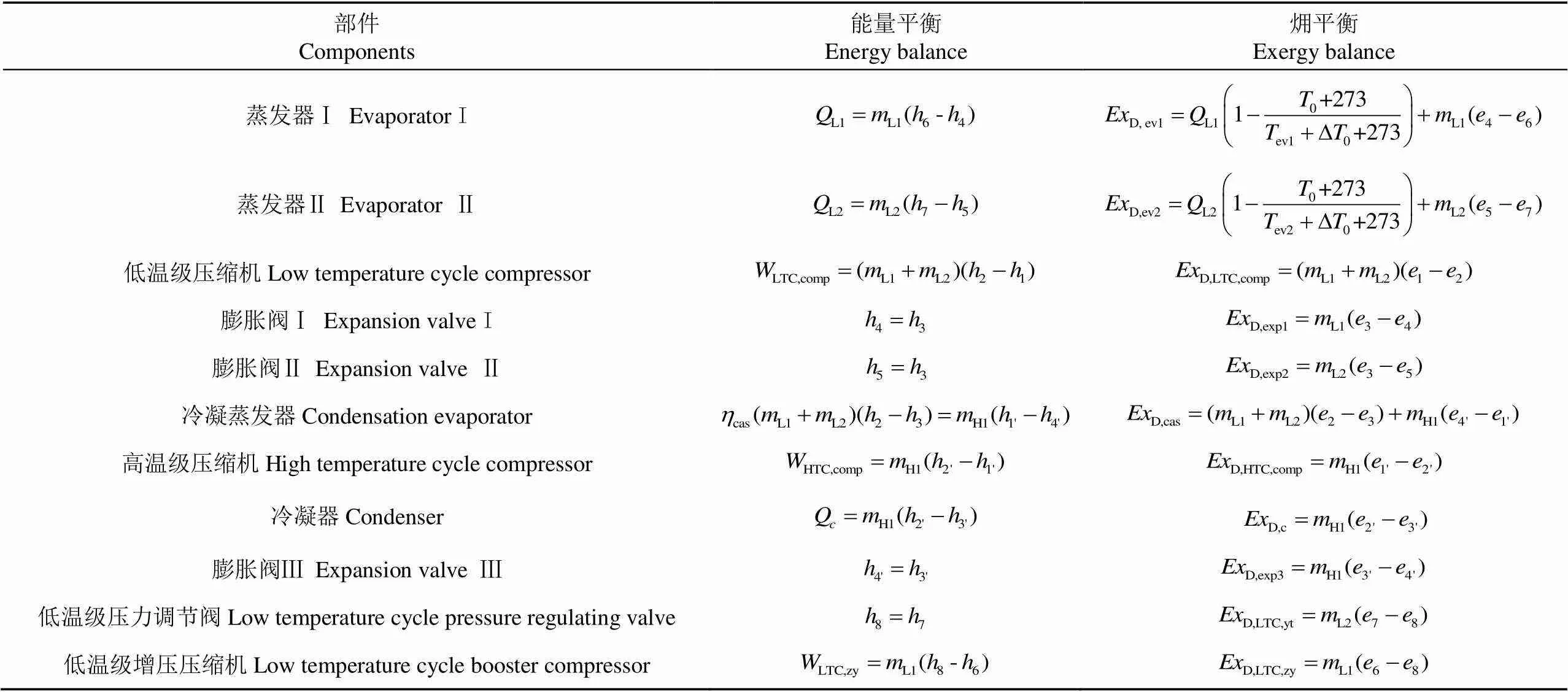
表4 雙溫區復疊制冷系統能量與?平衡方程
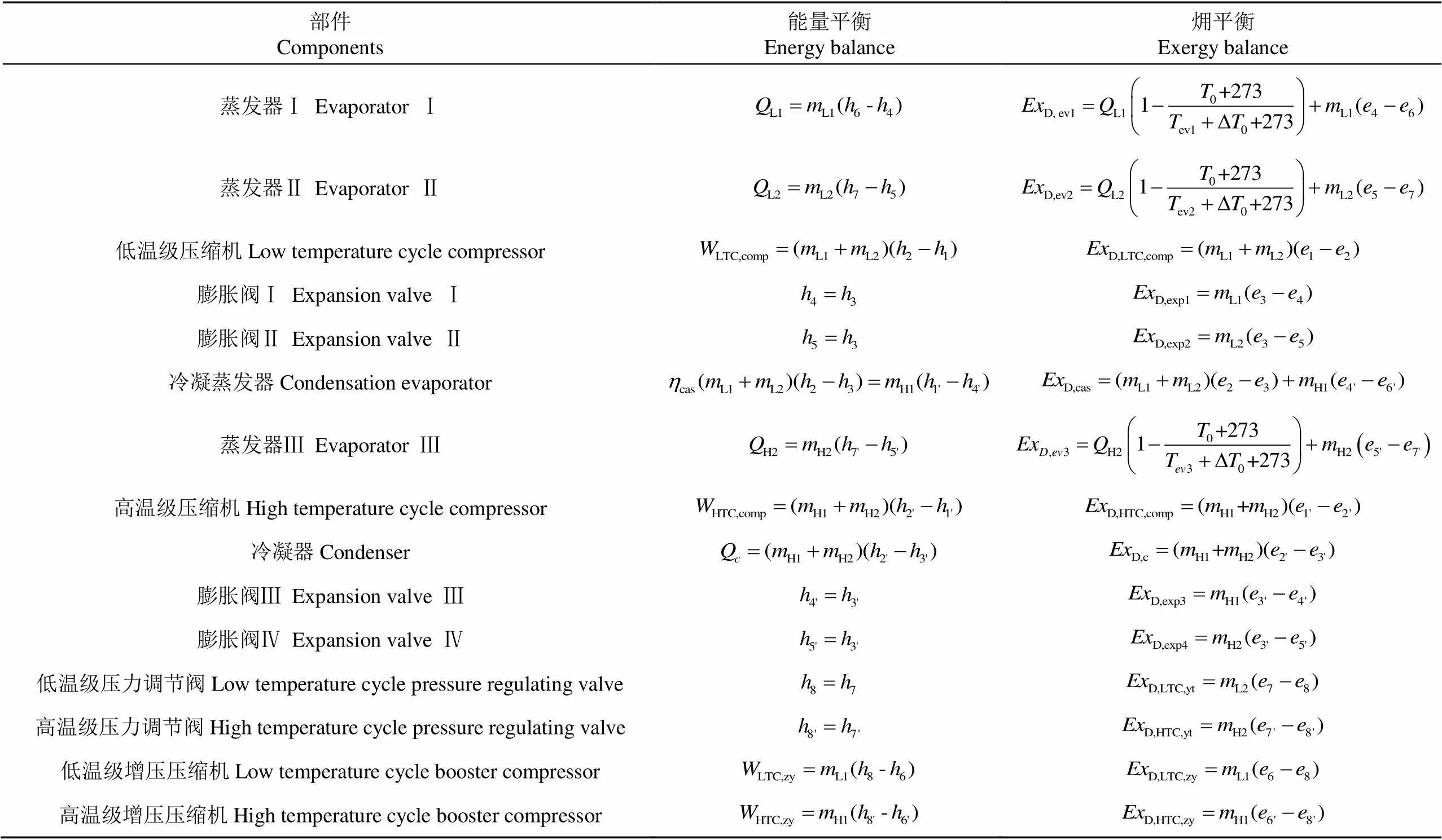
表5 三溫區復疊制冷系統部件能量與?平衡方程
注:表4和表5中,L1、L2和H2分別為蒸發器Ⅰ、蒸發器Ⅱ和蒸發器Ⅲ的制冷量,kW;LTC,comp、HTC,comp、LTC,zy和HTC,zy分別為低溫級壓縮機、高溫級壓縮機、低溫級增壓壓縮機和高溫級增壓壓縮機的耗功,kW;h為狀態點的比焓,kJ·kg-1;e為狀態點的比物理?,kJ·kg-1;Ex為表4和表5中對應部件的?損,kW;L1、L2、H1和H2分別為流經蒸發器I、蒸發器Ⅱ、冷凝蒸發器和蒸發器Ⅲ的質量流量,kg·s-1;Q為系統高溫級冷凝熱,kW;ev1、ev2和ev3分別為蒸發器I、蒸發器Ⅱ和蒸發器Ⅲ的蒸發溫度,℃;cas為冷凝蒸發器換熱效率,%;0為環境溫度,℃;Δ0為蒸發器換熱溫差,℃。
Note: in the table 4 and table 5,L1,L2andH2are the cooling capacity of evaporator I, evaporator Ⅱ and evaporator Ⅲrespectively, kW;LTC,comp、HTC,comp、LTC,zyandHTC,zyare the power consumption of low temperature stage compressor, high temperature stage compressor, low temperature stage booster compressor and high temperature stage booster compressor respectively, kW;his the specific enthalpy of state point, kJ·kg-1;eis the specific physical exergy of state point, kJ·kg-1;Dis the exergy destruction rate of corresponding parts in the table 4 and table 5, kW;L1、L2、H1andH2are the mass flow through evaporator I, evaporator Ⅱ, condensation evaporator and evaporator Ⅲ respectively, kg·s-1;Qis the condensation heat at the high temperature stage of the system, kW;ev1、ev2和ev3are the evaporation temperature of evaporator Ⅰ, evaporator Ⅱ and evaporator Ⅲ respectively, ℃;casis the heat exchange efficiency of condensation evaporator, %;0is the ambient temperature, ℃; Δ0is the evaporator heat transfer temperature difference, ℃.
基于表3中三溫區系統參數設定值與表5中熱力學分析模型,計算三溫區復疊制冷循環節流系統和增壓系統性能系數與?效率。
節流系統性能系數和?效率為
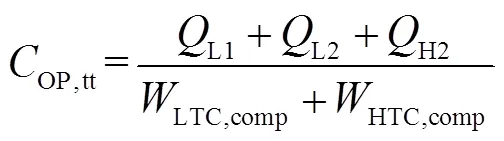
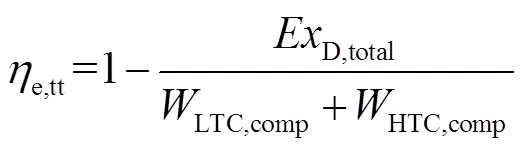
增壓系統性能系數和?效率為


式中OP,tt為三溫區復疊制冷循環節流系統性能系數;e,tt為節流系統?效率,%;OP,tb為三溫區復疊制冷循環增壓系統性能系數;e,tb為增壓系統?效率,%。
2.3 結果與分析
為了探究多溫區復疊制冷系統的運行特性,獲得最佳的設計與運行參數,分別研究雙溫區和三溫區復疊制冷系統在節流和增壓模式下低溫級冷凝溫度、冷凝蒸發器內2種工質傳熱溫差及高溫級冷凝溫度對系統熱力學性能的影響。
雙溫區復疊制冷循環節流模式和增壓模式的性能系數和?效率對比結果如圖5所示。圖5a為CO2低溫級冷凝溫度對雙溫區制冷系統性能系數與?效率的影響,節流系統和增壓系統的性能系數和?效率均先增大后減小,而增壓系統性能系數和?效率大于節流系統,這是因為增壓壓縮機提高了低溫級CO2壓縮機的吸氣壓力,減小了壓縮比。在表3所示雙溫區參考工況下,節流系統和增壓系統性能系數分別為1.25和1.63,增壓系統相較于節流系統性能系數提高了30.4%。兩類系統的性能系數和?效率隨低溫級冷凝溫度升高變化幅度較小,節流系統與增壓系統性能系數變化率分別為1.5%和1.7%。
圖5b和圖5c分別為冷凝蒸發器傳熱溫差及高溫級冷凝溫度對雙溫區制冷系統的影響。從圖中可以看出,傳熱溫差和冷凝溫度增大均會造成系統性能系數和?效率下降,當冷凝蒸發器傳熱溫差從2 ℃增大到10 ℃時,增壓系統性能系數從1.72降至1.49,?效率從35.9%下降到30.9%。高溫級冷凝溫度對雙溫區復疊制冷系統的影響也較大。
圖5d描述了蒸發溫度對雙溫區制冷系統的影響,隨著蒸發溫度ev1增大,節流系統和增壓系統的性能系數都有所提高。ev1相同時,蒸發溫度ev2增大對節流系統性能系數幾乎無影響,但其?效率下降,這是因為采用節流模式后蒸發溫度ev2的增大增加了蒸發器Ⅱ出口壓力調節閥的節流損失;蒸發溫度ev2對增壓系統性能系數與?效率的影響相反,ev2增大會使增壓系統性能系數增大,而?效率反而下降。根據系統根據分析結果,在進行雙溫區復疊制冷系統設計時,應盡可能減小冷凝蒸發器內換熱溫差和高溫級冷凝溫度,適當提升系統蒸發溫度,以此改善系統性能,減小系統的不可逆損失。
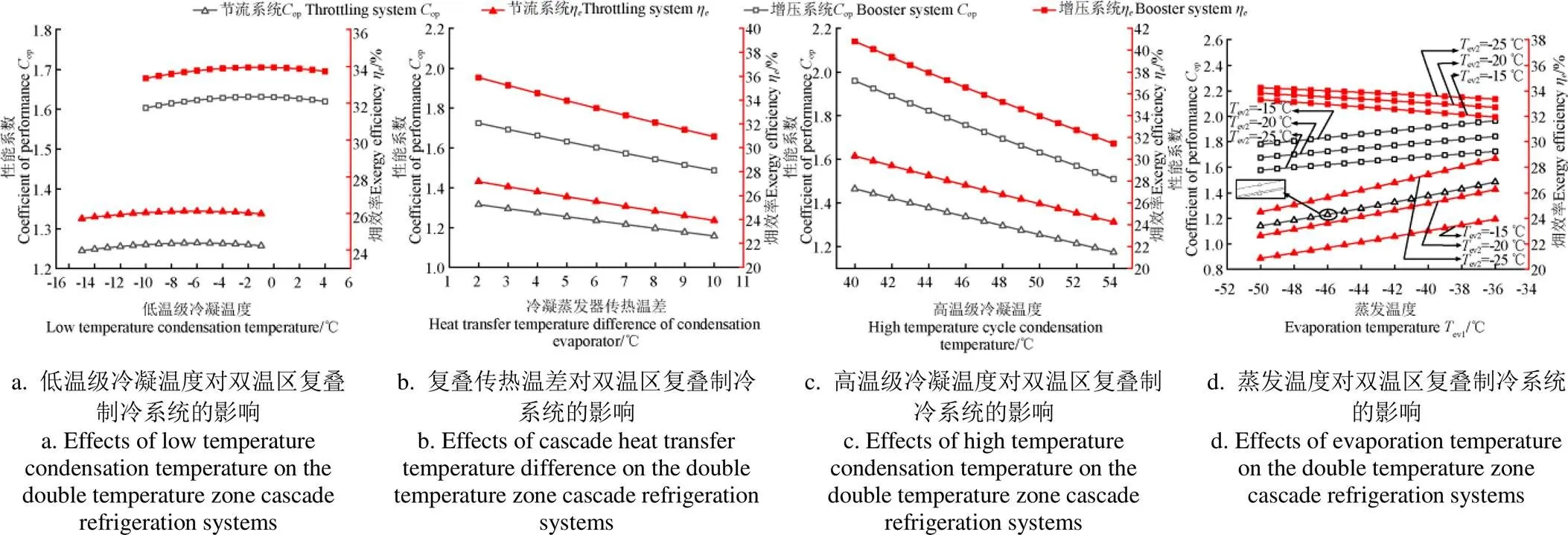
圖5 運行參數對雙溫區復疊制冷系統性能的影響
圖6反映了三溫區復疊制冷系統性能系數和?效率隨循環參數的變化規律,該系統不僅在低溫級設置了兩個溫區,在高溫級也設置了一個同冷凝蒸發器并聯的溫區,同時提供3個不同的蒸發溫度。隨著循環參數的變化,增壓系統性能系數和?效率始終高于節流系統,對于三溫區復疊制冷循環,采用增壓形式也體現了性能的優越性。在表3所示三溫區系統計算工況下,三溫區復疊制冷循環節流系統與增壓系統性能系數分別為1.88和2.32,采用增壓形式系統性能系數提升了23.4%。如圖6a所示,低溫級冷凝溫度在-9~5 ℃范圍變化時,增壓系統性能系數和?效率與雙溫區復疊系統變化趨勢一致,低溫級冷凝溫度為-5 ℃時性能系數和?效率同時達到最大值,分別為2.33和28.9%,其性能系數變化范圍不超過0.02,?效率波動范圍不超過0.26%。而對于三溫區復疊制冷節流系統卻有不同的變化情況,性能系數和?效率隨著CO2低溫級冷凝溫度的升高均增大,意味著在該系統中,若要提升系統性能,則盡可能增大低溫級冷凝溫度。
冷凝蒸發器傳熱溫差與高溫級冷凝溫度對三溫區復疊制冷系統的性能系數和?效率的影響如圖6b和6c所示,傳熱溫差和冷凝溫度增大同樣導致了兩種系統性能下降,高溫級冷凝溫度為40 ℃時性能系數最大,此時兩系統性能系數相差0.63。傳熱溫差增大和高溫級冷凝溫度越遠離環境溫度水平,均會增大系統的不可逆性損失,造成?效率下降。對于三溫區復疊制冷循環,各溫區蒸發溫度的變化對系統性能系數均有影響,分析結果發現蒸發溫度ev1和ev2對三溫區復疊制冷循環節流和增壓系統性能系數和?效率的影響與雙溫區復疊制冷循的影響趨勢一致,因此在此僅研究蒸發溫度ev3對三溫區復疊制冷循環的影響,結果如圖6d所示。蒸發溫度ev3增大使三溫區增壓系統性能系數快速增大,而節流系統因制冷劑在壓力調節閥中節流后溫度與冷凝蒸發器出口溫度接近,所以系統性能系數基本保持不變,而壓力調節閥節流損失增大導致節流系統?效率急劇下降。
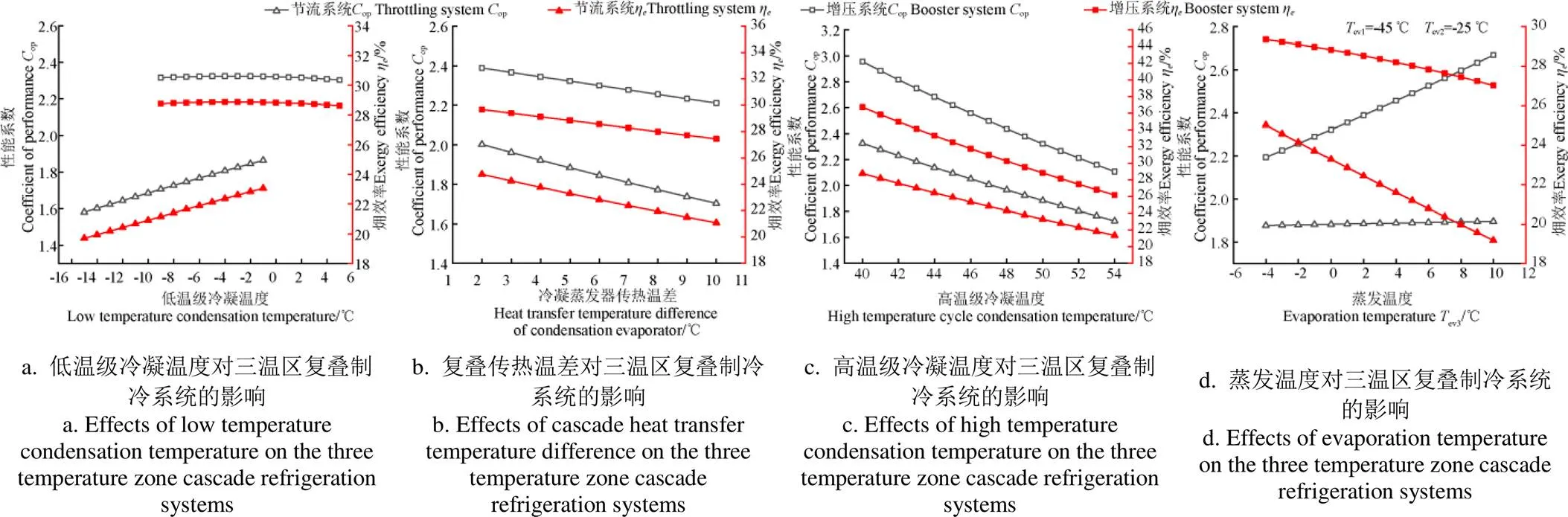
圖6 運行參數對三溫區復疊制冷系統性能的影響
根據上述研究結果,雙溫區和三溫區復疊制冷循環的增壓系統在性能上具有較大優勢,表6對本文所研究的雙溫區和三溫區復疊制冷循環增壓系統同常規的CO2單溫區復疊制冷系統性能系數進行了比較,多溫區復疊制冷系統的蒸發溫度以最低蒸發溫度為對比工況。結果發現本文所研究的增壓系統在相同工況下具有較高的性能,在蒸發溫度為-50 ℃、冷凝溫度為40 ℃時,雙溫區和三溫區增壓系統性能系數為CO2/R134a復疊制冷系統的1.5和2.3倍,增壓系統利用增壓壓縮機提升了并聯蒸發器中蒸發壓力低的一側制冷劑回氣壓力,降低了壓縮功率,因此系統性能得到改善。
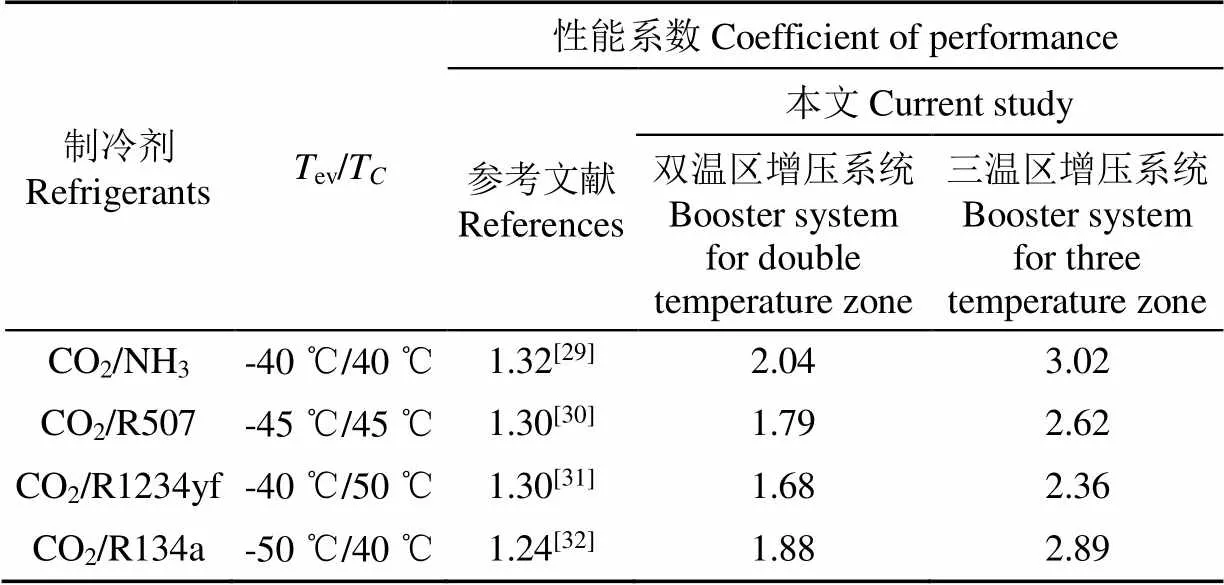
表6 本研究的多溫區復疊制冷系統性能系數同其他文獻對比結果
為減小系統各部件的不可逆損失,提高?效率,在特定工況下對雙溫區和三溫區復疊制冷循環的節流系統和增壓系統各部件進行?損(Ex)分析,為系統節能優化提供指導。圖7和圖8分別反映了雙溫區和三溫區復疊制冷兩類系統在表3所示工況下各部件的?損。
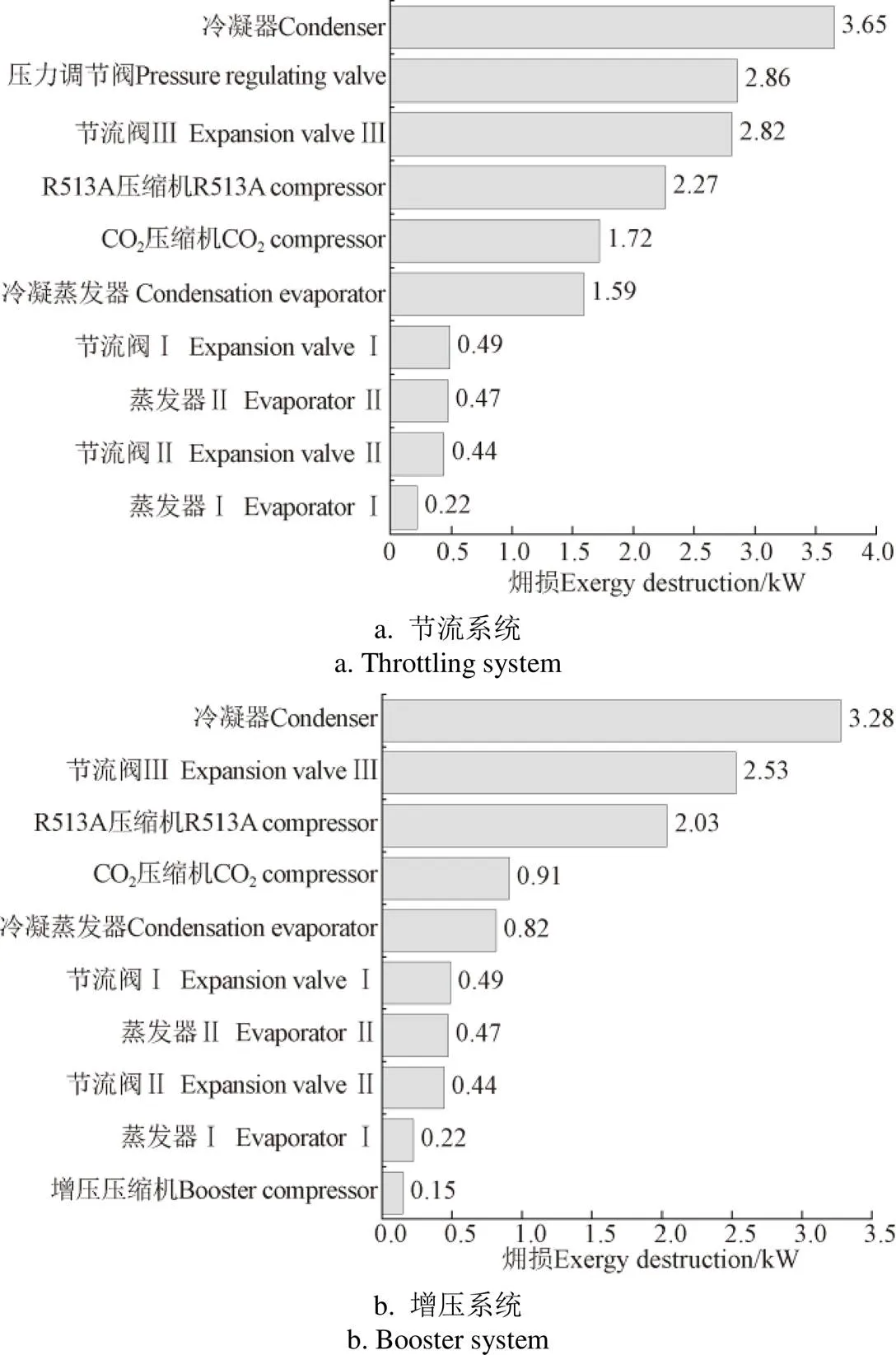
圖7 雙溫區復疊制冷系統各部件?損
在雙溫區和三溫區復疊制冷系統中,冷凝器都具有最高?損,雙溫區節流系統、增壓系統、三溫區節流系統和增壓系統冷凝器?損分別為3.65、3.28、8.53和7.92 kW。對比節流系統和增壓系統,壓力調節閥的?損遠高于增壓壓縮機,就復疊系統低溫級而言,壓力調節閥與增壓壓縮機的?損分別為2.86和0.15 kW,采用壓力調節閥的節流系統帶來了更大的能量損失,因此節流系統性能系數低于增壓系統。此外,各系統中R513A壓縮機也具有較高的?損。從性能角度考慮,對于雙溫區和三溫區復疊制冷循環,采用增壓系統具有明顯優越性。
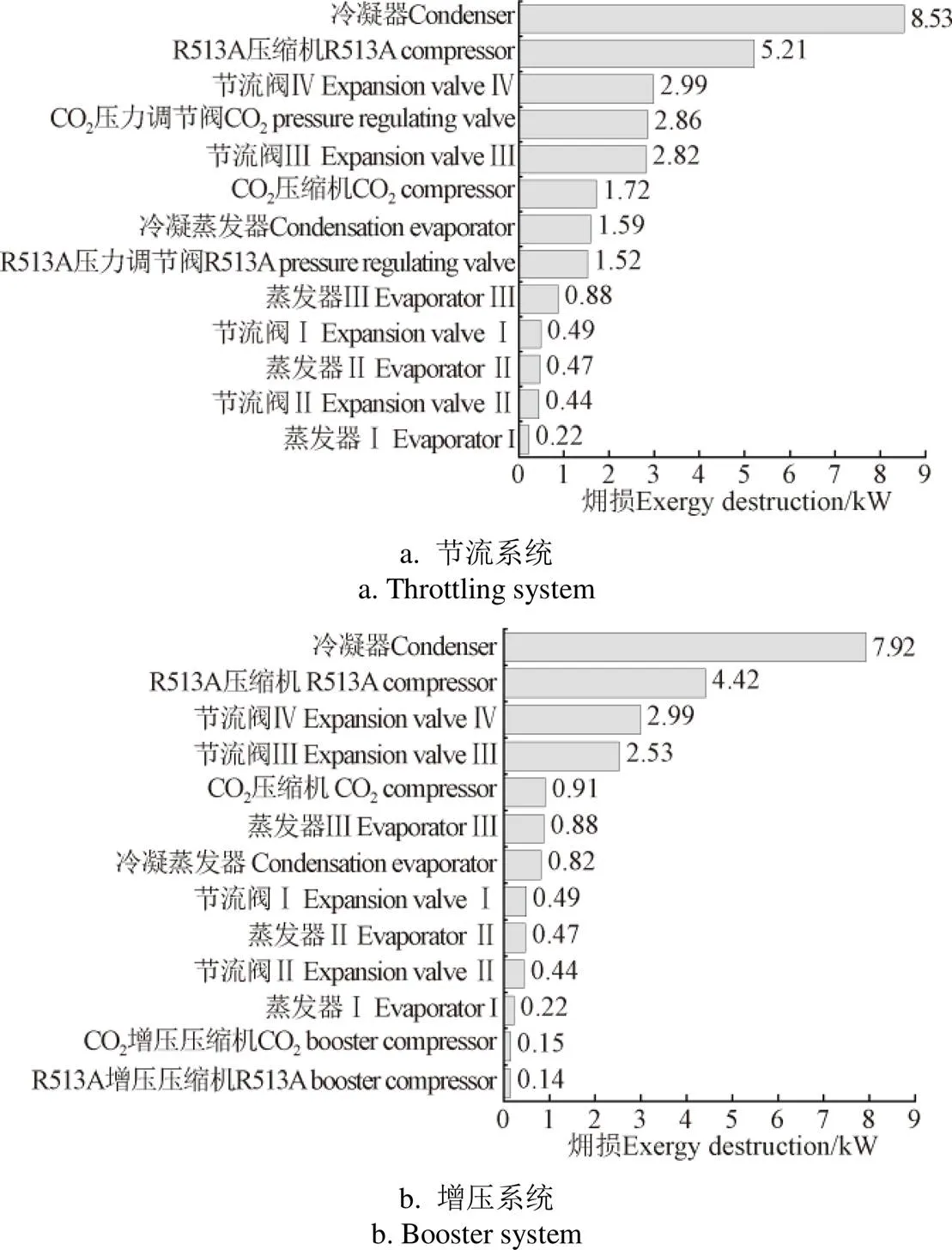
圖8 三溫區復疊制冷系統各部件?損
3 經濟性分析
通過上述的研究發現增壓系統比節流系統在性能上更有優勢,但增壓系統采用增壓壓縮機的成本遠大于壓力調節閥,此外,增壓壓縮機在運行過程中還會產生額外的功耗,增加運行成本。因此,對雙溫區和三溫區復疊制冷的兩類系統分別進行經濟性分析,主要包括初投資與維護成本、運行成本以及環境成本(電能消耗產生的CO2排放導致的罰款),膨脹閥和壓力調節閥等節流裝置由于成本遠低于其他主要設備,可忽略其投資成本。
3.1 初投資及維護成本
設備的投資成本可由以下公式進行計算[33-34]:
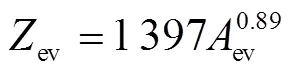

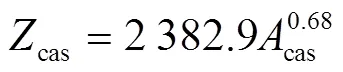

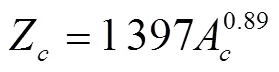


式中ev、cas和c分別為蒸發器、冷凝蒸發器和冷凝器的換熱面積,m2;ev、LTC,comp、cas、HTC,comp、Z、LTC,zy,comp和HTC,zy,comp分別蒸發器、低溫級壓縮機、冷凝蒸發器、高溫級壓縮機、冷凝器、低溫級增壓壓縮機與高溫級增壓壓縮機的初投資,美元。
系統換熱器換熱面積由下式計算:
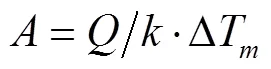
式中為換熱量,kW;代表換熱器換熱面積,m2;為換熱器傳熱系數,W/(m2·K);ΔT為換熱器傳熱溫差,℃。
本文所研究的多溫區冷庫制冷系統冷凝器側采用風冷式換熱器,總結參考文獻,相應的換熱器傳熱系數見表7。
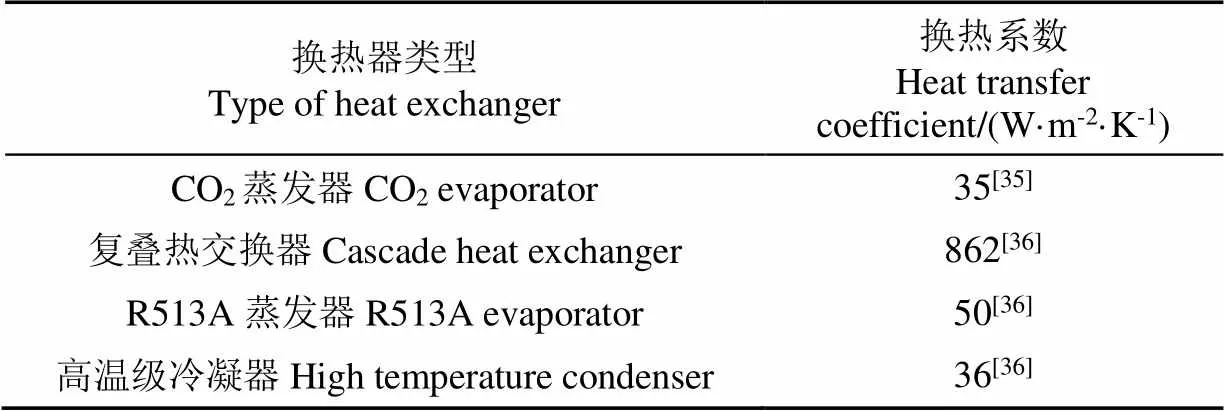
表7 系統換熱器傳熱系數
系統總的初投資成本為各部件初投資成本之和:
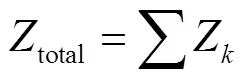
式中total為系統總的初投資,美元;Z為上述部件初投資,美元。
資本成本的評估選取的時間間隔為1 a,設備的年度資本成本可由資本回收系數(capital recovery factor,RF)獲得:
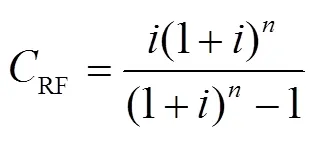
式中和分別代表年利率和系統運行壽命,根據參考文獻,=10%,=15 a[37-38]。
考慮系統維護成本,并將資本成本換算成年度成本

3.2 系統運行成本
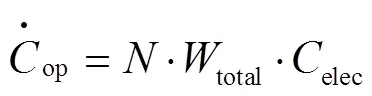
系統的運行成本主要為高低溫級的壓縮機所消耗的電能,對于增壓壓縮系統,還需要考慮增壓壓縮機所輸入功耗,運行總成本:
3.3 環境成本
溫室氣體的大量排放導致全球變暖,環境問題變得越來越嚴重。目前全球大多數國家已出臺有關CO2排放的罰款政策[40]。制冷系統的環境成本主要包括制冷劑泄漏以及系統運行電力消耗所產生的CO2排放,對于環保型制冷工質,制冷劑泄漏所產生的CO2排放遠小于電力消耗產生的間接排放,因此可忽略制冷劑泄漏產生環境成本[27]。

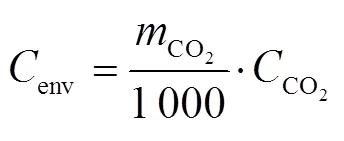
式中CO2為電力碳排放因子,取0.581 kg/(kW·h)[41];CO2為單位間內CO2排放量,kg/h;env為系統環境成本,美元;CO2為單位CO2排放成本,取90美元/t[37]。
3.4 結果分析
圖9a和9b分別為雙溫區和三溫區復疊制冷循環節流系統與增壓系統在表3所示工況下的年度成本對比。對比節流系統和增壓系統的初投資及維護成本、系統運行成本、環境成本及系統年度總成本,結果發現雙溫區復疊制冷循環增壓系統的投資成本、運行成本及環境成本均低于節流系統,其原因是增壓系統性能系數高于節流系統,相同制冷量下能耗更少,可有效減少壓縮機投資成本、系統運行成本以及CO2排放量。
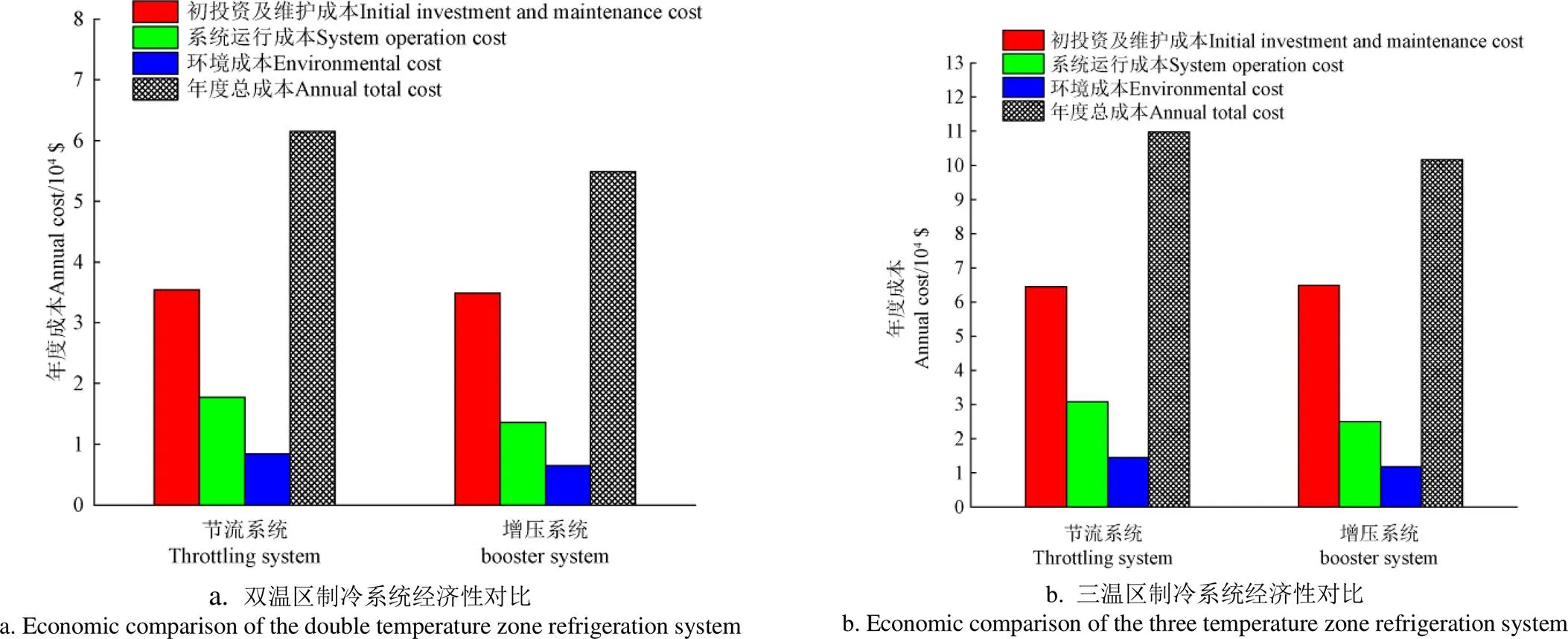
圖9 多溫區復疊制冷系統經濟性對比
而三溫區復疊制冷循環增壓系統的年度初投資及維護成本雖然略高于節流系統,但系統年度總成本仍小于節流系統。盡管增壓系統相對于節流系統增加了增壓壓縮機設備,但性能上的優勢地彌補了這部分成本,雙溫區與三溫區節流系統比增壓系統年度總成本分別增加了6 554和8 156美元,由此可見,增壓系統相較于節流系統體現了更好的經濟性。
4 結 論
1)本文設計了應用于農產品貯藏的CO2/R513A多溫區復疊制冷系統,該系統可同時提供多個貯藏溫度,其溫區可滿足農產品在-50~15 ℃的貯藏溫度范圍。對比多溫區兩種系統的性能,增壓系統性能系數和?效率均高于節流系統,參考工況下雙溫區和三溫區的增壓系統比節流系統性能系數分別提升了30.4%和23.4%。
2)低溫級冷凝溫度升高,雙溫區和三溫區復疊制冷循環增壓系統性能系數與?效率先增大后減小;三溫區節流系統性能系數與?效率隨低溫級冷凝溫度升高而增大。冷凝蒸發器傳熱溫差和高溫級冷凝溫度升高會導致雙溫區和三溫區復疊制冷循環兩種系統性能系數與?效率下降。增壓系統中蒸發溫度增大有利于提升系統性能系數,而在節流系統中,蒸發溫度ev2和ev3增大對系統性能系數無明顯影響。
3)節流系統采用壓力調節閥造成了更大的能量損失,因此其性能不如增壓系統;同文獻中的CO2/R134a單溫區復疊制冷系統相比,雙溫區和三溫區增壓系統性能系數為CO2/R134a系統的1.5和2.3倍。
4)對比節流系統和增壓系統年度成本,由于性能上的優勢,增壓系統的年度總成本低于節流系統,雙溫區與三溫區復疊制冷循環節流系統比增壓系統年度總成本分別增加了6 554和8 156美元。
本文研究的CO2多溫區復疊制冷循環增壓系統有較高的性能,運用于冷鏈裝備時對農產品多溫區貯藏和實現節能減碳具有重要意義,但裝置的運行特性還有待研究,后續將對多溫區復疊制冷循環增壓系統開展試驗研究,進一步探索該系統在農產品貯藏中應用的可行性。
[1] 劉廣海,李慶庭,謝如鶴,等. 基于輻射制冷技術的冷鏈保溫箱隔熱性能測試與能耗分析[J]. 農業工程學報,2022,38(11):318-325. LIU Guanghai, LI Qingting, XIE Ruhe, et al. Thermal insulation performance test and energy consumption of the cold chain incubator with radiative cooling[J]. Transactions of the Chinese Society of Agricultural Engineering (Transactions of the CSAE), 2022, 38(11): 318-325. (in Chinese with English abstract)
[2] 中華人民共和國中央人民政府. 國務院辦公廳關于印發“十四五”冷鏈物流發展規劃的通知[EB/OL]. (2021-11-26). [2023-03-05]. http: //www. gov. cn/zhengce/ content/2021-12/12/content_5660244. htm.
[3] 付煥森,王郭全,夏華鳳,等. 農產品保鮮冷庫的PLC控制與關鍵技術研究[J]. 江蘇農業科學,2017,45(18):233-236. FU Huansen, WANG Guoquan, XIA Huafeng, et al. Study on PLC control and key technology of cold storage for agricultural products[J]. Jiangsu Agricultural Sciences, 2017, 45(18): 233-236. (in Chinese with English abstract)
[4] GAO E, CUI Q, JING H, et al. A review of application status and replacement progress of refrigerants in the Chinese cold chain industry[J]. International Journal of Refrigeration, 2021, 128: 104-117.
[5] BRUNO F, BELUSKO M, HALAWA E. CO2refrigeration and heat pump systems: A comprehensive review[J]. Energies, 2019, 12(15): 2959.
[6] 王長江,李麗娜,韓爽,等. 二氧化碳在冷凍冷藏系統中循環方式的分析[J]. 制冷技術,2020,40(5):73-76. WANG Changjiang, LI Lina, HAN Shuang. Analysis of circulation type of CO2in freezing and cold storage system[J]. Chinese Journal of Refrigeration Technology, 2020, 40(5): 73-76. (in Chinese with English abstract)
[7] 周成君,申江,楊建國,等. 新型CO2冷庫制冷系統的理論和實驗分析[J]. 低溫與超導,2017,45(4):51-54。 71. ZHOU Chengjun, SHEN Jiang, YANG Jianguo, et al. Theoretical and experiment analysis of a novel CO2cold storage refrigeration system[J]. Cryogenics & Superconductivity, 2017, 45(4): 51-54, 71. (in Chinese with English abstract)
[8] 張犇,胡開永,吳冬夏,等. 亞臨界CO2冷庫制冷系統性能實驗研究[J]. 低溫與超導,2022,50(2):65-70,93. ZHANG Ben, HU Kaiyong, WU Dongxia, et al. Experimental research on performance of subcritical CO2cold storage refrigeration system[J]. Cryogenics & Superconductivity, 2022, 50(2): 65-70, 93. (in Chinese with English abstract)
[9] 劉金光,劉玉茜,王世清,等. 無氟制冷劑HCR22熱管低溫儲糧溫度動態特征[J]. 農業工程學報,2022,38(20):286-292. LIU Jinguang, LIU Yuqian, WANG Shiqing, et al. Temperature dynamics of the heat-pipe low-temperature grain storage with fluorine-free refrigerant HCR22[J]. Transactions of the Chinese Society of Agricultural Engineering (Transactions of the CSAE), 2022, 38(20): 286-292. (in Chinese with English abstract)
[10] 辜雪冬,孫術國,楊飛艷,等. 冰溫或冷藏對牦牛肉貯藏品質及水分遷移的影響[J]. 農業工程學報,2019,35(16):343-350. GU Xuedong, SUN Shuguo, YANG Feiyan, et al. Effects of ice temperature or chilled storage on quality of yak meat and moisture migration[J]. Transactions of the Chinese Society of Agricultural Engineering (Transactions of the CSAE), 2019, 35(16): 343-350. (in Chinese with English abstract)
[11] ZHAO H, LIU S, TIAN C, et al. An overview of current status of cold chain in China[J]. International Journal of Refrigeration, 2018, 88: 483-495.
[12] GULLO P. Impact and quantification of various individual thermodynamic improvements for transcritical R744 supermarket refrigeration systems based on advanced exergy analysis[J]. Energy Conversion and Management, 2021, 229: 113684.
[13] 曹鋒,葉祖樑. 商超跨臨界CO2增壓制冷系統及技術應用現狀[J]. 制冷與空調,2017,17(9):68-75. CAO Feng, YE Zuliang. Commercial transcritical CO2booster refrigeration system and technology application status[J]. Refrigeration and Air-conditioning, 2017, 17(9): 68-75. (in Chinese with English abstract)
[14] LIU S, WANG J, DAI B, et al. Alternative positions of internal heat exchanger for CO2booster refrigeration system: Thermodynamic analysis and annual thermal performance evaluation[J]. International Journal of Refrigeration, 2021, 131: 1016-1028.
[15] 劉圣春,劉坤,王嘉豪,等. 帶內部熱交換器的CO2增壓制冷系統熱力學分析[J]. 流體機械,2022,50(2):64-70. LIU Shengchun, LIU Kun, WANG Jiahao. Thermodynamic analysis of transcritical CO2booster refrigeration system with an internal heat exchanger[J]. Fluid Machinery, 2022, 50(2): 64-70. (in Chinese with English abstract)
[16] ABAS N, KALAIR A R, KHAN N, et al. Natural and synthetic refrigerants, global warming: A review[J]. Renewable and Sustainable Energy Reviews, 2018, 90: 557-569.
[17] SUN J, LI W, CUI B. Energy and exergy analyses of R513a as a R134a drop-in replacement in a vapor compression refrigeration system[J]. International Journal of Refrigeration, 2020, 112: 348-356.
[18] 張鵬,袁興鈴,薛友林,等. 精準溫度控制對枸杞鮮果貯藏品質和香氣成分的影響[J]. 農業工程學報,2021,37(18):322-330. ZHANG Peng, YUAN Xingling, XUE Youlin, et al. Effects of precise temperature control on the storage quality and aromacomponents of fresh goji fruit[J]. Transactions of the Chinese Society of Agricultural Engineering (Transactions of the CSAE), 2021, 37(18): 322-330. (in Chinese with English abstract)
[19] 任浩,于官楚,孫炳新,等. 食用菌貯藏保鮮技術研究進展[J]. 包裝工程,2019,40(13):1-11. REN Hao, YU Guanchu, SUN Bingxin, et al. Research advances on the storage and preservation of edible fungi[J]. Packaging Engineering, 2019, 40(13): 1-11. (in Chinese with English abstract)
[20] 孫靜,陳全,王萍,等. 乙二醇蓄冷庫性能及其在黃冠梨保鮮上的應用[J]. 農業工程學報,2018,34(8):276-282. SUN Jing, CHEN Quan, WANG Ping, et al. Performance of cold storage with ethylene glycol as secondary refrigerant and its application on preservation of ‘Huangguan’ pear[J]. Transactions of the Chinese Society of Agricultural Engineering (Transactions of the CSAE), 2018, 34(8): 276-282. (in Chinese with English abstract)
[21] WANG F, LIANG R, ZHANG Y, et al. Effects of packaging methods combined with frozen temperature on the color of frozen beef rolls[J]. Meat Science, 2021, 171: 108292.
[22] 梁紅,宋曉燕,劉寶林. 冷藏期間溫度波動對牛肉冰晶增長的影響[J]. 食品與發酵工業,2016,42(6):193-196. LIANG Hong, SONG Xiaoyan, LIU Baolin. Effect of temperature on ice-crystal growth in frozen beef in cold-chain transportation[J]. Food and Fermentation Industries, 2016, 42(6): 193-196. (in Chinese with English abstract)
[23] 寧靜紅,趙延峰,孫朝陽. 草莓干冰噴射速凍過程的數值模擬與優化[J]. 農業工程學報,2021,37(1):306-314. NING Jinghong, ZHAO Yanfeng, SUN Zhaoyang. Numerical simulation and optimization of quick freezing process of strawberry by dry ice spray[J]. Transactions of the Chinese Society of Agricultural Engineering (Transactions of the CSAE), 2021, 37(1): 306-314. (in Chinese with English abstract)
[24] 伍志權,李唯正,何鑫平,等. 荔枝速凍保鮮技術研究進展[J]. 食品研究與開發,2017,38(9):206-212. WU Zhiquan, LI Weizheng, HE Xinping, et al. Research advances in quick-freezing preservation technique of litchi[J]. Food Research and Development, 2017, 38(9): 206-212. (in Chinese with English abstract)
[25] 朱文慧,宦海珍,步營,等. 低溫貯藏和解凍過程對魷魚品質的影響研究進展[J]. 食品科學,2017,38(17):279-285. ZHU Wenhui, HUAN Haizhen, BU Ying, et al. Progress in the effects of low-temperature storage and thawing on squid quality[J]. Food Science, 2017, 38(17): 279-285. (in Chinese with English abstract)
[26] 賈明正. R1270/CO2超市復疊制冷系統的性能研究[D]. 鄭州:鄭州輕工業學院,2018. JIA Mingzheng. Performance Study of R1270/CO2Cascade Supermarket Refrigeration System[D]. Zhengzhou: Zhengzhou University of Light Industry. 2018. (in Chinese with English abstract)
[27] BELLOS E, TZIVANIDIS C. A theoretical comparative study of CO2cascade refrigeration systems[J]. Applied Sciences, 2019, 9(4): 790.
[28] 宋衛堂,耿若,王平智,等. 表冷器-熱泵聯合集熱系統的優化及可用能分析[J]. 農業工程學報,2022,38(15):241-248. SONG Weitang, GENG Ruo, WANG Pingzhi, et al. Optimization and exergy analysis of fan-coil units-heat pump combined heat collection system[J]. Transactions of the Chinese Society of Agricultural Engineering (Transactions of the CSAE), 2022, 38(15): 241-248. (in Chinese with English abstract)
[29] YILMAZ B, MANCUHAN E, ERDONMEZ N. A parametric study on a subcritical CO2/NH3cascade refrigeration system for low temperature applications[J]. Journal of Energy Resources Technology, 2018, 140(9): 092004.
[30] 吳磊. R507/CO2復疊式制冷系統設計及循環特性研究[D]. 哈爾濱:哈爾濱商業大學,2015. WU Lei. Design and Research on the Cycle Performance of R507/CO2Cascade Refrigeration System[D]. Harbin: Harbin University of Commerce, 2015. (in Chinese with English abstract)
[31] DEYMI-DASHTEBAYAZ M, SULIN A, RYABOVA T, et al. Energy, exergoeconomic and environmental optimization of a cascade refrigeration system using different low GWP refrigerants[J]. Journal of Environmental Chemical Engineering, 2021, 9(6): 106473.
[32] ADEBAYO V, ABID M, ADEDEJI M, et al. Comparative thermodynamic performance analysis of a cascade refrigeration system with new refrigerants paired with CO2[J]. Applied Thermal Engineering, 2021, 184: 116286.
[33] KESHTKAR M M. Multi-objective optimization of a R744/R134a cascade refrigeration system: Exergetic, economic, environmental, and sensitive analysis (3ES)[J]. Journal of Thermal Engineering, 2019, 5(4): 237-250.
[34] ROY R, MANDAL B K. Thermo-economic analysis and multi-objective optimization of vapour cascade refrigeration system using different refrigerant combinations[J]. Journal of Thermal Analysis and Calorimetry, 2020, 139(5): 3247-3261.
[35] 申江,邊煜竣,黃冰. CO2冷風機換熱性能仿真及實驗研究[J]. 制冷學報,2017,38(5):51-56. SHEN Jiang, BIAN Yujun, HUANG Bing. Simulation and experimental study on heat transfer performance of CO2air cooler[J]. Journal of Refrigeration, 2017, 38(5): 51-56. (in Chinese with English abstract)
[36] 王軍. R134a/R744復疊式制冷系統設計研究[D]. 合肥:合肥工業大學,2015. WANG Jun. Design and Study on R134a/R744 Cascade Refrigeration System[D]. Hefei: Hefei University of Technology, 2015. (in Chinese with English abstract)
[37] 韓小龍,李見波,孔祥強,等. 余熱驅動的吸收-壓縮復疊制冷循環性能及經濟性分析[J]. 制冷學報,2021,42(6):28-35. HAN Xiaolong, LI Jianbo, KONG Xiangqiang, et al. Performance and economic analysis of absorption-compression cascade refrigeration cycle driven by waste heat[J]. Journal of Refrigeration, 2021, 42(6): 28-35. (in Chinese with English abstract)
[38] FAZELPOUR F, MOROSUK T. Exergoeconomic analysis of carbon dioxide transcritical refrigeration machines[J]. International Journal of Refrigeration, 2014, 38: 128-139.
[39] CUI Q, GAO E, ZHANG Z, et al. Preliminary study on the feasibility assessment of CO2booster refrigeration systems for supermarket application in China: An energetic, economic, and environmental analysis[J]. Energy Conversion and Management, 2020, 225: 113422.
[40] 黃卓. 一種R744超市雙溫制冷系統的優化及3E評估[D]. 濟南:山東大學,2019. HUANG Zhuo. Optimization and 3E Evaluation of a R744 Two-temperature Supermarket Refrigeration System[D]. Ji’nan: Shandong University, 2019. (in Chinese with English abstract)
[41] 中華人民共和國生態環境部. 《關于做好2022年企業溫室氣體排放報告管理相關重點工作的通知》解讀[EB/OL]. (2022-03-15). [2023-03-05]. https: //www. mee. gov. cn/zcwj/zcjd/202203/t20220315_971493. shtml.
Performance analysis of CO2multi-temperature zone cascade refrigeration system for the storage of different agricultural products
HE Qing1,2, YANG Junling2, WANG Youdong2,3, ZHANG Hailun2, ZHANG Xuelai1, ZHANG Zhentao2, LI Xiaoqiong2※
(1.,,,201306,;2.,,100190,;3.,,300222,)
Low-carbon refrigeration is a promising trend in cold chain logistics under carbon peaking and carbon neutrality. Among them, CO2refrigeration has offered broad application prospects in freezing and cold storage of agricultural products. In addition, the different agricultural products vary greatly in the temperature requirement of the storage. The single temperature zone in the current storage systems cannot fully meet the high-quality storage in the various agricultural products. Fortunately, the cascade refrigeration system can be expected to utilize in cold storage, due to the wide temperature range and high performance. Different temperature zones can be set in the high and low-temperature cycle of the cascade refrigeration system, in order to achieve accurate temperature control of materials, according to the storage characteristics of different agricultural products. In this study, the double- and three-temperature zones were applied to the cascade refrigeration system in cold storage. The natural CO2was selected as the refrigerant in the low-temperature cycle, while the potential environment-friendly fluid R513A was used in the high-temperature cycle of the systems. The pressure difference was reduced in the different temperature zones, where a booster compressor (booster system for short) was set behind the evaporator with the low evaporation temperature, and a pressure regulating valve (throttling system for short) behind the evaporator with the high evaporation temperature. Furthermore, a thermodynamic model was established for the double- and three-temperature zone cascade refrigeration system, and then to carry out the energy and exergy analysis. A systematic investigation was made to clarify the effects of condensation temperature in the low and high-temperature cycle, temperature difference of cascade heat transfer on the coefficient of performance (OP) and exergy efficiency (η) of cascade refrigeration systems. TheOPand exergy efficiency of the multi-temperature zone refrigeration system decreased both in the booster and throttling mode, particularly with the increase of the condensation temperature in the high-temperature cycle and the temperature difference of the cascade heat exchanger. The performance of the double-temperature zone cascade refrigeration and the booster system of the three-temperature zone cascade refrigeration cycle increased firstly and then decreased with the increase of the condensation temperature in the low-temperature cycle. The performance of the throttling system increased gradually for three temperature zone. The results also showed that the coefficient of performance and exergy efficiency of the booster system was higher than those of the throttling system, at the reference working conditions, the coefficient of performance of double temperature zone and three temperature zone booster system was increased by 30.4% and 23.4% respectively. The exergy destruction analysis found that the condenser had the largest exergy destruction, and the exergy destruction of the pressure regulating valve was much higher than that of the booster compressor. Under the same operating conditions, coefficients of performance of the double and three temperature zone booster systems designed in this study institute are 1.5 and 2.3 times that of the CO2/R134a single temperature zone cascade system. A higher performance was achieved in the multi-temperature cascade refrigeration system. The initial investment and maintenance cost, system operation cost, and environmental cost were lower in the double temperature zone cascade refrigeration cycle booster system, compared with the throttling system. The total annual cost of the system was still far less than that of the throttling system, even the initial investment and maintenance cost was higher in the three-temperature zone cascade refrigeration cycle booster system. Although the initial investment and maintenance cost of the three temperature zone cascade refrigeration cycle booster system was higher, the annual total cost of the double- and three-temperature zone cascade refrigeration cycle throttling system was 6 554 and 8 156 $ higher than that of the booster system, respectively. The total annual cost of the booster system was lower than that of the throttling system, due to the performance advantages.Therefore, the multi-temperature zone booster system was superior to the throttling system in terms of thermal performance and economy.
agricultural products; storage; CO2multi-temperature zone cascade refrigeration; throttling system; booster system; thermodynamic performance; economic analysis
10.11975/j.issn.1002-6819.202211106
S218
A
1002-6819(2023)-06-0247-12
何慶,楊俊玲,王有棟,等. 適用于不同農產品貯藏的CO2多溫區復疊制冷系統性能分析[J]. 農業工程學報,2023,39(6):247-258.doi:10.11975/j.issn.1002-6819.202211106 http://www.tcsae.org
HE Qing, YANG Junling, WANG Youdong, et al. Performance analysis of CO2multi-temperature zone cascade refrigeration system for the storage of different agricultural products[J]. Transactions of the Chinese Society of Agricultural Engineering (Transactions of the CSAE), 2023, 39(6): 247-258. (in Chinese with English abstract) doi:10.11975/j.issn.1002-6819.202211106 http://www.tcsae.org
2022-11-11
2023-03-12
國家重點研發計劃項目(2018YFD0401305)
何慶,研究方向為食品冷凍冷藏技術。Email:307837820@qq.com
李曉瓊,博士,助理研究員,研究方向為農產品低碳貯藏加工技術。Email:lixiaoqiong@mail.ipc.ac.cn
猜你喜歡
工業設計(2022年8期)2022-09-09 07:43:20
軍民兩用技術與產品(2021年10期)2021-03-16 06:05:30
北京測繪(2020年12期)2020-12-29 01:33:58
裝備制造技術(2019年12期)2019-12-25 03:06:46
制造技術與機床(2019年10期)2019-10-26 02:47:06
中國洗滌用品工業(2019年4期)2019-05-11 09:27:34
鐵道通信信號(2018年5期)2018-06-28 03:06:24
家庭影院技術(2017年9期)2017-09-26 03:41:45
知識經濟·中國直銷(2017年5期)2017-06-15 20:28:19
通信電源技術(2016年6期)2016-04-20 06:21:32
