On the Character: 物萬事萬物,起源于“牛”?
2024-09-30 00:00:00ByHuangWeijiaandPanFengfan
漢語世界(The World of Chinese) 2024年3期
How the character for “ox” evolved to encompass everything within the cosmos
In a Tibetan creation myth, it is the sacrifice of an ox that brings our world into being. The yak, now a revered animal in Tibetan culture, brought order to the chaos of the universe. Its head formed towering mountain ranges, its tail became expansive roads, and its hide painted the vast wilderness with life. This myth echoes the ancient belief, shared by many ethnic Han people, that all natural phenomena and living things are ultimately born from cattle.
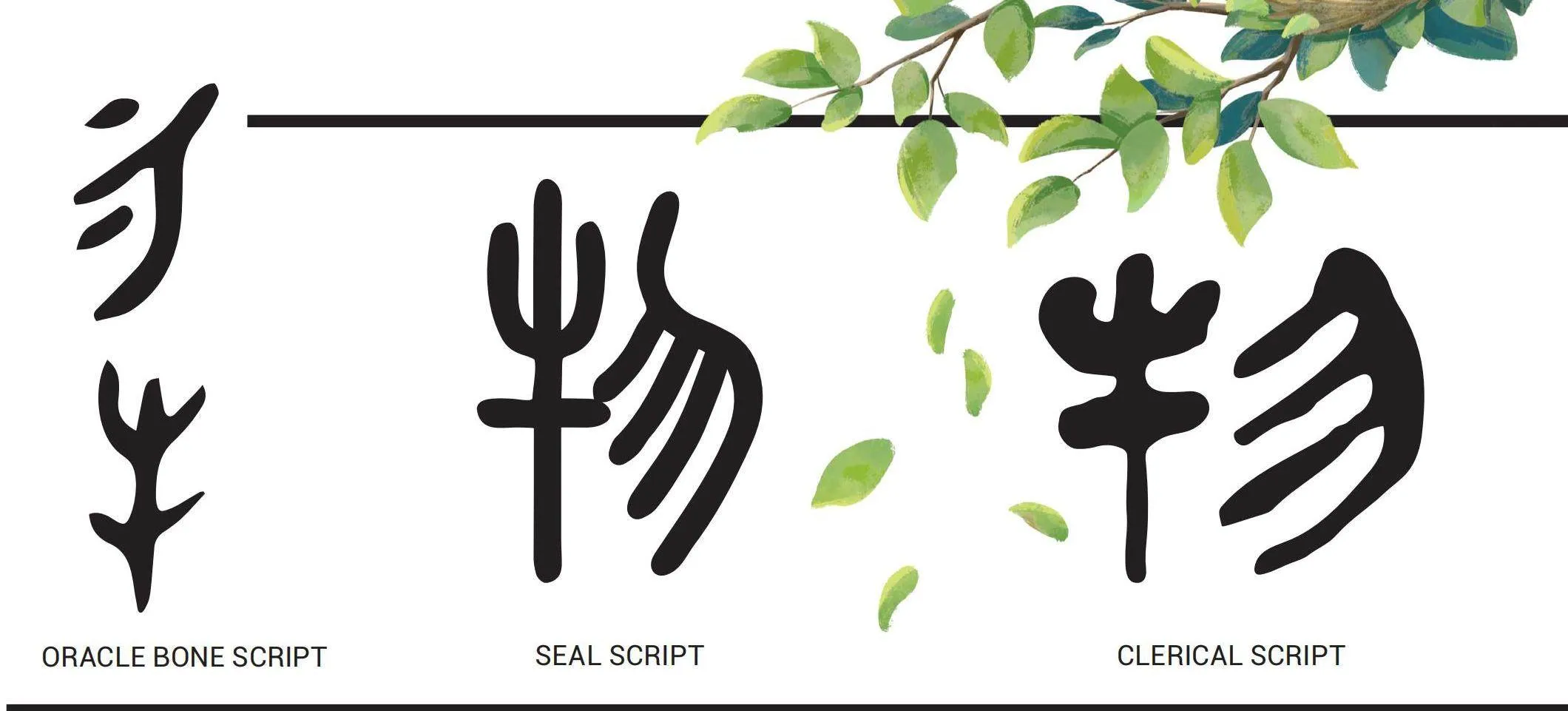
This notion is captured in the character 物(wù). It first appeared in oracle bone script over 3,000 years ago, as a compound of 牛(niú, ox, yak) and 勿(wù), which contributes to its pronunciation. Initially, this denoted an ox with multicolored fur, but (《說文解字》) from the 2nd century states that “物represents all entities. The ox is a being of significance, since all things under heaven arise from the ox’s plowing. (物,萬物也。牛為大物,天地之數,起于牽牛。Wù, wànwù yě. Niú wéi dà wù, tiāndì zhī shù, qǐ yú qiān niú.)”
While the character has largely retained its form and pronunciation through the ages, its meaning has broadened far beyond the original reference. In contemporary Chinese, 物encompasses various aspects of existence, from the biological to the cultural, such as 人物(rénwù, person), 動物(dòngwù, animal), 植物(zhíwù, plant), 食物(shíwù, food), and 文物(wénwù, cultural relic). Places like 植物園(zhíwùyuán, botanical garden) and 動物園(dòngwùyuán, zoo) serve as urban sanctuaries connecting us with nature and lead to important discussions on 動物權益(dòngwù quányì, animal rights). 生物(shēngwù, living beings) encompasses all life and reminds us of our fundamental link to the natural world, as humans are but a kind of 高等生物(gāoděng shēngwù, advanced animal).
Many idioms featuring 物implicitly advocate for the traditional Chinese virtue of moderation. 玩物喪志(wánwù sàngzhì) warns against losing ambition due to indulgence in hobbies;暴殄天物(bàotiǎn tiānwù) criticizes the squandering of natural resources; 物極必反(wùjí bìfǎn) suggests that extremes will inevitably lead to their reversals; while the proverb 一物降一物(yí wù xiáng yí wù) reminds us that everything has its match and no one is invincible.
Beyond physical objects, 物also ventures into intangible realms, representing the content of speech and writing. 言之有物(yánzhī yǒuwù) describes speech with meaningful content, as opposed to 空洞無物(kōngdòng wúwù), or empty talk. The idiom 睹物思人(dǔwù sīrén, to think of someone when seeing something associated with them) captures the human connection to objects and memories. Likewise, the nostalgia for a bygone time is poignantly expressed by the sorrowful lines of Song dynasty (960 – 1279) poet Li Qingzhao (李清照): “Things remain the same while the people change, and everything is over. I wish to speak, yet my tears fall first. (物是人非事事休,欲語淚先流。Wùshì rénfēi shìshì xiū, yù yǔ lèi xiān liú.)”
Philosophically, 物extends to 唯物主義(wéiwù zhǔyì), or materialism, which asserts that reality is materially based and independent of human perception. The academic term 物化(wùhuà, objectification) has recently entered public discourse, especially in discussions related to gender and sexual harassment, highlighting the character’s role in framing our understanding of reality.
Eventually, 物evolved to denote people or environments beyond oneself. 待人接物(dàirén jiēwù) refers to the way we engage with others, and 恃才傲物(shìcái àowù) describes an arrogant and contemptuous individual. The phrase 物我兩忘(wùwǒ liǎngwàng) describes a state of complete absorption in an activity to the point where one becomes oblivious to oneself and one’s surroundings, often experienced during moments of intense creativity or focus.
Another interesting term is 物色(wùsè). While it can be defined in today’s terminology as searching selectively (such as when a director casts actors), back in the Spring and Autumn period (770 – 476 BCE) it referred to the hue of animal fur, harking back to the character’s ancient origin.
In our present-day world, filled with an abundance of material wealth, one might wonder if it is still possible to remain true to oneself amidst the allure of worldly possessions. The answer may lie in the Daoist philosopher Zhuangzi (莊子) from around the 4th century BCE, who advises us to “物物而不物于物(wù wù ér bú wù yú wù, make use of things without being dominated by them)”—a timeless piece of wisdom for reflection.
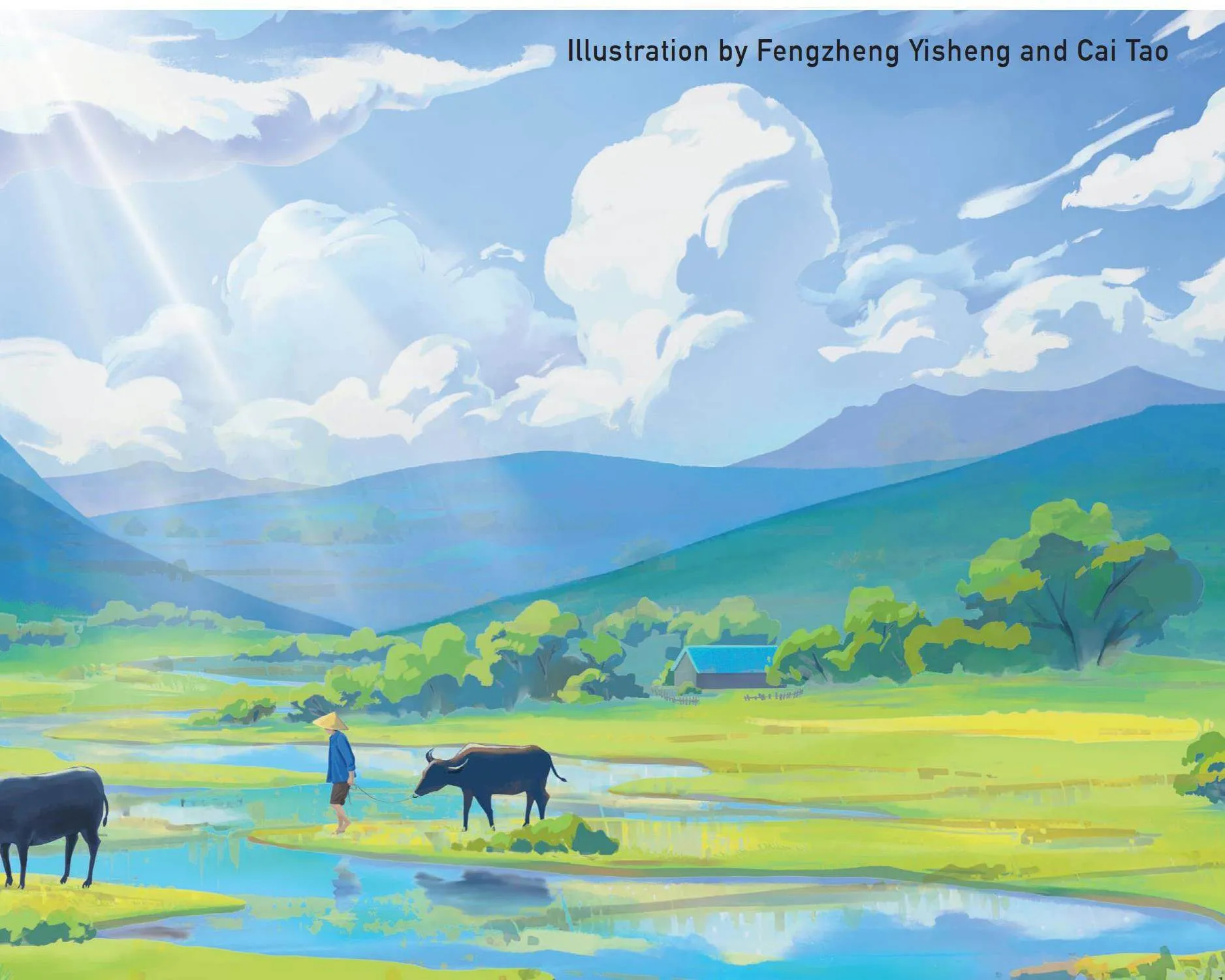
Illustration by Fengzheng Yisheng and Cai Tao