淺談虛擬語氣的用法
2009-07-30 09:50:46朱佳
黑河教育 2009年3期
朱 佳
語氣是動詞的一種形式,表示說話人對發生的動作或所處的狀態所表現出的態度和看法。英語中有三種語氣,即陳述語氣、祈使語氣和虛擬語氣。虛擬語氣在英語中較常見,表示人的主觀愿望、建議或與事實相反的假設之意,是高中英語語法學習的重點和難點。下面試對虛擬語氣的一些用法作以介紹。
1.虛擬語氣用在If引導的條件狀語從句中,其主句、從句的時態如下:
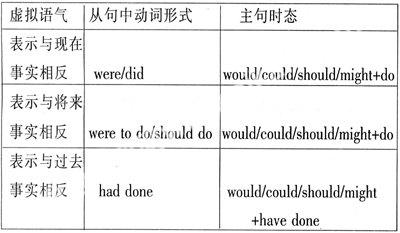
例句: ①If I were you,I would help you.
② If you were to come tomorrow,I would giveyoua book.
③ Ifhe had studied hard ,he would have succeeded.
這里需要強調的是:首先,當條件狀語從句的謂語中含有助動詞had, should或were時,有時可省略從句中的if,然后將had, should或were移到主語之前。如上面句②可變為:Were you to come tomorrow,I would give you a book.或者可以表達為:Should you come tomorrow, I would give him a book. 句③可變為:Had he worked hard , he would have succeeded.
其次,如果主句和從句所描述的動作不是同時發生,其動詞的形式要根據動作所發生的時間而定,所用的虛擬語氣要用混合虛擬語氣。如:If it had rained last night , it would be very cold today.
第三,含蓄虛擬條件句即不用條件句而是用介詞短語等來表示假設情況的虛擬語氣的用法。如:Without him ,the question couldnt have been solved in a short time.
2.虛擬語氣用在wish引導的賓語從句中,其動詞形式如下:
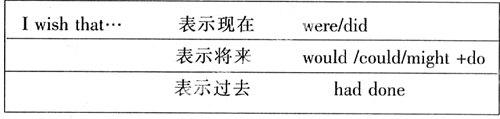
例句:① I wish I were you.
② I wish it would rain tomorrow.
③He wished he hadnt done it.
3.虛擬語氣用在as if/though引導的狀語從句或表語從句中,意為“好像”。
例句:①She loved the child as if he were her own.(方式狀語從句,表示與現在事實相反)
②It looked as if he hadnt cheated in the exam.(表語從句,表示與過去事實相反)
4.虛擬語氣用在It′stime 引導的從句中,意為“該是做什么的時候了”。
例句:①It is the first time I went there.
②It is time you watchedTV.
5.虛擬語氣用在would rather, would sooner等引導的從句中, 動詞采用過去式或過去完成式,意為“寧愿做什么”。
例句:①I would rather he came tomorrow than today.
I would just as soon you had returned the book yesterday.
6.虛擬語氣用在 insist 和 suggest 引導的賓語從句中,表示建議、要求或命令之意。
例句: ①She insisted that she had read thatbook.
②The smile on his face suggested that he had passed the exam.
總之,虛擬語氣的用法并非沒有規律可循,只要學生掌握了其正確的表達方法,注意主句、從句的時態呼應,就能在考試中做到萬無一失。
責任編輯付淑霞)