篇首語
2010-04-14 11:56:29孫捷
世界建筑 2010年8期
可持續建筑評估體系LEED的出現,對北美可持續建筑的發展產生了快速的推動作用。它標志著可持續建筑已經廣泛地從理論研究落實到了建筑實踐中。LEED評估體系不僅為建造可持續建筑提供了一些關鍵措施和方法,而且成功地在全球范圍內促進了整個建筑市場的轉變。在加拿大,目前可持續建筑評估采用的標準是加拿大LEEDNC 1.0,適用于新建和重大改建工程,它是在美國綠色建筑協會LEED-NC 2.1的基礎上,依據加拿大的氣候特點進行了改編的標準。
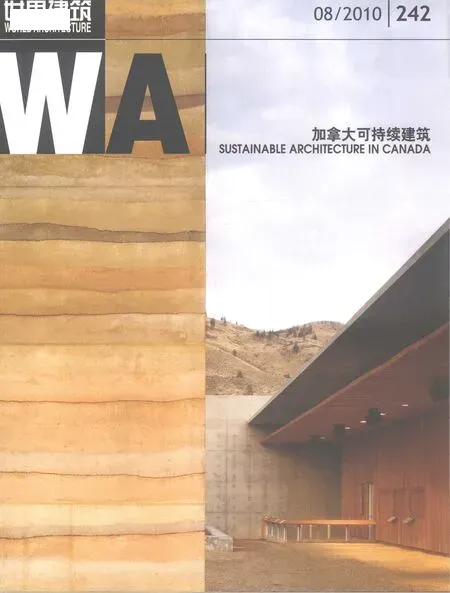
在本期加拿大可持續建筑專輯中,我們不僅介紹了一些最新的高投入、高性能表現的可持續建筑,如溫哥華會議中心和溫哥華冬奧會運動員村,還介紹了一些所謂“低技術”的作品, 運用傳統地方性手法、地方材料以及被動式太陽能和地源熱泵等手段。尼科米普沙漠文化中心和克勞福德灣學校就是這樣的作品。 此外,隨著節能技術成本的不斷降低, 加拿大可持續建筑的發展也呈現出了一些新的、追求更高標準的動向,大學城托幼設施和不列顛哥倫比亞大學的可持續發展交互研究中心,都是力求做到零能耗和完全不依賴于市政管網的設計實例。這兩個項目也是以“生態建筑挑戰”這一零能耗標準為設計目標的項目。
“所有評估體系的目的都是要促使市場的轉變”。中國在2006年頒布了自己的綠色建筑評估體系——綠色建筑評價標識認證,三星標準。如何促使整個建筑行業和市場的轉變,是中國可持續建筑發展要解決的關鍵問題。缺少具有建筑整合設計能力的專業人才,缺少可信賴的可持續建材市場以及過高的建設成本投入,這些是中國發展可持續建筑面臨的最大挑戰。通過學習加拿大可持續建筑發展的有益經驗,并試圖找到自己發展的解決方案是我們出版這期加拿大可持續建筑專輯的目的。□(孫捷)
Since the advent of LEED Green Building Rating System, the development of sustainable building has gained a rapid progress in North America. It indicates that sustainable buildings have widely developed from theory to industry practice. The LEED rating System has not only directed the industry some key measures and methods of sustainable building design, but also transformed the market successfully and globally. In Canada, the current rating system is LEED Canada-NC 1.0 Green Building Rating System for New Construction and Major Renovations and is adapted from the USGBC LEED-NC 2.1, but tailored specifically for Canadian climates.
In this Canada Sustainable Building special, we’ve introduced the newest high performance and high input projects like Vancouver Convention Centre and Vancouver Olympic Village, and also the‘low-tech’projects which are regional solutions using local materials, passive solar and geothermal heat etc, for individual sites.Projects like NK’MIP Desert Cultural Centre, Crawford Bay School are in this category. On the other hand, as renewable technologies become more cost effective, there are some new trends of the sustainable building development in Canada which are raising the bar. The UniverCity Childcare Facility and Centre for Interactive research on Sustainability at the University of British Columbia are two designs which are seeking net-zero energy and completely independent of municipal net services.
‘The goal of all the rating system is market transformation’. China has launched its national sustainable building rating system in 2007, Evaluation Standards of Green Building-the Three Star System. How to make the entire industry and the market transformed is the key of Chinese sustainable building development. Lacking of design talents who has the integrated building design capabilities, lacking of a reliable supply chain of sustainable building materials and the higher construction cost will be the big challenges that China has to face. Learning from the valuable experience of Canada, trying to find our own solutions are the purposes of this issue.□ (SUN Jie)
猜你喜歡
品牌研究(2022年26期)2022-09-19 05:54:46
城市道橋與防洪(2022年4期)2022-07-01 06:04:12
新世紀智能(數學備考)(2020年11期)2021-01-04 00:38:16
海峽姐妹(2019年3期)2019-06-18 10:37:10
當代陜西(2019年8期)2019-05-09 02:22:48
動漫星空(興趣百科)(2019年3期)2019-03-07 07:23:10
專用汽車(2016年4期)2016-03-01 04:13:43
新高考·高一物理(2014年1期)2014-09-18 01:26:07
中國火炬(2010年7期)2010-07-25 10:26:09
健康之家(2009年5期)2009-05-26 06:47:08