景觀濕地夏季原生動物群落結構與水質關系
2013-04-19 08:50:02孫志強施心路徐琳琳孟祥瑋劉桂杰
水生生物學報 2013年2期
孫志強施心路,徐琳琳孟祥瑋劉桂杰
(1.杭州師范大學動物適應與進化杭州市重中之重實驗室, 杭州 310036; 2.中國海洋大學原生動物研究室,青島 266003; 3.中國科學院水生生物研究所淡水生態與生物技術國家重點實驗室, 武漢 430072)
景觀濕地夏季原生動物群落結構與水質關系
孫志強1,2施心路1,2,3徐琳琳1孟祥瑋1劉桂杰1,3
(1.杭州師范大學動物適應與進化杭州市重中之重實驗室, 杭州 310036; 2.中國海洋大學原生動物研究室,青島 266003; 3.中國科學院水生生物研究所淡水生態與生物技術國家重點實驗室, 武漢 430072)
2011年夏季(6—8月)對杭州市境內一景觀濕地——西溪國家濕地公園進行采樣, 共得原生動物樣品21個。利用浮游生物研究方法對該濕地水域中原生動物的種類組成、群落特征、優勢種分布、指示種及生物多樣性指數進行了綜合分析, 研究了該特征性水域中原生動物的群落特征與水質變動之間的關系。共鑒定原生動物84種, 隸屬于3綱45屬, 其中鞭毛蟲綱61種, 纖毛蟲綱14種, 肉足蟲綱9種。優勢種主要為隱滴蟲(Cryptomonas)和眼蟲(Euglena), 均屬于鞭毛蟲綱; 污染性指示種及Margalef等多樣性指數均表明水質呈中度污染狀態; 在原生動物功能類群中, 光合自養者最多, 腐生者、雜食者和捕食者相對較少; 主要理化指標中TN、TP和COD含量均較高, 且對原生動物群落的影響較大, 是造成群落變化的主要原因。綜合評價結果揭示出, 西溪國家濕地公園水體目前仍處于中度污染狀況。研究對濕地水域的污染原因進行了分析并提出了防治參考對策。
景觀濕地; 原生動物; 群落結構; 物種多樣性; 水質監測
原生動物是一類形態各異, 分布極廣, 在各種自然環境水域中極為常見的一種單細胞生物, 它們在水體中的種類多且數量大, 是自然水域生態類群中的重要組成部分, 因此在水生生物物質循環和能量流動中扮演了極為重要的角色[1—3]。它們的存在,對于維持生態系統結構的穩定性和可持續性起著不可替代的作用。因此, 原生動物被廣泛地應用于水域環境監測及水體富營養化評價中, 許多種類也正越來越多地被認為是水體污染的指示生物而得到廣泛利用[4—6]。利用原生動物的群落結構特征及變化規律可以及時反映出水體環境現狀的變化, 近年來,已有許多學者在該領域做了大量的研究, 并取得了一系列的可喜成果[1—6]。
作者等依據地區特征選取杭州市的著名景觀濕地——西溪國家濕地公園(簡稱西溪濕地)作為研究的區域, 希望此研究結果為后續進一步開展濕地水域的相關研究提供依據。
西溪濕地距離著名的世界遺產保護地——西湖約5 km, 是一處罕見的位于繁華都市中的次生性濕地, 被稱為“天堂綠腎”[7], 是目前我國第一個也是唯一的集城市濕地、農耕濕地、文化濕地于一體的國家濕地公園。公園東起杭州紫金港路西側(E120°05′12.34″),西至繞城公路東側(E120°02′19.40″), 南起天目山路沿山河(N30°14′57.57″), 北至文二西路(N30°16′56.99″),面積約為11.5 km2, 河流交錯成網, 并有水塘鑲嵌,水域面積占總面積的46%[8]。濕地水流主體自南部的沿山河向北流, 最終匯入余杭塘河, 但下游余杭塘河水位較高時, 本區域會出現局部的倒流現象,加上河網的復雜性, 故水流方向隨季節和水位的情況而移, 具有一定程度的不確定性[9]。
隨著西溪濕地在旅游業和城市生態中的作用日趨重要, 為了保護好城市的“綠腎”, 讓濕地效益可以持續的發展下去, 本文對西溪濕地游客開放區域夏季原生動物群落結構及物種多樣性變化進行了初步的調查研究, 以期為濕地水域的可持續發展及污染治理提供科學依據, 本工作的結果也將為全國城市性濕地的生物多樣性研究提供參考。
1 材料與方法
1.1 采樣點設置
本文依據水域環境特征共選取7個采樣點(圖1),樣點設置主要考慮水的流動特征及人類活動對其產生的影響等多方面因素。工作重點主要集中于對游客開放的一期和二期工程部分, 樣點描述(表1)。
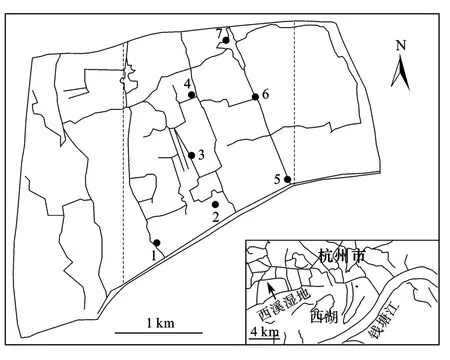
圖1 西溪濕地的原生動物采樣點分布Fig.1 Distribution of sampling sites in Xixi Wetland
1.2 樣品采集
于2011年6月—8月, 每月中旬進行采樣, 共得到21個原生動物樣品。具體實驗方法均按照相關文獻[10—14]進行(下同)。采自上中下水層的1 L水樣加10 mL魯哥試劑, 靜置48h, 利用虹吸原理濃縮至50 mL左右, 加1 mL濃度 4%的甲醛溶液保存以備鏡檢。
1.3 物種鑒定和統計
先輕輕搖勻樣品, 然后吸取0.1 mL置于0.1 mL計數框中, 放置1—2min后在顯微鏡下全片計數,取兩片計數的平均值, 按照以下公式計算個體密度:

N: 個體密度(ind./L); V: 采樣體積(L); Vs: 沉淀體積(mL); Va: 計數體積(mL)
n: 計數所得個體數
觀察使用帶數碼攝像功能的顯微鏡Nikon E200。物種鑒定主要依據: 《微型生物監測新技術》[15]、《淡水浮游生物圖譜》[16]和《淡水浮游生物研究方法》[17]。
1.4 水質狀況分析
對所采水樣按照水質評價及監測標準進行理化指標測定, 主要包括: 溫度(T)、酸堿度(pH)、溶解氧(DO)、五日生化需氧量(BOD5)、化學需氧量(CODCr)、總氮(TN)和總磷(TP)。其中溶解氧和溫度在采樣現場用便攜式儀器測定(HACH sension 156 Multi METER)[18]。
1.5 數據處理
根據公式Y = (Ni/N) fi計算物種的優勢度。式中Ni為第i種的個體數; N為樣品中所有種類的總個體數; fi為第i種的出現頻率。Y>0.02為優勢種。
計算多樣性指數: Margalef多樣性指數(d)、Shannon-Wiener多樣性指數(H)、Simpson多樣性指數(D)和均勻度(J)。公式如下:

其中S為物種數; ni為第i種的個體數; N為總個體數。
原生動物不同污染程度指示種及功能營養類群按照沈韞芬等[15]《微型生物監測新技術》進行劃分。
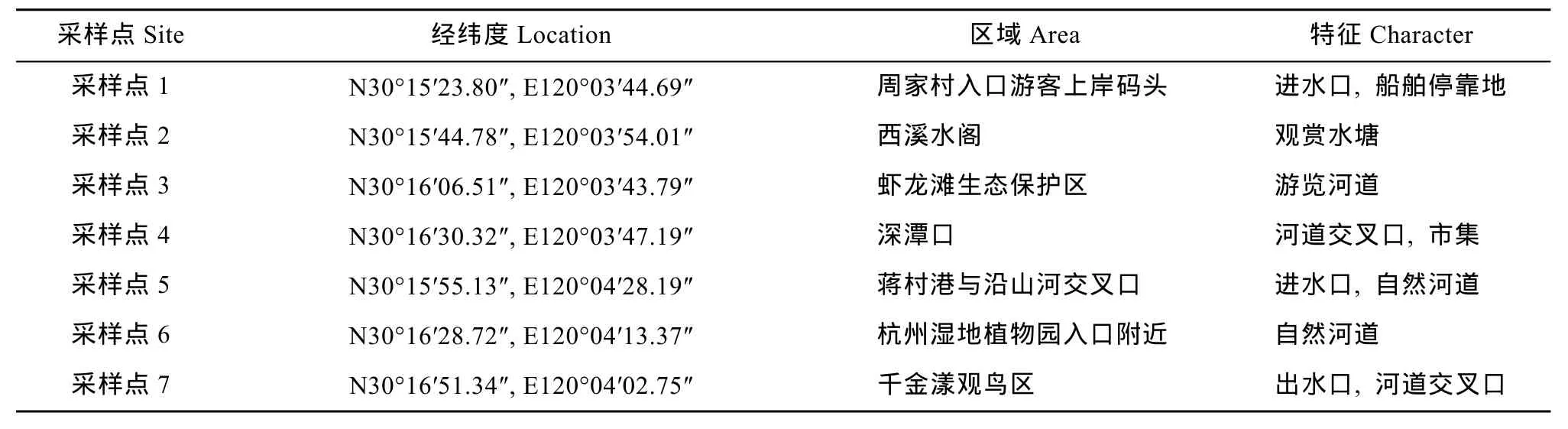
表1 西溪濕地原生動物采樣點Tab.1 Synopsis of sampling sites in Xixi Wetland
2 結果
2.1 西溪濕地原生動物種類組成及分布
通過對西溪濕地原生動物調查發現, 共有原生動物84種, 隸屬于3綱45屬。鞭毛蟲綱28屬61種, 纖毛蟲綱12屬14種, 肉足蟲綱5屬9種(圖2)。鞭毛蟲中隱滴蟲屬(Cryptomonas)和眼蟲屬(Euglena)占多數, 分別達到8種和29種。各采樣點常見種有嚙蝕隱滴蟲(Cryptomonas erosa)、卵形隱滴蟲(Cryptomonas ovata)、蛋白核隱滴蟲(Cryptomonas pyrenoidifera)和尾眼蟲(Euglena caudata)等。
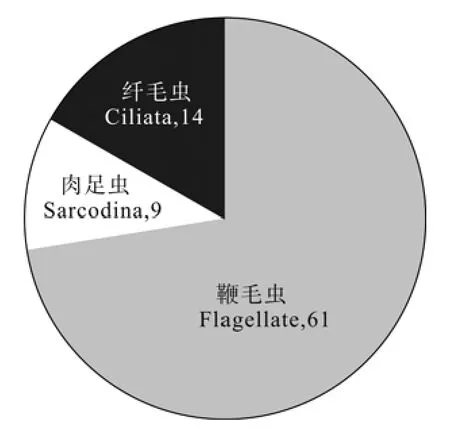
圖2 西溪濕地原生動物的種類組成Fig.2 Composition of protozoan communities in Xixi Wetland
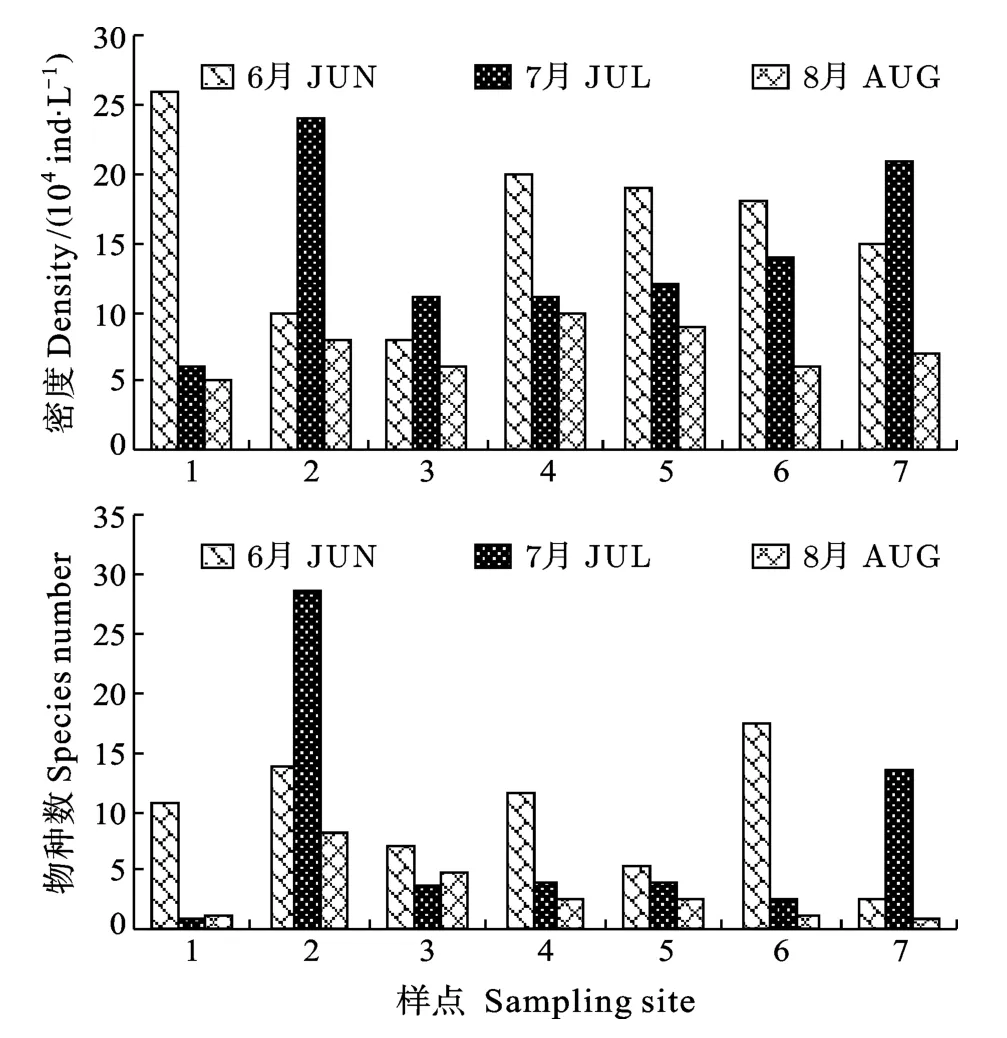
圖3 西溪濕地夏季7個采樣點原生動物種類數和密度的變化Fig.3 Variation of species number and density of protozoan at seven sampling sites in Xixi Wetland in summer
各樣點原生動物種類數變化和密度變化(圖3)顯示, 物種數最大值出現在6月份樣1中, 達到26種; 最小值在8月份樣1中, 只有5種。密度最大值出現在7月份樣2中, 達到287500 ind./L, 最小值是在8月份樣7中, 只有8000 ind./L。樣2中密度相對較高可能與靜水水塘有利于原生動物生長有關。通過SPSS13.0進行方差分析發現, 各采樣點間原生動物種類數(F=0.238, P=0.956)和密度(F=1.390, P= 0.285)差異并不顯著, 可能是由于濕地水域面積不大, 水流復雜等因素所致。
西溪濕地水域中的原生動物優勢種隨著采樣時間的變化稍有變化, 6月份最多, 有6種優勢種, 7月份減少到5種, 8月份僅有3種。它們的優勢度(表2)。優勢種多屬鞭毛綱中的隱滴蟲(Cryptomonas)和眼蟲(Euglena), 可能跟夏季光照和營養充足有關。
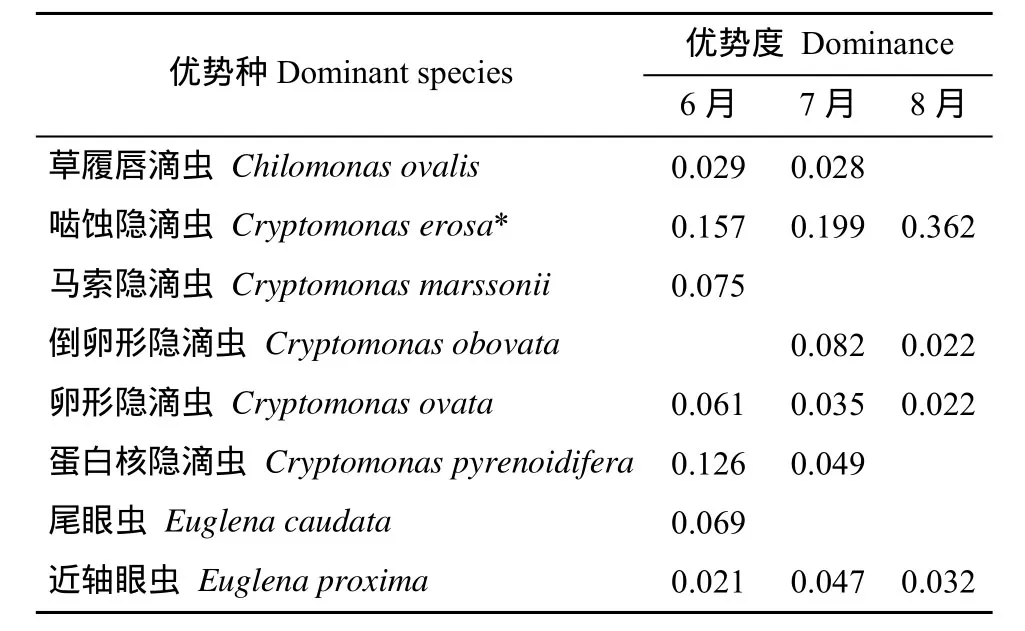
表2 西溪濕地原生動物優勢種時間分布Tab.2 Monthly distribution of dominant species of protozoan in Xixi Wetland in summer
2.2 西溪濕地原生動物群落多樣性指數分析
Margalef多樣性指數規定: 0—1為重度污染, 1—2為嚴重污染, 2—4為中度污染, 4—6為輕度污染, 大于6為清潔水體[19]。研究中西溪濕地共出現5次嚴重污染, 14次中度污染, 2次輕度污染, 揭示了西溪濕地水質目前總體處于中度污染中。
Simpson多樣性指數在0.678—0.890范圍內波動, 最小值出現在6月份樣3, 最大值出現在6月份樣5(圖4)。
Shannon-Wiener多樣性指數變化主要集中在1.956—3.609間, 最大值出現在6月份樣1, 最小值出現在8月份樣3(圖4)。其值為0—1時, 代表水質嚴重污染, 1—2時中等污染, 2—3時輕度污染, 大于3時代表清潔水體[20]。結果與Margalef多樣性指數基本一致。
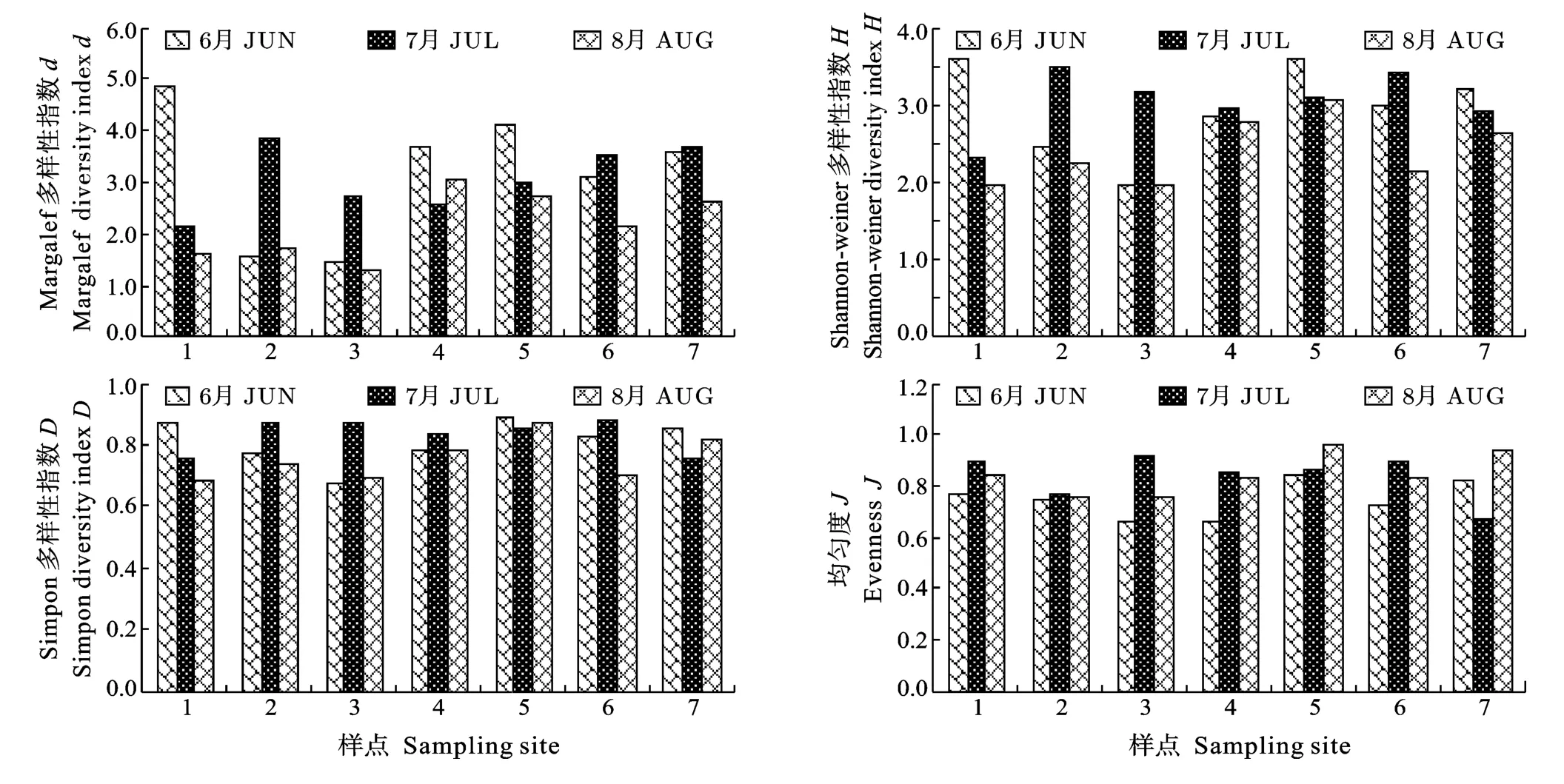
圖4 西溪濕地夏季7個采樣點原生動物多樣性指數變化Fig.4 Variation of diversity index at seven sampling sites in Xixi Wetland in summer
均勻度變化范圍是0.657—0.962, 波動幅度較小。值越大說明原生動物分布越均勻。
方差分析發現, 4個多樣性指數在樣點間差異均不顯著(F值分別為0.839、0.897、0.669、0.659, P值均大于0.05), 進一步表明西溪濕地夏季原生動物樣點間分布差異不大。
2.3 西溪濕地原生動物功能類群劃分及污染指示種分布
Pratt, et al.[21]通過對美國6個濕地和一個河流中原生動物群落特征的研究, 按照食性將原生動物劃分為6個功能類群, 分別是: (1)光合自養者P, (2)食菌屑者B, (3)食藻者A, (4)腐生者S, (5)雜食者N, (6)捕食者R。干凈的水體自養程度高, 隨著水質的污染, 異養程度就增加[22]。若群落中P組和A組占比例大, 說明水質較好, 若S組和B組比例加大, 說明水質變差。按照沈韞芬等[15]所列種類對西溪濕地原生動物種類進行功能類群劃分(表3), P組(48種)、B組(24種)、A組(14種)、S組(2種)、N組(3種)、R組(3種), P組和A組占的比例較大。
原生動物對水質污染的耐受性不同, 所以在污染程度不同的水域中會出現不同的種類, 有些種類對環境的反應非常靈敏, 德國學者Kolrwitz和Marsson早在1909年就提出了指示種的概念, 總結了不同污染帶的指示種類。參照沈韞芬等[15]的劃分,鑒定出了西溪濕地中存在的污染指示種(表4)。三次采樣中, 共鑒定原生動物污染指示種15種, 其中多污性3種, α-中污性9種, β-中污性8種, 寡污性3種。所有中污性指示種占所鑒定指示種類的比例為86.667%, 據此表明, 西溪濕地水域已受到中度污染。
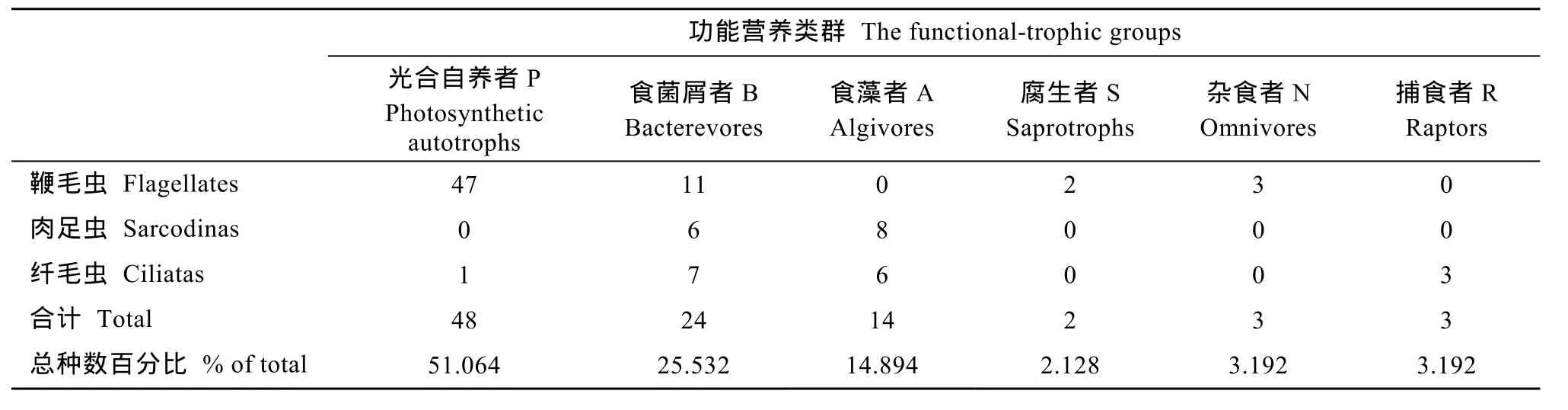
表3 西溪濕地夏季原生動物功能類群所占比例Tab.3 Proportion of protozoan functional group in Xixi Wetland in summer
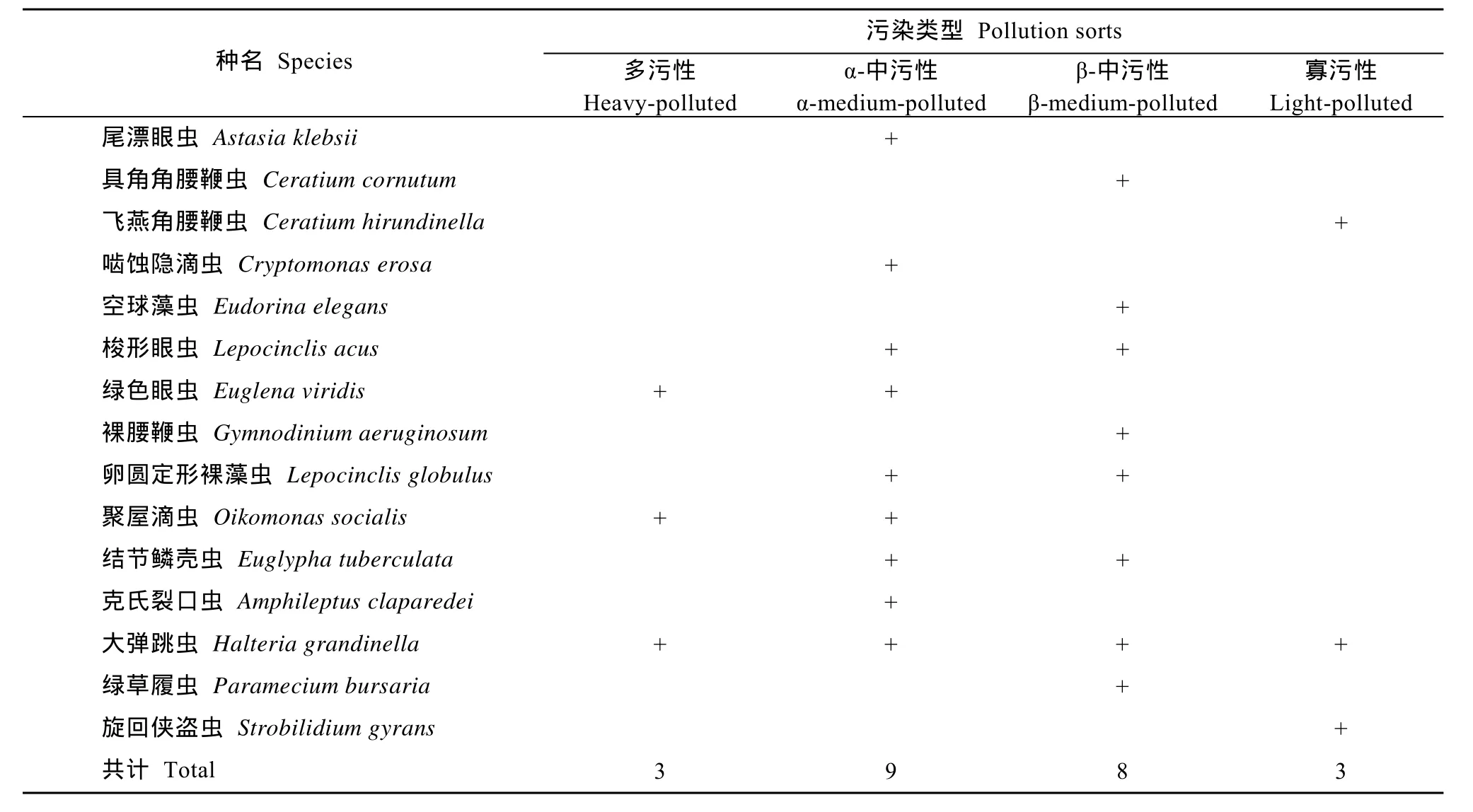
表4 西溪濕地夏季原生動物污染指示種類Tab.4 Species of pollution indicators in Xixi Wetland in summer
2.4 西溪濕地水質理化指標及與原生動物分布相關性分析
西溪濕地水質理化指標的測定結果顯示(圖5),實驗水域的溫度變化基本都維持在24—32℃(圖中沒有畫出), 三次采樣各樣點間差別不大; pH變化不是很大, 基本都維持在7左右; DO最大值出現在7月份樣7中, 為7.351, 最小值出現在8月份樣4中,為2.988, 樣3波動最小, 樣7波動最大; BOD值在0.732—5.051 mg/L間波動, 各樣點間變化趨勢類似; 6月份的COD值明顯高于7月份和8月份的, 最大值達到104.031 mg/L, 最小值出現在8月份樣7中,為10.310 mg/L; TN值也是6月份的要高于其他兩個月份, 最大值出現在6月份樣1中, 達到5.399, 最小值在7月份樣7中, 為0.368; TP值各月份之間差異不是很大, 樣點間波動也比較小。
參考《地表水環境質量標準》GB 3838-2002對水質進行分級[23]。采樣過程中各指標平均值分別是: DO 5.002、BOD 2.681、COD 42.327、TN 2.508、TP 0.143。它們的分級分別是: DO Ⅲ類, BODⅠ類, CODⅤ類, TN Ⅴ類, TP Ⅲ類。污染最嚴重的是COD和TN。
通過SPSS 13.0對西溪濕地水質理化指標與原生動物數據的相關性分析發現(表5), 種類數與溫度和pH呈顯著負相關, 而與COD呈顯著正相關; Margalef指數和Shannon-Wiener指數均與pH呈顯著負相關。由于夏季溫度本來就高, 過高的溫度反而會抑制原生動物的生長; 白天藻類有很強的光合作用, 導致pH升高, 而pH升高又會抑制原生動物的生長[24]; COD代表著水中的有機污染, 在一定程度上COD升高會刺激原生動物的大量生長。
3 討論
3.1 西溪濕地夏季原生動物的組成特點
西溪濕地夏季原生動物物種豐富, 本次調查共鑒定原生動物84種, 隸屬于3綱45屬, 其中以鞭毛蟲居多, 占總種類數的72.596%, 而肉足蟲和纖毛蟲則相對較少; 在個體密度中, 鞭毛蟲也占據主要優勢, 達到93.93%, 其中又以隱滴蟲(Cryptomonas)和眼蟲(Euglena)為主。西溪濕地夏季原生動物優勢種如: 草履唇滴蟲(Chilomonas ovalis)、嚙蝕隱滴蟲(Cryptomonas erosa)、尾眼蟲(Euglena caudata)、近軸眼蟲(Euglena proxima)等, 均屬于鞭毛蟲。這樣的物種組成特征可能是由于水體的富營養化而造成耐受性強的物種大量生長, 以及夏季溫度較高, 光照充足, 西溪濕地水體流動性較小等因素所致。其他研究也有類似現象, 如姜勇等[25]發現青島膠州灣浮游原生生物中鞭毛藻的豐度遠遠大于纖毛蟲; 趙文[26]在《水生生物學》一書中也提到, 隱藻喜生于有機物和氮豐富的水體, 裸藻喜歡在有機質豐富的靜水體中。對各樣點間的種類數、個體豐度及多樣性指數運用SPSS13.0進行差異性分析發現, P值均大于0.05, 差異不顯著, 表明西溪濕地原生動物分布的空間差異不明顯, 在各采樣點間比較均衡, 可能與該水域水流的復雜性及水域面積較小等因素有關。
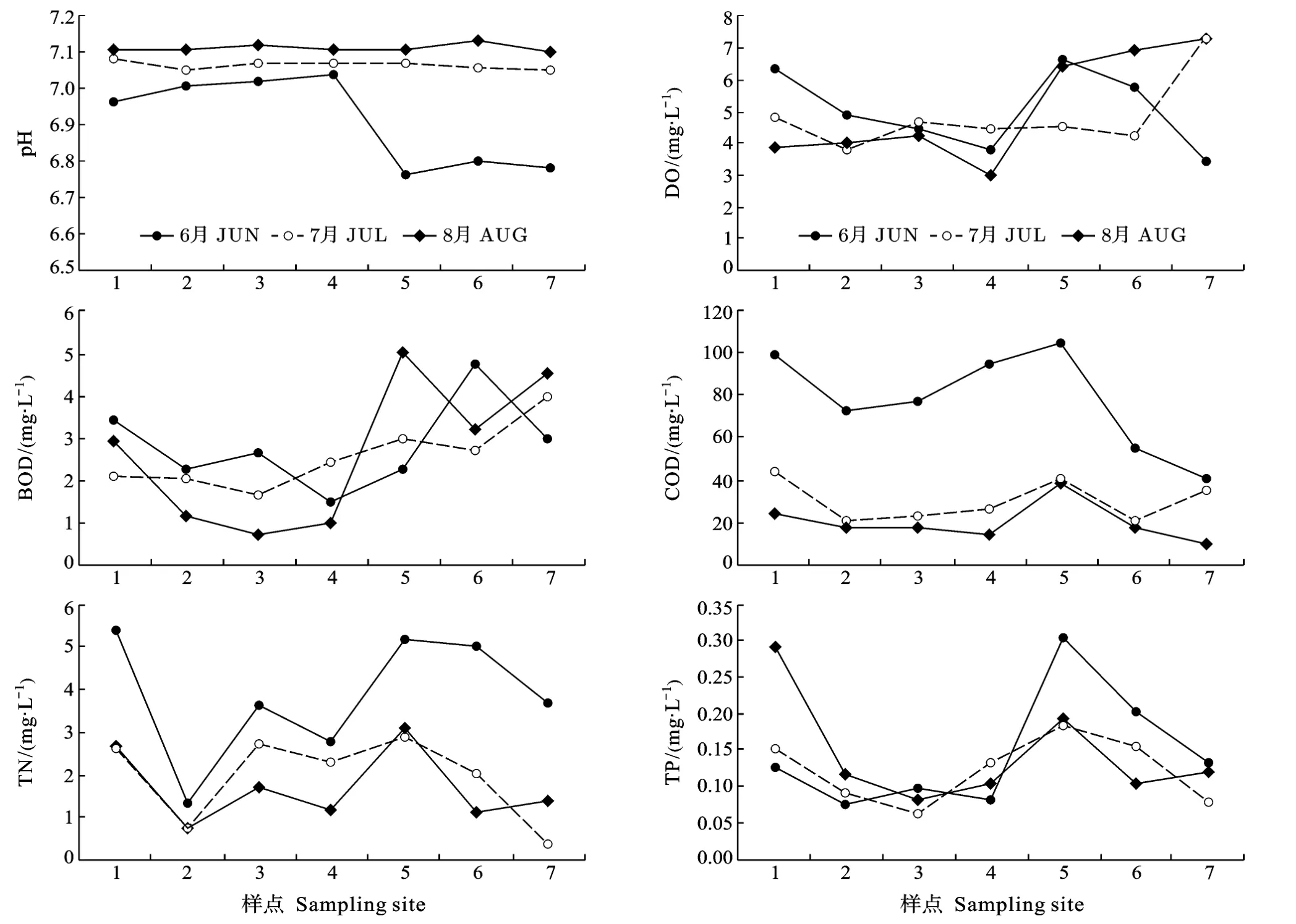
圖5 西溪濕地各采樣點水質狀況Fig.5 The water quality conditions in Xixi Wetland
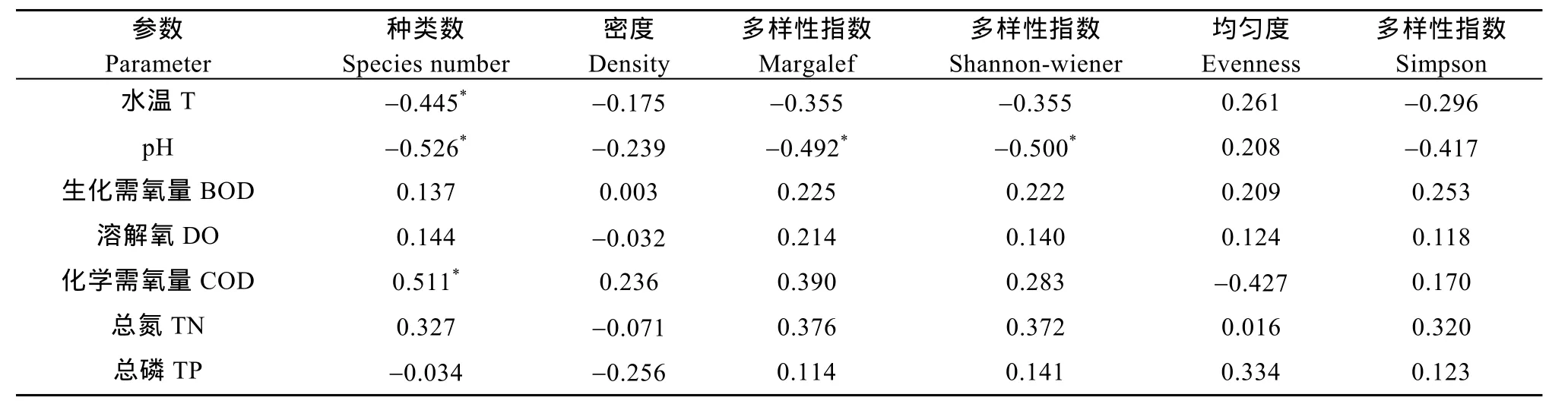
表5 西溪濕地主要理化數據與生物數據間的相關系數Tab.5 Regression coefficient of environmental datas with biological datas in Xixi Wetland
3.2 西溪濕地夏季原生動物群落與水質的關系
西溪濕地夏季原生動物的污染指示種分布顯示, α-中污性和β-中污性的指示種類占多數, 共達到所有指示種類的86.667%, 且優勢種中的嚙蝕隱滴蟲(Cryptomonas erosa)同時也是α-中污性污染指示種的一種, 根據原生動物污染指示種的定義可以認為西溪濕地水質處于中度污染中。類似于對白洋淀[27]受有機污染較嚴重的水體的研究, 發現耐污種類形成優勢種群而具有很高的個體數量和生物量; 在上海明珠湖[4]及長江洞庭湖口[28]的原生動物調查研究中發現中性污染指示種占多數, 指示結果與其理化指標非常吻合, 充分說明了原生動物污染指示種在監測、評價淡水水域污染中, 具有一定的可靠性。生物多樣性指數監測的結果也表明了西溪濕地水質受到了一定程度的污染, 如Margalef多樣性指數的值多在2—4, 指示了水質處于中度污染。在原生動物功能類群中, 進行光合自養的類群P組較多, 按照規定指示水質清潔, 但由于P組中以隱滴蟲和眼蟲居多, 而它們喜歡生活在有機質豐富的水中, 喜高溫及靜水, 反而說明水質已經受到一定的有機污染[26]。對西溪濕地水質理化指標分析發現, 各指標均表現出不同程度的污染, 特別是COD、TN和TP的值偏高, 說明該水域的污染類型主要是有機污染。水質理化結果與上述生物指示結果一致。
西溪濕地原生動物對水體富營養化的反映中,雖然主要的水質營養指標TN、TP及COD與生物數據沒有顯著相關, 但當6月份TN、TP和COD濃度明顯高于其他月份時(由于暴雨沖刷所致), 本月各樣點原生動物密度也明顯高于其他月份, 說明原生動物密度與水體富營養化程度密切相關, 它們可能是通過 N、P→自養型鞭毛蟲和混合營養的纖毛蟲→其他原生動物, 這樣一條食物鏈作用的[29]。這種變化與武漢東湖[30]、天津漢沽穩定塘[31]、太湖梅梁灣湖區[32]的結果類似, 表明對西溪濕地原生動物起主要作用的環境因子是氮磷濃度。
3.3 西溪濕地水質的污染原因及防治對策
對比近十年來的西溪濕地水質發現, 2004年之前的水質狀況比較惡劣, 之后經過全方位治理水質明顯改善, 近幾年比較平穩但富營養化問題依然存在, TN、TP、COD等指標仍居高不下[33—35]。西溪濕地的水體污染源主要包括[34]: (1)外圍河道帶來的污染。周圍存在著較多的農田、魚塘、工廠以及生活污水的排放, 都通過各個河流進入西溪濕地公園內; (2)內部游人、飯店和農業活動的影響, 如樣4是游客聚集處, 飯店、商店較多, 容易造成人為污染; (3)底泥中沉積的污染物。要解決西溪濕地的污染問題就要對癥下藥, 從問題的根源入手, 從根本上解決問題。可以從以下幾個方面努力: (1)對外圍污染源的控制, 從根源上杜絕污染輸入, 并且加強對外圍河道的治理, 讓污染物在進入西溪濕地之前就消耗殆盡。(2)加強管理, 杜絕游人及飯店污染。(3)堅持市政府的“引配水”政策, 以“自我為主, 適度干預”為原則進行適當引水[33]。(4)加強濕地的自凈能力, 保護濕地生物多樣性, 引入凈水動植物, 也可以考慮疏浚底泥, 人工浮島等措施[34]。
綜上所述, 西溪濕地的水質存在一定程度的污染, 加強對水質的監測和治理勢在必行。本研究進一步表明, 原生動物及其群落變化在水質監測和淡水水質評價中具有重要作用。
[1] Xu R L, Bai Q S, Xie R W.PFU protozoan community characteristics and the relation with the water quality in the Guangzhou reach of the Pearl River [J].Acta Ecologica Sinica, 2002, 22(4): 479—485 [徐潤林, 白慶笙, 謝瑞文.珠江廣州市段PFU原生動物群落特征及其與水質的關系.生態學報, 2002, 22(4): 479—485]
[2] Xu M Q, Cao H.Ecological basis and application of PFU protozoan community in bio-monitoring with relation to water quality [J].Acta Ecologica Sinica, 2004, 24(7): 1540—1547 [許木啟, 曹宏.PFU原生動物群落生物監測的生態學原理與應用.生態學報, 2004, 24(7): 1540—1547]
[3] Shen Y F, Gong X J, Gu M R.Studies of biological monitoring by using PFU protozoan community [J].Acta Hydrobiologica Sinica, 1985, 9(4): 299—308 [沈韞芬, 龔循矩, 顧曼如.用PFU原生動物群落進行生物監測的研究.水生生物學報, 1985, 9(4): 299—308]
[4] Chen L J, Gu J, Hu Z J, et al.The research of protozoa community structure in Mingzhu Lake of Chongming Island, Shanghai [J].Journal of Fisheries of China, 2010, 34(9): 1404—1413 [陳立婧, 顧靜, 胡忠軍, 等.上海崇明明珠湖原生動物的群落結構.水產學報, 2010, 34(9): 1404—1413]
[5] Chen H, Shi X L, Tan X L, et al.Changes of protozoao community diversity in the swampy water area in Hangzhou, China [J].Chinese Journal of Ecology, 2007, 26(10): 1549—1554 [陳紅, 施心路, 譚曉麗, 等.杭州沼澤性水域原生動物群落變化規律.生態學雜志, 2007, 26(10): 1549—1554]
[6] Han L, Shi X L, Liu G J, et al.Preliminary studies on protozoans community diversity in the water area of the Sun Island in Harbin [J].Acta Hydrobiologica Sinica, 2007, 31(2): 272—277 [韓蕾, 施心路, 劉桂杰, 等.哈爾濱太陽島水域原生動物群落變化的初步研究.水生生物學報, 2007, 31(2): 272—277]
[7] Gao Y L.The practices and improvements of the Xixi National Wetland Park Model, Hangzhou [J].Wetland Science & Management, 2006, 2(1): 55—59 [高乙梁.西溪國家濕地公園模式的實踐與探索.濕地科學與管理, 2006, 2(1): 55—59]
[8] Li Y F, Liu H Y, Cao X, et al.Characteristics of temporal and spatial distribution of water quality in urban wetland of the Xixi National Wetland Park, China [J].Environmental Science, 2010, 31(9): 2036—2041 [李玉鳳, 劉紅玉, 曹曉, 等.西溪國家濕地公園水質時空分異特征研究.環境科學, 2010, 31(9): 2036—2041]
[9] Miu L H.Research review of Xixi Wetland in Hangzhou [J].Journal of Anhui Agricultural Sciences, 2009, 37(11): 5043—5044 [繆麗華.杭州西溪濕地研究綜述.安徽農業科學, 2009, 37(11): 5043—5044]
[10] Kchaou N, Elloumi J, Drira Z, et al.Distribution of ciliates in relation to environmental factors along the coastline of the Gulf of Gabes, Tunisia [J].Estuarine, Coastal and Shelf Science, 2009, 83: 414—424
[11] Tan X L, Shi X L, Liu G J, et al.An approach to analyzing taxonomic patterns of protozoan communities for monitoring water quality in Songhua River, northeast China [J].Hydrobiology, 2010, 638: 193—201
[12] Xu H L, Zhang W, Jiang Y, et al.An approach to determining the sampling effort for analyzing biofilm-dwelling ciliate colonization using an artificial substratum in coastal waters [J].Biofouling, 2011, 27: 357—366
[13] Shi X L, Tan X L, Liu G J, et al.Seasonal change of phytoplankton community and biological evaluation about water quality of an artificial lake in Northeast China [J].Journal of Hangzhou Normal University (Natural Science Edition), 2009, 8(2): 132—143 [施心路, 譚曉麗, 劉桂杰, 等.東北地區人工湖泊浮游藻類變動與生物學評價.杭州師范大學學報(自然科學版), 2009, 8(2): 132—143]
[14] Xu H L, Zhang W, Jiang Y, et al.An approach to identifying potential surrogates of periphytic ciliate communities for monitoring water quality of coastal waters [J].Ecological Indicators, 2011, 11: 1228—1234
[15] Shen Y F, Zhang Z S, Gong X J, et al.Modern Biomonitoring Techniques Using Freshwater Microbiota [M].Beijing: China Architecture Building Press.1990, 152—524 [沈韞芬,章宗涉, 龔循矩, 等.微型生物監測新技術.北京: 中國建筑工業出版社.1990, 152—524]
[16] Han M S.Maps of Freshwater Plankton [M].Beijing: Agriculture Press.1980, 44—107 [韓茂森.淡水浮游生物圖譜.北京: 農業出版社.1980, 44—107]
[17] Zhang Z S, Huang X F.Research Methods of Freshwater Plankton [M].Beijing: Science Press.1991, 52—251 [章宗涉, 黃祥飛.淡水浮游生物研究方法.北京: 科學出版社.1991, 52—251]
[18] Ministry of Environmental Protection of the People’s Republic of China.Water and Wastewater Monitoring and Analysis Methods (Fourth Updated Edition) [M].Beijing: China Environmental Science Press.2002, 88—104 [國家環境保護總局.水和廢水監測分析方法 (第四版).北京: 中國環境科學出版社.2002, 88—104]
[19] Zhang Z B, Shi X L, Liu G J, et al.The relationship between planktonic algae changes and the water quality of the West Lake, Hangzhou, China [J].Acta Ecologica Sinica, 2009, 29(6): 2980—2988 [張志兵, 施心路, 劉桂杰, 等.杭州西湖浮游藻類變化規律與水質的關系.生態學報, 2009, 29(6): 2980—2988]
[20] Zhou F X.Biological Monitoring [M].Beijing: Chemical Industry Press.2006, 51—52 [周鳳霞.生物監測.北京: 化學工業出版社.2006, 51—52]
[21] Pratt J R, Caima J Jr.Functional groups in the protozoa: roles in differing ecosystems [J].Protozool, 1985, 32(3): 415—423
[22] Chen T, Huang J R, Chen S P, et al.PFU protozoan community colonization process and its indication of water quality in Guangzhou urban artificial lakes [J].Chinese Journal of Applied and Environmental Biology, 2004, 10(3): 310—314 [陳廷, 黃建榮, 陳晟平, 等.廣州市區人工湖泊 PFU原生動物群落群集過程及其對水質差異的指示作用.應用與環境生物學報, 2004, 10(3): 310—314]
[23] Compiled by the Water Quality Standards Group.Compilation of Water Quality Standard [M].Beijing: Standards Press of China.2005, 12—26 [水質標準匯編組編.水質標準匯編.北京: 中國標準出版社.2005, 12—26]
[24] Zhang P L, Sun C J.The influence of algae growing on pH and DO in surface water [J].Environmental Monitoring in China, 2004, 20(4): 49—50 [張澎浪, 孫承軍.地表水體中藻類的生長對pH及溶解氧含量的影響.中國環境監測, 2004, 20(4): 49—50]
[25] Jiang Y, Xu H L, Zhu M Z, et al.Planktonic protists in Jiaozhou Bay, China: annual variation abundance and correlation with environmental conditions [J].Periodical of Ocean University of China (Natural Science Edition), 2010, 40(3): 17—23 [姜勇, 許恒龍, 朱明壯, 等.膠州灣浮游原生生物時空分布特征——豐度周年變化及與環境因子間的關系.中國海洋大學學報(自然科學版), 2010, 40(3): 17—23]
[26] Zhao W.Hydrobiology [M].Beijing: China Agriculture Press.2005, 74—99 [趙文.水生生物學.北京: 中國農業出版社.2005, 74—99]
[27] Xu M Q, Zhu J, Cao H.The relationship between the protozoan community diversity and the water in the Baiyangdian Lake [J].Acta Ecologica Sinica, 2001, 21(7): 1114—1120 [許木啟, 朱江, 曹宏.白洋淀原生動物群落多樣性變化與水質關系研究.生態學報, 2001, 21(7): 1114—1120]
[28] Song B Y.Ecological studies on the protozoans at the Dongting Lake outlet of the Changjiang River [J].Acta Hydrobiologica Sinica, 2000, 24(4): 317—321 [宋碧玉.長江洞庭湖口原生動物的生態學研究.水生生物學報, 2000, 24(4):317—321]
[29] Taylor G T.The role of pelagic heterotrophic protozoa in nutrient cycling: A review [J].Annales de l'Institut Oceanographique, 1982, 58(1): 227—241
[30] Wu S G, Shen Y F.On the protozoan succession from the viewpoint of temporal and spatial heterogeneity in eutrophic Donghu Lake [J].Acta Ecologica Sinica, 2001, 21(3): 446—451 [吳生桂, 沈韞芬.從時空異質性看東湖富營養化中原生動物的演替.生態學報, 2001, 21(3): 446—451]
[31] Xu M Q, Cao H, Wang Y L.The purification efficiency of the Hangu Stabilization Ponds and its relationship with biodiversity of protozoan community [J].Acta Ecologica Sinica, 2000, 20(2): 283—287 [許木啟, 曹宏, 王玉龍.原生動物群落多樣性變化與漢沽穩定塘水質凈化效能相互關系的研究.生態學報, 2000, 20(2): 283—287]
[32] Cai H J.The reaponse of ciliated protozoans to eutrophication in Meiliang Bay of Taihu Lake [J].Journal of Lake Science, 1998, 10(3): 43—48 [蔡后建.原生動物纖毛蟲對太湖梅梁灣水質富營養化的響應.湖泊科學, 1998, 10(3): 43—48]
[33] Wang J, Yang Y Y.The investigation of cited water for improving the water environment in Xixi Wetland of Hangzhou [J].Zhejiang Hydrotechnics, 2009, (4): 15—16, 19 [汪健,楊艷艷.引配水對改善杭州西溪濕地水環境的探討.浙江水利科技, 2009, (4): 15—16, 19]
[34] Ye X H, Shen X Y, Xu X L, et al.Environmental assessment and countermeasure of water in Xixi Wetland of Hangzhou [J].Agro-Environment & Development, 2010, 27(3): 86—89 [葉旭紅, 申秀英, 許曉路, 等.杭州西溪濕地水體環境質量分析評價及對策.農業環境與發展, 2010, 27(3): 86—89]
[35] Chen W Y, Zheng H L.Water pollution and control measures of Xixi Wetland of Hangzhou [J].Hangzhou Agricultural Science and Technology, 2008, (4): 25—26 [陳文岳, 鄭花蘭.西溪濕地水質污染現狀與防治對策.杭州農業科技, 2008, (4): 25—26]
THE PROTOZOAN COMMUNITY STRUCTURE AND ITS RESPONSE TO THE CHANGE OF WATER QUALITY IN A TYPICAL WETLAND LANDSCAPE IN SUMMER
SUN Zhi-Qiang1,2, SHI Xin-Lu1,2,3, XU Lin-Lin1, MENG Xiang-Wei1and LIU Gui-Jie1,3
(1.Hangzhou Key Laboratory for Animal Adaptation and Evolution, Hangzhou Normal University, Hangzhou 310036, China; 2.Laboratory of Protozoology, Institute of Evolution & Marine Biodiversity, Ocean University of China, Qingdao 266003, China; 3.State Key Laboratory of Freshwater Ecology and Biotechnology, Institute of Hydrobiology,
Chinese Academy of Sciences, Wuhan 430072, China)
To evaluate water quality of a wetland system, a comprehensive survey on the community structure of protozoan was carried out in the open area of the Xixi National Wetland Park of Hangzhou, southern China, from June to August, 2011.Protozoan samples were collected monthly at seven sampling stations with a spatial gradient of environmental status.Finally, a total of 21 protozoan samples were collected.Physicochemical parameters, including water temperature, pH, dissolved oxygen (DO), chemical oxygen demand (COD), biological oxygen demand (BOD5), total phosphorus (TP) and total nitrogen (TN), were measured according to the Water and Wastewater Monitoring and Analysis Methods for comparison of biological data.By using the freshwater plankton survey methodology, we investigated species composition, community characteristics, dominant species distribution, indicator species and biodiversity indexes of protozoan in Xixi Wetland.Identification was made mostly according to the morphology, mainly on the basis of the published books with protozoan pictures.Environmental and biological data were packed up and analyzed by EXCEL 2007 and SPSS13.0.Finally, a total of 84 species of protozoan were identified, belonging to 3 classes, 45 genera, with 61 flagellates, 14 ciliates, and 9 sarcodinas in the Xixi Wetland.Whether in the species number or abundance, flagellates a the largest proportion.A total of 8 dominant species were collected including Chilomonas ovalis, Cryptomonas erosa,Cryptomonas marssonii,Cryptomonas obovata,Cryptomonas ovate,Cryptomonas pyrenoidifera,Euglena caudateandEuglena proxima, which belong to flagellates.We found 15 pollution indicators including 3 heavy-polluted, 9 α-medium-polluted, 8 β-medium-polluted and 3 light-polluted indicators, in which medium-pollution indicators accounted for 86.67%, and Cryptomonas erosa, an α-medium-pollution indicator, was also a dominate specie.The Simpson index and evenness index were a little low while Margalef index and Shannon-Wiener index were moderate, and all diversity indexes suggested that the water of Xixi National Wetland Park was slightly polluted.Among the seven sampling sites, there were no statistically significant differences in biotical data including species number, abundance and all diversity indices.In the functional nutrition taxa of protozoan, the photoautotrophic (P group) were significantly more than the other functional groups, with the majority of Cryptomonas and Euglena that liked to live in the organicrich water.In all environmental data, the values of TN, TP and COD were higher and made a main effect to protozoan communities.The variation of species number kept significant negative correlation with the changes of T value and pH value, when significant positive correlation with the changes of COD value.The variation of Margalef index and Shannon-Weiner index kept significant negative correlation with the changes of pH value.These results should help us to understand more about the structures and functions of protozoan community in the Xixi Wetland.Both the environmental and biotical data suggested the water of the Xixi Wetland was slightly polluted and should be protected intensively.In summary, the protozoan communities showed a clear coordination in response to the environmental pressure, and they can be used as a robust tool in assessing water quality in freshwater wetland systems based on our research.
Wetland landscape; Protozoan; Community structure; Species diversity; Water quality monitoring
X835
A
1000-3207(2013)02-0290-10
10.7541/2013.17
2012-02-13;
2012-11-26
國家自然科學基金(31272262, 31071880); 浙江省自然科學基金(Y3100128)部分資助; 浙江省科技創新項目(2010R50039-20, PD11001004002016); 杭州市重點實驗室基金(20100333T05); 浙江省大學生科技創新活動計劃(2010R421046)資助
孫志強(1988—), 男, 河南焦作人; 碩士研究生; 主要從事水生生物水質監測研究。E-mail: sunszq@qq.com
施心路, E-mail: shixl56@163.com
猜你喜歡
環境(2023年5期)2023-06-30 01:20:01
小學科學(學生版)(2021年7期)2021-07-28 06:44:32
小學科學(學生版)(2020年6期)2020-08-13 07:47:12
當代水產(2019年1期)2019-05-16 02:42:04
當代水產(2019年3期)2019-05-14 05:42:48
當代陜西(2019年7期)2019-04-25 00:22:18
領導決策信息(2018年26期)2018-10-12 02:18:26
電子制作(2018年14期)2018-08-21 01:38:16
水利規劃與設計(2016年7期)2016-02-28 15:06:27
都市麗人(2015年5期)2015-03-20 13:33:49