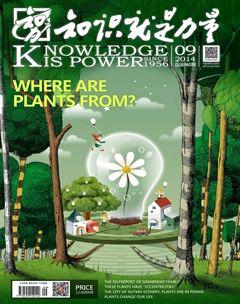
These plants have “eccentricities”
2014-09-24 23:52:14ByQiuZhi
KNOWLEDGE IS POWER 2014年9期
By+Qiu+Zhi

In the angiosperm family, there is a distinctive branch called “caryophyllales”. Among them are salt-tolerant plants, peculiar-formed succulent plants, ferocious meaty plants, and many other plants that are also vegetables.
The Halophytes Of Heavy Taste
To feel the harm of excessive salt, you just need to put a full spoon of salt into your mouth——so we can imagien the pain of common plants as encountering saline-alkali land. However, some plants can survive in the salinized soil where the salt concentration( mainly sodium chloride) is much higher than the normal range, people call these plants halophytes.
People divide the halophytes into three categories customarily. The salt-proof plantss roots have special skill to block the salt outside. The salt-secreting plants roots can absorb salt, but the salt are secreted outside through special cells after transformed into the stem and leaves. Salt-tolerant plants are those who really store salt in the body.
The Succulent Plants Who Can Hold The Breath
For plants, the drought is more serious survival crisis than salt and alkali. In the extremely arid desert region, the ways for plants to adapt to arid is various. One way is to quickly die after germination, flowering, seeding in the short rainy season, the entire life cycle is only a few weeks——this is the trick taken by desert ephemeral plants. Storing water in the body and make the stems and leaves juicy is the solution of succulent plants. There are three big families among the succulent plants, apricot and crassulaceae, who can control the rhythm of absorbing carbon dioxide to avoid moisture loss.
To conducting photosynthesis, plants have to absorm carbon dioxide in the air, which requires opening the stomas. But after opening the stomas, water in the cells may escape in steam. In order to solve this problem, the succulent plants only open their stomas in the evening and absorb the carbon dioxide, then store them in the form of four carbon sugar. As its cool in the evening, the moisture loss is less. During the day, they close the stamos, turn four carbon sugar into carbon dioxide as holding the breath, carbon dioxide is the raw material for photosynthesis. In this way, no matter how hot the weather is, water will not be lost. This special way of photosynthesis is called “crassulacean acid metabolism” in plant physiology, for it is firstly found in the crassulaceae plants.
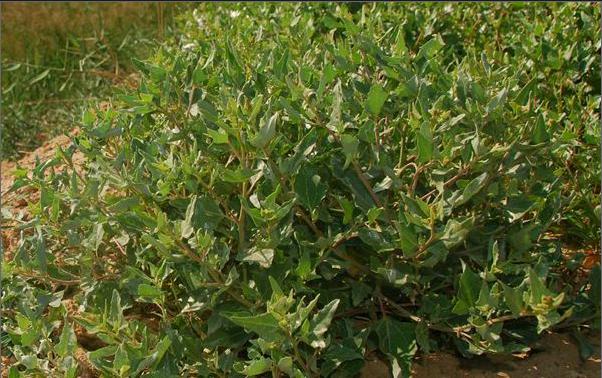
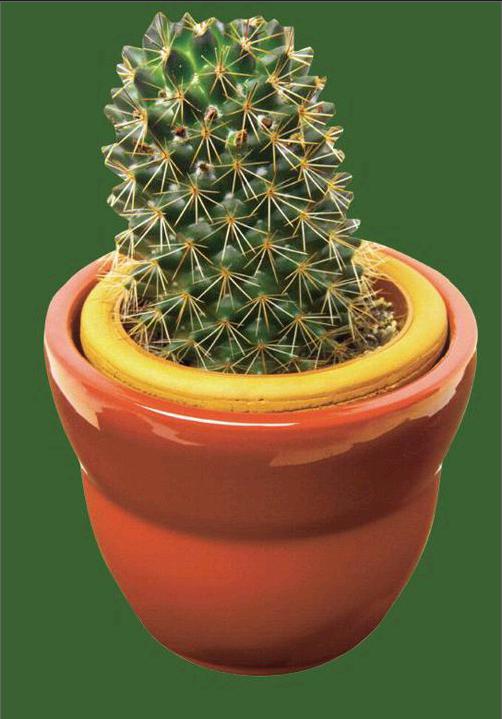
Although plants avoid moisture loss with this solution, there is also a side effect——more energy consumption. Therefore, these plants grow slowly. You will feel that if you have a ball cactus in your home. However, there is always an exeption in biology. The cactus family and aizoceae both belong to caryophyllales, they have a close relative called purslane, which is a succulent plant that can hold the breath, but it grows quickly and becomes a common weed and a kind of wild vegetable.
Its quite common for animals to eat plants, but its fresh for plants to eat animals. The plants eating animals are called carnivorous plants, although often called insectivorous plants, the former name is more appropriate. For the plants eat not only insects, but also other animals. A swine pitcher in the Southeast Asian tropical rainforest can catch frogs and rats, which are already the largest animals they can catch, the so-called “man-eating trees” dont exist.
There are two characteristics for the typical carnivorous plants, the first is the physiological structre easy to catch animals, such as the mucus that can stick to animals, or the traps to catch animals. The second is the ability to secrete digestive enzymes, which help decompose and absorb the nutrients in the animals body. The flytrap in the Southeastern United States swamp is the most ferocious carnivorous plants, its leaves can suddenly close, trap the flies in and digest them slowly. Through this way to supplement extra nutrition, the flytrap is able to survive in the nurient barren swamp.
Some other plants also have the physiological structure to capture animals, but they cannot secrete digestive enzymes. These plants are known as “original carnivorous plants”. Maybe you cant imagine that the shepherds purse in spring is a kind of original carnivorous plant, its seed husk will form a lot of mucus after meeting water, one of the mucus functions is to stick to some small animals in the soil. After the bodies are decomposed by microbes, they become the nurients for the shepherds purses seedling to absorb. Some people think that the potato and tomato are all original carnivorous plants, because the sticky hair on their stems will also trap insects to death. The carnivorous plants may be evolved from the original carnivorous plants. Perhaps thousands of years later, the potatoes and tomatoes we eat will become carnivorous plants!
The dionaea muscipula has a close relative called sundew, which is also carnivorous plants. They are distant relative of nepenthes. There are another two carnivorous plants called drosophyllum and drosophyllum cany in Africa, which are also their distant relatives, belong to caryophyllales. What a big family who love eating meat!
The Same Big Family In Vegetables
Vegetables are what we need to eat everyday. Althouth there are many different kinds of vegetables on the market, if sorting them you will find that many vegetables are from several big families——cruciferae, leguminosae, cucurbitaceae, solanaceae… the cruciferae is worth the “ first vegetable family”. Chinese cabbage, green vegetables (cabbage), purple cai-tai, cabbage, cauliflower, broccoli, mustard, turnips, pickle, carrot, shepherds purse, watercress… these are all cruciferous plants. Leguminosae also provide people all kinds of beans. Because of their special nuritional value, they are apart from the common vegetables and consists an separate category. Cucurbitaceae contains pumpkin, zucchini, towel gourd, cucumber, balsam pear, etc. although the common solanaceae contain only 4 kinds——potato, eggplant, tomato and pepper, they are all the most common type.
Why would the same family born so many varieties of vegetables, forming huge families? This is largely related to phytochemistry. Plants cannot move, in order not to be eaten too much by animals, they have to synthetise a variety of toxic substances. The toxins of the same family are oftern sililar, for example, the cruciferous vegetables all take glucosinolates as “chemical weapons”.
Therefore, if the secret poison of one family is invalid to some animal, it usually means the whole family of plants are vulnerable in front of the animal. For example, we human beings are not afraid of glucosinolates, and even regard it as seasoning( mustard, horseradish, behenic dishes are all in the spicy taste of glucosinolates)