Wang Yi: Spearhead ofChina’s Marine Agriculture
2014-09-27 10:52:26
CHINA TODAY 2014年7期
FOR ordinary Chinese, the twin concepts of marine farming and marine agriculture are still novel, possessing a touch of mystery.
Wang Yi, president of Wanning Haifeng Biotechnology Development Co., Ltd., is a pioneer in this field. He is now planning a marine ranch. China has vowed to build a strong marine economy, and marine agriculture is deemed the most lucrative feature of it. The country has over 1.3 billion people to feed, and given its current concerns over food security, building a granary on the sea is a sensible way forward. However, large-scale and effective development of marine agriculture demands advanced and mature technologies plus effective methods, currently lacking in China. Wang Yis innovative “engineering a marine ranching system” is thus a pioneering branch in this field.
“Engineering a marine ranching system has become part of the modern bio-scientific and technological revolution – the sixth industrial revolution in human history, with marine agriculture as a major battlefield. So carrying out a systematic program on marine ranching will likely be an inevitable route for developing marine agriculture,” Wang Yi said.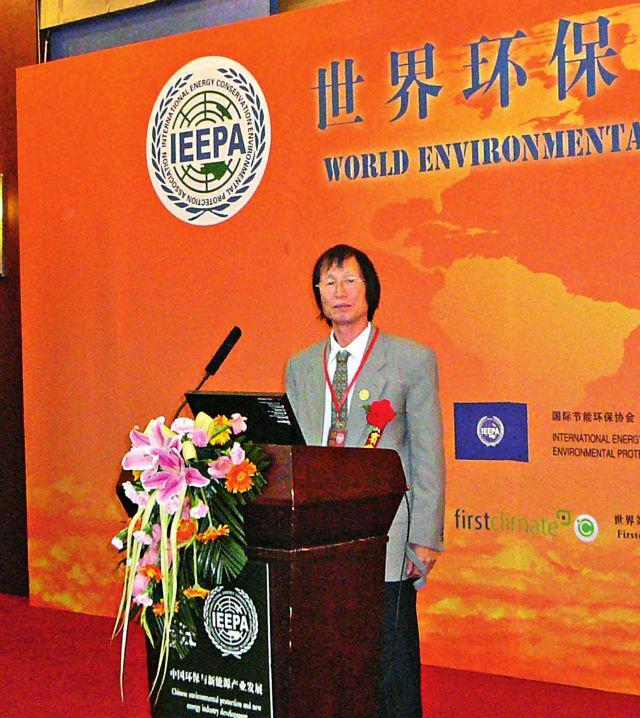
Learning from Those More Advanced
In the mid-1980s, Wang Yi studied in Japan, and later worked in Japanese companies. His experience in the country broadened his vision of marine agriculture. Back in the early 1980s, Japan had already drafted a strategic plan for marine agriculture to produce more food from marine resources. From 1993 to 2000, Wang worked in research and development of marine ranch system engineering and related technologies in Japan. This prepared him for his career in this area.
“What Japan is capable of achieving could also be realized in China. Technologies and opportunities in this field should be introduced to China.” Propelled by this belief, Wang returned to his home city of Wanning in Chinas Hainan Province, to embark on building his Chinese version of marine agriculture.
Within two years, Wangs team completed an experimental project to simulate a cultivation system in a marine ecological environment, and garnered a great deal of important data in the process. This project won second prize for scientific and technological development from the Wanning municipal government in 2005, and ranked one of the key sci-tech projects that year by the Hainan provincial government. The following year the project won approval from the State Bureau of Foreign Experts Affairs to bring in foreign tech-nologies and management talent. The project then won an award in 2008 from the International Energy Conservation Environmental Protection Association at the First World Environment Protection Conference.
The peak of its glory was in 2010, when the project was selected as an exemplar project for marine technology achievement by the National High-tech R&D (863) Program of the Ministry of Science and Technology.
In 2007, Wang Yi obtained a letter of patent from the State Intellectual Property Office for his zero-emission close-ended circular cultivation mode. It features technology for a cultivation pool simulating a marine ecological environment. This achievement paved the way for his future work on engineering a marine ranching system.
Hi-tech Marine Ranch
For many insiders, Wangs blueprint for marine agriculture is capable of cracking two conundrums: low-efficiency traditional fishing practices, and growing demand for quality foods. “The change in human production from hunting to raising livestock increased productivity 20-fold.” Wang thus explains his logic of “change is the only way out.”
Wangs engineering of a marine ranching system consists of three subsystems of a marine ecological environment, marine bio-system and mariculture, with modern bioengineering technologies at the core. By incorporating prevailing concepts of green growth, such as a low-carbon and circular economy, into his innovative undertaking, Wangs project forms an amazing circular system.
Wang first sought to develop a sound ecological environment for his marine ranch, involving seabed fish shelters, coves, shoal and smooth sea flows, as well as infrastructure for natural or artificial tidal movements, various beneficial bacterial flora and beds, and light sources able to penetrate deep into the sea. Then came the cultivation system of the marine ranch. On the one hand, his aim is to develop a suitable environment for fish; on the other, he is planning to build an offshore fishing port, in an attempt to improve productivity and the survival rate of fish in a large-scale marine ranch. In addition, flume transportation equipment is to be used for live fish, to guarantee that catches stay alive after delivery to their destination.
The onshore further cultivation, processing and distribution center of the marine ranch will be equipped with a closed cultivation pool system with circulating water. It receives fish through flumes, sorts aqua products by different varieties and types, and further breeds them before sending them into the distribution network.
The fish fry production system of the marine ranch is composed of a bio-bait production system and incubation system, which ensures the healthy growth of young fish. Healthy fish fry are then placed into the cultivation pool that simulates the natural marine eco-environment through sound-wave domestication, a process usually lasting three to five months.
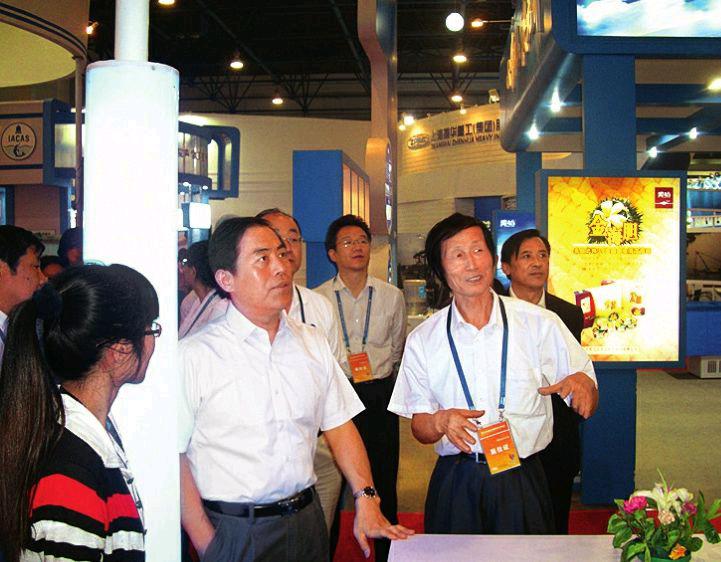
After the young fish are able to respond completely to sound control information, they are moved to the cultivation sector of the marine ranch. There, a sea-based sound-control feeding machine automatically sends out acoustic signals and dispenses feed at timed intervals. The sound induces the fish fry to forage for food. Meanwhile, a visual transmission system monitors the whole growth process of such raised marine life, helping the management spot prob-lems in time and resolve them, thereby improving production efficiency and ensuring safe production. This satellite-based system offers a solution for remote information transmission in large-scale marine ranches, since it is able to make timely and accurate transmission of real-time dynamic imagery of cultivated aqua life over long distances and in all environmental and weather conditions.
Swelling Local Purses
For his mariculture dreams, Wang Yi has not only considered technical issues, but also taken into account the goal of increasing local peoples incomes and driving the local economy by developing marine industry. This should definitely help create a passion for a marine economy.
To enable more local people to have a share in this rewarding project, Wang Yi suggests development of two types of marine ranches. One is a small-scale marine ranch based in individual fishing villages, relying on local natural conditions of beaches, coves and islets. Within this mode, a fishing cooperative could be established with villagers as members, who jointly participate in management, production and profit distribution. The second type is a bigger farm that takes advantage of large bays and coasts to develop modern fishing operations, integrating urban and rural areas. This type features mass production, high efficiency and consequently higher returns. Under this type, upstream and downstream products of the fishery industry could also be developed, building a range of industries related to marine ranching.
As in industrial and agricultural projects on land, the proper function of a marine ranch depends on a variety of facilities. Thus a vast amount of construction material and infrastructure involving transportation, communica- tion, production and management are needed, creating demands for upstream industries. The downstream sectors –marine food, biopharmacy, biofertilizer and new bioenergy – not only improve peoples dietary structure and enrich food culture, but bring enormous economic and social benefits. For instance, algae has become a new source of renewable energy. Such industrial development also serves as a positive response to the countrys strategy for transform- ing its mode of economic development, and opens new fields of growth.
“A large-scale marine ranch, featuring multiple advantages like diversified functions, high yields, high returns and more job opportunities, will benefit more people, and thus quicken their pace towards attaining better-off lives,” Wang Yi said, while talking about the prospects of his marine ranching enterprise.
Spearheading Marine Agriculture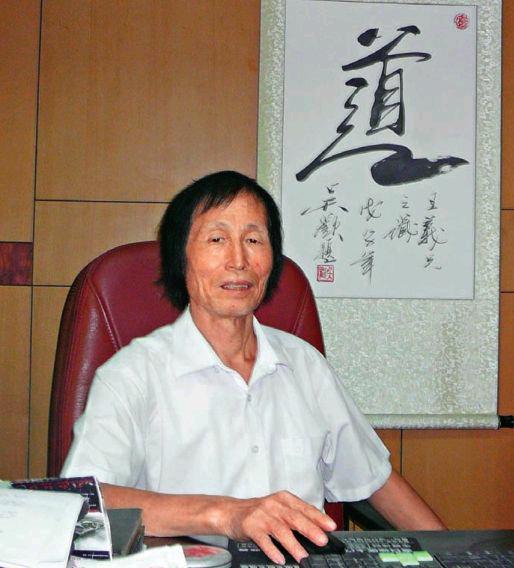
The sea is a treasure house and also one of the final frontiers for human survival and development. Today, human society is developing a sea world with a brandnew approach, with four promising pillar industries taking shape globally.
The 2013 Report on Chinas Oceanic Development, issued by the State Oceanic Administration, indicates that the contribution of Chinas marine economy to the national economy has been climbing steadily. It predicts that by 2020 its share in the countrys GDP will exceed 12 percent, and rise further to 15 percent in 2030. According to the report, the oceanic industrys added value in local GDP in Chinas 11 coastal provinces, municipalities and autonomous regions will also see gradual increases. It is forecasted that the marine economy growth rate will be higher than the overall economic growth rate in Chinas coastal regions.
These coastal regions are increasingly devoted to their local marine economys development. Tianjin aims to build six oceanic industrial chains including a modern fishery industry. The plan is to form a modern oceanic industrial system. Fujian Province has invested a total of RMB 163.885 billion in 183 marine economy projects. Shenzhen in Guangdong Province has introduced its 2013-2020 Plan on the Development of the Oceanic Industry, vowing to boost the marine economy to become an important growth point for the citys future economic development.
Hainan Province, where Wang Yis undertaking is based, has also put a premium on the marine economy. Local officials say that the high added value of oceanic industry is conducive to optimizing the regions economic structure and will also provide new space for sustainable development and a new growth point. Although the province with the largest oceanic area, Hainan is yet to feature an extensive development mode for a marine economy with comparatively low levels of resource exploitation and water utilization. It is therefore a pressing issue that the province advances the transformation and upgrading of its marine economy.
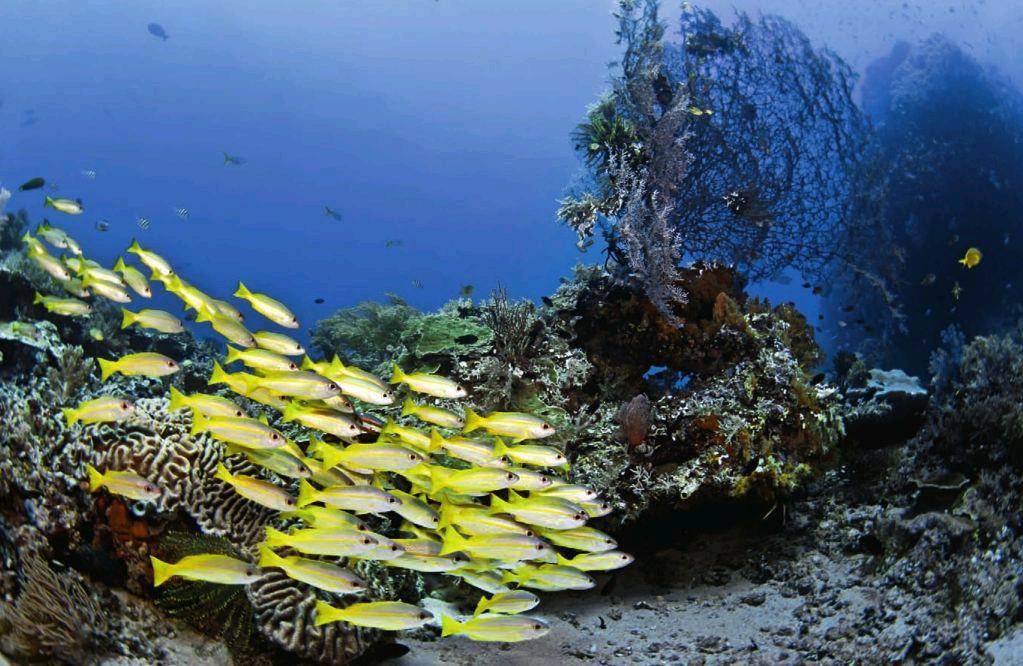
Located in Haiwei Town in Hainans Changhai County, the marine ranch run by Wanning Haifeng Biotechnology Development Co., Ltd. will play an exemplary role in effectively exploiting and utilizing marine resources and developing a marine economy. Fully taking advantage of a favorable natural and policy environment, Wang Yi and his team are bound to achieve mariculture glory.
Given its advantageous geographic location, tourism has long been a pillar industry in Hainan. To tap this market, Wang Yis marine ranch offers marine sightseeing services in addition to its mariculture business, to form a new comprehensive business mode. On its premises will be found a marine forest park and an underwater fantasy world.
According to Wang, a total of RMB one billion is to be invested in the marine ranch, with RMB 700 million for mariculture and RMB 300 million for building the marine forest park and the underwater fantasy world.
The sea has always been a source of wealth in human history. In Wangs opinion, developing mariculture is in the interest of the country as well its people, and will benefit later generations. This demands and deserves extensive participation. He hopes his ranch will attract more investment and expertise. With the wisdom of more people, Wang believes the project will achieve win-win results for all parties involved.
“Development of mariculture is critical to the realization of Chinas dream to build a strong marine economy globally. And I believe China will reach this goal someday. Dreams and clear goals are important to any country, place or person,” Wang said.