三峽水庫營養元素的分布及其與藻類生長的關系
2015-03-03 08:02:15王司陽周子俊汪志聰李慧曹秀云宋春雷周易勇
水生生物學報 2015年5期
王司陽周子俊汪志聰李 慧曹秀云宋春雷周易勇
(1. 中國科學院水生生物研究所, 淡水生態與生物技術國家重點實驗室, 武漢 430072; 2.中國科學院大學, 北京 100049)
三峽水庫營養元素的分布及其與藻類生長的關系
王司陽1,2周子俊1,2汪志聰1李 慧1,2曹秀云1宋春雷1周易勇1
(1. 中國科學院水生生物研究所, 淡水生態與生物技術國家重點實驗室, 武漢 430072; 2.中國科學院大學, 北京 100049)
為進一步研究三峽水庫(尤其是支流)氮和磷等營養元素的時空分布格局及其與藻類生長的關系, 于2012年8月、11月與2013年1月、4月在三峽庫區木洞至秭歸的5個斷面采樣分析了不同形態氮和磷以及葉綠素a(Chl.a)的濃度, 并對藻類進行了胞外堿性磷酸酶的熒光標記(Enzyme Labelled Fluoresce, ELF)。結果表明, 春夏季總磷(TP)與Chl.a濃度均高, 但二者的正相關性在空間尺度上并未得到充分的體現, 干流的TP濃度顯著高于支流(P<0.05), 而Chl.a濃度則反之。巫山斷面干流與支流的TP濃度顯著低于其他斷面(P<0.05),而 Chl.a濃度則無顯著差異, 秭歸斷面顯著增高的 TP濃度改變了其沿水流方向下降的趨勢。從總體上講, Chl.a濃度與TP、溶解性總磷(DTP)、溶解反應性磷(SRP)和硝態氮(NO–3-N)濃度均極顯著負相關(P<0.01), 而與總氮(TN)濃度、TN/TP、NO–3-N /SRP等均極顯著正相關(P<0.01), 因此, 氮對藻類的生長可能具有一定的促進作用, 而泥沙對磷的吸附與沉降有效降低了其生物可利用性。巫山斷面底層顯著較高的TP與顆粒態磷(PP)濃度支持了上述推測, 不同斷面不同藻類胞外磷酸酶的標記進一步說明了磷對其生長的關鍵限制性作用。因此, 在水質管理、富營養化防治和漁業資源管理過程中必須充分考慮不同營養元素的存在狀態及其與水文條件的交互作用。
氮; 磷; 富營養化; 葉綠素a; 三峽水庫
三峽大壩竣工后蓄水形成的三峽水庫, 是集航運、灌溉、供水等眾多功能于一體的大型水利樞紐工程, 對國家的經濟發展與社會進步具有至關重要的作用。三峽水庫自2003年蓄水以來, 水流減緩、水體擴散能力減弱, 部分支流和庫區在蓄水期完全處于靜水狀態, 導致水體中污染物的滯留時間延長,水域環境變化明顯, 水庫呈現富營養化趨勢[1], 部分庫灣爆發藻類水華[2]。已有研究表明, 相對長江上游干流而言, 三峽水庫干流氮的濃度較高, 而磷的濃度較低, 且氮的主要形式為硝態氮, 而磷則多以顆粒態的形式存在[3]。此外, 庫區內支流的TN濃度低于干流, 而溶解態磷已經成為控制藻類水華的關鍵因子之一[4]。總之, 庫區不同形態氮和磷的濃度在時間與空間尺度上均表現出明顯的異質性, 但相關分布模式尚未得到充分描述, 營養物質的存在狀態與藻類生長的關系亦不甚明晰。本研究于2012年8月、11月與2013年1月、4月在三峽庫區木洞、忠縣、云陽、巫山、秭歸等5個斷面分層(表, 中, 底)采集水樣, 分析了不同形態氮和磷以及葉綠素a(Chl.a)的濃度, 并對藻類進行了胞外堿性磷酸酶的熒光標記(Enzyme Labelled Fluoresce, ELF), 以期深入了解三峽庫區氮和磷等關鍵營養元素的分布格局及其與藻類生長的關系, 為庫區富營養化的預警與控制提供科學依據。
1 材料與方法
1.1 采樣點分布和地理概況
如圖1所示, 從三峽水庫的庫首、庫中至庫尾,依次設置秭歸、巫山、云陽、忠縣、木洞等5個采樣斷面, 于2012年8月、11月、與2013年1月、4月4個季節現場采集樣品, 分析水體中不同形態氮、磷以及 Chl.a含量的時空變化格局。每個斷面分干流與支流共設11個采樣點, 各采樣點的水樣采自距表層0.5 m(表層)、25 m(中層)以及距底部約1 m處(底層), 若水深>50 m, 則采集距表層50 m處的水樣作為底層水樣。
1.2 樣品分析方法
水樣經孔徑 0.45 μm微孔濾膜過濾, 取濾液測定溶解態反應性磷(SRP)、硝態氮, SRP采用鉬藍比色法測定[5], NO–3-N采用紫外分光光度法測定[6]; 將原水和上述濾液采用過硫酸鉀高溫消解(121 ℃, 30min), 鉬藍比色法測定磷酸鹽濃度, 并據此推算總磷和溶解態總磷濃度; 另取上述消煮液測定硝態氮濃度, 并據此推算總氮(TN)濃度; Chl.a測定的是通過采集500—1000 mL水樣經GF/C(Whatman)濾膜過濾, 采用丙酮萃取分光光度法[7]。溶解態有機磷(DOP)和顆粒態磷(PP)用差減法循下述公式計算: DOP=DTP–SRP, PP=TP–DTP。
采用酶熒光標記(Enzyme Labelled Fluoresce, ELF)技術觀察和表征能產生胞外堿性磷酸酶的藻類[8],具體方法如下: 水樣中加入 Tris-HCl (0.1 mol/L)緩沖液(pH 7.5, 最終濃度9 mmol/L)與ELF97(最終濃度 27 μmol/L)后, 置室溫下反應 2—4h, 用孔徑為0.45 μm的濾膜過濾反應液, 用Citifluor AF1 (Citifluor;London)包埋濾膜以防褪色, 并最終鏡檢濾膜上的浮游植物及其酶標記狀況[9]。
1.3 數據處理方法

圖1 三峽水庫采樣點分布圖Fig. 1 The map of sampling sites in the TGR
每個實驗樣本, 采用了 3個重復, 相對誤差均小于 10%。營養鹽之間差異比較以及與Chl.a之間的相關分析均在 SPSS Statistics 19.0軟件上進行,不同斷面與季節參數間比較進行 one-way ANOVA檢驗, 方差分析及相關分析前均進行了正態分布檢驗, 方差齊性時采用LSD法檢驗, 方差不齊時采用Games-Howell法分析; 圖表繪制通過Sigmaplot12.2完成。
2 結果
2.1 營養元素與葉綠素a濃度的水平與季節分布
三峽水庫各斷面干流的 TP濃度均顯著高于其支流的相應值(P<0.05), 干流與支流的TP濃度自木洞至巫山斷面依次降低。此外, 包含支流與干流的數據斷面間綜合統計比較結果表明: 巫山斷面 TP濃度顯著低于木洞、忠縣和云陽斷面; 而在秭歸斷面, TP濃度顯著增加, 其增幅主要源于PP(圖2)。此外, 秭歸斷面支流的 TN濃度顯著高于干流的相應值(P<0.05), 而硝酸鹽濃度則在斷面間并均無顯著差異(圖3); 各斷面干流的Chl.a濃度均分別顯著低于支流的Chl.a濃度(圖4)(P<0.05)。
4個季度干流葉綠素 a濃度變化范圍為 1.23—5.78 μg/L, 平均值為3.05 μg/L; 支流葉綠素a濃度的變化范圍為6.05—14.63 μg/L, 平均值為9.65 μg/L。統計分析結果表明前者顯著低于后者(P<0.05), 此外,不同斷面葉綠素a濃度大小順序為(忠縣8.38 μg/L、木洞6.96 μg/L、云陽4.96 μg/L、秭歸4.05 μg/L、巫山4.04 μg/L), 且不同斷面間均無顯著差異(圖4)。
如圖5所示, 各斷面TP和Chl.a濃度均在2012年11月取最小值, 而在4月或8月取最大值(除忠縣斷面外)。
2.2 營養元素與葉綠素a濃度的垂直分布

圖2 三峽水庫不同斷面干流與支流不同形態磷濃度的分布Fig. 2 The distribution of concentrations of phosphorus in different forms in different sections of the TGR

圖3 三峽水庫不同斷面干流與支流不同形態氮濃度的分布Fig. 3 The distribution of concentrations of nitrogen in different forms in different sections of the TGR

圖4 三峽水庫不同斷面葉綠素a濃度的分布Fig. 4 The distribution of the concentration of Chl.a in different sections of the TGR
4個季節綜合數據的統計結果表明: 不同斷面的DTP和SRP濃度均在底層最大, 中層最小, 其間的差異達顯著水平(P<0.05); 秭歸、巫山和云陽斷面不同深度的TP濃度均無顯著差異, 而忠縣斷面底層和表層的TP濃度顯著高于中層(P<0.05); 葉綠素a濃度均在表層最大, 各斷面不同水層間葉綠素a濃度均無顯著差異(圖6); 木洞、忠縣和云陽斷面不同水層的TN濃度均無顯著差異, 巫山斷面底層TN濃度(2.20 mg/L)明顯高于表層(1.63 mg/L), 而秭歸斷面表層TN濃度(2.19 mg/L)則顯著高于底層(1.70 mg/L);各斷面不同水層的硝酸鹽濃度均無顯著差異(圖7)。
分斷面分季節統計的結果表明: 2012年 8月,巫山斷面底層與中層的TP和PP濃度顯著高于表層;而不同水層葉綠素a濃度均無顯著差異(圖8); 巫山斷面底層硝酸鹽濃度顯著高于表層, 而秭歸斷面則反之(圖9)。此外, 2012年11月, 各斷面中層TN濃度均顯著高于表層, 且秭歸斷面底層的 TN濃度亦顯著高于表層(圖10, P<0.05)。
2.3 三峽水庫顯示磷酸酶標記的常見藻類
如圖11所示, 三峽不同斷面顯示胞外堿性磷酸酶標記的藻類包括: 空球藻(Eudorina sp.)(圖11D)、直鏈藻(Melosira sp.)(圖11A)、橋彎藻(Cymbella sp.) (圖11B)、角甲藻(Ceratium hirundinella)(圖11C)等。
2.4 營養元素與葉綠素a濃度的關系
Chl.a濃度與TP、DTP、SRP和NO–3-N濃度呈顯著負相關, 而與PP、TN、TN/TP、NO–3-N/SRP濃度呈顯著正相關(圖12、13); TN與PP濃度亦呈顯著正相關(圖14, P<0.01)。
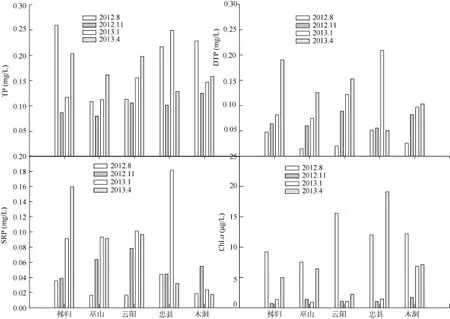
圖5 三峽水庫不同斷面不同形態磷與Chl.a濃度的季節變化Fig. 5 The seasonal variation of concentrations of Chl.a and phosphorus in different forms in different sections of the TGR

圖6 三峽水庫不同形態磷與葉綠素a濃度的垂直分布Fig. 6 The vertical variation in concentrations of Chl.a and phosphorus in different forms in the TGR

圖7 三峽水庫不同形態氮的垂直分布Fig. 7 The vertical variation in concentrations of nitrogen in different forms in the TGR
3 討論
3.1 營養元素與葉綠素a濃度時空分布的異質性
三峽水庫干流的TP濃度顯著高于支流, 而Chl.a濃度則反之, 這種現象在2010年[10]亦有體現: 干支流以異重流形式進行水體交換, 大寧河、磨刀溪、小江3條支流庫灣水體TP濃度均低于干流水體; 營養鹽濃度高的干流水體倒灌進入庫灣, 對其影響范圍內的支流水體的營養鹽起到補給作用。因此, 干流對支流磷的補給是造成后者Chl.a濃度明顯較高的重要原因之一。

圖8 2012年8月三峽水庫不同斷面各形態磷以及葉綠素a濃度的垂直分布Fig. 8 The vertical variation in concentrations of Chl.a and phosphorus in different forms in the TGR in August 2012

圖9 2012年8月三峽水庫不同斷面各形態氮濃度的垂直分布Fig. 9 The vertical variation in concentrations of nitrogen in different forms in the TGR in August 2012

圖10 2012年11月三峽水庫不同斷面各形態氮濃度的垂直分布Fig. 10 The vertical variation in concentrations of nitrogen in different forms in the TGR in November 2011
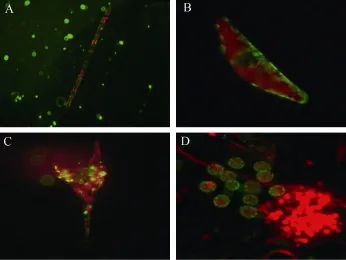
圖11 三峽水庫顯示胞外磷酸酶熒光標記的常見藻類Fig. 11 Common algal species detected with ELF in the TGR
TP與葉綠素a濃度在各斷面間的分布模式不同,支流與干流的TP濃度均在巫山斷面最小, 而Chl.a濃度在不同斷面間則無顯著差異。從整體上講, 蓄水后, 庫區干流總磷濃度從庫尾至庫首沿程下降, 豐水期尤為突出.這種變化主要是庫區水位抬高后,流速減小引起的泥沙沉降所致[11]。2012年8月, 與表層相比, 巫山斷面底層與中層具有顯著較高的TP和PP濃度, 這一結果恰與此斷面TP濃度總體較低的結果相對應, 故為磷被泥沙吸附沉降的推測提供了進一步佐證; 再者, 從季節尺度上講, 4月或8月各斷面葉綠素a濃度較高, 因此, 豐水期磷的沉降可從溫度和光照條件均有利于藻類生長的表層有效移除磷營養, 因而富有重要生態學意義。
值得注意的是, 位于巫山下游的秭歸斷面TP濃度明顯上升, 且以PP為主。這一特征可從下述方面加以解釋: 首先, 秭歸是三峽工程的移民大縣, 涉及動態移民10 萬多人, 秭歸淹沒綜合指標約占庫區10%; 其次, 土地利用方式變化劇烈, 1992—2007年間園地面積比原來增加248.14%, 旱地面積減少20.32%, 喬木林減少0.59%, 草地減少8.04%, 人工表面面積增加141.84%, 水體面積增加90.86%; 耕地轉換為果園, 施肥量加大, 與坡耕地相比, 增加的果園致使農業面源污染更為嚴重; 再次, 庫首地區地形陡峭, 水土容易流失, 綠化面積不足, 故輸沙量增加[12]; 最后, 2012—2013年秭歸斷面支流TN濃度顯著高于干流的相應值, 且干流表層的 TN濃度顯著低于底層的相應值, 此外, TN與PP濃度顯著正相關, 因此, 支流輸入的氮將有效增加干流的PP濃度, 并導致以PP為主要組分的TP濃度的顯著增加。

圖12 三峽水庫葉綠素a與不同形態磷濃度的關系Fig. 12 Relationships between concentrations of Chl.a and phosphorus in different forms in the TGR

圖13 三峽水庫葉綠素a與不同形態氮濃度以及氮磷比值的關系Fig. 13 Relationships between concentrations of Chl.a and nitrogen in different forms and the N︰P ratio in the TGR

圖14 三峽水庫總氮與顆粒態磷濃度的關系Fig. 14 Relationships between concentrations of TN and PP in the TGR
3.2 營養元素與葉綠素a濃度的關系
三峽水庫13 條主要支流回水區[13]和香溪河平邑口水域[14]的研究結果表明, Chl.a與TP濃度顯著正相關。然而, 本研究的結果表明, 三峽水庫Chl.a與TP、DTP、SRP濃度均顯著負相關。2007年3月—2008年3月三峽小江回水區溶解性磷酸鹽濃度亦與Chl.a濃度顯著負相關, 河道型的回水區水體更新周期縮短, 懸浮顆粒濃度升高, 由此導致水體光學透射性能的下降, 洪水脈沖帶來的不穩定的環境亦阻礙了浮游植物的進一步生長與繁盛, 這些因素的綜合作用可能是小江回水區TP與Chl.a濃度負相關的原因[15]。顯然, 在實驗期間, 上述環境因素均未改變, 故仍能產生類似的影響, 此外, Chl.a與SRP濃度的顯著負相關性可能源于藻類生長時對無機態磷的吸收利用。例如, 香溪河溶解無機態磷在水華區域銳減[16],而胞外堿性磷酸酶的分泌是藻類細胞缺磷的重要標志[17], 不同斷面常見藻類胞外堿性磷酸酶的標記為磷對三峽水庫水體初級生產力的關鍵限制性作用提供了進一步的證據。
三峽水庫Chl.a與TN濃度和TN/TP顯著正相關,水華發生時, 香溪河平邑口水域TN和Chl.a濃度均存在明顯的正相關性[14]。以1995—2007數據為基礎的模型研究結果表明, 在三峽庫區湖北水域范圍里, 2007年非點源輸入的總氮量遠高于總磷量, 二者比值為13.23, 且當年共發生8次藻類水華, 因此, 三峽水庫入口的富營養化潛力與來自非點源污染的TN/TP值相關[18], 2012—2013年不同季節不同斷面TN/TP平均值為16.09, 故有利于藻類生長, 從而表現出與Chl.a濃度的顯著正相關性, 氮對藻類生長的促進作用亦可從Chl.a與NO3–-N/SRP的正相關性得到解釋。香溪河庫灣, 無機態氮與正磷酸鹽的比值能有效調節藻類的數量和組成[19], 而Chl.a與硝酸鹽濃度的負相關性進一步說明了藻類生長對硝酸鹽的有效利用, 2007年3—5月香溪河庫灣硝酸鹽濃度與Chl.a濃度顯著負相關且在水華發生時取最低值[20]。
綜上所述, 三峽水庫水質參數的分布具有空間異質性, 秭歸斷面支流 TN濃度顯著高于干流的相應值, 各斷面Chl.a的濃度亦如此, 而TP濃度則反之。此外, 就斷面間的差異而言, 巫山斷面干流與支流的TP濃度顯著較低, 而Chl.a濃度則無顯著差異,從總體上講, Chl.a濃度與不同形態磷濃度顯著負相關, 卻與氮的絕對濃度(TN)及其相對于磷的濃度(TN/TP)顯著正相關。泥沙等懸浮顆粒以其具有的競爭性吸附并沉降磷的能力和遮光效應抑制了藻類的生長, 巫山斷面底層顯著較高的TP與PP濃度, 進一步支持了上述推測。概言之, 氮對藻類的生長具有一定的促進作用, 而泥沙的吸附沉降作用有效降低了磷的生物可利用性, 故其仍為限制藻類生長的關鍵營養元素。因此, 在水質管理和富營養化防治過程中必須充分考慮不同營養元素的存在狀態及其與水文條件的交互作用。
[1] Cao Z J, Zhang X B, Ai N S. Effect of sediment on concentration of dissolved phosphorus in the Three Gorges Reservoir [J]. International Journal of Sediment Research, 2011a, 26(1): 87—95
[2] Liu L, Liu D F, Johnson D M, et al. Effects of vertical mixing on phytoplankton blooms in Xiangxi Bay of Three Gorges Reservoir: Implications for management [J]. Water Research, 2012, 46(7): 2121—2130
[3] Huang Y L, Zhang P, Liu D F, et al. Nutrient spatial Pattern of the upstream, mainstream and tributaries of the Three Gorges Reservoir in China [J]. Environmental Monitoring and Assessment, 2014, 186(10): 6833—6847
[4] Cao Z J, Zhang X B, Ai N S. Effect of sediment on concentration of dissolved phosphorus in the Three Gorges Reservoir [J]. International Journal of Sediment Research, 2011b, 26(1): 87—95
[5] Murphy J, Riley J P. A modified single solution method for determination of Phosphate in natural waters [J]. Analytica Chimica Acta, 1962, 26(1): 31—36
[6] State Environmental Protection Administration. Water and Wastewater Monitoring Analysis Methods (4th edition) [M]. Beijing: China Environmental Science Press. 2002, 12 [國家環境保護總局《水和廢水監測分析方法》編委會. 水和廢水監測分析方法(第4版)北京: 中國環境科學出版社. 2002, 12]
[7] Vinod T, Ajay V S Y, Purnendu B. Analysis of photosynthetic activity in the most polluted stretch of river Ganga [J]. Water Research, 2002, 37(1): 67—77
[8] Gonzáles-Gil S B, Keafer RVM, Jovine A, et al. Detection and quantification of alkaline phosphatase in single cells of Phosphorus-starved marine phytoplankton [J]. Marine Ecology Porgress Series, 1998, 164: 21—35
[9] ?trojsová A, Vrba J, Nedoma J, et al. Seasonal study on expression of extracellular phosphatases in the phytoplankton of an eutrophic Reservoir [J]. European Journal of Phycology, 2003. 38(4): 295—306
[10] Hu N S, Liu D F, Ji D B. Effects of stream flow backward to the distribution of the nutrient of the branch library bay in the Three Gorges Reservoir [J]. Environmental Science and Technology, 2012, 35(10): 6—11 [胡念三, 劉德富, 紀道斌.三峽水庫干流倒灌對支流庫灣營養鹽分布的影響. 環境科學與技術, 2012, 35(10): 6—11]
[11] Lou B F, Yin S Y, Mu H Q, et al. Comparison of total phosphorus in the mainstream of the Three Gorges Reservoirs before and after the impoundment [J]. Lake Science, 2011, 23(6): 863—867 [婁保鋒, 印士勇, 穆宏強,等. 三峽水庫蓄水前后干流總磷濃度比較. 湖泊科學, 2011, 23(6): 863—867]
[12] Wang P, Wu B F, Zhang L, et al. Spatial and temporal analysis of land use in Zigui county of the construction of the Three Gorges Reservoir [J]. Society of Agricultural Engineering, 2010, 26(6): 302—309 [王鵬, 吳炳方, 張磊,等. 三峽水庫建設期秭歸縣土地利用時空變化特征分析.農業工程學報, 2010, 26(6): 302—309]
[13] Zhang S, Li C M, Zheng J, et al. Seasonal variation of trophic states in backwater areas of tributaries in Three Gorges Reservoir [J]. Environmental Science, 2009, 30(1): 64—69 [張晟, 李崇明, 鄭堅, 等.三峽水庫支流回水區營養狀態季節變化. 環境科學, 2009, 30(1): 64—69]
[14] Hu S, Qiu G S, Ying S Y. The monitoring analysis ofeutrophication evolution in the Xiangxi Bay, Three Gorges Reservoirs [J]. Yangtze River, 2012, 43(12): 10—13 [胡圣,邱光勝, 印士勇. 三峽水庫香溪河庫灣水體富營養化演化監測分析. 人民長江, 2012, 43(12): 10—13]
[15] Fang F, Li Z, Tian G, et al. Seasonal variations of phosphorus forms and resource analysis in the xiaojiang streamwise of the Three Gorges [J]. Environmental Science, 2009, 30(12): 3488—3493 [方芳, 李哲, 田光, 等. 三峽小江回水區磷素賦存形態季節變化特征及其來源分析. 環境科學, 2009, 30(12): 3488—3493]
[16] Xu T, Wang Y C, Liu D F, et al. Survey of the summer blooms in the Xiangxi Bay of the Three Gorges Reservoirs [J]. Acta Ecologica Sinica, 2014, 33(3): 646—652 [許濤, 王雨春, 劉德富, 等. 三峽水庫香溪河庫灣夏季水華調查.生態學報, 2014, 33(3): 646—652]
[17] Cao X Y, Strojsova A, Znachor P, et al. Detection of extracellular phosphatases in natural spring Phytoplankton of a shallow eutrophic lake (Donghu, China) [J]. European Journal of Phycology, 2005, 40(3): 251—258
[18] Ma X., Li Y, Zhang M, et al. Assessment and analysis of non-point source nitrogen and phosphorus loads in the Three Gorges Reservoir Area of Hubei Province, China [J]. Science of the Total Environment, 2011, (412—413): 154—161
[19] Ye L, Cai Q H. Spring phytoplankton blooms in Xiangxi Bay of Three Gorges Reservoir: spatiotemporal dynamics across sharp nutrient gradients [J]. Journal of Freshwater Ecology, 2011, 26(2): 11—18
[20] Zhou G J, Zhao X M, Bi Y H, et al. Phytoplankton variation and its relationship with the environment in Xiangxi Bay in spring after damming of the Three Gorges, China [J]. Environmental Monitoring and Assessment, 2011, 176(1—4): 125—141
THE DISTRIBUTION OF NUTRIENTS IN THE THREE GORGES RESERVOIR AND THE EFFECTS ON THE GROWTH OF ALGAE
WANG Si-Yang1,2, ZHOU Zi-Jun1,2, WANG Zhi-Cong1, LI Hui1,2, CAO Xiu-Yun1, SONG Chun-Lei1and ZHOU Yi-Yong1
(1. Institute of Hydrobiology, Chinese Academy of Sciences, 430072 Wuhan, China; 2. University of Chinese Academy of Sciences, 100049 Beijing, China)
Signs of accelerated eutrophication have appeared in the Three Gorges Reservoir (TGR), and algal blooms have occurred in some areas especially the tributaries. However, little is known about the spatial and temporal distribution of the nutrients, such as phosphorus and nitrogen, and how it affects the growth of algae. To answer this question, we collected water samples from five different sections of the TGR in August and November of 2012 and in January and April of 2013. We analyzed the concentrations of chlorophyll-a (Chl.a) and nitrogen/phosphorus in different forms in the samples. We also applied the enzyme labeled fluoresce (ELF) method to detect the extracellular alkaline phosphatase excreted from algal cells. The concentrations of total phosphorus (TP) and Chl.a showed the same seasonal trend but unrelated spatial patterns. The concentrations of both were higher in spring and summer. The level of TP was higher in the main stream than that in the tributaries, whereas the level of Chl.a was higher in the tributaries (P<0.05). Among the five sections, the concentration of TP was the lowest in Wushan in both the main stream and the tributaries (P<0.05), but the concentration of Chl.a did not significantly vary between different sections. The level of TP decreased along the direction of the water flow until it reached Zigui where the TP level was significantly elevated. There was significantly negative correlation between the concentration of Chl.a and those of TP, dissolved total phosphorus (DTP), soluble reactive phosphorus (SRP), and nitrate nitrogen (NO–3-N)(P<0.01). In the contrast, the level of Chl.a was positively correlated to the levels of total nitrogen (TN), TN/TP and NO–3/SRP (P<0.01). These suggested that nitrogen might moderately promote the growth of algae. Furthermore, sorption and deposition of phosphorus by suspended solids may decrease its bioavailability, and this was supported by the fact that the concentrations of TP and Particulate Phosphorus were significantly higher at the bottom of the Wushan section. Various algal species in different sections and seasons produced extracellular phosphatase, indicating that phosphorus was the key limiting factor of the growth of algae. Therefore, the current status of phosphorus and nitrogen and their effects on the hydrological condition should be taken into consideration in the eutrophication control and the management of the TGR.
Nitrogen; Phosphorus; Eutrophication; Chl.a; The Three Gorges Reservoir
Q142
A
1000-3207(2015)05-0910-10
10.7541/2015.120
2015-02-02;
2015-05-12
中國長江三峽集團公司科研項目(No. CT-12-08-01)資助
王司陽(1990—), 男, 湖北武漢人, 博士研究生; 研究方向為藻類環境酶學。E-mail: mvbctv@foxmail.com
周易勇, E-mail: zhouyy@ihb.ac.cn