
Ballistic impact simulation of Kevlar-129 fiber reinforced composite material
2015-03-03 07:51:06ZHANGMingYUANMeiniXIANGFenghuaWANGZhenxing
ZHANG Ming, YUAN Mei-ni, XIANG Feng-hua, WANG Zhen-xing
(College of Mechatronic Engineering, North University of China, Taiyuan 030051, China)
張 明, 原梅妮, 向豐華, 王振興
(中北大學 機電工程學院, 山西 太原 030051)
?
Ballistic impact simulation of Kevlar-129 fiber reinforced composite material
ZHANG Ming, YUAN Mei-ni, XIANG Feng-hua, WANG Zhen-xing
(CollegeofMechatronicEngineering,NorthUniversityofChina,Taiyuan030051,China)
The penetration resistance of Kevlar-129 fiber reinforced composite materials was investigated with AUTODYN software. The ballistic limits of the fragment that pierced 6 kinds of target plates were obtained by finite element simulation when the 10 g fragment simulation projectile (FSP) impacting to the target plates of different thickness values of 8,10,12, 14, 16 and 18 mm with appropriate velocity, respectively, and the influences of thickness on the ballistic limits and the specific energy absorption were analyzed. The results show that the ballistic limit of Kevlar-129 fiber reinforced composite plates presents linear growth with the increase of the target thickness in the range from 8 to 18 mm. The specific energy absorption of plates presents approximately linear growth, but there is slightly slow growth in the range from 10 to 16 mm of the target thickness. It also can be found that the influences of plate thickness and surface density on the varying pattern of specific energy absorption are almost the same. Therefore, both of them can be used to characterize the variation of specific energy absorption under the impact of the FSP fragment.
ballistic limit; finite element; specific energy absorption; Kevlar fiber reinforced composite material
Kevlar fiber reinforced composite material has many advantages such as excellent impact resistance, fatigue resistance, low density, good kinetic energy absorption, no “second killing effect”, etc. It have been widely used in ballistic material armor protection, vehicle protection, body protection as well as other protection projects[1]. Especially the study on impact of dynamic mechanical behavior under load and anti-penetration performance has attracted wide attention from domestic and foreign scholars. In recent years, PENG Gang, et al[2]. have studied the ballistic energy absorption characteristics of fiber reinforced composite material impacted by a 4.5g spherical projectile. The results show that the experimental methods of specific energy absorption can evaluate and compare the fiber reinforced resin matrix fiber composite material on ballistic performance effectively. Tham C Y, et al.[3]studied the ballistic impact of a Kevlar helmet through experiment and simulation. Sevkat E[4]estimated the ballistic limit velocities of woven composite beams by experimental and numerical approaches.
Experimental tests on ballistic penetration play a pivotal role, but they are influenced greatly by a number of factors, such as strain rate, test environments, test conditions, test fund, laboratory instruments, laboratory personnel, et al. Therefore, numerical simulation has been widely used to study the ballistic performance[5]. In this study, six groups of finite element simulations are conducted on Kevlar-129 fiber reinforced composite material impacted by fragment simulated projectiles(FSP). Numerous studies have been done focusing on ballistic limit velocity (V50) method and specific energy absorption (SEA) method under different target thickness values, and the variation of Kevlar-129 fiber composite material anti-penetration performance has been obtained by experiment and simulation[6].
1 Numerical simulation
1.1 Geometric model
The length and width of Kevlar-129 fiber plate are 120 mm×120 mm. According to actual needs of the analysis, the thickness was divided into 8, 10, 12, 14, 16 and 18 mm, respectively. Using finite element simulation(FES), the ballistic limit of Kevlar fiber plate under six kinds of thickness is calculated, then the variation is analyzed between the ballistic limit, energy absorption ratio, surface absorption energy and the plate thickness. The fragment is made of 35CrMnSi steel, weight is 10 g, and the fragment simulation projectile (FSP) structure is used to simulate the penetration of Kevlar-129 fiber target against natural fragment. The geometric dimension is shown in Fig.1.
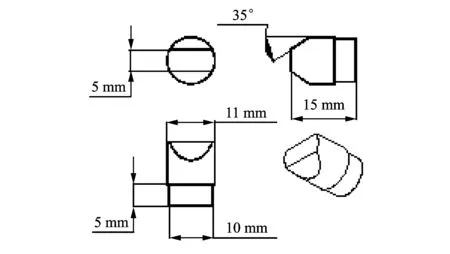
Fig.1 Size of 35CrMnSi fragment
1.2 Grid and constraint
Due to the symmetry of the structural shape and load, as shown in Fig.2, only 1/2 solid model was established. Both fiber targets and fragments were divided into structured grid. In order to improve the calculation speed and accuracy, dense mesh was adopted in the contact region and the nearby area. In additon, sparse mesh was adopted in remote areas to the contact position[7]. Symmetrical constraint was applied to the surface of the symmetry of the target, and fixed constraint was applied to the other three surfaces. In the process of calculation, the equivalent failure strain method was utilized to delete the failure element and node, and to describe grid distortion and erosion.
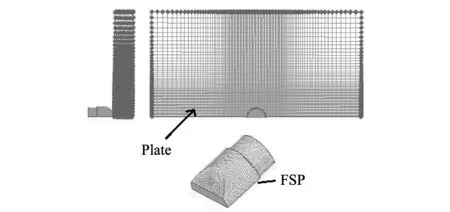
Fig.2 Finite element model of target structure
1.3 Material model and parameters
In finite element analysis, for Kevlar fiber, Puff model is used to describe the change of state, and Von Mises stress model is for stress analysis. The material parameters are listed in Table 1. For FSP, linear model is used to describe the change of material states, and stress model is for Von Mises model[6]. The material parameters of FSP are listed in Table 2. Plastic strain is used to describe failure and erosion of targets, as listed in Table 3.
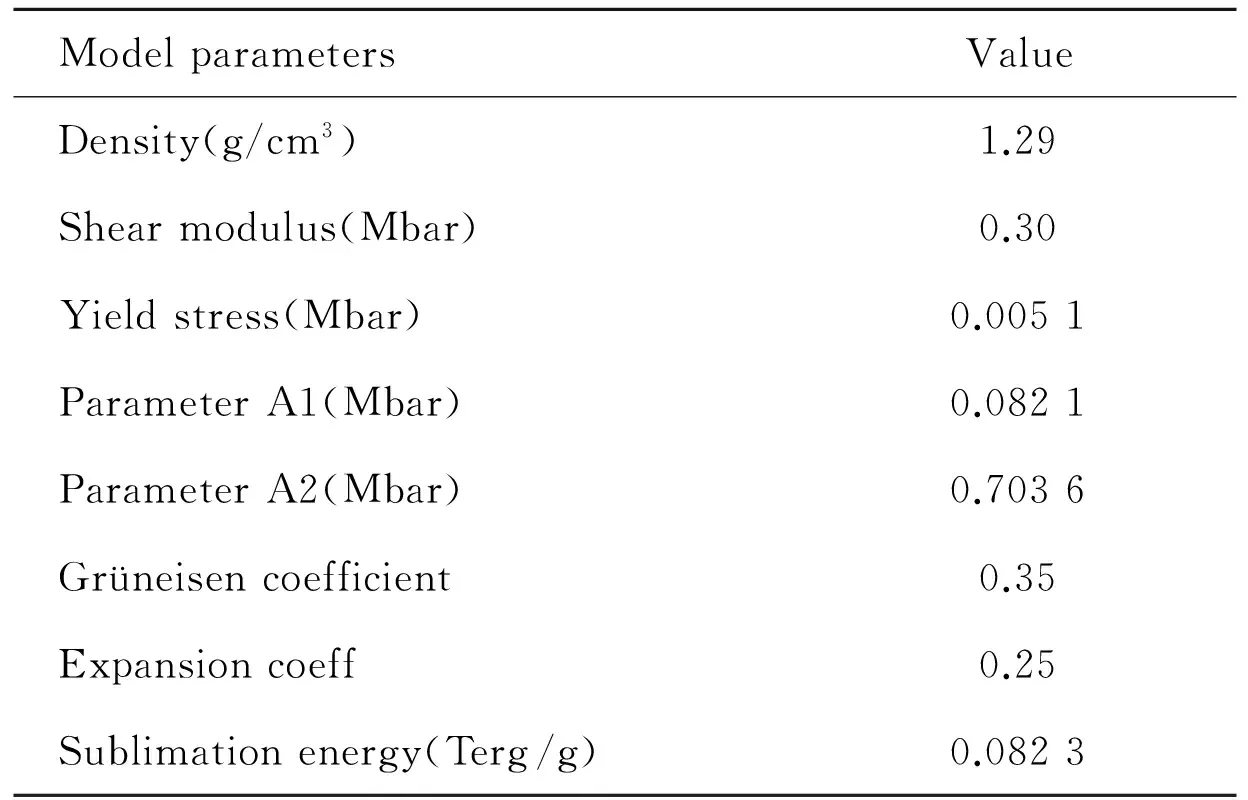
Table 1 Material model parameters of Kevlar-129 fiber
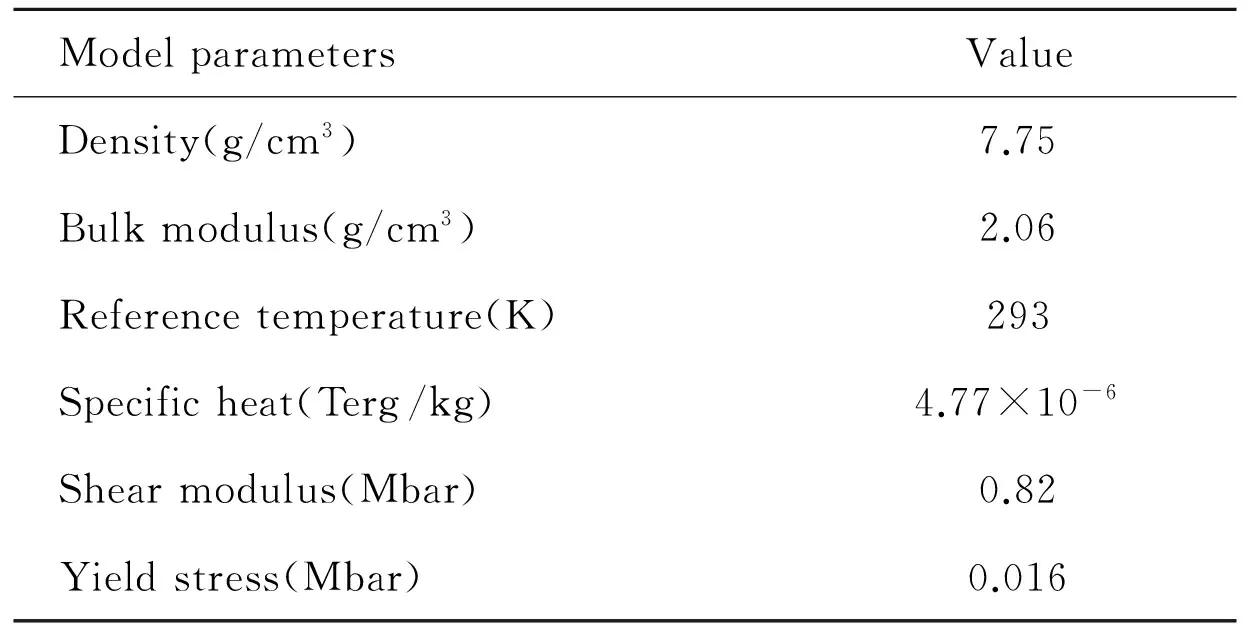
Table 2 Material model parameters of 35CrMnSi fragment

Table 3 Erosion and failure parameters of materials
1.4 Results and discussion
Six groups of numerical simulations were carried out for Kevlar-129 fiber composite plates impacted by FSP, and the typical penetration and perforation process was obtained. Here the anti-penetration process of 8 mm thick plate is listed, as shown in Fig.3. The process that FSP impacted to an 8 mm target was calculated by finite element at the initial velocity of fragments of 307 m/s. As seen from Fig.3, the target and fragment reaches a critical contact state at the time of 0 μs, and the target does not produce stress and strain; At the time of 10 μs, there is bow shaped strain produced on the target, particularly, a pit on the attacked surface and a convex on the back surface. Along with the time change from 10, 20, 40 to 80 μs continuously, the depth of penetration is deeper and deeper, and the bow deformation on the target is larger and larger. When the time passes from 80 to 120 μs, due to the kinetic energy of FSP and the resistance that the target loads to FSP were smaller and smaller, the elastic deformation of the target begins to shrink. When the time is 120 μs, the fragment penetrates the target and its kinetic energy decreases to zero.

Fig.3 Penetration process of FSP impacting 8 mm thick Kevlar fiber target
The data in Table 4 are the calculation results for six groups of target finite element structures. What can be seen from the table is that the different thicknesses of plates are of great difference to the ballistic limit. As shown in Fig.4, the ballistic limit shows a linear growth with the increase of the plate thickness. Therefore, the anti-penetration performance of single kevlar-129 fiber composite target exhibit a trend of linear growth in the normal protection domain.
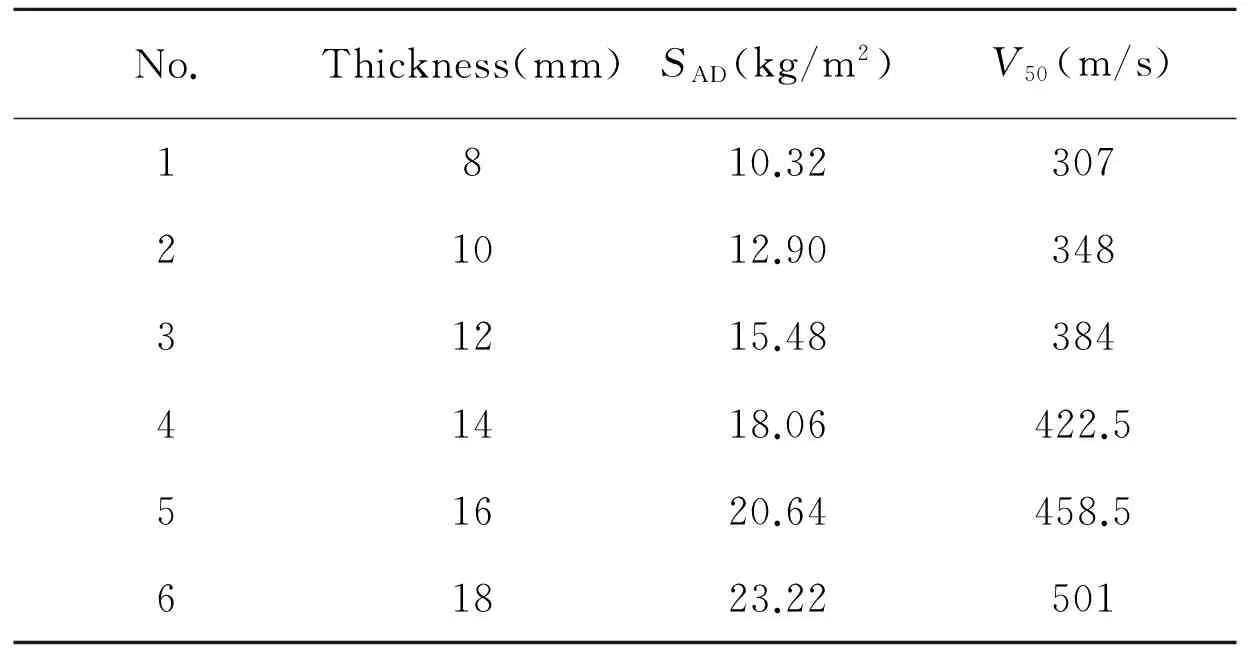
Table 4 Ballistic limits of six groups of Kevlar fiber targets
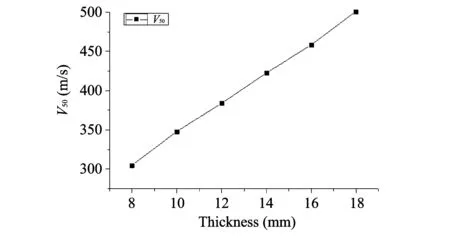
Fig.4 Relationship of ballistic limit varying with target thickness
1.5 Characterization of ballistic performance
Based on the FSP, the methods used commonly to characterize the ballistic performance areV50method and SEA method. TheV50method is to obtain the ballistic performance by the projectile impacting target with certain surface density, which is defined to measure velocity as the probability of penetration and un-penetration composites reaches 50%. This method can reflect the ballistic performance of the target comparative directly. Based onV50method, theEsis defined as the energy absorption capability of the targets underV50, and is given by
(1)
whereEsis the specific energy absorption (J·m2/kg);mandV50are the quality of fragment (kg) and the ballistic limit velocity of Kevlar fiber target (m/s), respectively;SADis the surface density of the target (kg/m2). According to Eq.(1), six groups ofEsare calculated under the ballistic limit, as listed in Table 5.

Table 5 Es values of six groups target under ballistic limit
In Table 5, the gap in specific energy absorption of two adjacent groups of the targets based on the ballistic limit is very small. Generally speaking, the specific energy absorption based on ballistic limit exhibits linear growth with the increase of the plates’ thickness. As more clearly shown in Fig.5, in a large range of the target thickness from 8 to 18 mm and the surface density from 10.32 to 23.22 kg/m2, the specific energy absorption under the Kevlar fiber plate impacted by FSP target varies from 45.66 to 54.05 J·m2/kg. In general, the variation exhibits linear growth, but in the range of the thickness from 10 to 16 mm and the surface density from 13 to 23 kg/m2, as shown in Fig.6, the specific energy absorption of Kevlar fiber composite plates increases slowly.
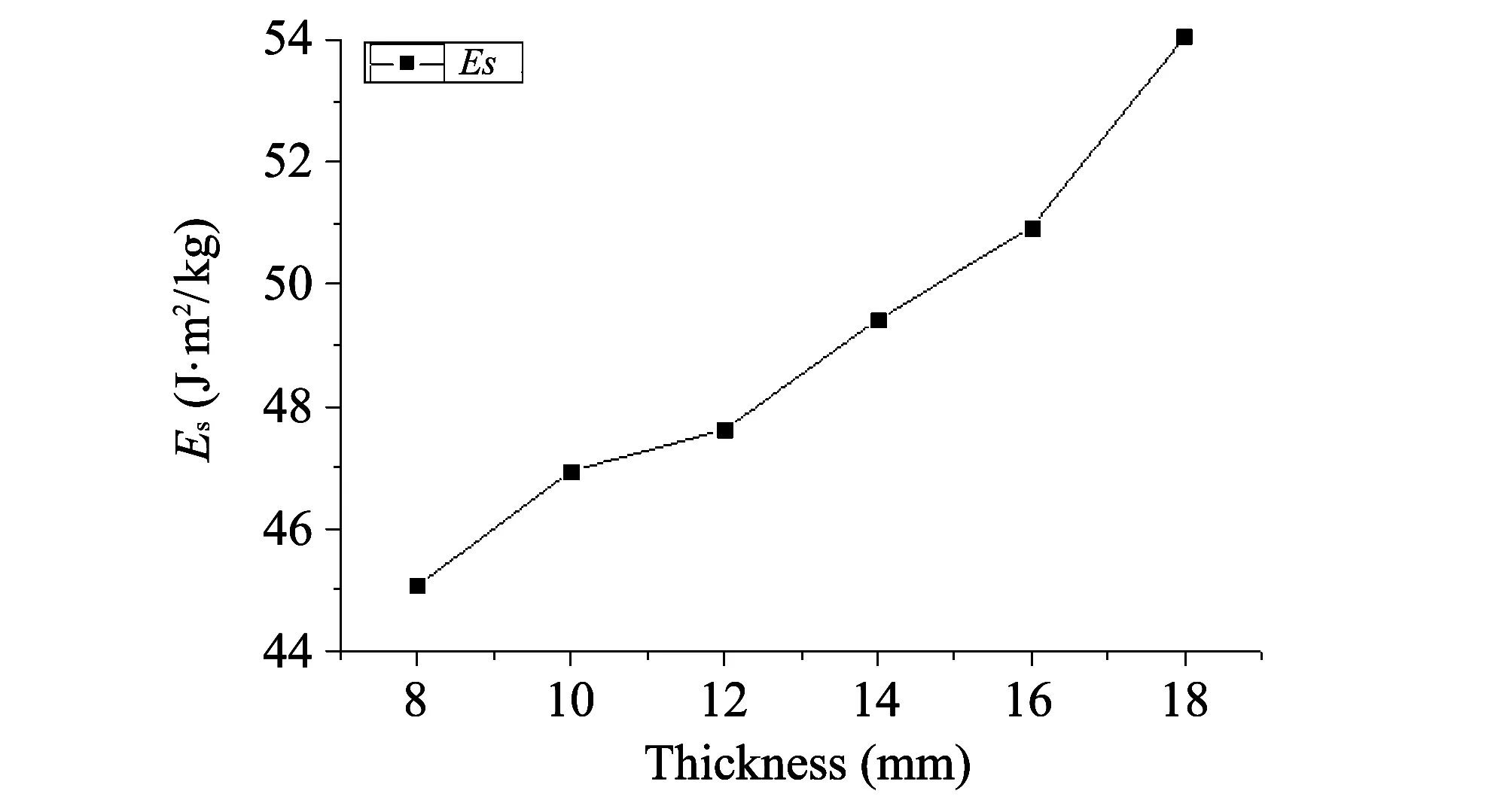
Fig.5 Relationship of Es varying with target thickness
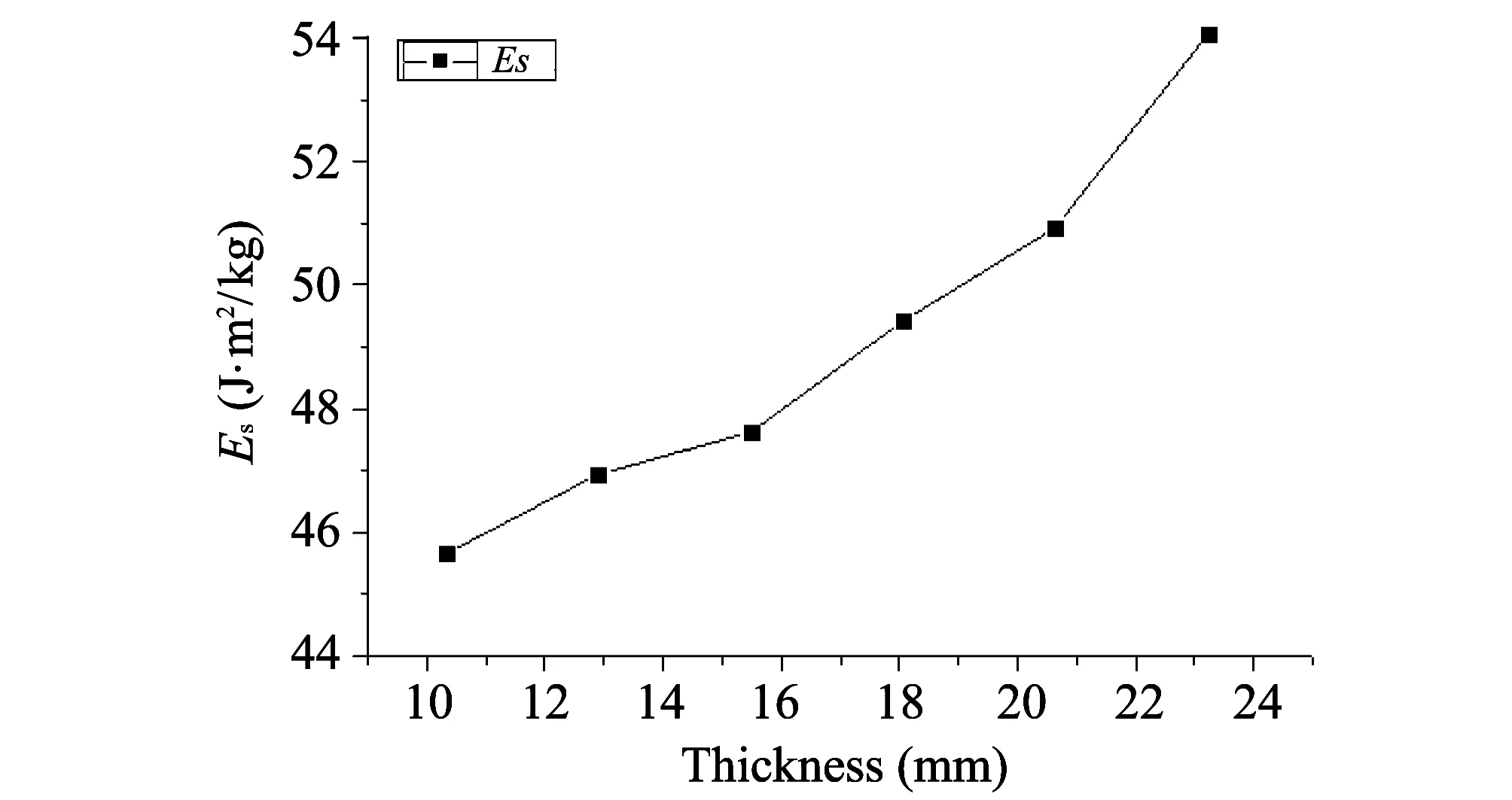
Fig.6 Relationship of Es varying with surface density
As seen from Figs.5, 6, what’s more, the changing relation that the specific energy absorption of Kevlar fiber composite material is almost the same as that of the thickness and the surface density. That means the specific energy absorption of Kevlar fiber composites material can be characterized by any one of the two characterization methods impacted by FSP.
2 Conclusion
The anti-penetration performance of Kevlar fiber plate was studied by establishing six groups of finite element models, in which the thickness values of six groups of plates are 8, 10, 12, 14, 16 and 18 mm. The results of numerical calculation show that the ballistic limit exhibits linear growth with the increase of thickness of the kevlar-129 fiber target in the range of 8-18 mm. Through calculating the ballistic limit, the relation between the specific energy absorption and the target thickness and surface density of Kevlar-129 fiber composite target is obtained. The results show the changing relation that the specific energy absorption of Kevlar fiber composite material is almost the same as that of the thickness and the surface density. That means the specific energy absorption of Kevlar fiber composite material can be characterized by any one of the two characterization methods impacted by FSP. It is very important for the further research on anti-penetration and penetration of the kevlar-129 fiber plate.
[1] GAO Zhong-ren, DU Wen-ze, ZHONG Wei-hua, et al. Anti-perforation performance of aramid composite against spheric projectil. Acta Armamentarll, 2010, 31(4): 459-463.
[2] PENG Gang, FENG Jia-chen, LIU Yuan-dong, et al. Research of ballistic absorbing energy character of fiber reinforced composites. Journal of Ballistics, 2007, 19(3): 10-14.
[3] Tham C Y, Tan V B C, Lee H P. Ballistic impact of a Kevlar helment: Expriment and simulation. International Journal of Impact Engineering, 2008, 35: 304-318.
[4] Sevkat E. Experimental and numerical approaches for estimating ballistic limit velocities of woven composite beams. 2012, 45: 16-27.
[5] WANG Xiao-qiang, ZHU Xi, MEI Zhi-yuan. The development of fiber-reinfor- ced composites under ballistic impact. Fiber Reinforced Plastics/Composites, 2008, 5: 47-56.
[6] ZHANG Xiao-po, SHI Quan, WANG Guang-yuan. Finite element analysis of columniform fragment penetrating target based on LS-DYNA. Science Technology and Engineering, 2007, 23(7): 6005-6009.
[7] XU Yu-xin, WANG Shu-shan, YAN Wen-kang, et al. Armor-piercing experiment on fragm- ent against sandwich plate with fiber reinforced composite cores. Acta Materiae Compositae Sinica, 2012, 29(3): 72-78.
Kevlar-129纖維復合材料的彈道侵徹數值仿真
基于AUTODYN有限元軟件, 研究了Kevlar-129纖維增強復合材料的抗侵徹性能。 通過質量為10 g的FSP破片對厚度為8、10、12、14、16以及18 mm的六組Kevlar纖維靶板進行撞擊模擬, 獲得了FSP破片貫穿6組靶板的彈道極限, 并分析了靶板的彈道極限、比吸收能隨板厚的變化關系。 結果表明, 在板厚8-18 mm范圍內, Kevlar纖維靶板的彈道極限隨板厚的增加呈線性增長;在此范圍內, 靶板的比吸收能也呈近似線性增長, 但在板厚為10-16 mm時, 增長稍緩。 對比還發現, 比吸收能隨板厚的變化規律與靶板面密度的變化規律幾乎相同, 二者都可用于描述Kevlar-129纖維復合材料靶板在FSP破片碰撞下比吸收能的變化。
彈道極限; 有限元; 比吸收能; Kevlar-129纖維增強復合材料
ZHANG Ming, YUAN Mei-ni, XIANG Feng-hua, et al. Ballistic impact simulation of Kevlar-129 fiber reinforced composite material. Journal of Measurement Science and Instrumentation, 2015, 6(3): 286-290. [
張 明, 原梅妮, 向豐華, 王振興
(中北大學 機電工程學院, 山西 太原 030051)
10.3969/j.issn.1674-8042.2015.03.015]
ZHANG Ming (674158317@qq.com)
1674-8042(2015)03-0286-05 doi: 10.3969/j.issn.1674-8042.2015.03.015
Received date: 2015-05-19
CLD number: TB333; TJ012.4 Document code: A
登錄APP查看全文
猜你喜歡
建材發展導向(2021年14期)2021-08-23 00:56:16
紡織科技進展(2021年3期)2021-06-09 08:07:14
上海節能(2020年3期)2020-04-13 13:16:16
裝備制造技術(2019年12期)2019-12-25 03:06:00
天津醫科大學學報(2019年6期)2019-08-13 07:04:32
纖維復合材料(2018年3期)2018-04-25 07:22:58
電子測試(2017年11期)2017-12-15 08:57:13
機械工程師(2015年10期)2015-02-02 01:14:03
應用化工(2014年10期)2014-08-16 13:11:29
機電產品開發與創新(2014年4期)2014-03-11 16:42:24
 Journal of Measurement Science and Instrumentation
2015年3期
Journal of Measurement Science and Instrumentation
2015年3期
- Journal of Measurement Science and Instrumentation的其它文章
- Modal analysis of 4-cylinder engine crankshaft based on ANSYS Workbench
- Simulation of small-aperture deep hole drilling based on ABAQUS
- Investigation on nonlinear rolling dynamics of amphibious vehicle under wind and wave load
- Numerical simulation of two-phase flow field in underwater sealing device based on dynamic mesh
- Analysis of movement laws of fragment and shock wave from a blast fragmentation warhead
- Application of adaptive Kalman filter in rocket impact point estimation