
A Passport to Guatemala’s Mayan Past
2015-06-01 12:28:08byPolyaLesova
瘋狂英語·新策略
2015年2期
by Polya Lesova
Cass 譯
A Passport to Guatemala’s Mayan Past
危地馬拉—瑪雅不朽
by Polya Lesova
Cass 譯

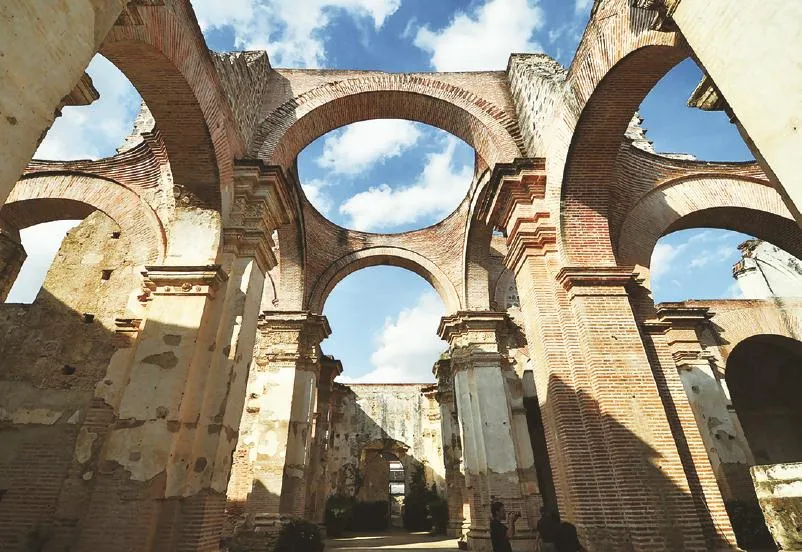
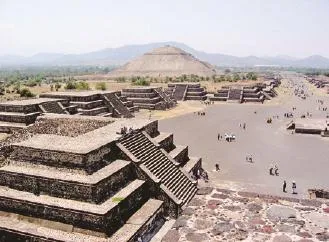
北島說:“一個人行走的范圍,就是他的世界。”所以你毋寧去行走,去跋涉,不為抵達(dá),只為遠(yuǎn)方。危地馬拉是古代瑪雅文化的發(fā)祥地,素有“森林之國”之稱,據(jù)說在印第安語里,其意思是“森林茂密的土地”。讓我們跟隨著本文的作者一起探尋這座不朽的末日之城,領(lǐng)略通往天堂的路上遇見的最美風(fēng)景!
We were on a motorboat to the past—or so we hoped.
My husband, Paul, and I sat near the bow of the1)skiff, soaking in the sun and the view as we zipped across Lake Atitlán, in Guatemala’s highlands. Several large volcanoes towered in the distance, seemingly standing guard over the villages scattered along the green shores.
Our destination was Santiago Atitlán, the largest town on the lake and a place to encounter the culture of the Tz’utujil—one of roughly 20 Mayan ethnic groups in Guatemala. As we approached the shore, we saw women in traditional purple-striped blouses, waist deep in the water, washing clothes. We walked from the2)ricketypier into town, at frst seeing little more than stalls where locals were aggressively hawking water bottles and maps. But a left turn took us into Santiago Atitlan’s main plaza, which was crowded on market day. Tz’utujil women, some with children, sat on the ground with their wares spread around them: piles of fruits and vegetables, spices, meats. The women wore3)huipiles—striking blouses embroidered with birds and flowers. Some men wore traditional purple-and-white-striped pants, also4)stitchedwith symbols.
Starting around 1500 B.C., the Mayan people established one of the dominant civilizations in5)Mesoamerica. At its height, the empire stretched from southern Mexico to parts of Honduras and El Salvador, with its center in present-day Guatemala. Skilled at agriculture, astronomy and mathematics, the Mayans built stepped stone temples, palaces, and cities that held tens of thousands of residents. But for reasons that are not understood, their civilization went into decline, even before Spanish6)conquistadorsarrived in the early 16th century; urban centers were abandoned to the jungle and many traditions vanished. But not all…
我們正乘坐著摩托艇駛向過去—至少我們懷抱著這樣的希望。
我們快速地駛過危地馬拉高地的阿蒂特蘭湖,我和丈夫保羅坐在小艇的船頭沐浴陽光,欣賞美景。遠(yuǎn)處屹立著幾座高聳的火山,儼然守衛(wèi)著散落在綠色海岸邊的村莊。
我們的目的地是圣地亞哥阿蒂特蘭鎮(zhèn),那是阿蒂特蘭湖上最大的城鎮(zhèn),同時也是邂逅楚圖希爾人(危地馬拉的大約20個瑪雅民族之一)文化的絕佳地點。靠近岸邊時,我們看到了身穿傳統(tǒng)紫色條紋上衣的婦女們,站在齊腰深的水里,正在洗衣服。我們沿著搖搖晃晃的碼頭踏進(jìn)城鎮(zhèn),最先見到的僅僅是幾個小攤,本地人正在賣力地兜售水壺和地圖。但一個左轉(zhuǎn)彎我們就來到了圣地亞哥阿蒂特蘭主廣場,在這集市日里顯得十分擁擠。楚圖希爾婦女們,其中一些帶著孩子,坐在地上,身邊擺放著她們的商品:一堆堆蔬果、香料和肉。女人們穿著花洋裝,引人注目的上衣上繡著鳥類和鮮花。一些男人們穿著傳統(tǒng)的紫白色條紋褲子,也刺有一些標(biāo)志圖案。
大約從公元前1500年開始,瑪雅人在中美洲建立了世上輝煌的文明之一。……
登錄APP查看全文
