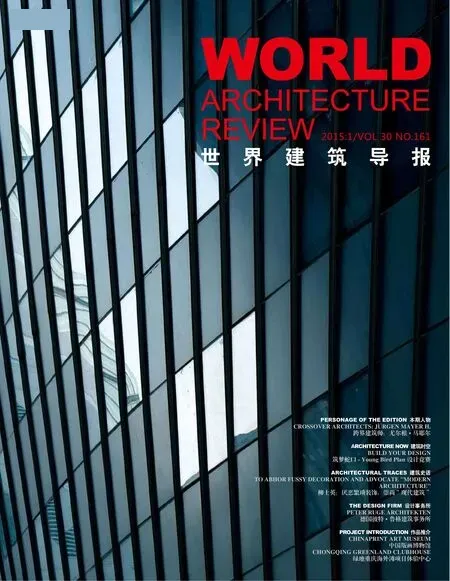
訪談:尤爾根·馬耶爾
2015-11-29 06:07:45
世界建筑導報 2015年1期
訪談:尤爾根·馬耶爾
INTERVIEW: JüRGEN MAYER H.
導報:在我們的印象中,德式建筑是比較嚴謹精確的,而您的作品似乎表現不同風格,請問這是德國目前普遍的趨勢嗎?
尤爾根?馬耶爾:我主要對如何把文化現象凝聚于建筑學感興趣,而在如何創作建筑作品和正確看待建筑學,如何確定建筑學未來地位等方面樂意接受新的挑戰。德式建筑以高效且管理出色而著稱,而這些都是極具價值的方面。總有一些與眾不同的建筑師事務所,通過獨特的概念和嚴謹的工作演繹這些優點。
導報:您的作品形式往往與眾不同,請問您的依據是什么?您想通過您的作品來表達什么?
尤爾根?馬耶爾:我們通過發揮建筑物的潛能和把握其韻味來產生創作契機和制造驚喜。因為我們總要為各種具體方案、地點和客戶制定個性化設計,我們就不能依靠固有的模式,而是在設計過程中開發,當然也受以往經驗的影響。一些概念性方法也是基于我們對建筑項目和藝術設施的研究。我們親臨現場進行詳細勘察,嚴謹地反復推敲方案,并盡力從指定位置提取出特別的因素。我們建立適當參數,作為每個項目的骨架或框架,這些只是基于客戶的設計綱要和程序邏輯的概念性條件,而不是設計驅動的成分。
導報:請問在您眾多的建筑作品中,哪一件是您最青睞的?為什么?
尤爾根?馬耶爾:迄今為止,“都市陽傘”項目仍然是我們最重要的項目。它坐落在21世紀新型城市空間的中心地帶,是從考古學層面了解塞維利亞歷史的重要地標。“都市陽傘”不僅有歷史內涵,還包含了人們日常生活所必需的菜市場和商業區,提供用于舉辦各種活動的公共區域,并設有提升裝置,可將游客們提升至樓頂觀景臺欣賞塞維利亞城市全景,這體現了一種“富于想象”的文化。所有這些不同的服務項目在白天和夜晚的不同時段分別開放并發揮不同作用。實際上塞維利亞與大多數西班牙城市一樣,非常接近24小時的不夜城。每當您在城里轉轉,四處都充滿生機勃勃的氛圍。正如遮陽傘不僅僅在日間提供遮陽一樣,隨著“都市陽傘”為未來各類公共活動創造有利氛圍,其夜間功能可能會變得更加重要。 除了“都市陽傘”,我們還參與了格魯吉亞數項旨在塑造整個國家基礎設施全新景觀的項目。在這些成就的基礎上,我們朝著高樓大廈和程序上更復雜的項目邁進。
導報:請問在此項目中最具挑戰性的有哪些方面?
尤爾根?馬耶爾:此項目的最后成功都是基于2004年夏季競標的成功,之后通過我們工程師的投入、客戶和塞維利亞文化委員會的反饋,我們不斷制定和改進方案。該項目匯聚了各種不同的力量和利益團體,與市長成就息息相關。項目建設期從2005年開始直至2011年年中。研究各種結構可能性和比較木材、鋼材和玻璃纖維鋼筋混凝土結構數月后,我們才決定采用門薩毛奇項目為原型。用層壓木板構造“都市陽傘”并覆蓋聚氨酯貼膜。而陽傘木結構所用Kerto層壓木板由德國芬林生產。
導報:請問您能談談對德國建筑教育的感受嗎?
尤爾根?馬耶爾:由于參與國際交流項目,德國教育在過去幾年也改變了很多。如今我們德國也出現了各種不同的教學理念,每所學校都關注不同的方面,無論是更偏重于技術,概念還是藝術。總體教育水平非常扎實,是開始建筑師職業生涯的良好基礎。
導報:請問最初是什么原因促使您想要成為一名建筑師呢?您可以描述您從第一個項目開始到現在的心理演變過程嗎?
尤爾根?馬耶爾:當我還是個半大小伙時,我在報刊上看到了由埃里希·門德爾松(Erich Mendelsohn)設計的斯圖加特Schocken百貨商場的照片,這張照片便成為了我想要深入了解建筑學的契機。到現在我仍然對“形式”的發展歷程充滿好奇。在這里“形式”不僅是一個物理實體,而且也是社會結構的“儀式”、“慣例”和“界限”。建筑學需要找到對“形式”的空間響應。
導報:請問您認為該專業更需要科學精神還是創意?
尤爾根?馬耶爾:需要兩者的結合,例如:我們開始用各類媒介工具工作,設計和試驗包括物理模型、手工和電腦繪圖,有時只需要到樹林里走走,而這正是創意的階段。但是,對于創意的實現,您還需要知道關于建筑材料和建筑法規的很多東西。于是我們需要各種工程師、顧問、公司和建筑專家網絡。
導報:請問在您看來,新材料和新技術是如何影響建筑學的?
尤爾根?馬耶爾:如今通過博客、教程和論壇等形式進行建筑學溝通和交流,已經影響了當今建筑作品的制作;建成或未建成則是另外一回事。這增強了設計構思的交流,同時也教會我們如何對自己的設計過程保持一種批判態度。
我們主要的投資集中在拓展建筑材料方面,這里的建筑材料不僅限于傳統的“建材”。當今,新媒體和新材料的出現擴展了我們對“空間”的理解,同時也為溝通和社會文化的互動提供了新平臺。我們堅信,建筑應該成為人們由被動的期望轉變成主動的參與和關注的催化劑。
導報:請問您在中國有過建筑實踐嗎?
尤爾根?馬耶爾:目前,我們正在參與蛇口校園文化的總體規劃,這是一個非常好的項目,探討四個團隊合作設計的新形式。它具備成為未來發展的典型項目的潛力。
導報:請問您認為建筑師的角色將在未來20年內如何變化?
尤爾根?馬耶爾:我們認為建筑學和建筑師應視為催化劑的作用。他們可以擔當動畫師角色,避免被動消耗空間,同時也負責規劃如何使用我們的公共領域。作為催化劑的建筑必須獨具魅力,足以激發創新形式的方案,乃至具備建筑使用和壽命方面的靈活性。如果您想溝通最新動態和引起關注,最好與物流技術和計算機技術相結合。這樣,借助通訊技術的發展,人人置身于公共空間,實現透明、網絡化和自發性的公共生活。
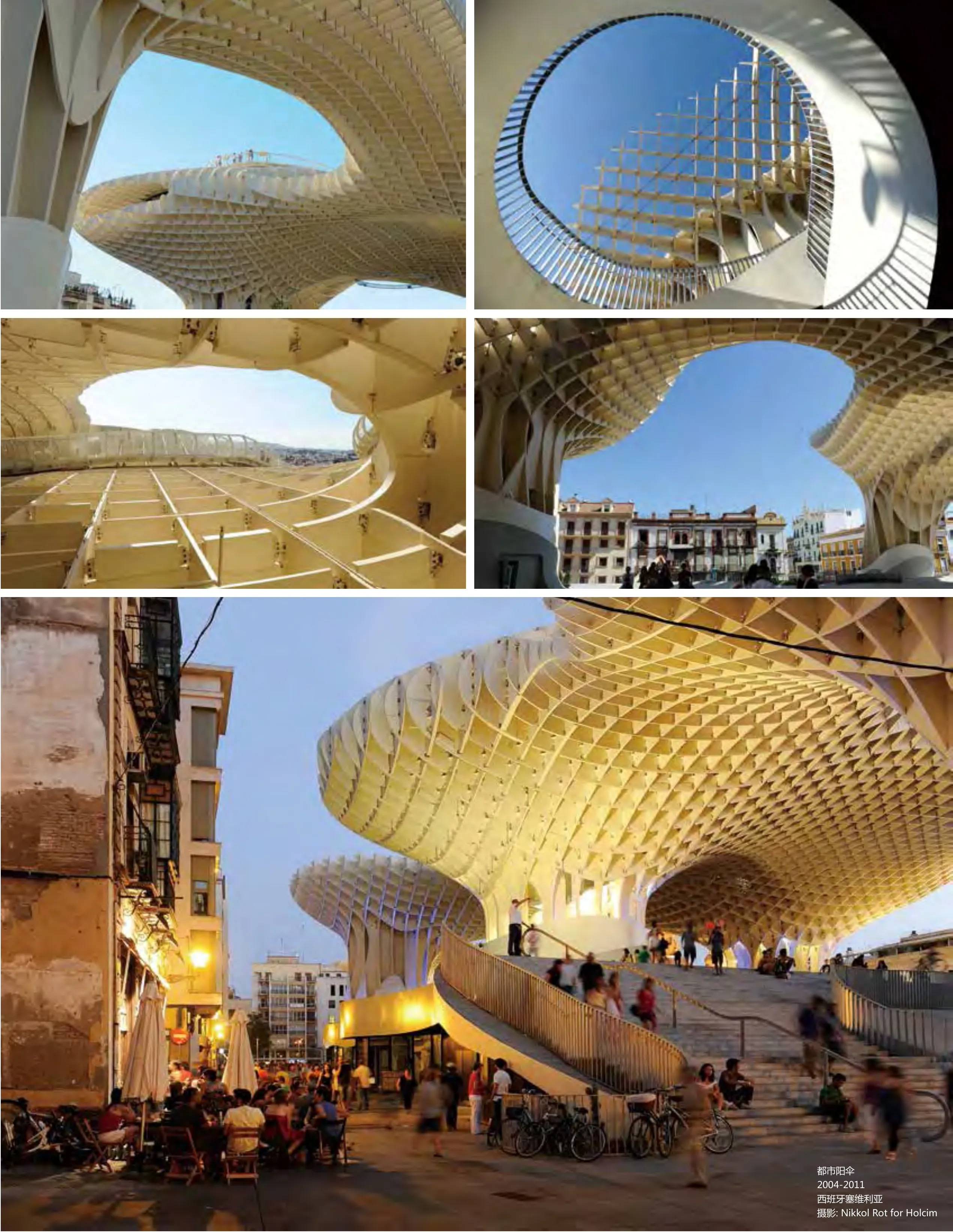
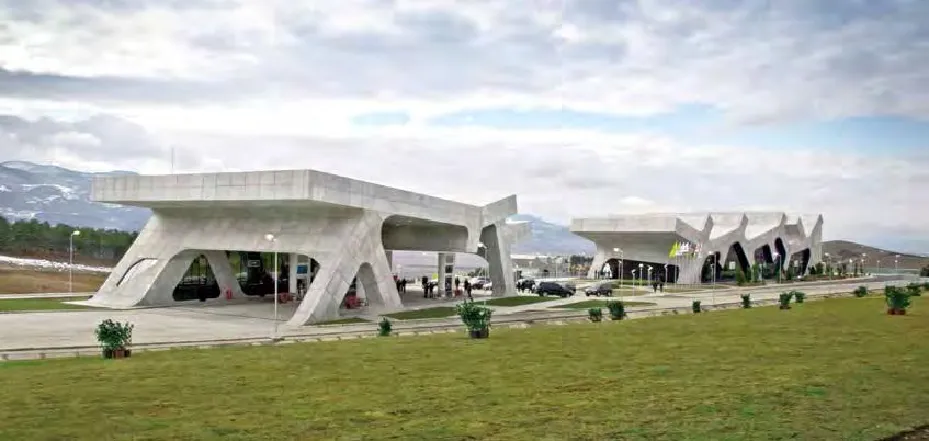
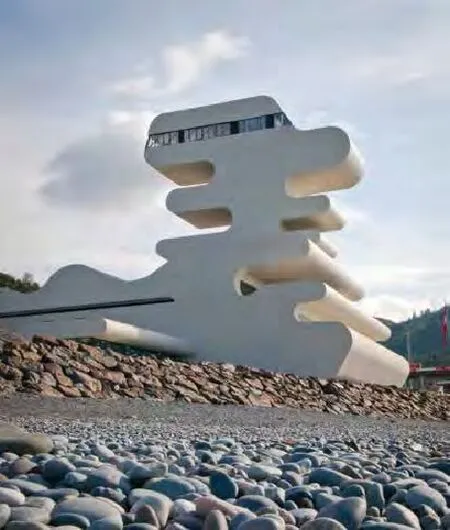
高速公路休息區2009-2011格魯吉亞哥里市攝影:Jesko M. Johnsson-Zahn
WAR: In our impression, Germany architecture is comparative rigor and accurate, while your works seem like a different picture, is that a common trend in German today?
Jürgen Mayer H. : I am mainly interested in how cultural phenomena condensate on architecture, frame new challenges in how we produce and look at architecture, and how we can speculate about the future role of architecture. German architecture has a reputation of efficiency and good management which are all very good values. And there are some extraordinairy offices that extend these characteristics by a unique conceptual and formal agenda.
WAR: The form of your work is always special,what is that according to? What do you want to express though your work?
Jürgen Mayer H. : We want to create curiousity and surprise for the potential of a building and it′s context. Since we always develop individual designs for specific programs, sites and clients, we don’t start with a special formal attention in mind. It is developed during the design process and is influenced by former experiences for sure. Some conceptual approaches are based on our research by architectural projects and art installations. We look closely at the site, critically rethink the program and try to extract something that is special to the specific site. We establish parameters as a skeleton or framework for each project. These are conceptual conditions rather than design driven compositions, based on a clients brief,contextual references and programmatic logistics.
WAR: Among your so many architecture works,which one are you most favored? Why?
Jürgen Mayer H. : So far still Metropol Parasol is the most important project for us. Based on an archaeological window into the history of Sevilla, the parasols cover the very heart of the city for a new urban place for the 21st century. Metropol Parasol covers history, hosts the everyday life in the food market or in commercial spaces, offers open public space for events and contemplation, and it refers to a ‘visionary’culture with rising structures to elevate visitors onto a panoramic Sevilla city view on the roof-scape. All these different programs are open and active at various times of day and night. Actually Sevilla as with most Spanish cities, is very close to a 24 hour urban space. Whenever you walk around in the city, there is a lively, energetic atmosphere. As much as the parasols provide shadow during the day, nigh-time might become even more important when Metropol Parasol creates an atmospheric cover to various forms of public activities still to be invented. Beyond Metropol Parasol we are involved in a number of projects in Georgia which shape a new infrastructural landscape for a entire country. Based on these achievements we move forward towards high-rises and more programmatically complex projects.
WAR: What was the most challenging aspect in designing the project?
Jürgen Mayer H. : The final project is based on a the competition entry we won in Summer 2004. We continually developed the scheme afterwards with the input of our engineers, feedback from the client and cultural comittees in Sevilla. The project was able to connect all different forces and interest groups as a mayor group achievement. The construction period was from 2005 to mid 2011. After some months of researching structural possibilities and comparing, timber, steel and glasfibre reinforced concrete structures,we decided to use our Mensa Moltke Project as the prototype. Metropol Parasol is realized with laminated wood plates and covered with a polyurethan skin. The timber construction of the parasols is made of Kerto laminated wood panels, produced by Finnforest, Germany.
WAR: Can you say something about the architecture education in German?
Jürgen Mayer H. : German education transformed a lot in the last couple of years due to international exchange programs. Today we find a wide range of pedagogical concepts and each school has it′s focus on different aspects, either more technical, conceptual or artistic. The overall education level is very solid and good base to start your career as an architect.
WAR: What made you choose the path of architecture? Can you describe an evolution in your mind from your first project until now?
Jürgen Mayer: At some point in my late youth I saw the Schocken department store by Erich Mendelsohn in Stuttgart in a publication. It was a kind of surprise that drew me towards studying architecture. One of my curiosities is still to find out how "form" develops. Not only form as a physical reality but also formality,ritual and boundaries of social constructs. Architecture needs to find a spatial response to that.
WAR: Do you think the profession does require a more scientific spirit or creative?
Jürgen Mayer H. : It’s a combination of both. For example: We start working with all kinds of media. Designing and experimenting includes physical models, drawings by hand and computer and sometimes just walking in the woods, that’s a very creative phase. But for realization you need to know also a lot about building materials and building regulations. That′s when we activate our network of engineers,consultants, companies and constructions specialists.
WAR: In your opinion, how do new materials and technologies influence architecture ?
Jürgen Mayer H. : Communicating and mediating architecture with blogs, tutorials, forums etc. have influenced the architecture being produced today; built and unbuilt, moved to another level. It enhanced exchanging ideas and teaches how to stay critical towards your own design process.
One major investment in our work is looking at expanding the material of architecture, beyond say just building material. The influence of new media and new materials now expands our understanding of“space” as a platform for communication and sociocultural interactivity. We believe that architecture should work as an activator to move people from a passive mode of expectation to an involved level of participation and attention.
WAR: What is your knowledge in terms of the architectural practice in China?
Jürgen Mayer H. : We are currently involved in a master plan for a culture campus in Shekou. A fantastic project that explores new forms of co-designing with 4 teams. It has the potential to become a prototypical projects for future developments.
WAR: How do you like the role of the architect will change over the next twenty years?
Jürgen Mayer H. : We think architecture and also the role of architect’s should be seen as Activators. They can work as animators to overcome a passive consumption of space, but become involved and also responsible for how we use our public realm. Activators have to be seductive enough to provoke new forms of program and even flexibility of use and duration. This works better with logistics and computer technology, also when you want to communicate what is going on and how you create attention. In this case the development of communication technology returns people back into public space, offering transparency, networks and spontaneity to public life.
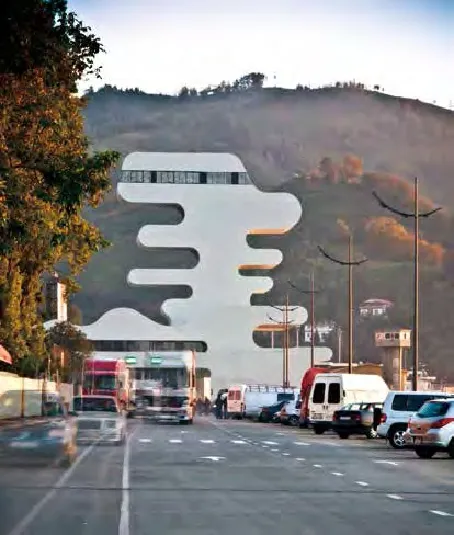
邊境檢查站攝影: Jesko M. Johnsson Zahn
猜你喜歡
北方建筑(2021年6期)2021-12-31 03:03:54
文苑(2020年10期)2020-11-07 03:15:36
現代裝飾(2020年7期)2020-07-27 01:27:42
現代裝飾(2020年6期)2020-06-22 08:43:12
現代裝飾(2020年4期)2020-05-20 08:55:08
流行色(2020年1期)2020-04-28 11:16:38
藝術啟蒙(2018年7期)2018-08-23 09:14:18
海峽姐妹(2017年7期)2017-07-31 19:08:17
Coco薇(2017年5期)2017-06-05 08:53:16
福建農業科技(2016年10期)2016-03-07 09:46:49