
奇洛埃休閑中心,卡斯特羅,奇洛埃,智利
2015-12-18 06:59:34建筑設計霍納斯雷塔馬爾建筑師事務所
世界建筑 2015年6期
關鍵詞:建筑
建筑設計:霍納斯·雷塔馬爾建筑師事務所
奇洛埃休閑中心,卡斯特羅,奇洛埃,智利
建筑設計:霍納斯·雷塔馬爾建筑師事務所
奇洛埃休閑中心是一座完全由智利南部本地木材建造的度假地,在這里,人們置身于大自然,享受獨處的休閑時光,還可以俯瞰卡斯特羅峽灣及其城市。
這個建筑項目位于奇洛埃群島中的瑞蘭半島上,距離卡斯特羅市16km,被一片20hm2的綠地和森林環抱。設計由兩個主要的想法發展而來:
第一,該項目將由多個獨棟建筑組成,配合該地區的尺度,以減小對周圍景觀的影響,賦予人們在區域內多種不同的使用方式。
第二,桃金娘林和田間小徑之間的橋梁構成了連接各個體量的天然廊道,它們也通往觀景臺及其他設施,以便駐足欣賞風景及鳥類。
為了適居于此地區,我們創建了3個組群:
地域賓館,由7個體量組成,它們在空間上受到自然力量的啟發。其中包括:
·一棟接待建筑,餐廳和起居室緊靠壁爐。
·3個主題房間,它們彼此獨立,以提供相對私密的空間。“風之屋”在垂直方向上創造了豐富的空間,以及來自屋頂陽臺的良好視野;“地之屋”插入了一小段斜坡來模擬洞穴形態及其內部光線;“林之屋”由兩片浸沒在樹冠中的巨大葉片組成。
·一個包含6間臥房的側翼,每個房間分別面向從入口到火烈鳥和黑頸天鵝棲息濕地的不同景觀。
鄉村項目:5hm2的綿羊牧場內有修復過的老房、火坑、客房、雞舍和蘋果樹,參觀者可以借此了解傳統的奇洛埃生活方式,體驗當地風俗。
森林:一系列互相聯通的步道、露臺和桑拿毗鄰當地植被與河流,人們可以穿行其中放松休憩,同時也能觀察鳥類的生活。
該項目的施工技術基于奇洛埃的木構文化,因此所有的建筑都建在瓜伊特卡斯的柏木樁上。結構、墻板、窗、家具都是由桂皮樹、柏樹等奇洛埃本地木材制作,給這片陰郁、冰冷的景色帶來溫暖而友好的空間。
所有建筑都遵循生態原則,使用來自太陽、風、雨的被動式能源,以減小運行費用和對環境的影響。由此,該項目在2014年被國家旅游局授予可持續性旅游勛章。□(辛夢瑤 譯)
項目信息/Credits and Data
主持建筑師/Principal Architects:Jonás Retamal,Laura Houssin
合作者/Collaborators: Lautaro áLvarez, Diego Aguilera
承建方/Construction: Area Verde SA.
基地面積/Site Area: 20hm2
建筑面積/Floor Area: 1100m2
攝影/Photos:Pablo Casals
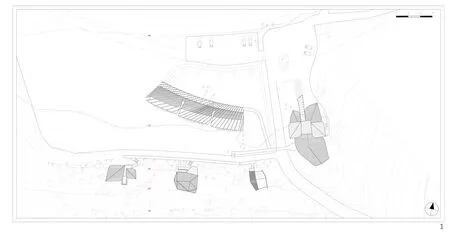
1 總平面/Site plan
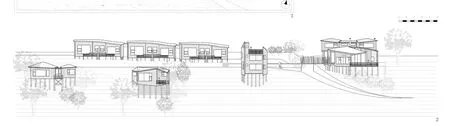
2 剖面/Section
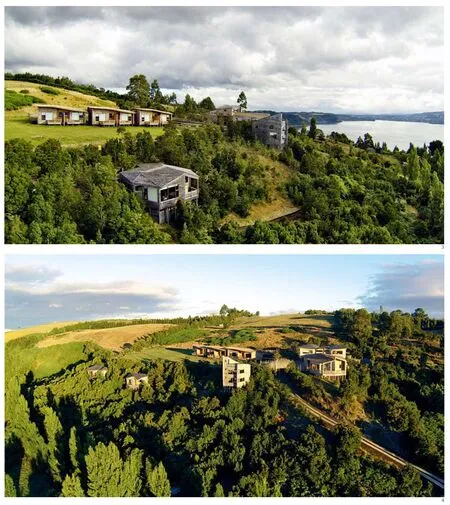
3. 4 全景/Panoramas
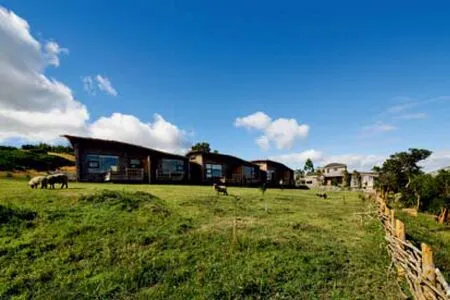
5 接待建筑與臥房側翼外景/Exterior view, reception building and the wing with 6 bedrooms
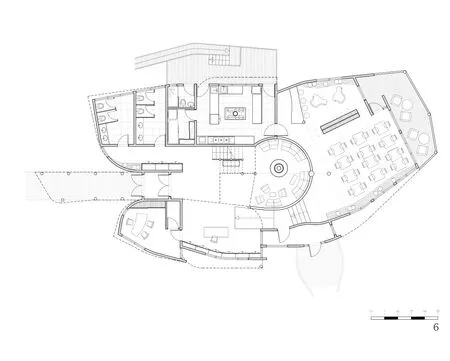
6 接待建筑平面/Plan, reception building
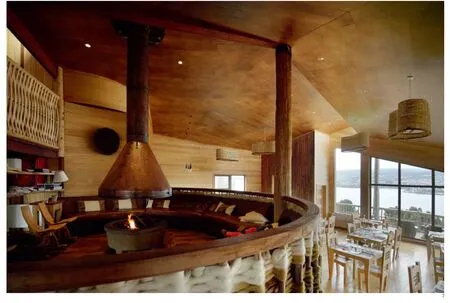
7 接待建筑內景/Interior view, reception building
The Chiloé Leisure Centre is a resort built entirely of native woods from southern Chile and designed for relaxation and leisure, where one can enjoy time alone in the midst of nature while watching from above the Castro Thord and its city.
It is located on the Chiloé Island, 16 km from the city of Castro on the Rilan Peninsula, in 20 hectares of grassland and forest. We developed this project based on two main decisions:
First: the project would be comprised of independent buildings suitable to the site scale, so as to minimize its impact on the landscape and to provide the users with different ways of enjoying the center on all available geographic dimensions.
Second: the routes that connect the volumes would be natural corridors formed by bridges between myrtle grooves and country trails, which also connect to other facilities and provide scenic spots for people to admire the scenery and observe the birdlife.
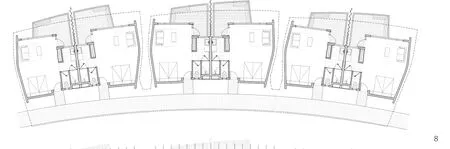
8 臥房側翼平面/Plan, wing with bedrooms
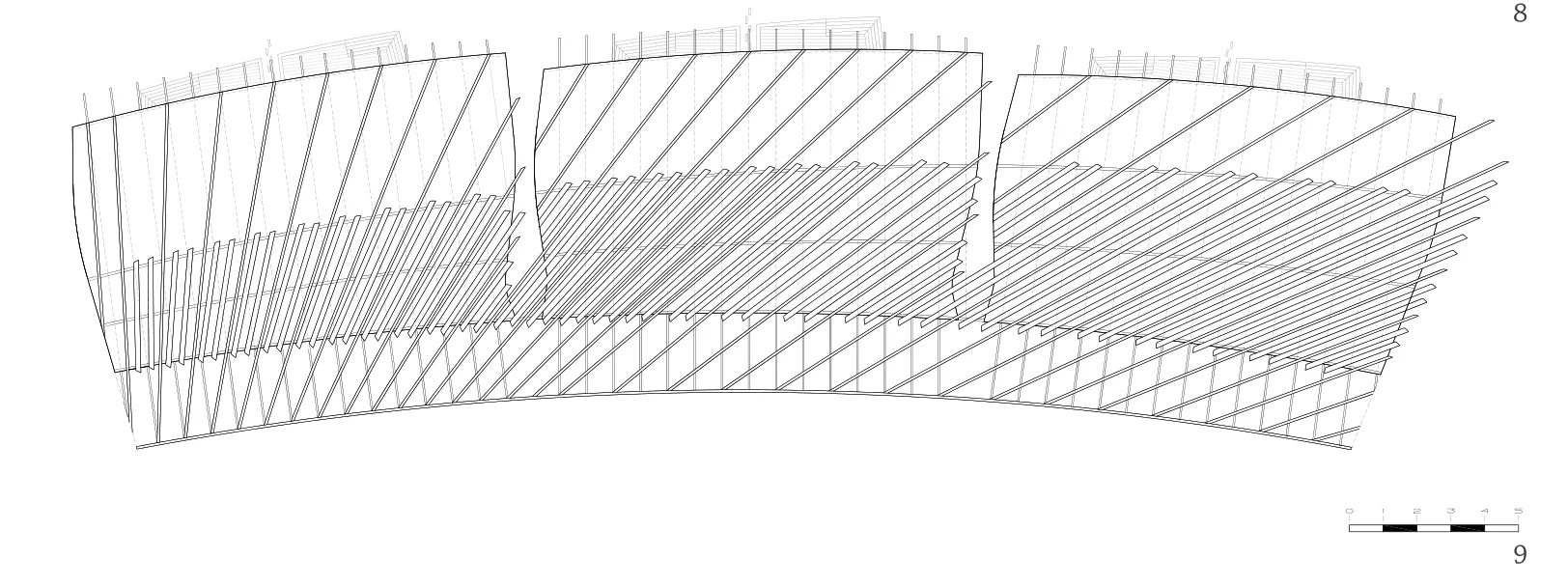
9 臥房側翼屋頂平面/Roof plan, wing with bedrooms

10 臥房側翼外景/Exterior view, wing with bedrooms
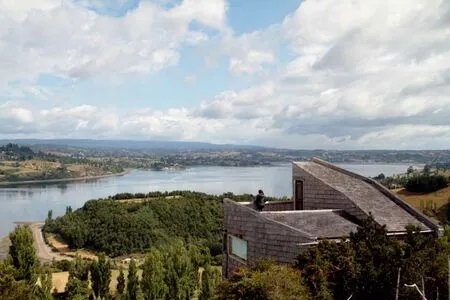
11 “風之屋”外景/Exterior view, Wind

16 “風之屋”內景/Interior view, Wind
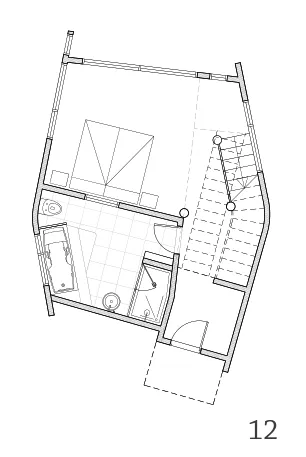
12 “風之屋”首層平面/Floor 0 plan, Wind
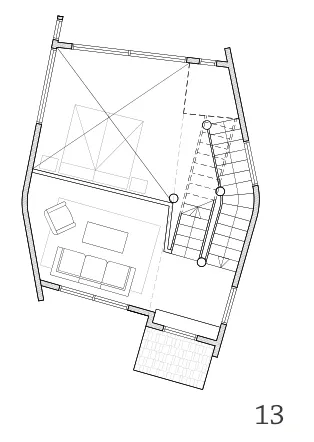
13 “風之屋”二層平面/Floor 1 plan, Wind

14 “風之屋”三層平面/Floor 2 plan, Wind

15 “風之屋”剖面/Section, Wind
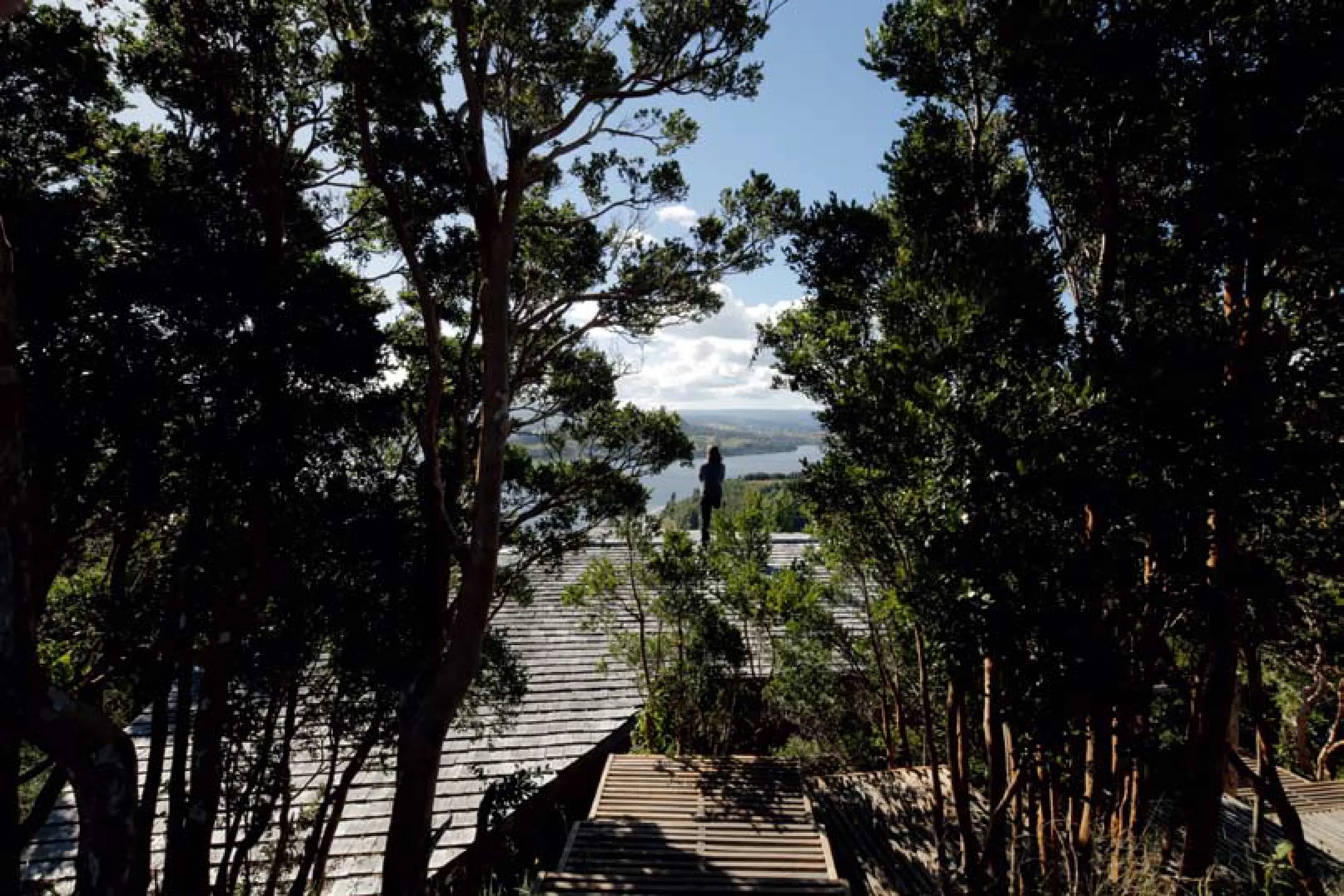
17 “地球之屋”外景/Exterior view, Earth
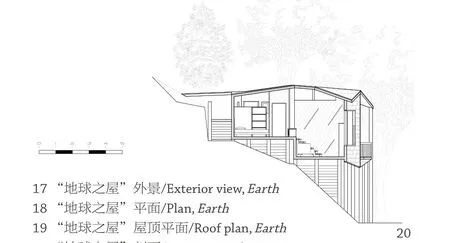
20 “地球之屋”剖面/Section, Earth
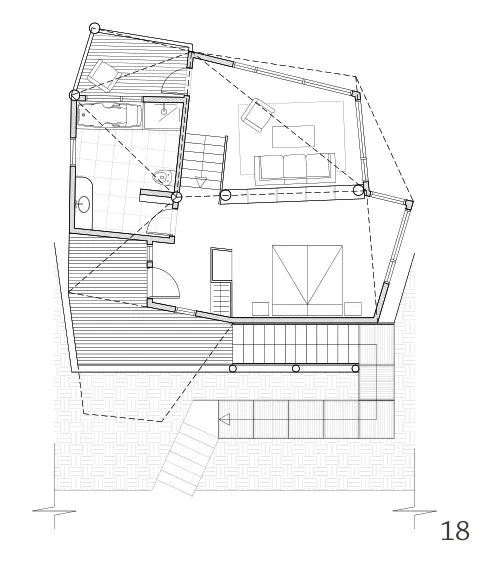
18 “地球之屋”平面/Plan, Earth

19 “地球之屋”屋頂平面/Roof plan, Earth
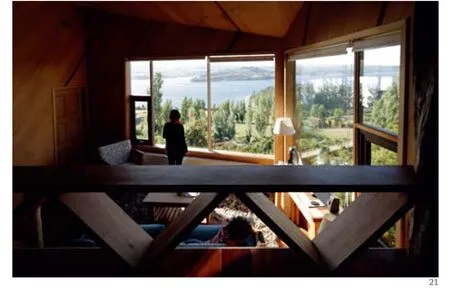
21 “地球之屋”內景/Interior view, Earth
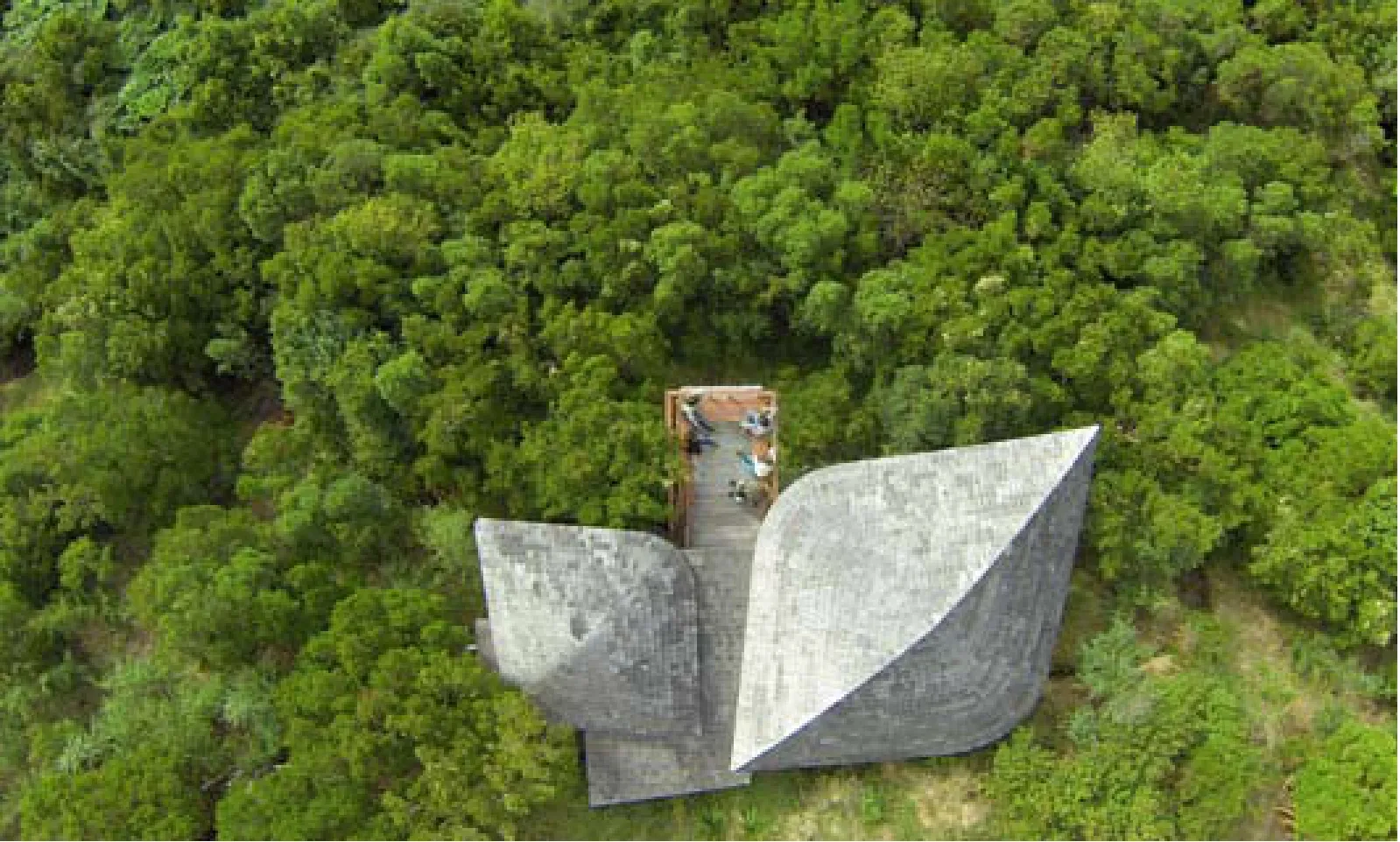
22 “森林之屋”屋頂/Roof, Forest

23 “森林之屋”內景/Interior view, Forest
To inhabit this territory, we created three large groups of facilities:
The Territorial Hotel is made up of seven volumes and yields spaces inspired by the forces of nature. It is composed of:
·A reception building, with dining and living rooms next to the fireplace.
·Three themed rooms, isolated from one another for better privacy. The vertically disposed Wind Room provides ample spaces and views from the rooftop terrace; the Earth Room, embedded in a cut of the slope, is conceived as a single structure simulating the light and shape of a cave; the Forest Room consists of two large leaves immersed in the tree canopy.
·A wing of 6 bedrooms, with framed views of different points of the fjord, from its entrance to the wetlands inhabited by flamingos and black-necked swans.
Rural Project: Within 5 hm2of sheep grazing field, the restored old house, together with fire pit, guest house, chicken coops and apple trees, allows visitors to learn the traditional way of living in Chiloé and share local customs.
The Forest: next to the river and local vegetation is a series of interconnected walkways, gazebos and sauna where one can wander about and relax while watching the birdlife.
The building techniques are based on Chiloé's wood construction culture, so all the buildings are set on Guaitecas cypress stakes. The structures, walls, windows and furnishings are all made of native woods such as Canelo, Tepa, Tenio, ma?io, cypress and larch, which along with the Chiloé wool create warm and inviting spaces for the contemplation of the blue and cold landscape of the island.
All buildings are designed under bioclimatic principles, using passive energies generated by the sun, wind and rain to minimize operating costs and impact on the environment. For this reason, it was awarded the S Seal for Sustainable Tourism by the National Tourism Service in 2014.□
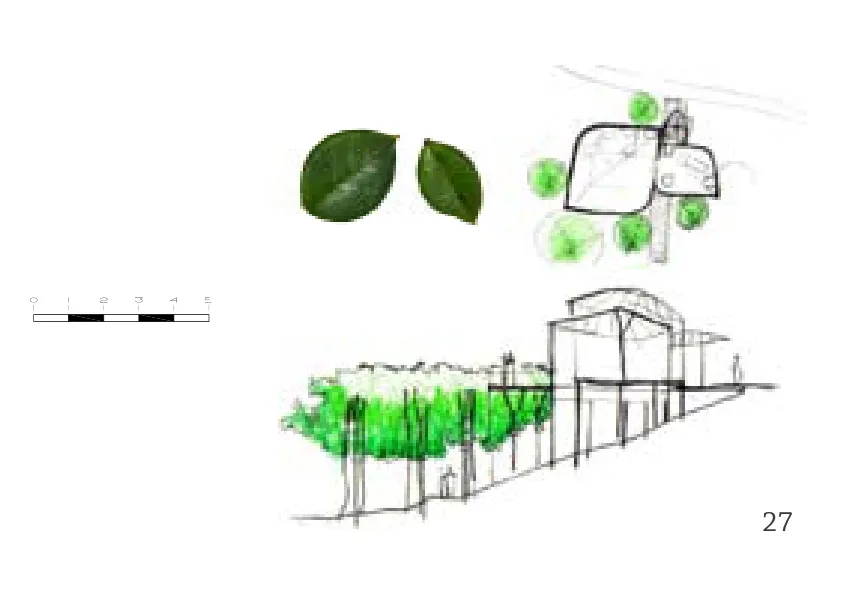
27 “森林之屋”草圖/Sketch, Forest

26 “森林之屋”剖面/Section, Forest
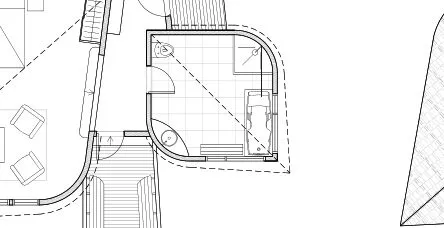
24 “森林之屋”首層平面/Floor 0 plan, Forest

25 “森林之屋”屋頂平面/Roof plan, Forest
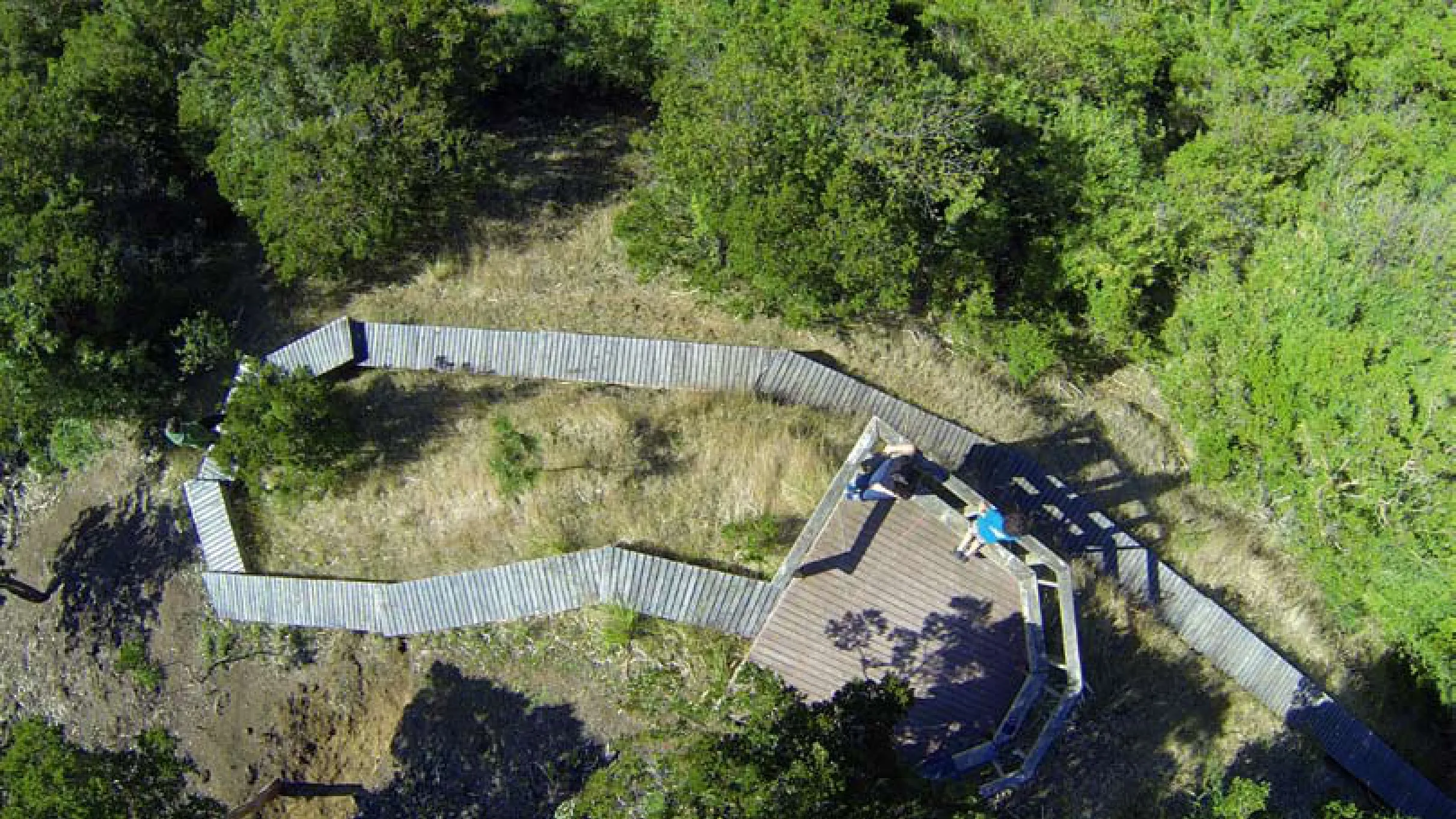
28 步道/Walkways
評論
李曉鴻:對設計來說,基地的特殊條件,對創作是束縛還是恰好被激發呢?地處20hm2綠地和森林之中的奇洛埃休閑中心,設計的出發點一定是使用當地到處可見的木材,然后服從自然的力量進行建造。很顯然,建筑師在“必須使用當地木材”的天經地義的念頭中爆發了對材料表達的極大熱情——項目中對木材嫻熟而充滿天才想像的應用實在令人難忘。這一點無論是從屋頂和墻面獨特的“木制瓦片”所創造的結果來看,還是從結構、地面、窗、家具等木材的建造及其工法上,都是顯而易見的。較之僅僅強調利用地方材料、復制地方建造文化而制造出的“樣式化”建筑,我們是不是該討論一個問題:在這里,建筑學的積極貢獻到底該是什么?
方曉風:度假屋這樣的項目很容易成為中產階級對幸福生活的小清新想像,扭捏一番之后露出庸俗的虛榮底色。這個設計得以免俗的原因在于,設計師的重點是表達對自然環境的欣賞,謙恭而謹慎的態度使建筑與環境的融合度十分出色。在這個基礎上,建筑師沒有放棄對空間趣味的追求,建筑作為人與自然景色之間的媒介,表現出了獨特的品質。這個項目的技術策略也與整體氛圍相協調。
Comments
LI Xiaohong: In architectural design, is creation restricted by specific site conditions or rather inspired by them? Situated in 20 hectares of grassland and forest, the starting point of the Chiloé Leisure Center design must have been native woods, and the construction must have been carried out following the forces of nature. Obviously, the architects' great enthusiasm for material expression burst from the unalterable principle of "using native woods" – the dexterous and ingeniously imaginative application of which is truly impressive. This can be readily seen in the effects created by unique roof and wall "shingles" as well as in the wood craftsmanship of structure, flooring, windows and furnishings. Compared to the "stylized architecture" that emphasizes solely the utilization of local materials and reproduction of native architectural culture, this project prompts our debates on a critical issue: what should be the positive contribution of architecture, after all?
FANG Xiaofeng: Resort projects can easily become the middle class' fresh imagination for sweet life, but after some coy time their vulgar vanity is completely exposed. That this design could escape such fate is largely because the designers laid emphasis on expressing their appreciation for natural environment; their humble, prudent attitude made it possible for the buildings to fuse perfectly with their setting. On this ground, the architects did not give up pursuit for spatial taste; here architecture serves as a medium between man and natural scenery, exhibiting a unique quality. The project's technical strategy is also in accordance with the overall atmosphere.
Chiloé Leisure Centre, Castro, Chiloé, Chile, 2014
Architects: Jonás Retamal Arquitectos
猜你喜歡
北方建筑(2021年6期)2021-12-31 03:03:54
文苑(2020年10期)2020-11-07 03:15:36
現代裝飾(2020年6期)2020-06-22 08:43:12
現代裝飾(2020年4期)2020-05-20 08:55:08
攝影之友(影像視覺)(2019年2期)2019-03-05 08:27:16
藝術家(2017年3期)2018-01-26 08:54:49
文學自由談(2016年3期)2016-06-15 13:01:16
福建農業科技(2016年10期)2016-03-07 09:46:49
少兒科學周刊·兒童版(2015年6期)2015-11-24 03:49:38
中國工程咨詢(2015年4期)2015-02-14 03:49:56
