2008北京奧運會射擊館,北京,中國
2015-12-21 05:33:22莊惟敏,祁斌,汪曙等
世界建筑 2015年10期
2008北京奧運會射擊館,北京,中國
Shooting Venue of 2008 Olympic Games, Beijing, China, 2008
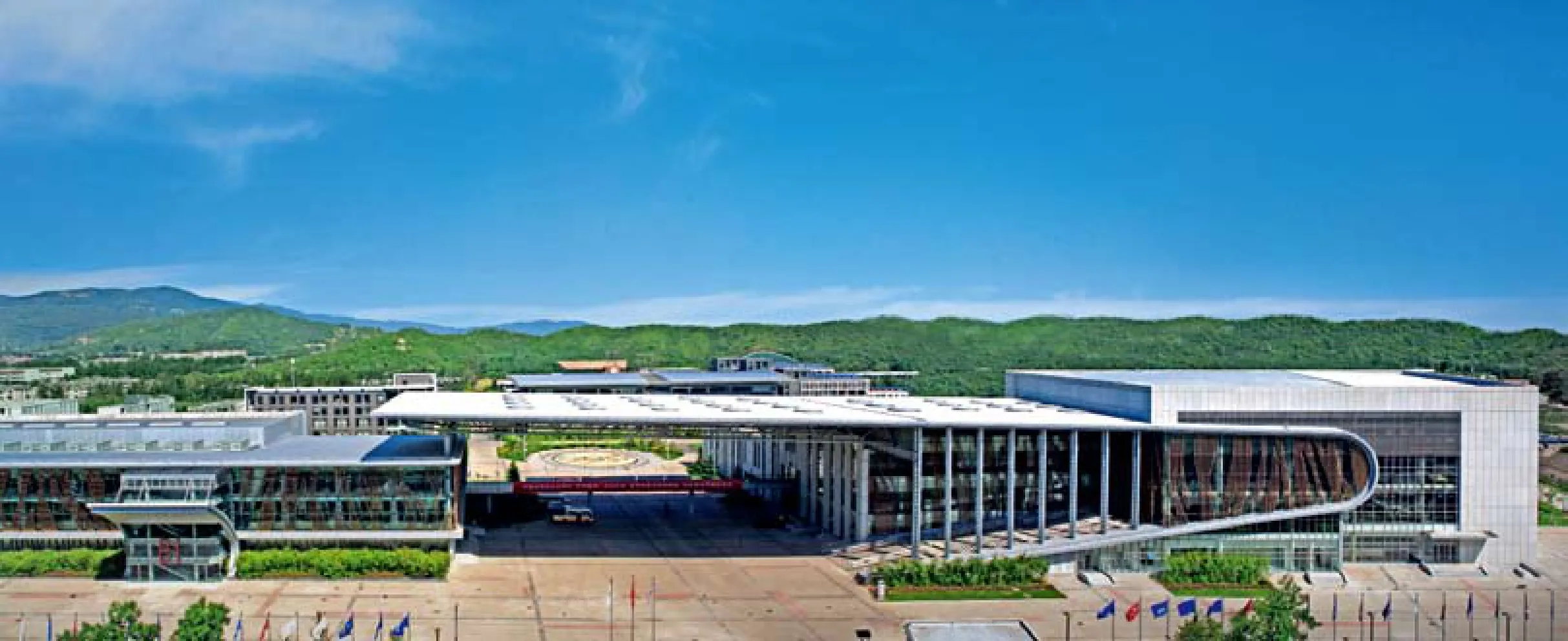
1 主入口鳥瞰/Bird's eye view of main entrance
射擊運動是一項歷史悠久的傳統奧運項目,是化干戈為玉帛的奧林匹克精神的產物,有著不同于其他運動項目的獨特文化。射擊運動又是一項以靜制動、以巧搏力的項目。射擊運動源于森林狩獵,是一項非常貼近自然的運動項目。運動員在草地、藍天和陽光下,追求精準,以靜制動,進行耐力和心理素質的較量,使這項運動展現出人與自然的相融和諧,建筑與環境密不可分的相互依存關系。拋棄追求彰顯“國家象征”的宏大敘事式的立面追求,強調建筑空間與自然的對話,體現回歸自然、回歸人性、回歸建筑的本原,應該是本設計最本質的追求。
方案以“林中狩獵”為理念,更加強調建筑的人性化色彩,減少了建筑的剛性色彩,強調給人以溫暖、舒適、親切的感受。建筑外部形態構思延續林中狩獵的設計理念,在建筑形式上呼應原始狩獵工具——弓箭的抽象意向。資格賽館與決賽館之間的聯系部分是整個射擊中心園區的入口,建筑設計采用將屋面與入口臺階連成整體的處理手法,由此形成的折線弧形開口成為整個建筑群特征鮮明的母題,在資格賽館水平延伸的形體斷面以及5個主要觀眾出入口處重復呼應弧形母題。在二層、三層主要觀眾休息區域的幕墻外側,采用鋁型材熱轉印木紋肌理豎向遮陽百葉的處理,形成引發人們聯想的抽象的森林意向。
在建筑功能布局上,需要為所有靶位創造盡可能均等的比賽條件。資格賽館采取了4個靶場分兩層豎向疊落的布置方式,一層為25m、50m兩個半露天靶場,二層為10m靶、10m移動靶兩個室內靶場。資格賽館內部從北向南,分別設置靶場射擊區、裁判區、觀眾坐席區、綠色中庭、觀眾廳等幾個功能片段,比賽廳都按照相同的剖面功能關系,水平延伸這種布局關系,保證全部靶位的南北向、均好性。
建筑整體風格自外延續到室內,室內設計中將“質樸” “自然” “力量” “平靜”等體現運動本質的元素加以發揮,凸顯“質樸運動精神”“自然的回歸”“內在力量的再現”的設計主題,呼應建筑“表現原始張力”的弧形語言,并加以強調,成為室內空間設計的控制元素。設計中盡量表現建筑結構自身的質感,對結構材料、構造做法進行真實的再現,強調還原材質自身的表現力,運用了諸如木材、清水混凝土、青石、木地板、卵石等多種自然材料,傳達建筑由外到內統一的建筑語言和一致的建筑人文意境。
射擊項目是一個管理非常特殊的項目,由于我國實行非常嚴格的槍支彈藥管理制度,射擊運動其實并不是一個大眾普及運動。賽后利用這一建造體育場館面臨的共同難題,在這個場館中變得更加具有不定性。整個項目的功能布局為賽后利用提供了充分的余地,賽后面向內部的射擊訓練設施都集中在北側,為奧運會大量觀眾觀賽設置的觀眾活動區都集中在面向城市道路的南側,這樣待奧運會比賽結束后,在保證北側面向園區內部的訓練功能不受影響的前提下,南側面向外部的觀眾活動區可以進行面向社會的賽后改造利用,可以作為展示、商業、公共活動空間。資格賽館與決賽館中,固定座席和臨時座席都被設計為完整的區域,當大型賽事結束后,鋼結構的臨時座席可以被整體拆除,從而獲得完整的大空間,利于靈活改造利用。
回歸本原的建筑理念定位,使我們在設計中不追求華麗的建筑表現,盡量避免單純的建筑裝飾,建筑從內到外的建筑材料、工藝都圍繞基本功能要求展開,控制建筑造價,營造建筑樸素自然的形象。同時,將建筑經濟性的考慮不僅放在建筑建造這個環節上,而在影響建筑長期使用的諸如建筑保溫、采光、自然通風等方面,采用適宜技術手段和策略實現建筑長期運營中的節能和可持續發展。□
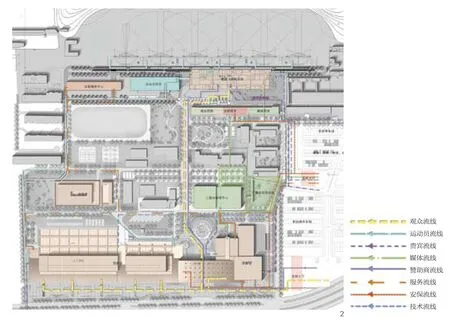
2 總平面/Site plan
項目信息/Credits and Data
項目負責人/Principal in Charge: 莊惟敏/ZHUANG Weimin
設計團隊/Design Team: 莊惟敏,祁斌,汪曙等/ ZHUANG Weimin, QI Bin, WANG Shu, et al.
場地面積/Site Area: 64,500m2
總建筑面積/Total Floor Area: 47,626m2;
地上/Aboveground, 45,372m2;
地下/Underground, 2254m2
檐口高度/Height of Eaves:
資格賽館/Qualification competition venue, 18m;
決賽館/Final competition venue, 24m
建筑長度/Length: 260m(資格賽館/Qualification competition venue)
座席數/Number of Seats:
資格賽館/Qualification competition venue:6491個(固定座席/Fixed seats, 1024個;臨時座席/Temporary seats, 5467個)
決賽館/Final competition venue: 2493個
設計時間/Design Period: 2003
竣工時間/Completion: 2008
攝影/Photos: 張廣源/ZHANG Guangyuan
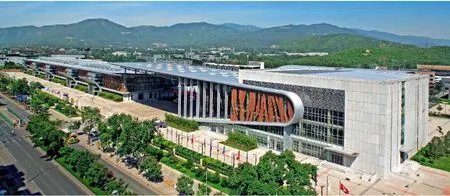
3 外景/Exterior view
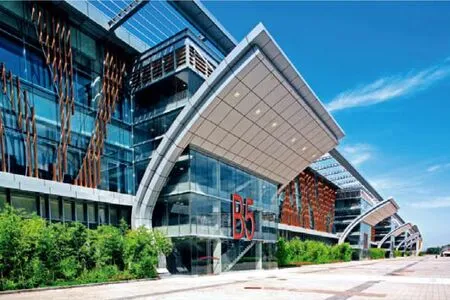
4 資格賽館觀眾入口/Audience entrance of qualification competition venue
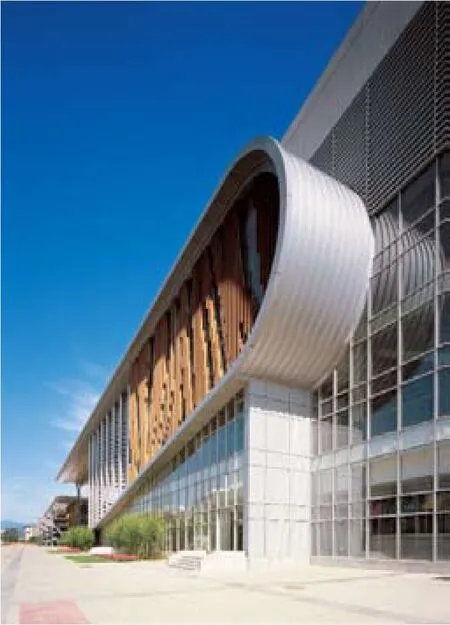
5 決賽館局部/Part view of final competition venue
Shooting is an Olympic event with a timehonored history. Though it should embody the peaceful Olympic spirit, its culture differs from many others. In addition, shooting is a program that values individual skill over strength. As the event itself originates from hunting in the forest, it is closely related to nature. This pursuit of precision, endurance, and steadiness under the sun represents the harmony of man and nature, in a way that resembles the relationship between architecture and the environment. the essence of this proposal lies in this humanistic dialogue between spaces and nature, without over-emphasizing exaggerated formal narratives.
"Hunting in the forest" is the concept of this proposal, stressing humanism and a sense of warmth, comfort, and amenity rather than rigidity and solidity. The building form resembles a bow and arrow, a representation of hunting's primal tools. The connection between the qualification competition venue and the final competition venue also serves as the entrance to the center of the shooting zone. Using an arc as the visual theme of the building complex, the roof and the entrance steps are connected, and this motif is repeated in the cross section of the qualification competition, as well as in the five main audience entrances. A glass curtain wall fronting lounges on the second and third floor feature applied thermal transfer printing on the shades, this pattern relating to an abstract image of the forest.
The program requires equal conditions for all of the competitor positions. The qualification competition venue consists of a total of four ranges over two floors, the first floor with two semi-outdoor ranges of 25m and 50m, and the second floor with two indoor ranges of 10m and 10m with moving targets. Within the qualification competition venue the ranges, the referee zone, audience seats, the green atrium, and the audience hall are oriented north to south. These multiple competition areas feature a consistent horizontal extension of the section in order to make sure that each competitor position is equal.
The building's basic theme extends from the exterior to the interior. the interior design is rooted in the primal essence of competition, revealing motifs such as purity, nature, strength, and peace, so as to develop into several design themes including "the pristine sports spirit", "the return to nature", and "the representation of inner strength". These themes control the interior design itself, which is a response to and re-emphasis of the arc element the represents "primal force". this proposal made efforts to express the nature of the building's structure, revealing its materials and tectonics. the expressive power of raw materials such as wood, raw concrete, bluestone, wood flooring, and gravel are articulated. Such a configuration speaks of unity in architectural language as well as artistic imagery.
The management of the shooting programs is unique. Due to the strict control of firearms in China, shooting as a sport is quite difficult to popularize. The common challenge of post-game reuse becomes especially uncertain for this type of venue. As an solution, the program layout offers an abundance of space for post-game reuse. The inward-looking training facilities are concentrated to the northern side, while the public areas on the southern side reach out, ready for reconstruction and transformation into exhibition, commercial, activity spaces, and many other possibilities. Within the qualification competition venue and the final competition venue, both the fixed and temporary seats were created as a contiguous steel structure, so that they can be removed without much effort afterwards to make space for more flexible functions.
The basic theme of purity kept us from a pomposity in form and typical decorations. The materials and tectonics involved are all based on basic functionality in order to control the cost and to make a honest gesture. Meanwhile, the project's concern over economy is not only placed upon the single phase of construction, but also on the long term performance of insulation, lighting, ventilation, etc. Both technology and a design strategy contribute to the building's energy-saving and sustainability.□
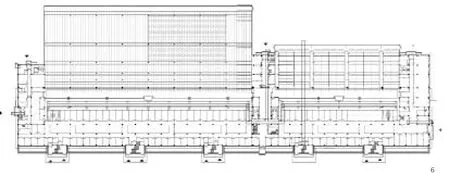
6 資格賽館首層平面/Floor 0 plan, qualification competition venue

7 資格賽館二層平面/Floor 1 plan, qualification competition venue

8 決賽館首層平面/Floor 0 plan, final competition venue
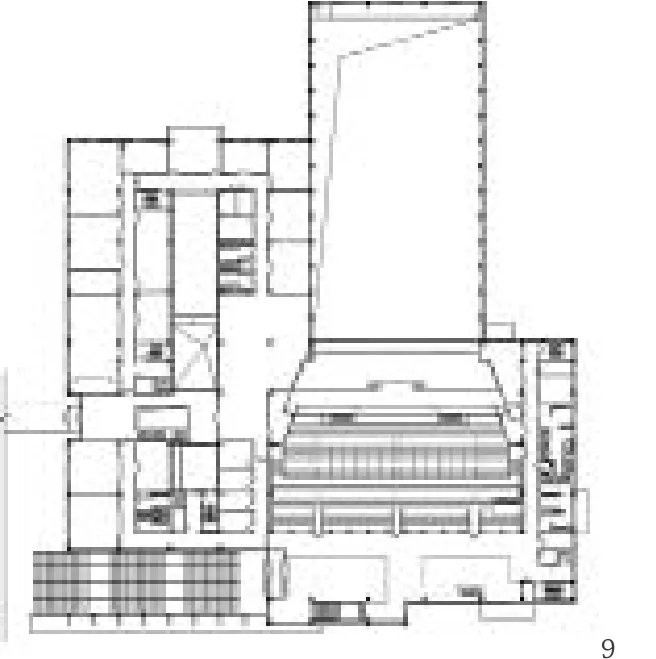
9 決賽館二層平面/Floor 1 plan, final competition venue

10 主入口廣場南側夜景/Night view of the south side of the main entrance
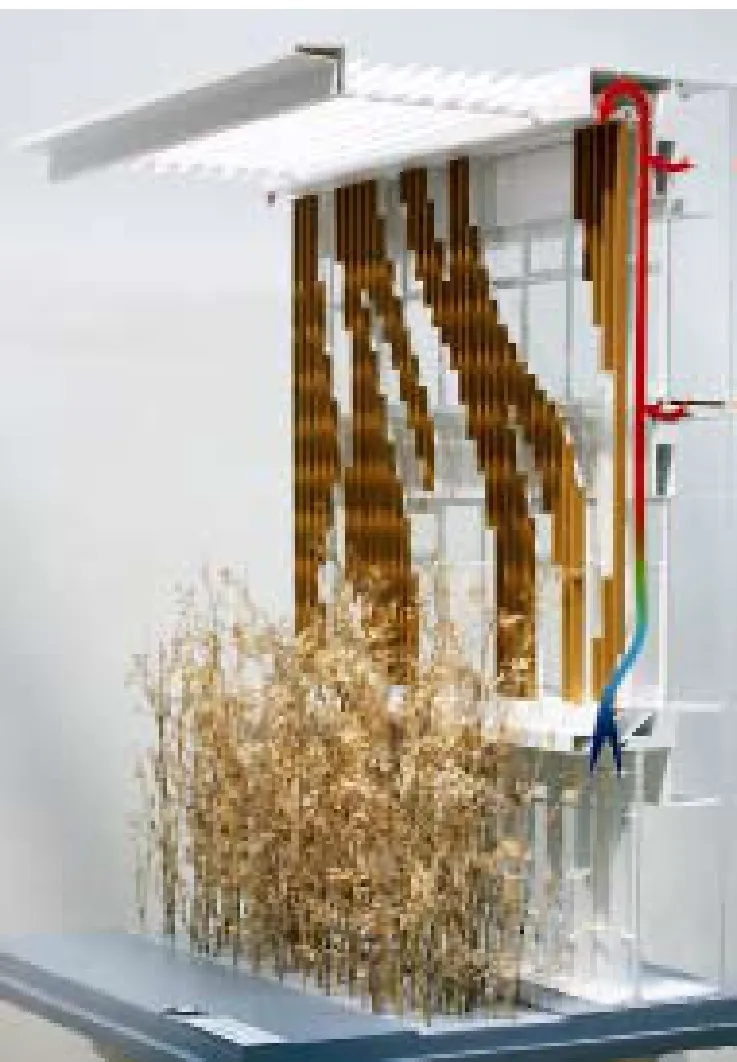
11 生態呼吸式遮陽幕墻細部模型/Model of the curtain wall
評論
李興鋼:奧運射擊館最大的特點是在緊張的用地和有限的造價條件下,將諸多比賽觀賽的功能需求和流線安排得井井有條,采用獨特的雙層賽場和雙層幕墻設計,采光照明設計突出了對運動員比賽條件的重視,經濟、節地、節能,建筑效用良好;后奧運場館利用策劃和設計中,考慮到射擊運動的特殊性,在確保賽后專業及訓練比賽功能之外,又為多種公眾活動預留了空間,以實現可持續的長期運營。射擊單元的分段排列設置及對應的多個觀眾入口設計,弱化了建筑的超長體量,強化了節奏和構成感;體現在建筑外觀的“森林狩獵”——作為對射擊運動的象征性闡釋,雖略顯牽強,但最大的意義是回避了宏大沉重的國家象征性表達,使得整個建筑呈現出放松而輕盈愉悅的氣質,恰恰體現了這一運動本應帶給觀眾和運動員的精神特征。
Comments
LI Xinggang: The main feature of the Beijing Olympic Shooting Venue is to meet functional requirements of games and game watching within a limited site and a tight budget. All sorts of circulation is arranged in perfect order. the uniqueness lies in the two-story shooting gallery as well as the double-skin curtain wall. the lighting design shows the designer's concern for a better game environment. the building is designed to be highly efficient, and it is economical, land-saving and energy-saving. As for the Post-Olympic usage, a long term sustainable operation is highlighted. It is realized that shooting is a special sport with few players, so that a variety of space are reserved for public events, which is a bonus beyond the training and game facilities maintained for professionals. The sectioned shooting units and its corresponding spectator entrances have visually shortened the mass of the extra-long hall, meanwhile enhanced the sense of rhythm and composition. It is said that the exterior design of the Beijing Olympic Shooting Venue was inspired by jungle hunting. Although this might be a bit farfetched, at least it chose an approach of more casual and cheerful to break the routine of national building design in China which was usually grand and solemn to symbolize the nation . What's more, it is the approach to bring athletes and the public the spirit of shooting as a sport. (English translation by Dandan WANG)

12 資格賽館剖面圖/Section, qualification competition venue
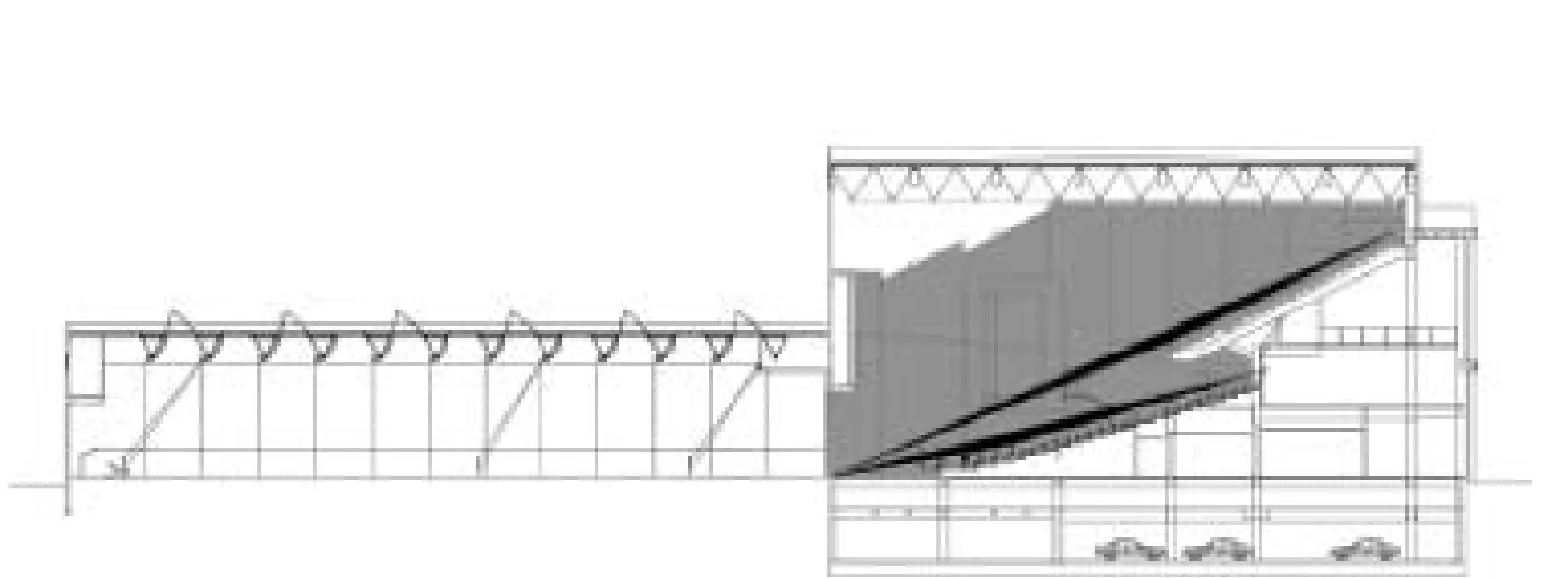
13 決賽館剖面圖/Section, final competition venue
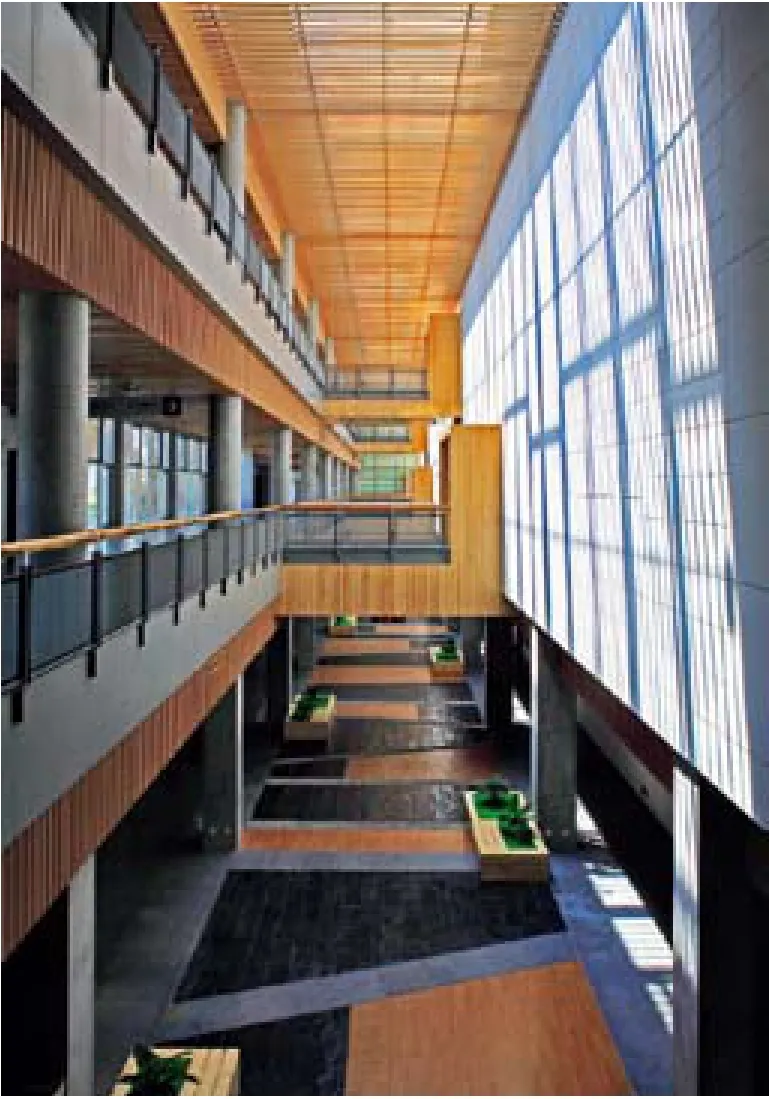
14 資格賽共享休息區/Lobby of qualification competition venue

15 決賽館觀眾休息廳/Lobby of final competition venue

16 從決賽館主入口看資格賽館夜景/Night view from the main entrance of final competition venue to qualification competition venue
猜你喜歡
北方建筑(2021年6期)2021-12-31 03:03:54
文苑(2020年10期)2020-11-07 03:15:36
現代裝飾(2020年7期)2020-07-27 01:27:42
現代裝飾(2020年6期)2020-06-22 08:43:12
現代裝飾(2020年4期)2020-05-20 08:55:08
流行色(2020年1期)2020-04-28 11:16:38
藝術啟蒙(2018年7期)2018-08-23 09:14:18
海峽姐妹(2017年7期)2017-07-31 19:08:17
Coco薇(2017年5期)2017-06-05 08:53:16
福建農業科技(2016年10期)2016-03-07 09:46:49