Open the Gates
2016-01-10 13:16:28
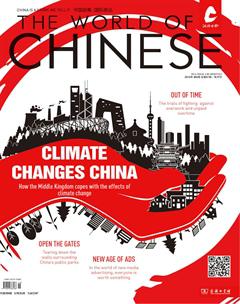
漢語世界(The World of Chinese) 2016年6期
關鍵詞:文化


Chinese cities struggle to imagine public parks with no walls
拆掉圍墻或許是建造真正“公”園的第一步
Imagine a park that has no barrier from the surrounding neighborhood, nothing to prevent you stepping right off the sidewalk into the park from any direction.
This is hardly a revolutionary concept in urban design, and youd be forgiven for thinking it is, in fact, the dictionary definition of a public park. After all, 19th century architect Frederick Law Olmsted, legendary designer of that gold standard in urban parks, New Yorks Central Park, once argued before a panel of American social scientists that the word “park” should only be used to describe a “simple, broad, open space of clean greensward”, to which “people can easily go” and would provide “the greatest possible contrast with the restraining and confining conditions of the town”.
A land developer in Shanghais Xuhui District, however, asked the readers of local political magazine, The Paper,?to make just that leap of imagination last year. Their announcement of plans to make an open-access, fenceless green space on land donated by the local government in the districts new CBD was enthusiastically received by local media, which promoted it as a centerpiece of modernized city planning and Xuhuis own version of Central Park.
Back in 2009, the Guangzhou governments “give the park back to the people” movement had the same bright idea, proposing to tear down the walls around three of their biggest urban parks. In their case, however, the plans were temporarily halted due to an outcry from local residents.
One elderly Guangzhou resident surnamed Chen complained to the Yangcheng Evening News: tear down the walls, and you can no longer call it a park. His argument was a linguistic one—the character 園, for garden, is the Chinese word for “public park” (公園, public garden) uses the ?radical, which comes from the ancient ideographic representation for enclosure. Other citizens translated his concern into more practical terms: without walls, what was to prevent the park from becoming a “free hotel” for the homeless, or a wretched hive of criminals who could enter and escape at will?
Encouraged by official directives to add recreational areas and green spaces to the urban landscape, cities in China are increasingly building so-called “open-style parks” (開放式公園). But the history of truly open-plan, public-access parks in China is short, and the learning curve they present is steep.
Until the early 2000s, most “public” parks in China—defined simply as parks not reserved for use by anydanwei (單位), or work unit—not only had walls and fences but charged admission to enter. In 2002, Shanghai and the city of Zhuhai, Guangdong Province, began to offer free admission to a limited number of their parks. Beijing followed in 2006.
However, the terminology of “open-style parks” is misleading; in most cases, even without a ticket office, the parks have retained guarded entrances, opening and closing hours, and enclosures all around the perimeter.
Beijings Ming Dynasty City Wall Relics Park is a special case. By the standards common to Chinese landscaping, theyve gone and put walls on the wrong side. Completed in 2006, the park consists of grassy knolls, winding paths, and flowering shrubs buttressed against one of the last remaining sections of Beijings ancient fortifications; on the other side, the grass runs straight up against the sidewalk beyond. In the mornings and afternoons, commuters like to take shortcuts through the park instead of battling crowds and car exhaust on the sidewalk.
“Strictly speaking, that makes us an open-style green space, not an open-style park,” the manager of the park office, surnamed Shi, told TWOC. “The only part that ought to be called a park is the Southwest Corner Tower, where we have an entrance gate and a ticket booth for people who want to climb to the top or admire the ancient buildings.”
This October, when Shanghais Xiangyang Park was reopened by the Xuhui District government after renovations, which included the removal of the parks outer walls, the response from the community was lukewarm. “They dont understand that the wall itself is a part of landscaping, its architecture,” a long-time park visitor was reported to complain by a local news blog, Shanghai Guangcha. Chinese landscaping scholar Yang Han has also published papers that have been generally approving of the opening up of Chinas urban parks, referring to the trend as the natural accompaniment of modern, urban societys recreational needs; however, he has also argued that walls should not be “blindly removed”, because their long cultural and symbolic history, as well as architectural details, make them an invaluable “Chinese characteristic” in landscape architecture.
Walls have played an indispensable role in the two ancient styles that influenced the traditional Chinese landscaping, the “imperial garden” and “l(fā)iterati garden”. ?Imperial gardens originated from early imperial hunting grounds, which were walled off to all users except for the emperor. These later evolved into private retreats in which the emperor could relax and enjoy his diverse, often exotic collection of plants. As with City Wall Parks corner tower, there is a sense the garden being a place to preserve and showcase objects of historical interest.
The “l(fā)iterati garden”, of which the private gardens of Chinas Jiangnan region are the most famous example, favored a simpler aesthetic consisting of native plants and more naturalistic arrangements. Built with a philosophy of “high walls and deep courtyards”, they were meant to be secluded spaces for the scholars literary and spiritual contemplation, influenced by the so-called “hermit culture”(隱逸文化) in the tumultuous Northern and Southern Dynasties (420 – 589) period. Under this culture, educated men were encouraged to retreat from political life and cultivate their moral qualities in nature.
Ancient religious beliefs also gave an important spiritual function to the walls; they were supposed to keep the supply of qi?within the courtyard, while gates allowed the qi?to circulate in a controlled fashion.
Stepping into a Chinese park still feels like discovering a private sanctuary: residents walk slower and without fear of being run over by bikes, while the sounds of the city are muted behind the old melodies playing on the radio as the seniors dance. But Zhang Jie, a landscape engineer attached to the Parks and Greening Management Bureau of Changsha County, Hunan Province, is not sure that such a place ought to qualify as a public park. To him, they fail to incorporate the first character of 公園, which is 公?(public).
Screened behind walls and fences, recreation takes place out of the sight of passersby, ?instead of being integrated into each residents sensory experience of the city. This is a mode of life that Zhang calls “participatory”. It was with the intention of increasing the participatory character of their communities that the Changsha County government, earlier this year, gave the order to remove the walls not only around their public parks, but private recreational yards belonging to all public institutions with the exception of the military.
“It has been the tradition in China to build walls that clearly mark [off] each unit,” Zhang said. “We see it evolve from the imperial garden, the siheyuan????(四合院, traditional courtyard homes), to, in modern times, every danwei?that had to have a big courtyard and security guard to restrict peoples access.”
The motivation behind Changsha Countys new measure was political. “Our county has always advocated ‘getting close to peoples hearts, and theres no better way than to welcome them to our spaces,” Zhang said. It may seem odd that a government in modern China, which always claimed to have been founded by the people, would have a tradition of restrictive courtyard-building at all. However, this practice has its origin in modern Chinas system of danwei, which until recently was the organizing framework of all urban residents economic activities, living arrangements, and by extension, recreation.
Adanweis courtyard used to contain all the necessities of urban life: in addition to the buildings where people worked, they provided housing for the workers. The biggest ones also had their own schools, canteens, clinics, markets, as well as spaces for indoor and outdoor activities: auditoriums, squares, and parks. It was possible to live your day-to-day life without ever leaving the units gates and the comfort of what anthropologists call the “acquaintance society”.
These days, while many universities and military units are still set up like this, most urban residents of China find themselves living in their own apartments and crossing paths with strangers at every turn. In essence, this forces Chinese urban residents to adjust to a concept of “public space” where they must coexist with and respect the individual needs of others, rather than the socialist “communal space” in which they shared with others a similar, state-mandated style of living.
To Zhang, this is a positive development in helping residents “get to know their neighbors, their city, their government”. However, its also the source of much of the controversy in response to open parks in cities like Guangzhou and Shanghai, as residents unease toward public space spills into the last remaining institutions that symbolized the old style of governance and security.
Zhang said that he has not received any feedback from residents anxious about their safety and the suzhi?(素質), or “quality” of their fellow park visitors after the removal of the walls, though he admited that open parks are potentially more challenging to make safe and orderly for users.
Shi was also reluctant to comment on the safety procedures of the City Wall Park, except to confirm they had surveillance cameras and a team of security guards patrolling the premises. “The safety procedures we take in this park are the same as any closed park in Beijing, its all standardized, though I would expect that [a park like] ours take a greater investment in security,” she said. In all the years she has worked at the park, she said there has never been any safety incidents reported.
The views from the ground are mixed. On a weekday morning, a knot of local residents exercising at the City Wall Park shared their impressions of the parks good points and bad. They unanimously said that ease of access was the main reason that they come to the park, some of them coming every day. “I live nearby, and there is absolutely no space for activities in our housing communities,” a woman surnamed Fang told TWOC. “The management here has been especially good lately, its a very large park but the guards patrol it on foot and bike.”
Shi believes that her park has been more or less free from controversy due to the security investments taken by Beijing as a whole. “Each city has their own concept of safety, a different threshold for accepting these open public spaces,” she said. Residents of Guangzhou, a city with a higher proportion of migrants and reputation for crime, would probably have different concerns about their safety compared to the capital. Fang agreed that the impression of public safety is not purely due to the presence of guards but thesuzhiof Beijing residents. “This is a nice neighborhood,” she stressed.
However, on the eastern section of the City Wall Park, wedged against the busy eastern Second Ring Road and cut off from Shis office by railroad tracks, an elderly resident named Yu had the opposite impression of park management. “Its chaotic on this side, everyone sits on the grass, picks the flowers. In the summer there are always people here and there spending the night in the park,” Yu said. He also relates this to the character of the neighborhood—“were close to [Beijing] Railway Station, theres a huge floating population passing through here”—as he, like many urban residents, believes that rural migrants lack the education and awareness of how to share space with others.
But he isnt sure that walls are the solution either. “Could you solve the problem if you put a fence by the sidewalk over there? You cant really say, I think it has more to do with the moral quality of society.”
Zhang believes that the trend in society is toward more open spaces, not less—and it doesnt just apply to parks. He pointed out that in February this year, the central government released a series of new urban planning guidelines, among which it was proposed that housing developers will no longer be allowed to build housing communities closed to outside traffic, and existing communities as well as remaining public danwei?will gradually see their walls opened. Intended as a measure to reduce traffic congestion in urban areas, the policy caused backlash across the country as urban residents balked at letting strange cars and people into the last stronghold of communal space in China. “Opening up space is an inevitable step in opening up the country, building a modern city,” Zhang said.
Those that already embrace (or are resigned to) this new mode of living are at least optimistic. “In this park, every morning, they have a broadcast saying, ‘a(chǎn)ccording to Beijing city regulations, its prohibited to walk dogs or ride bikes through the park, but look at this—theyre everywhere,” said another City Wall Park regular, surnamed Bai. A fellow exerciser surnamed Lai added, “sometimes [the dog-walkers] have arguments with the guards.” Both seemed amused by this, rather than worried.
“They cant do anything about it: when youre walking or biking on the edge of the park, whos to say if youre in the park or on the sidewalk?” Bai laughed. “The park is safe as long as Beijing is safe, there are good people because Beijing has good people.” Thats perhaps the highest praise a public park can receive—it has become wedded to the citys own identity.
猜你喜歡
中國德育(2022年12期)2022-08-22 06:16:18
湖北教育·綜合資訊(2022年4期)2022-05-06 22:54:06
金橋(2022年2期)2022-03-02 05:42:50
金橋(2022年1期)2022-02-12 01:37:04
英語文摘(2019年1期)2019-03-21 07:44:16
小天使·一年級語數(shù)英綜合(2018年9期)2018-10-16 06:30:16
西部大開發(fā)(2017年8期)2017-06-26 03:16:12
西部大開發(fā)(2017年8期)2017-06-26 03:15:50
人民中國(日文版)(2015年10期)2015-04-16 03:53:52
人民中國(日文版)(2015年9期)2015-03-20 15:08:05