Panda Priorities
2016-01-10 13:16:28
漢語世界(The World of Chinese) 2016年6期

It might be premature to claim mission accomplished on conserving the giant panda
大熊貓受威脅程度“降級”是否為時過早?
On September 4, the International Union for Conservation of Nature and Natural Resources (IUCN) downgraded the status of giant pandas from “endangered” to “vulnerable”. As one of the worlds top wildlife bodies, the announcement by the IUCN seemed to be a massive conservation victory, but the reaction in China was less than enthusiastic.
IUCN uses seven categories: extinct, extinct in the wild, critically endangered, endangered, vulnerable, near threatened, and least concern. It appears, at first glance, that pandas are making their way to safe numbers. To back up the decision, the IUCNs report states: “An increase in available habitat and an expanding occupied range provide further support for the contention that panda numbers are increasing. Forest protection and reforestation measures have increased forest cover in China and have supported an 11.8 percent increase in occupied habitat and 6.3 percent increase in unoccupied but suitable habitat.”
Based on a census conducted between 2011 and 2014, the report estimates there are approximately 2,060 pandas living in the wild, of which about 9.6 percent are cubs and around 1,040 are mature adults. This is a significant improvement over past years, so theres plenty of good news here for environmentalists to celebrate.
Although the IUCN announcement of the pandas new status was made relatively recently, it was hardly a bolt out of the blue. For years, the situation facing pandas has been improving at a slow clip, as the Chinese government poured wave after wave of funding into efforts at panda preservation—ranging from panda porn (for pandas reluctant to mate) to massive panda preservation centers and even 24-hour online live-streaming for public viewing. At any Chinese zoo lucky enough to have pandas, the panda enclosure is always, without question, the most well-maintained.
Pandas have always been far more than just a mere animal. They are the worlds most expensive animal to care for in captivity, a symbol of Chinese culture, a tool for diplomacy, and even the logo of the World Wide Fund for Nature (WWF). The resources that have been poured into preserving this animal have provoked numerous debates on the nature of conservation and how to determine which animals are most worth saving.
The efforts to preserve pandas have been so intense that, in 2009, prominent British conservationist and BBC presenter Chris Packham argued that they should be allowed to go extinct, on the basis that the funds could be better spent elsewhere and that “cuteness” should not be a key factor in deciding which species to save. His comments set off a whirlwind of commentary that lasted for years, much of it outraged. It didnt help that in 2012, Dr. Sarah Bexell, a former senior staff member at the Chengdu Research Base of Giant Panda Breeding, said that captive-bred pandas were generally unable to survive in the wild, as evidenced by pandas that had been released and promptly died.
So its hardly surprising that the IUCN announcement has evoked a wide range of responses; from China itself, there is a lot of skepticism that pandas are on a safe path.
Chinas State Forestry Administration,?while no doubt eager to claim some of the credit for the improvement in panda fortunes, has pointed out that development and deforestation have wiped out a lot of giant panda habitats. After the IUCN announcement, the administration called the change in status “premature”.
Head of the China Conservation and Research Center for the Giant Panda, Zhang Hemin, was cited by Xinhua as saying that “A severely fragmented natural habitat still threatens the lives of pandas; genetic transfer between different populations will improve, but is still not satisfactory.”
Other scientists were similarly nonplussed. Ouyang Zhiyun, a researcher with the Chinese Academy of Sciences, told Scientific American that the change in status means it will be even more difficult to persuade developers to take the conservation of pandas seriously. He should know; he was involved in a project to connect railways in Sichuan Province and Gansu Province, which traversed panda habitats. He had to try to convince developers to build bridges over these areas rather than destroy the local environment. “We succeeded to a large extent, mainly because pandas enjoyed a special endangered status,” he told the publication.
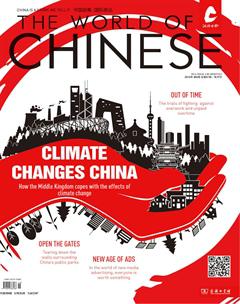
Loss of habitat has particularly grim implications for wild pandas, and the situation is unlikely to get easier. Its a view that the IUCN report actually endorses, largely because of the climate-change elephant in the room.
“Although the population is currently increasing, climate change is predicted to eliminate >35% of the pandas bamboo habitat in the next 80 years, and thus the panda population is projected to decline,” the report states. “The threat of declining bamboo availability due to climate change could, in the near future, reverse the gains made during the last two decades. The giant panda will remain a conservation-dependent species for the foreseeable future. The Chinese governments plan to expand existing conservation policy for the species should receive strong support to ensure its implementation.”
There are still a lot of questions over the viability of panda breeding programs. The first captive-bred panda ever released into the wild, Xiang Xiang, was quickly slain by another panda.
On October 20, two pandas were released, taking the total number of pandas released into the wild from captivity to seven, with two confirmed fatalities.
Then there are also questions over the accuracy of the numbers themselves; the increase in panda numbers is based on comparing two different censuses, taken many years apart and with significantly improved methodology in the more recent survey. Critics point out that the increased numbers could be a function of better tracking rather than actual population increases.
All of these factors complicating the recovery of giant panda numbers ensure that Chinese authorities are not going to give up on panda preservation efforts anytime soon; if anything, they are going to double down. The central government is reviewing plans for a national panda reserve, and public interest in pandas is as high as it has ever been, as the panda live feeds continue to boast high viewer numbers. China is not about to abandon the giant panda, because at present, it would seem that they certainly arent going to survive without human assistance.