Last Stop
2016-01-10 13:16:28
漢語世界(The World of Chinese) 2016年6期
關(guān)鍵詞:特色
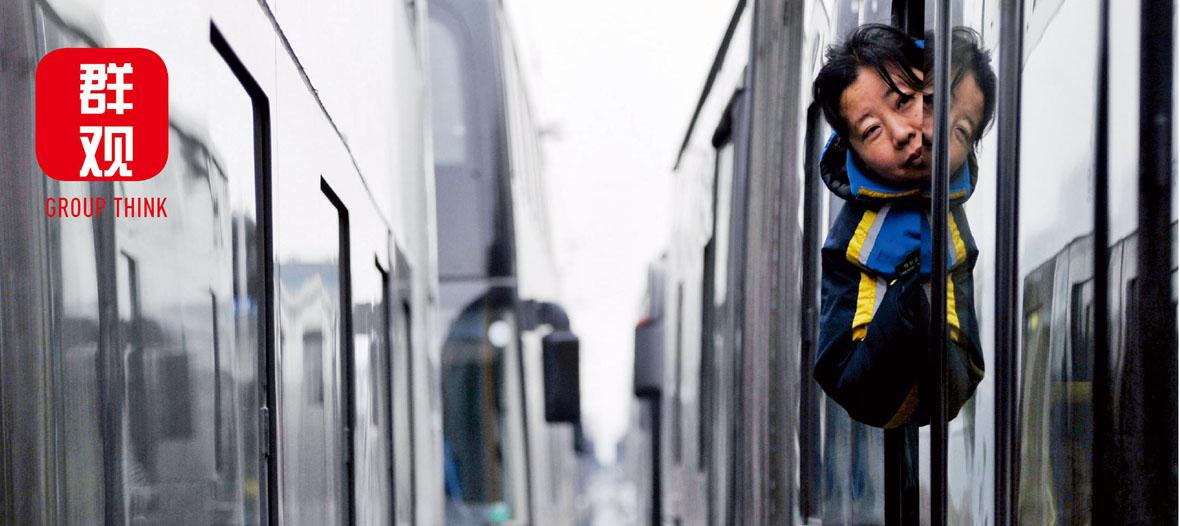
As ticket vendors disappear from Chinas buses, their legend remains
時至今日,勞動模范李素麗還能被人記起,公共汽車售票員這個職業(yè)卻正在淡出歷史舞臺
In the early 1960s, the Chinese people were asked to learn from Lei Feng. A semi-mythical foot-soldier assiduously devoted to Mao Zedong Thought and serving the people, Leis legend helped the Communist Party to rally a nation still reeling from the disastrous Great Leap Forward. In the 1990s, as Chinas new market economy picked up speed, the people were given a new ideological model: a Beijing public transit ticket vendor named Li Suli?(李素麗).
Lis backstory, like Leis, was emphatically ordinary. The daughter of a bus conductor, Li dreamed of becoming a newscaster but scored 12 points too low on the entrance exams to go to college. She then joined Beijing Bus Route 60 and, believing that “even the least prestigious jobs need to be done well”, became the best and hardest working ticket vendor she could be. In her slogan-filled, 18-year career she became the “cane of the elderly”, prepared newspapers and spare cushions for passengers, and once shamed a passenger by cleaning up his spit from the floor. While the rest of the the country was making demands about job security, social mobility, and increased wages under the new market economy, Li served years at a humble job with a responsible attitude and smile, eventually earning the title “Nations Model Worker” for demonstrating that old Party adage, “l(fā)abor is the most glorious thing”.
Ironically, 20 years after Li became the nations exemplar of the ordinary, commonplace worker, her job has become all but obsolete. Across China, IC card systems and standardized fares have taken over vendors basic role, while automated recordings and smartphones replaced them at announcing stops and giving travel directions. Most Chinese cities have already done away with the position. In August, 2015, Shanghai announced that they would put “vendor-less buses” on all of their routes except four that departed from the train station, citing itself as one of the last cities in China to catch up with the times.
Today the last stand of this disappearing profession is Beijing, Lis home base and a city with a transit system notorious for extensive subsidies and old-style bureaucracy; for instance, until prices were reformed in 2014, a subway trip was a steal at a flat rate of 2 RMB, and bus fares started at 0.4 RMB if paying with an IC card. Even so, the system is slowly changing. In July of this year, ticket vendors on Beijings Bus Route 300 went on strike to protest the phasing out of their position from the citys transit system.
Among their grievances, as told by a spokesperson who documented the incidents online, the ticket vendors were protesting the loss of their “iron rice bowl”, the lifetime job security that used to be guaranteed by Chinas socialist economy. “Vendors work hard, have never done anything wrong, yet weve been told that our work will be replaced by machines and security guards,” a vendor named Liu Ying (alias) reported. They also protested the fact that the transit company, which is part of a state-owned conglomerate, had not announced plans to place laid-off workers in other positions at the company. “Were getting up there in age and truly cant change our field,” Liu complained.
Reactions from Beijingers who followed the incident online were mixed, with several pointing out that working hard at the same job for many years hardly qualified a person for job security anywhere in the current economy, never mind at a job that is now redundant. Up and down the country, iron rice bowls had been shattering since the 1980s. Ticket vendors, in the capital especially, had been insulated until now by the inertia of state enterprises and their bloated benefit networks.
Whereas ticket vendors once represented values of old-fashioned hard work and honest reward vital to a newly reformed society, they now symbolize inefficiency and outdated attitudes about employment, which have no place in an increasingly technical and competitive economy. Primarily older women (and some older men) whove worked long years in their company at the detriment of gaining other skills, ticket vendors fall under what economists call the “overemployment” phenomenon in reforming socialist economies (RSEs); their grievances and occasional protests remain a delicate subject in China as it struggles to balance economic growth and social harmony.
Both Beijing and Shanghais transit authorities have refused our request for comment. The original copies of the Sina Weibo posts by the spokesperson covering the strike have been removed, though the account remains active.
As hinted by Lius comments, aside from machines the other nemesis of the ticket vendors is the transit security guard. This is a relatively new position, also mostly found in Beijing and Shanghai, that was added to Beijing buses this year as vendors were laid off. The two groups are polar opposites in a number of ways. Ticket vendors are affectionately called “ticket vending aunties”. They are required to have a Beijing household registration and collect generous benefits despite below-average pay, around 4,300 RMB as reported online.
The guards are often young, in their teens and early 20s. They are also reported to be migrants from outside of Beijing, and are stereotyped as apathetic, ignorant of local geography, and socially awkward in contrast to the poised and opinionated “aunties”. Local media and online job posts also indicate that transit companies are trying to recruit guards and “service personnel” with college or technical school education in order to modernize their image. Guards are employed by private contractors, whose job ads indicate that they are paid only half the reported average salary of ticket vendors andmention no social insurance.
Though divided about the utility of ticket vendors, Beijingers more or less prefer them to the guards, or “safety personnel” as they are official known. This mostly arises from the general animosity that Beijing natives have for waidiren?(外地人), non-locals who, as the old story goes, are invading their city and taking their jobs. Lius comments specified that it was “Beijing” vendors who were protesting machines and “non-local” guards. The strikers Weibo spokesperson also argued that having local Beijingers on Beijing buses presented “Beijing characteristics” (北京特色), rare things to find in this day and age.
Its curious that this incident arising from the ticket vendors precarious economic value also highlighted how, symbolically, the profession is as robust and resilient as it was in the days of Li Suli. A couple of bloggers sympathetic to the ticket vendors cause have referenced the 1950s propaganda film Spring Reigns Everywhere?(《春滿人間》) and 1990s film Shanghai Fever?(《股瘋》), both of which feature ticket-vending characters who embody different nostalgic ideas about the profession. Springs Zhu Xiuyun greets her passengers sweetly and efficiently climbs down to help a child aboard.?Shanghai Fevers Fan Li likes to shout at errant cyclists, but to her passengers she is straight-talking, wryly humorous, and surprisingly kind—like a mother hen, she fusses, but its all for the protection of her young.
The legacy of Li, as well as the depiction of ticket vendors in these films, lives on. Beijingers who commented in support of the striking vendors were nostalgic (and slightly tongue-in-cheek) about hearing their “aunties” brassy voice and her ceaseless admonitions of what you should and shouldnt be doing. After all, being told when to let the elderly sit, shouted at to keep order, and scrutinized for every action by the well-meaning voice of authority is as quintessential a Chinese characteristic as any. Its entangled in the millennia of history of social hierarchy, in which authority figures had a moral obligation to guide, mold, and correct whether or not its any of their business.
Its also reflective of peoples continued anxieties about order and safety while living in a large population and changing times. Shanghais four bus routes from the train station are actually required by city laws to retain their ticket vendors; Beijing transit authorities also say that double-decker buses will continue to employ vendors. These are considered particularly challenging routes, as the migrant population from the train station are believed to need extra supervision and street directions, and everyone needs reminders to move their luggage. The narrow stairs and isolated upper deck of double-deckers are just asking for accidents, thefts, and ticket dodgers.
Reminiscences from former ticket vendors have appeared in Chinese media in recent years. They paint a rather clearer-eyed picture of what was ultimately a low-status job, when stripped of ideology. Two men in their 80s, who started working as ticket vendors in the 1940s, vividly told Hangzhou Evening News?of being hours on their feet, pressed against sweaty bodies all summer long, being mistaken for beggars collecting alms, beaten up by ticket dodgers, and even shot at during the Chinese Civil War. A soon-to-be laid off vendor in Zhunnan, Anhui, told the local paper she hates it when passengers address her rudely but likes it when the children call her “auntie”. She also described missing lunch breaks, which were only 20 minutes long, whenever traffic puts her behind schedule. Meanwhile, a former vendor from Nanchang wrote of vendors having practically no holidays and having their breaks times used up by the companys safety checks, political education, and team events.
And what was the fate of Li Suli, whose story taught countless Chinese the gloriousness of working for the nation regardless of prestige, security, or pay? Shes still officially employed by the transit system in Beijing, but she has not been a ticket vendor since 1998. Instead, shortly after starring in the Partys 1996 “Learn From Li Suli” campaign, she started a transit information hotline, where she supposedly advises callers on both transit and personal matters to this day.
猜你喜歡
英語世界(2023年10期)2023-11-17 09:19:28
幼兒園(2021年17期)2021-12-06 02:35:20
今日農(nóng)業(yè)(2021年10期)2021-11-27 09:45:24
今日農(nóng)業(yè)(2021年17期)2021-11-26 23:38:44
今日農(nóng)業(yè)(2021年17期)2021-11-26 23:38:44
英語學(xué)習(xí)(上半月)(2019年9期)2019-10-10 02:17:36
知識經(jīng)濟·中國直銷(2017年10期)2017-11-07 02:39:51
陜西教育·綜合版(2015年5期)2015-06-28 06:17:52
短篇小說(2014年12期)2014-02-27 08:32:59
云南中醫(yī)學(xué)院學(xué)報(2011年1期)2011-07-31 18:24:34