自由之土,熱狗之鄉(xiāng)
2016-01-30 15:21:48ByBruceKraig趙青奇
新東方英語 2016年2期
By+Bruce+Kraig++趙青奇
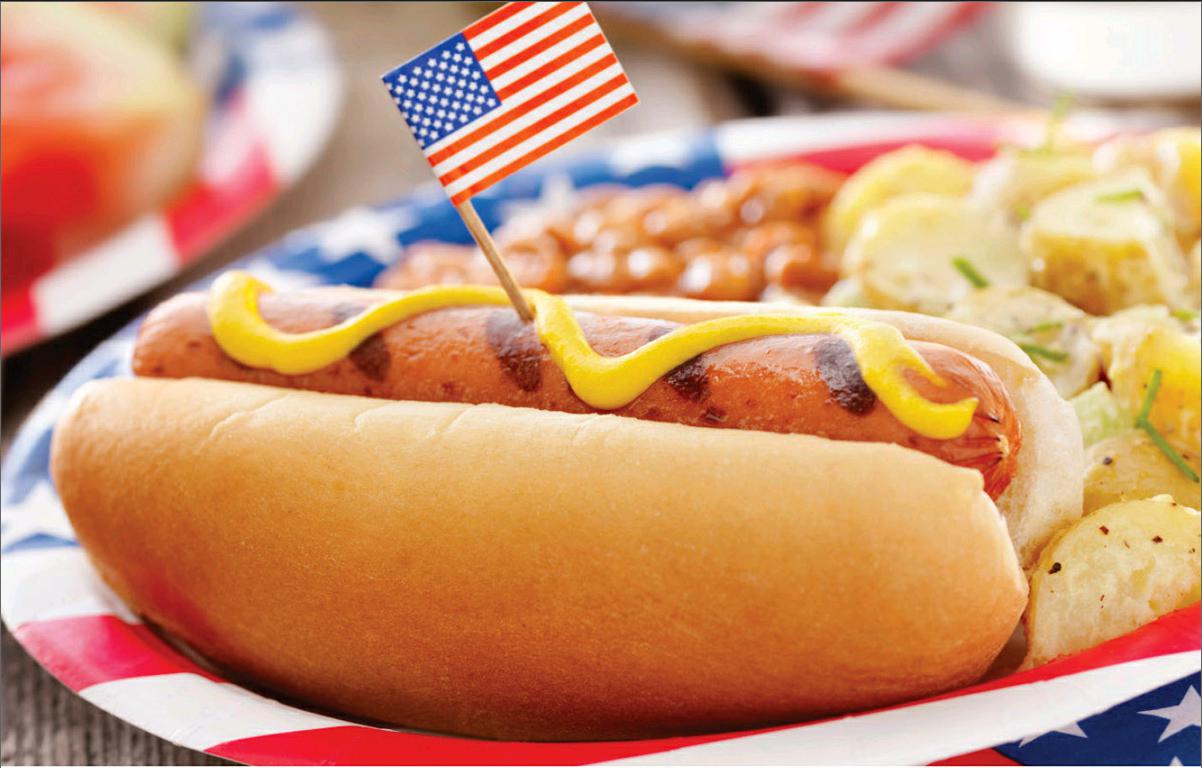
提起熱狗,人們首先想到的就是美國。這一“面包夾香腸”的簡(jiǎn)單組合在這片自由的土地上衍生出各種不同的形態(tài),如此普通,如此廉價(jià),卻又如此具有魔力,吸引著各個(gè)階層的人。從某種意義上說,咬一口手中的熱狗,你便品嘗到了一點(diǎn)自由和平等的味道。
Between Memorial Day1) and Labor Day2), about 7 billion hot dogs will be consumed in the United States. On the Fourth of July alone, 150 million will be gobbled3) by Americans celebrating the birth of the nation. Not that the Founding Fathers polished off4) batches of them after putting the final touches on the Declaration of Independence. Hot dogs as we know them today did not exist until nearly 100 years later. But they really are an American creation, and in a way the product of social and economic forces that the founders unleashed, wittingly5) or otherwise.
Why hot dogs? After all, they are just small sausages made of meat (and other things in the cheapest of them) sold for as low as a dollar or two a package. Most Americans think of them as common, cheap and somewhat suspect. Food connoisseurs6) Thomas Jefferson and Benjamin Franklin would have considered hot dogs to be the lowest of foods.
But if the nations founders were taken to a ballgame7) today where they could eat hot dogs (picture George Washington chomping8) down on a condiment9)-laden one with his “wooden” teeth10)), they would surely recognize the meaning inherent11) in them. Jefferson probably would be suspicious of a mass-produced commercial sausage since it was not made at home or in a small shop by an artisan. Alexander Hamilton12) (not a signer of the Declaration of Independence but a founder nonetheless) would have liked the industrial production and commerce as builders of the nations wealth. Franklin no doubt would have been fascinated by the science and technology used in the manufacturing process.
Hot dogs came to be part of American popular culture because of history and the sometimes mysterious workings of popular culture. But as much as anything, hot dogs just plain taste good. Dressed in various toppings or even relatively plain with mustard and maybe onions (but never ketchup), the combination of chewy meat, fat, salt and seasonings with a white bread bun is irresistible.
So they seemed to Americans when German immigrants brought their sausage culture (and beer) in the mid-19th century. Later, German, East European Jewish, Greek and Italian vendors sold them on the streets and in the new venues of affordable mass entertainment such as Coney Island13) and baseball parks. In the new Industrial Age, hot dogs seemed just right to Americans: cheap, meaty and served fast.
The founders also would have recognized some of their ideals for a new nation in the hot dog story: American individualism, can-do14) spirit and egalitarianism15). Although hot dogs are mass-produced, people have adapted them to their individual tastes and then into something that becomes iconic versions of their city or region.
As just a sampling, youll find a “garden on a bun in Chicago16),” deep-fried rippers17) and Italian hot dogs in New Jersey, cream cheese ones in Seattle and Sonoran hot dogs18) in Arizona and across the Southwest. The Sonoran dogs and Los Angeles “danger dogs” are bacon-wrapped and cooked on griddles19) with slight differences in toppings. They both come by way of Latino immigrants, just as the original versions were from German immigrants. All of these are variations created by small-scale hot dog hawkers20). Even the décor21) of many carts and stands operated by small entrepreneurs who hope to rise economically reflects this liberty to exist and operate in America.
As food, hot dogs are a symbol and means of social integration. Eating one with fellow enthusiasts from all walks of life is an act of community solidarity, especially at a ballpark with fellow fans. And it is part of the lovely myth of social equality that Americans hold dear. As one authority, Beverley Pink of Pinks Hot Dogs22) in Los Angeles, likes to say, customers from a cross-section of society—the minimum-wage worker and the celebrity in his fancy car—all stand in line to order their food and get the same dish.
Jefferson would have liked the idea of small communities of equals (his slaves excepted) standing in line—his White House dinners were like that. But Hamilton would never have descended from his Rolls-Royce. Who was more American and who would have loved hot dogs more?
從陣亡將士紀(jì)念日到勞動(dòng)節(jié)這段時(shí)間,美國的熱狗消費(fèi)量將達(dá)70億個(gè)。僅在7月4日這天,歡度國慶節(jié)的美國人就會(huì)吃掉1.5億個(gè)熱狗。這倒不是因?yàn)殚_國元?jiǎng)讉兺瓿伞丢?dú)立宣言》最后的潤(rùn)色后對(duì)著一批熱狗大快朵頤—我們今天所熟知的熱狗是在近100年之后才出現(xiàn)的。不過,熱狗確實(shí)是美國人的發(fā)明,從某種意義上說,它是開國元?jiǎng)讉兘夥诺纳鐣?huì)和經(jīng)濟(jì)力量有意無意催生的產(chǎn)物。
為什么偏偏是熱狗呢?說到底,它們不過是肉做的小香腸(最便宜的熱狗里,肉里會(huì)摻入其他東西)而已,售價(jià)低到一份只要一兩美元。在大多數(shù)美國人眼里,熱狗普通、廉價(jià),吃著還有點(diǎn)不放心。若是在托馬斯·杰斐遜和本杰明·富蘭克林這樣的美食行家看來,熱狗估計(jì)是最低級(jí)的食品。
但是,假如將這些開國元?jiǎng)讕У饺缃竦陌羟虮荣惉F(xiàn)場(chǎng),讓他們?cè)谀莾簢L嘗熱狗(想象一下喬治·華盛頓用他的“木”牙大嚼一個(gè)灑滿調(diào)料的熱狗的情景),他們定會(huì)明白熱狗所蘊(yùn)含的固有內(nèi)涵。杰斐遜可能會(huì)對(duì)這種批量生產(chǎn)的商業(yè)化香腸心懷疑慮,因?yàn)樗炔皇羌彝プ灾疲膊皇浅鲎孕∽鞣坏氖炙嚾恕啔v山大·漢密爾頓(不是《獨(dú)立宣言》的簽署人,但也算開國元?jiǎng)祝┛赡軙?huì)贊賞與熱狗相關(guān)的工業(yè)生產(chǎn)和商業(yè)活動(dòng),將其視為創(chuàng)造國家財(cái)富的力量。富蘭克林則無疑會(huì)對(duì)熱狗生產(chǎn)過程中運(yùn)用到的科學(xué)技術(shù)感到著迷。
熱狗成為美國流行文化的一部分,既有歷史的原因,也離不開流行文化有時(shí)所具有的奇妙運(yùn)作方式。但其中一個(gè)主要原因是,熱狗吃起來就是很美味。加上各種各樣的調(diào)料,或者哪怕只是相對(duì)簡(jiǎn)單地放點(diǎn)芥末,也許再加點(diǎn)洋蔥(但千萬別放番茄醬),這種耐嚼的肉、油脂、鹽、佐料與白面包的混合體簡(jiǎn)直令人無法抗拒。
這就是19世紀(jì)中期美國人眼中的熱狗,其時(shí)德國移民將他們的香腸文化(還有啤酒)帶到美國。后來,德裔、東歐猶太裔、希臘裔和意大利裔的小販們?cè)诮诸^以及不那么昂貴的大眾娛樂新場(chǎng)所(如科尼島和棒球場(chǎng))賣起了熱狗。在新的工業(yè)時(shí)代,熱狗似乎恰好合乎美國人的需求:便宜,肉多,出餐快。
開國元?jiǎng)讉円部梢詮臒峁返陌l(fā)展歷史中發(fā)現(xiàn)他們寄予新國家的一些理想:美國的個(gè)人主義、進(jìn)取精神和平等主義。盡管熱狗是批量生產(chǎn)的,但人們依據(jù)個(gè)人口味對(duì)其進(jìn)行了改造,從而衍生出他們所在城市或地區(qū)的特色熱狗。
比如,你會(huì)發(fā)現(xiàn)有“芝加哥菜園式熱狗”、新澤西的油炸裂皮熱狗和意大利式熱狗、西雅圖的奶油干酪熱狗以及亞利桑那州和美國西南部的索諾拉熱狗。索諾拉熱狗和洛杉磯的“危險(xiǎn)熱狗”外面都裹著培根,用平底鍋煎炸而成,只是配料略有不同。兩者均由拉丁裔移民引入,正如最早的熱狗出自德國移民之手。所有這些種類不同的熱狗都是小規(guī)模經(jīng)營(yíng)的熱狗小販們的發(fā)明。就連這些希望發(fā)家致富的小業(yè)主們的推車和攤鋪的裝飾也能反映出在美國謀生和經(jīng)營(yíng)的自由。
作為一種食物,熱狗是社會(huì)融合的一種象征和方式。跟各行各業(yè)對(duì)熱狗有同好的人一起吃熱狗是體現(xiàn)群體團(tuán)結(jié)的一種行為,尤其是在棒球場(chǎng)跟眾多球迷一起吃熱狗。這種行為也是美國人所珍視的社會(huì)平等這一美好幻想的一部分。正如洛杉磯平克熱狗店的一位熱狗權(quán)威人士貝弗利·平克常說的那樣,社會(huì)各階層的顧客—無論是拿最低薪酬的工人還是開著豪車的明星—都排隊(duì)點(diǎn)餐,吃到的都是同樣的食物。
杰斐遜可能會(huì)喜歡小群體內(nèi)平等的人們(他的奴隸除外)排隊(duì)候餐這個(gè)想法—他的白宮晚宴就是如此。但是漢密爾頓可決不會(huì)屈尊走下他的勞斯萊斯座駕。兩人誰更有美國范兒,誰會(huì)更喜歡熱狗呢?