
人工智能:是福還是禍?
2016-06-12 21:13:42
新東方英語·中學版 2016年6期
When people think of artificial intelligence (AI)—the study of the design of intelligent systems and machines—talking computers often come to mind. But most AI researchers are focused less on producing clever conversationalists and more on developing intelligent systems that make people's lives easier—from software that can recognize objects and animals, to digital assistants that cater to1), and even anticipate, their owners' needs and desires.
But several prominent thinkers, including the famed physicist Stephen Hawking and billionaire entrepreneur Elon Musk2), warn that the development of AI should be cause for concern.
人工智能(AI)研究的是智能系統和智能機器的設計,當人們想到它時,腦中出現的往往是會說話的計算機。但大多數人工智能研究者更為關注的不是制造聰明、健談的機器,而是開發可以讓人們的生活更加便利的智能系統,從可以識別物品和動物的軟件,到能夠迎合甚至預見主人需求和愿望的數字助手等等,不一而足。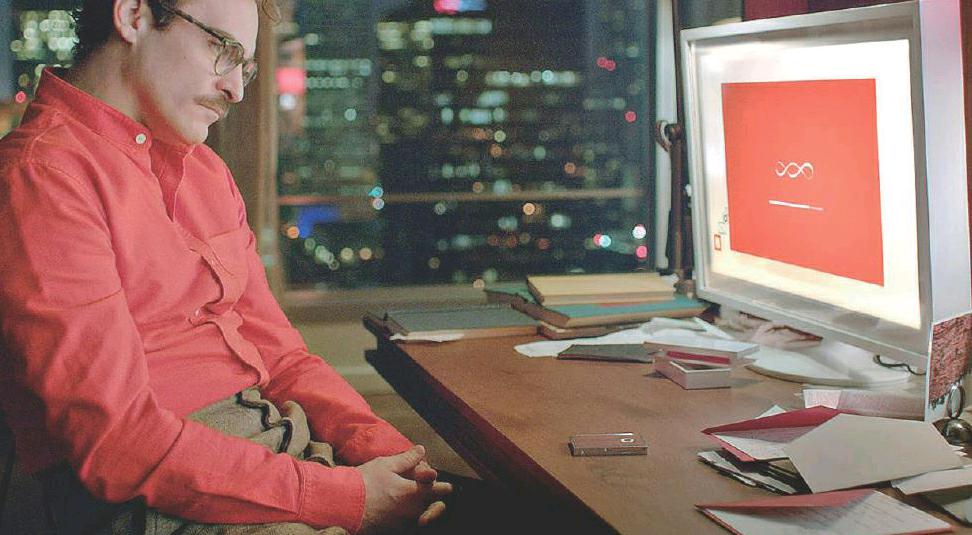
但是,包括著名物理學家斯蒂芬·霍金和億萬富翁企業家埃隆·馬斯克在內的一些富于思考的知名人士提醒大家,人工智能的發展應該引起我們的擔憂。
Since the field of AI was officially founded in the mid-1950s, people have been predicting the rise of conscious machines. Inventor and futurist Ray Kurzweil, director of engineering at Google, refers to a point in time known as "the singularity3)", when machine intelligence exceeds human intelligence. Based on the exponential4) growth of technology according to Moore's Law (which states that computing processing power doubles approximately every two years), Kurzweil has predicted the singularity will occur by 2045.
But cycles of hype5) and disappointment—the so-called "winters of AI"—have characterized the history of artificial intelligence, as grandiose6) predictions failed to come to fruition7).
Nevertheless, a number of prominent science and technology experts have expressed worry that humanity is not doing enough to prepare for the rise of artificial general intelligence8), if and when9) it does occur. Recently, Hawking issued a dire10) warning about the threat of AI.
"The development of full artificial intelligence could spell11) the end of the human race," Hawking told the BBC, in response to a question about his new voice recognition system, which uses artificial intelligence to predict intended words. (Hawking has suffered from a neurological disease, and communicates using specialized speech software.)
And Hawking isn't alone. Musk told an audience at MIT that AI is humanity's "biggest existential threat". He also once tweeted12), "We need to be super careful with AI. Potentially more dangerous than nukes13)."
But despite the fears of high-profile14) technology leaders, the rise of conscious machines—known as "strong AI" or "general artificial intelligence"—is likely a long way off, many researchers argue.
"I don't see any reason to think that as machines become more intelligent ... which is not going to happen tomorrow—they would want to destroy us or do harm," said Charlie Ortiz, head of AI at the Burlington, Massachusetts-based software company Nuance Communications. "Lots of work needs to be done before computers are anywhere near that level," he said.
自從人們自20世紀50年代中期正式開創了人工智能領域以來,人們就一直預言有意識的機器會興起。谷歌工程總監、發明家、未來學家雷·庫日韋爾提到了一個名為“奇點”的時間點,即機器的智力超越人類智力的時間。在科技的發展遵循摩爾定律(該定律聲稱計算機的運算處理能力大約每兩年增加一倍)而呈幾何級數增長的基礎上,庫日韋爾預測,奇點將會在2045年之前出現。
不過,輪番的熱炒和失望(即所謂的“人工智能的寒冬”)成了人工智能發展史的特征,因為一個個過于宏大的預言都未能取得成果。
盡管如此,許多知名的科技專家都表示了擔憂,擔心人類對通用人工智能的興起準備不足——倘若它真的出現的話。近日(編注:英文原文發表于2014年12月),霍金就針對人工智能的威脅發出了嚴重警告。
“完全人工智能的發展可能招致人類的滅亡。”在回答BBC關于自己新換的語音識別系統的提問時,霍金這樣表示。該系統利用人工智能來預測他想要說的話。(霍金患有一種神經系統疾病,他使用專門的語音軟件和別人交流。)
而持這一觀點的不止霍金一人。馬斯克在麻省理工學院演講時向在場觀眾表示,人工智能是人類“生存的最大威脅”。他還曾發布過一條推文:“我們必須對人工智能格外小心,它可能比核武器更加危險。”
雖然這些備受矚目的科技界領袖對人工智能心存憂慮,但許多研究者卻認為,有意識的機器(即“強人工智能”或“通用人工智能”)的興起可能還離我們很遙遠。
“隨著機器變得更加智能(這也不是明天就會發生的事情),它們就會想要毀滅或傷害我們,我認為這種想法毫無道理。”查利·奧爾蒂斯表示,他是總部位于馬薩諸塞州伯靈頓的軟件公司紐昂斯通訊公司人工智能部門的主管。“在計算機幾乎接近這種水平之前,還有許多工作要做。”他說。
Artificial intelligence is a broad and active area of research, but it's no longer the sole province15) of academics; increasingly, companies are incorporating AI into their products.
And there's one name that keeps cropping up16) in the field: Google. From smartphone assistants to driverless cars, the Bay Area-based tech giant is gearing up17) to be a major player in the future of artificial intelligence.
Google has been a pioneer in the use of machine learning18)—computer systems that can learn from data, as opposed to blindly following instructions. In particular, the company uses a set of machine-learning algorithms19), collectively referred to as "deep learning", that allow a computer to do things such as recognize patterns from massive amounts of data.
Today, deep learning is a part of many products at Google and at Baidu, which is sometimes referred to as "China's Google", including speech recognition, Web search and advertising, Andrew Ng, an artificial intelligence researcher at Stanford University who is now the chief scientist for the Chinese search engine Baidu, commented.
Current computers can already complete many tasks typically performed by humans. But possessing humanlike intelligence remains a long way off. "I think we're still very far from the singularity. This isn't a subject that most AI researchers are working toward." Ng said.
Instead, companies like Google focus on making technology more helpful and intuitive20). And nowhere is this more evident than in the smartphone market.
人工智能是一個涉及面廣、活躍度高的研究領域,但它已不再僅僅是學者們的研究范疇;如今,各大公司都越來越多地將人工智能融入自己的產品之中。
在這一領域,有一個名字被不斷提及,那就是谷歌。從智能手機助手到無人駕駛汽車,這家總部位于舊金山灣區的科技巨頭正在為成為未來人工智能領域的主力做準備。
谷歌在機器學習領域的應用方面一直都是先驅——機器學習是指那些能夠通過數據進行學習而非盲目聽從命令的計算機系統。特別是該公司使用了一套總稱為“深度學習”的機器學習算法,它們使計算機能夠進行諸如從大量數據中識別圖案等的操作。
斯坦福大學人工智能研究員、現任中國搜索引擎百度的首席科學家吳恩達表示,目前,谷歌和百度(有時被稱為“中國的谷歌”)這兩家公司包括語音識別、網絡搜索及廣告投放在內的許多產品都具有深度學習的功能。
現有的計算機已經可以完成很多通常由人類來完成的工作,但是它們離擁有與人類相似的智力仍有很大的差距。“我認為我們距離奇點還非常遙遠。奇點并不是大多數人工智能研究者正在研究的方向。”吳恩達說。
相反,谷歌等公司卻致力于讓科技變得更有用、更好用。這一點在智能手機市場比在任何領域都要表現得更為明顯。
In the 2013 movie Her, actor Joaquin Phoenix's21) character falls in love with his computer operating system, Samantha, a computer-based personal assistant who becomes sentient22). The film is obviously a product of Hollywood, but experts say that the movie gets at least one thing right: Technology will take on increasingly personal roles in people's daily lives, and will learn human habits and predict people's needs.
Anyone with an iPhone is probably familiar with Apple's digital assistant Siri, first introduced as a feature on the iPhone 4S in October 2011. Siri can answer simple questions, conduct Web searches and perform other basic functions. Microsoft's equivalent is Cortana, a digital assistant available on Windows phones. And Google has the Google app Google Now23), available for Android phones or iPhones, which bills itself as24) providing "the information you want, when you need it".
For example, Google Now can show traffic information during your daily commute25), or give you shopping list reminders while you're at the store. You can ask the app questions, such as "Should I wear a sweater tomorrow?" and it will give you the weather forecast. And, perhaps a bit creepily26), you can ask it to "show me all my photos of dogs" (or cats, sunsets or even a person's name), and the app will find photos that fit that description, even if you haven't labeled them as such.
While a phone that can learn your commute, answer your questions or recognize what a dog looks like may seem sophisticated27), it still pales28) in comparison with a human being. In some areas, AI is no more advanced than a toddler. Yet, when asked, many AI researchers admit that the day when machines rival human intelligence will ultimately come. The question is, are people ready for it?
在2013年上映的電影《她》中,華金·菲尼克斯飾演的角色愛上了自己的計算機操作系統薩曼莎,一個通過計算機提供服務、變得具有感知力的私人助理。雖然這部影片帶有明顯的好萊塢烙印,但專家們表示,它至少說對了一件事:科技將在人們的日常生活中扮演越來越個性化的角色,將學習人類的習慣并預測人們的需求。
任何一個擁有iPhone手機的人大概都對蘋果公司的數字助手Siri非常熟悉,Siri是在2011年10月作為iPhone 4S手機的一大特色首次推出的。Siri可以回答簡單的問題,進行網絡搜索并執行其他一些基本操作。微軟的Windows手機上也有類似的產品,即數字助手“微軟小娜”。谷歌則推出了安卓手機和iPhone手機都可使用的谷歌手機軟件Google Now,它號稱提供“你想要的信息,當你需要它時”。
譬如,Google Now可以在你每天上下班的路上為你顯示交通狀況,或是當你在商店時提醒你購物清單的內容。你可以問這款手機軟件問題,比如“明天我需不需要穿毛衣?”,它就會給你提供天氣預報。此外,或許有點讓人感到毛骨悚然的是,當你要求它“給我看看我所有的狗狗照片”(或是貓咪、日落,甚至是某個人的照片)時,這款手機軟件就會找出符合描述要求的那些照片,即使你并沒有在這些照片上標注這樣的標簽。
雖然一部能夠了解到你的上下班路線、回答你的問題或是識別出狗狗模樣的手機可能看起來非常先進,但是它跟人類相比還是相形見絀。在某些方面,人工智能并不比一個學步的孩子聰明多少。可是,許多人工智能的研究者在被問到時都這樣承認,終有一天,人工智能將可以與人類智力相匹敵。問題是,我們做好準備了嗎?
猜你喜歡
大科技·百科新說(2021年6期)2021-09-12 02:37:27
小學科學(學生版)(2021年7期)2021-07-28 06:44:42
好孩子畫報(2020年5期)2020-06-27 14:08:05
科技傳播(2019年22期)2020-01-14 03:06:34
意林·全彩Color(2019年6期)2019-07-24 08:13:50
商界(2019年12期)2019-01-03 06:59:05
IT經理世界(2018年20期)2018-10-24 02:38:24
消費導刊(2017年20期)2018-01-03 06:26:40
小康(2017年16期)2017-06-07 09:00:59
南風窗(2016年19期)2016-09-21 16:51:29
